In the contemporary digital economy, the discipline of copywriting has undergone a structural transformation. Once viewed primarily as a creative arm of brand advertising—focused on stylistic flair, high-concept taglines, and aesthetic prose—modern copywriting has re-emerged as a core driver of measurable business performance. As organic reach declines across traditional digital channels and customer acquisition costs (CAC) continue to fluctuate, high-growth digital enterprises are increasingly prioritizing direct-response copywriting designed to turn attention directly into pipeline revenue.
This analytical report examines the operational frameworks, empirical methodologies, and systemic shifts powering modern multi-million-dollar online media properties and digital marketing agencies. Synthesizing data-backed acquisition strategies, automated intelligence tools, and real-world execution frameworks, this study outlines how conversion-focused writing operates as an engine for customer acquisition.
The core thesis is straightforward: successful digital copywriters do not focus on writing more eloquently; they focus on extracting more enterprise value per word. By engineering content around acute customer pain points, platform-specific distribution algorithms, and disciplined return-on-investment (ROI) measurement, modern copywriters function less like traditional scribes and more like performance marketers and growth engineers.
Detailed Chronology: The Operational Blueprint for High-ROI Copywriting
The evolution of top-performing copywriting methodology can be mapped across four distinct operational phases: market intelligence gathering, process standardization, artificial intelligence integration, and performance attribution.
Phase 1: Customer Intelligence and Competitor Forensics
High-converting sales copy is rarely invented from thin air; it is synthesized from deep market research. Top-tier conversion strategists rely on systematic customer discovery to establish messaging frameworks before drafting a single sentence.
1. Voice-of-Customer (VoC) Extraction
The primary task of a direct-response writer is to mirror the precise psychological reality of the target audience. Rather than relying on generic value propositions—such as "increase your income" or "save time"—effective copy details the exact friction points, daily routines, and specific anxieties experienced by prospective buyers.
Sales Call Mining: Practitioners collect unedited sales transcripts to isolate exact phrasing, recurring objections, and underlying motivations expressed by prospects.
Qualitative Community Auditing: Unmoderated digital spaces, including targeted Reddit threads, specialized online forums, and Facebook groups, serve as real-world repositories for authentic customer sentiment.
AI-Assisted VoC Clustering: Copywriters aggregate large volumes of user commentary into large language models (LLMs) to identify dominant themes, recurring language patterns, and key buying barriers.
2. Competitor Ad Forensics
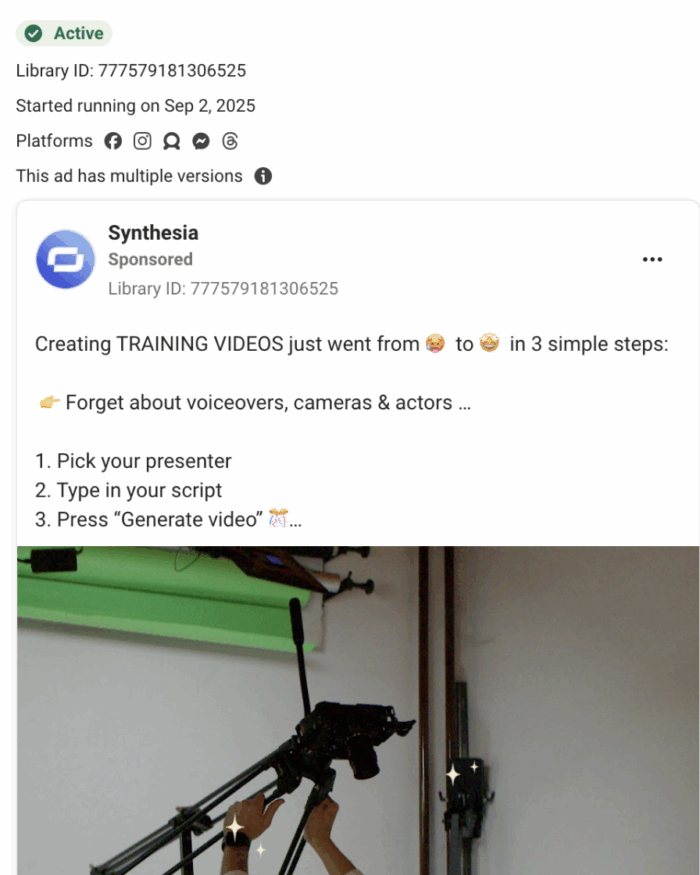
Industry competitors routinely spend thousands of dollars split-testing ad copy and visual hooks. Rather than starting from scratch, competitive research leverages public advertising databases—such as the Meta Ad Library and LinkedIn Ads Transparency tool—to identify validated messaging frameworks.
Ad Longevity as a Value Metric: The duration of an ad creative’s run-time serves as a proxy for profitability. Creatives and copy hooks that remain active for months typically indicate sustainable return on ad spend (ROAS).
Pain Point Identification: Dissecting long-running competitor ads reveals which specific pain points resonated most strongly with the target market (e.g., enterprise software ads emphasizing data clutter, or video creation tools framing logistics as a key operational bottleneck).
3. Swipe File Curation and Structural Analysis
Professional copywriters maintain systematic repositories ("swipe files") of proven headlines, high-converting lead structures, and persuasive landing pages. Platforms such as SwipeFile.com, curated by veteran copywriters like Neville Medhora, allow practitioners to analyze historical direct-response ads alongside contemporary digital funnels. This empirical approach prioritizes structural templates that have historically generated revenue over novel but untested creative concepts.
Phase 2: Process Standardization and Intent-Driven Practice
To produce conversion copy consistently without encountering cognitive friction or writer’s block, successful practitioners implement repeatable execution workflows.
+-----------------------------------------------------------------------------------+
|                        STANDARD WRITING WORKFLOW PROTOCOL                         |
+------------------------------------+----------------------------------------------+
| WORKFLOW STAGE                     | OPERATIONAL EXECUTION                        |
+------------------------------------+----------------------------------------------+
| 1. Structural Outline              | Map explicit headers, target pain points,    |
|                                    | and call-to-action (CTA) mechanics.          |
+------------------------------------+----------------------------------------------+
| 2. Raw Draft Generation            | Write unedited prose focused purely on        |
|                                    | narrative momentum and logical sequence.     |
+------------------------------------+----------------------------------------------+
| 3. Strategic Polishing             | Refine for sentence clarity, trim filler,    |
|                                    | and heighten emotional resonance.            |
+------------------------------------+----------------------------------------------+
The "Purchase Intent" Paradigm Shift
A foundational milestone in a copywriter’s development occurs when they pivot from chasing general search traffic to capturing high-intent commercial demand.
Consider the case of an e-commerce platform specializing in vintage cuckoo clocks. Initial content marketing efforts aimed at broad queries—such as general historical overviews—generated substantial website traffic but negligible sales. Conversely, shifting focus to technical, troubleshooting, and repair-oriented topics ("how to fix a cuckoo clock movement") attracted users with immediate operational needs and high purchase intent. This shift yielded qualified inbound leads and direct revenue. Modern copywriting success relies heavily on targeting audiences ready to purchase rather than passive readers.
Phase 3: Strategic AI Integration and Platform Specialization
The emergence of generative artificial intelligence has altered the content production ecosystem. Rather than replacing human copywriters, advanced AI tools act as operational accelerators when applied to specific high-value use cases.
                          AI INTEGRATION IN PERSUASIVE COPYWRITING
                                              │
         ┌────────────────────────────────────┼────────────────────────────────────┐
         ▼                                    ▼                                    ▼
┌───────────────────┐                ┌───────────────────┐                ┌───────────────────┐
│ Pain Point        │                │ Syntax & Clarity  │                │ Source & Quote    │
│ Research          │                │ Refinement        │                │ Mining            │
├───────────────────┤                ├───────────────────┤                ├───────────────────┤
│ • Prompts cluster │                │ • LLMs suggest    │                │ • Scrapes live    │
│   unstructured    │                │   alternative     │                │   web discussions │
│   forum feedback  │                │   phrasings for   │                │   for authentic   │
│ • Identifies key  │                │   maximum punch   │                │   subject matter  │
│   buying barriers │                │ • Trims wordiness │                │   expert citations│
└───────────────────┘                └───────────────────┘                └───────────────────┘
Advanced Use Cases for Generative AI in Copywriting:
Iterative Syntactical Refinement: Using prompts focused on clarity to generate alternate phrasing for key sentences, helping writers overcome stylistic stagnation.
Contextual Quote Mining: Using search-enabled AI models to extract real-world citations, industry commentary, and practitioner quotes from platforms like LinkedIn and Reddit. This adds third-party authority to commercial copy.
Customer Research Acceleration: Prompting models to synthesize common customer objections within specific vertical industries, creating a foundational starting point for sales page outlines.
Platform-Native Mechanics
Copywriting performance varies across distribution channels. High-performing copywriters tailor their voice, format, and structure to match platform-specific consumption habits:
LinkedIn & Executive Social Channels: Prioritizes authority-driven narrative hooks, concise line breaks, personal industry experience, and direct business insights.
Search Engine Optimization (SEO) & Long-Form Articles: Demands structured formatting, comprehensive answer density, search-intent alignment, and logical conversion pathways (such as contextually embedded lead magnets).
Direct Mail & Email Marketing: Leverages subject lines optimized for high open rates, narrative storytelling, personal tone, and clear, low-friction calls to action.
Phase 4: Attribution Modeling and Feedback Loops
To command premium fees or directly grow proprietary assets, copywriters must track and prove the financial impact of their work.
To understand how copy drives revenue, marketing teams evaluate clear performance metrics rather than relying on subjective artistic opinions.
Vanity Metrics vs. Revenue Indicators
          VANITY METRICS                           REVENUE INDICATORS
     (Low Business Relevance)                   (High Business Relevance)
┌────────────────────────────────┐         ┌────────────────────────────────┐
│ • Raw Impressions / Pageviews   │         │ • Qualified Pipeline Value     │
│ • Unqualified Social Likes     │   VS    │ • Cost Per Acquisition (CPA)   │
│ • Broad Audience Traffic       │         │ • Customer Lifetime Value (LTV)│
│ • Surface-Level Click Rates    │         │ • High-Intent Conversion Rate  │
└────────────────────────────────┘         └────────────────────────────────┘
Modern analytics demand a distinction between surface engagement and actual revenue metrics:
Qualitative Engagement Auditing: On platforms like LinkedIn, 100 comments from high-level decision-makers (e.g., Enterprise VPs, Chief Marketing Officers, Procurement Directors) hold far more commercial value than 10,000 impressions from unqualified users.
GA4 Event Attribution: In organic content programs, traffic metrics can be deceptive. A technical article drawing 500 monthly visits from high-intent buyers seeking enterprise software often drives more software demonstrations than a general industry post generating 50,000 casual readers.
Self-Reported Attribution Models: Integrating open-ended inquiry fields ("How did you first hear about us?") on checkout and demo forms reveals qualitative buyer paths that traditional tracking cookies frequently miss.
Official Statements & Primary Insights
Industry leaders consistently emphasize that actionable market research and long-term discipline are essential to sustained digital growth.
Executive Perspectives on Copywriting Execution
"Becoming a better copywriter doesn’t mean you write more eloquently. In fact, the opposite is often true. Great copywriters are clear, concise, and ultimately convert readers into customers. If you can prove that your copywriting generates a higher ROI than the market average, you will have a significantly more successful career."
— Senior Partner, Copyblogger
"Be impatient with action, but patient with results."
— Naval Ravikant, Investor and Entrepreneur
Key Strategic Takeaways from Top Performers
On Feedback Mechanisms: High-earning content strategists rarely work in isolation. Peer review networks, such as dedicated mastermind groups and focused academies (e.g., Copyblogger Academy, co-led by agency founders and personal branding strategists), provide practical feedback that speeds up professional development.
On Market Reality: Customers do not buy products based on features; they buy solutions that alleviate immediate operational or personal frustrations. Copywriters who mirror this reality back to the prospective customer consistently outperform traditional creative marketers.
Future Outlook: The Intersection of Generative AI, Intent Economics, and Brand Building
As algorithmic distribution channels evolve and generative AI lowers the barrier to producing low-cost baseline text, the economic landscape for writers is changing rapidly.
                       THE EVOLVING COPYWRITING LANDSCAPE
                                       │
        ┌──────────────────────────────┴──────────────────────────────┐
        ▼                                                             ▼
COMMODITIZED LOW-TIER CONTENT                                 HIGH-VALUATION STRATEGIC PERSUASION
─────────────────────────────                                 ───────────────────────────────────
• Generic AI-generated SEO filler                             • Deep Voice-of-Customer Research
• Surface-level copywriting                                   • Proprietary Data & Expert Quotes
• Focus on raw word volume                                    • Algorithm-Aware Distribution Strategy
• Declining economic returns                                  • Directly Attributable Revenue Growth
Key Trends Shaping the Next Era of Digital Copywriting:
The Rise of the Writer-Operator: The line separating copywriters from digital growth marketers continues to blur. Modern copywriters are expected to master full-funnel strategy—including technical SEO fundamentals, basic vibe-coding for rapid landing page deployment, email marketing automation, and multi-channel attribution analytics.
Increased Value of Original Information: As generic, AI-generated content fills digital channels, audiences and search algorithms increasingly reward content built on original primary research, verified expert quotes, proprietary data sets, and real-world case studies.
Community-Driven Growth Ecosystems: Single sales pages are increasingly giving way to integrated educational ecosystems. Digital properties that combine long-form publishing, targeted newsletter sequences, interactive forums, and structured peer communities build lasting brand equity, resulting in higher customer lifetime values (LTV).
Relentless Testing and Execution: Consistent production remains a primary differentiator. As market dynamics shift, copywriters who combine daily, feedback-driven output with long-term strategic patience will continue to drive outsized financial returns across online marketing channels.