

Executive Overview
The digital landscape is littered with the ghosts of once-dominant tech platforms, but few have executed a pivot as radical—or as timely—as LimeWire. Once synonymous with the 2000s peer-to-peer (P2P) file-sharing revolution and the legal turbulence that accompanied it, the brand has been entirely resurrected. Today, LimeWire exists not as a decentralized protocol for downloading music files, but as a cutting-edge, centralized ecosystem for artificial intelligence (AI) content generation, digital asset management, and decentralized monetization.
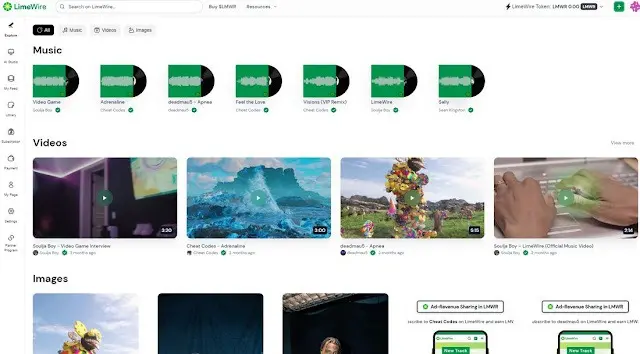
In its modern iteration, LimeWire has positioned itself at the intersection of generative AI art and Web3 infrastructure. The platform allows creators, ranging from everyday hobbyists to global A-list celebrities like Deadmau5, Soulja Boy, and Sean Kingston, to generate, publish, and monetize digital media. By merging powerful image synthesis engines—such as Stable Diffusion and DALL-E—with automated blockchain-based minting and a robust cryptocurrency revenue-sharing model, LimeWire is attempting to redefine how digital creators own and profit from their work.
This report provides an in-depth examination of LimeWire’s resurgence. We will analyze the mechanics of its AI studio, the architecture of its blockchain integrations, its revenue structures, and the broader implications of a legacy brand attempting to capture the modern creator economy.
Detailed Chronology: The Rebirth of a Tech Titan
To understand LimeWire’s current trajectory, one must trace its journey from a controversial file-sharing client to a regulated, forward-thinking web platform.
The P2P Era and Its Demise (2000–2010)
Founded in 2000 by Mark Gorton, LimeWire was a staple of the early internet. Utilizing the Gnutella network, it allowed millions of users to share music, movies, and software freely. However, the platform became ground zero for the copyright infringement battles of the digital age. Following a protracted legal battle brought by the Recording Industry Association of America (RIAA), a federal judge ordered LimeWire to shut down its operations in late 2010. For over a decade, the brand remained a nostalgic artifact of early web history.
The Acquisition and Pivot to Web3 (2022)
The modern era of LimeWire began when serial entrepreneurs Paul and Julian Zehetmayr acquired the dormant brand rights. Recognizing the enduring brand recognition, the new leadership did not revive the file-sharing software. Instead, they envisioned a platform tailored to the burgeoning creator economy. In mid-2022, LimeWire re-launched as a digital collectibles marketplace, initially focusing on music NFTs before expanding into broader digital art.
Integration of Generative AI (2023–Present)
As the generative AI boom accelerated with the public release of models like DALL-E 2 and Stable Diffusion, LimeWire pivoted once more. The platform integrated advanced AI image generation tools directly into its interface, launching LimeWire Studio. This strategic move transformed the platform from a passive marketplace into an active creation suite. Today, LimeWire operates as an end-to-end ecosystem: users conceptualize art using AI prompts, publish it instantly, mint it as an NFT, and earn revenue through ad views and secondary market royalties.
Supporting Context & Metrics: Inside the LimeWire AI Studio
LimeWire Studio is engineered to bridge the gap between complex machine learning models and user-friendly creative tools. The platform provides a streamlined interface that abstracts the technical difficulties typically associated with running localized AI generation software.
Advanced Multi-Model Architecture
Rather than relying on a single proprietary engine, LimeWire integrates several industry-standard and cutting-edge open-source models. Creators on the platform can seamlessly toggle between:
- Stable Diffusion 2.1 & XL: Renowned for their incredible detail, photorealism, and ability to handle complex prompt structures.
- DALL-E 2: OpenAI’s powerful text-to-image generator known for its conceptual agility and illustrative range.
This multi-model approach allows users to experiment with diverse artistic frameworks. Whether a creator is aiming for a cinematic movie still, crisp pixel art, traditional anime aesthetics, or the textured look of analog film, LimeWire’s parameter controls and prompt guidance facilitate precise artistic output. Furthermore, the integration of advanced samplers grants users granular control over image fidelity, step counts, and detail enhancement.
Automated Blockchain Minting
One of LimeWire’s most frictionless technological features is its automated minting process. Once a user generates an image and decides to publish it, the platform automatically mints the creation as a Non-Fungible Token (NFT) on either the Polygon or Algorand blockchain.
This process requires no prior blockchain expertise from the creator. The resulting NFT provides cryptographic proof of authenticity and ownership, transforming a standard digital image into a unique, tradeable asset. When these digital collectibles are traded on the secondary market, creators automatically receive a 2.5% royalty on every subsequent transaction, establishing a passive income stream rooted in smart contract execution.
The Creator Economy and Revenue Share Models
LimeWire’s monetization framework is structured to incentivize active participation. The platform operates on a dual-revenue system: ad-revenue sharing and subscription models.
- Ad-Revenue Sharing: When creators publish public content, they receive up to 70% of all ad revenue generated when other users view their images, music, or videos on the platform.
- Subscription Paywalls: Creators are not forced to rely solely on ad traffic. They can opt to lock their content behind a premium subscription tier. Fans subscribe to specific creator pages to access exclusive drops, fostering intimate communities akin to Patreon or OnlyFans, but natively integrated with Web3 assets.
The LMWR Token Economy
At the financial heart of LimeWire is LMWR, the platform’s native utility token.
- Payouts: All creator earnings—whether derived from ad-revenue splits or subscription models—are distributed monthly in LMWR tokens. These tokens can be held, utilized within the ecosystem, or traded on prominent global cryptocurrency exchanges such as Kraken, ByBit, and Uniswap.
- Utility: Within the LimeWire platform, users spend LMWR tokens to purchase additional generation credits, pay for prompt expansions, and interact with premium content tiers.
Subscription Pricing Tiers
LimeWire caters to everyone from casual experimenters to high-volume professional designers through a tiered subscription model:
- Free Tier:
- Cost: $0
- Credits: 10 daily credits (approx. 20 image generations per day)
- Ad Revenue Share: 50%
- Basic Tier:
- Cost: $9.99 / month
- Credits: 1,000 monthly credits (up to 2,000 image generations)
- Ad Revenue Share: 50%
- Perks: Early access to new AI models, Pro profile badge, full creation history, faster generation speeds, ad-free experience.
- Plus Tier:
- Cost: $29 / month
- Credits: 3,750 monthly credits (up to 7,500 image generations)
- Ad Revenue Share: 60%
- Pro Tier:
- Cost: $49 / month
- Credits: 5,000 monthly credits (up to 10,000 image generations)
- Ad Revenue Share: 70%
- Advanced / Enterprise Tier:
- Cost: $99 / month
- Credits: 11,250 monthly credits (up to 22,500 image generations)
- Ad Revenue Share: 70%
Official Statements & Platform Vision
The leadership behind LimeWire has consistently emphasized that the platform’s evolution is designed to democratize content creation. In various press releases and developer updates, executives have highlighted the shift from passive media consumption to active digital ownership.
"We are witnessing a fundamental shift in how digital media is created and valued," noted representatives during the initial rollout of LimeWire Studio. "By removing the technical barriers of AI generation and blockchain minting, we are placing powerful enterprise-grade tools directly into the hands of everyday artists, designers, and musicians. LimeWire is no longer just a place to find content; it is a place to build a digital business."
The platform’s ability to attract mainstream musical icons such as Deadmau5 and Soulja Boy validates this enterprise vision. By providing high-profile artists with a compliant, Web3-enabled distribution channel, LimeWire bridges the gap between underground digital creators and mainstream entertainment conglomerates.
Future Outlook: Beyond Image Generation
As generative AI continues to mature at a breakneck pace, LimeWire’s roadmap indicates aggressive expansion beyond its current core competencies.
Upcoming AI Music and Video Generation
While LimeWire’s current utility is heavily anchored in state-of-the-art AI image generation, company executives have confirmed strategic plans to roll out AI music and video generation tools in the near future. This development will effectively close the loop on multimedia content creation, allowing musicians and filmmakers to utilize the platform to generate complex audio tracks and video elements using text prompts.
For a brand that historically built its reputation on the distribution of MP3 files, the integration of AI-powered music generation represents a poetic and disruptive full-circle moment. Instead of facilitating the sharing of pre-existing copyrighted music, the new LimeWire empowers users to synthesize entirely original auditory experiences, mint them as digital tokens, and monetize them globally.
Challenges and Market Positioning
Despite its ambitious roadmap, LimeWire faces steep competition in a crowded generative AI market populated by giants like Midjourney, OpenAI, and Adobe Firefly. To succeed, LimeWire must continuously iterate on its proprietary AI models—currently in active development—to ensure its image and media outputs remain competitive with industry leaders. Furthermore, navigating regulatory scrutiny surrounding cryptocurrency tokens (LMWR) and NFT copyright laws will require constant vigilance from its legal and executive teams.
However, LimeWire’s unique synthesis of AI creation + automated Web3 minting + direct revenue sharing creates a distinct value proposition that few competitors match. By empowering the end-user financially—returning up to 70% of ad revenue and offering recurring royalties on secondary trades—LimeWire has engineered a compelling incentive structure for the modern creator.
Conclusion
LimeWire’s transformation from a controversial P2P file-sharing client into a sophisticated generative AI studio is one of the most fascinating corporate pivots of the modern internet era. By embracing the creative potential of artificial intelligence and the transparent ownership models of blockchain technology, LimeWire has successfully reinvented its legacy.
As the platform rolls out upcoming music and video synthesis tools, it stands poised to become a comprehensive multimedia powerhouse. For digital artists, designers, and musicians looking to experiment with generative art while retaining true ownership and monetization control over their labor, LimeWire offers an accessible, feature-rich ecosystem designed for the future of the digital creator economy.
