

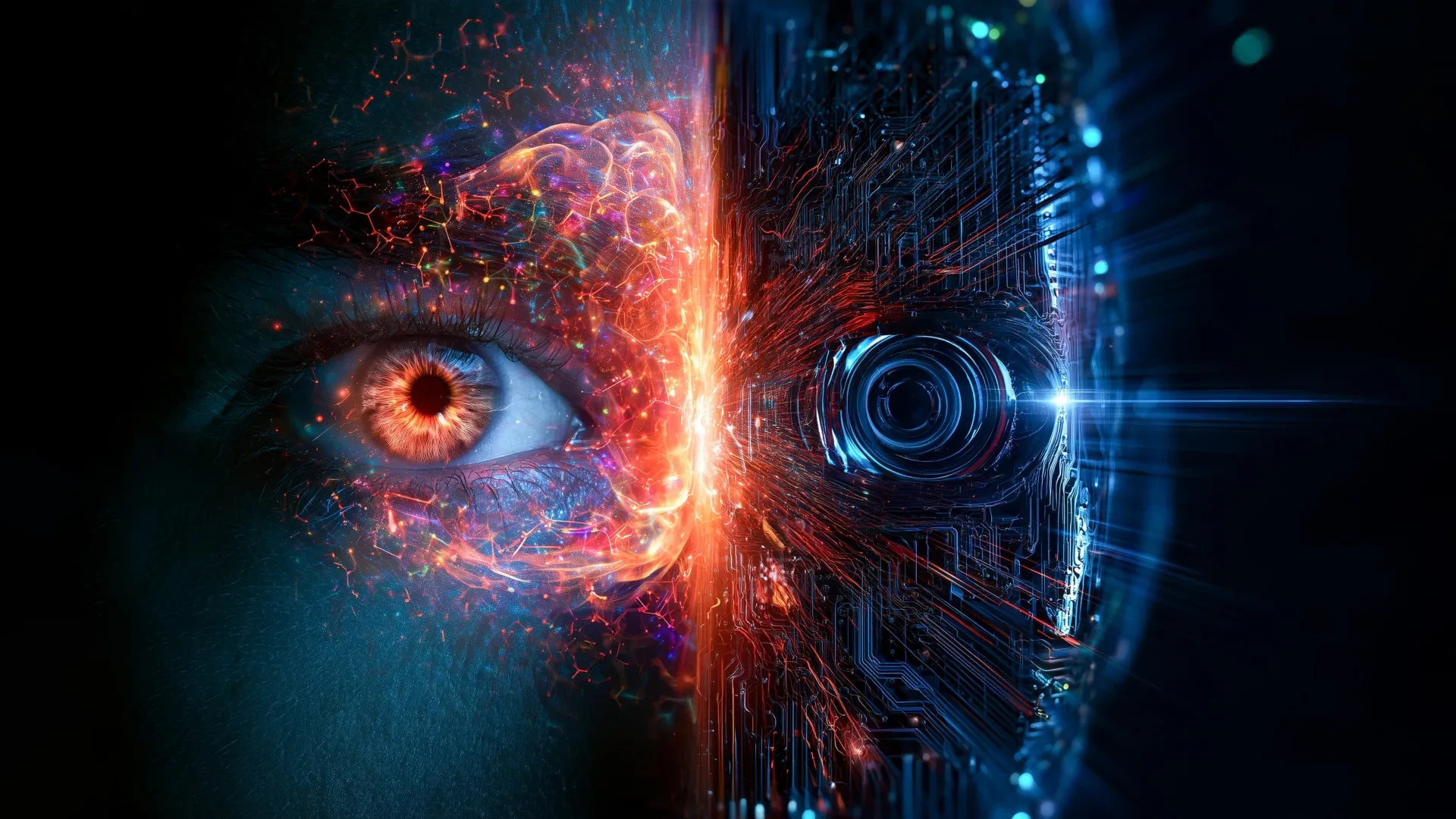
Executive Overview
For decades, the pursuit of Artificial Intelligence (AI) has operated on a foundational, almost axiomatic assumption: that human intelligence, and by extension consciousness itself, is ultimately a problem of computational scale. In this view, the brain is simply a biological computer—a massively parallel wetware processor running algorithms through electrical impulses. According to this narrative, as silicon processors grow faster, neural networks grow deeper, and parameter counts scale into the trillions, artificial systems will inevitably cross a threshold into sentience, duplicating the full spectrum of human thought, emotion, and subjective experience.
A groundbreaking new theoretical review challenges this entire paradigm. Authored by Dr. Gerard Marx of MX Biotech Ltd. and Professor Chaim Gilon of the Department of Chemistry at the Hebrew University of Jerusalem, a paper titled "Consciousness, Memory and Intelligence: A Mechanistic Perspective" suggests that the fundamental gap separating human cognition from machine processing is not a matter of computing power, but of chemistry.
Marx and Gilon propose that biological memory is not merely a digital-like recording of electrical states, but an intricate, living chemical archive. Through a framework they term the Tripartite Mechanism of Memory, the researchers argue that the brain "writes" and "reads" memories using a complex biochemical symphony involving neurons, star-shaped glial cells known as astrocytes, and the rich molecular soup of the extracellular environment. In this framework, memory, emotion, and thought are chemically intertwined from the ground up.
This hypothesis shifts the philosophical and scientific debate surrounding artificial intelligence. It raises an urgent, provocative question for the twenty-first century: Can silicon-based computational power alone ever give rise to the rich, feeling-driven tapestry of consciousness experienced by living organisms, or is true sentience inextricably bound to the wet chemistry of life?
Detailed Chronology: The Evolution of the Tripartite Theory
To understand the radical nature of Marx and Gilon’s latest synthesis, one must trace the historical trajectory of how science has viewed memory, and how these two researchers gradually dismantled the purely electrical model of the mind.
Phase One: The Electrical Dogma and Its Limitations
For much of the twentieth century, neuroscience was dominated by the synaptic plasticity model. Researchers focused overwhelmingly on neurons and the electrical spikes—action potentials—that travel down their axons. Memory was understood to be stored through the strengthening or weakening of synaptic connections, a process famously summarized by Donald Hebb’s adage: "Cells that fire together, wire together."
While this model successfully explained basic neural routing and reflex loops, it struggled to account for the holistic, enduring, and deeply emotional nature of human memory. It treated the brain as an electrical circuit board, largely ignoring the physical space between cells and the non-neuronal cells that outnumber neurons in the human brain.
Phase Two: Expanding the Cast—Astrocytes and the Extracellular Matrix
In recent years, neuroscientists began to realize that neurons do not work in isolation. The brain is densely populated by glial cells, long dismissed as mere structural "glue" that held neurons in place. Among these, astrocytes—star-shaped cells that wrap around synapses—emerged as active participants in brain signaling. They release gliotransmitters, clear out chemical waste, and regulate the ionic balance of the extracellular space.
Building on years of individual research into the molecular foundations of biopolymers and biological information storage, Dr. Gerard Marx and Professor Chaim Gilon began investigating these non-neuronal systems. Their early collaborations focused on a foundational puzzle: How can fleeting electrical and biochemical events be stabilized into lifelong memories? Their investigations pointed toward the extracellular matrix—the complex molecular scaffolding surrounding brain cells—as a potential storage medium.
Phase Three: The Synthesis of the Tripartite Mechanism
In their recent comprehensive review, Marx and Gilon integrated these disparate lines of inquiry into a unified theoretical framework: the Tripartite Mechanism of Memory.
Rather than viewing memory as an exclusive property of firing neurons, the researchers mapped out an interactive triad:
- Cellular Partners: Neurons working in tandem with abundant astrocytes.
- The Microenvironment: The intricate molecular substances and extracellular matrix surrounding these cells.
- Chemical Messengers: Metal ions, neurotransmitters, and gliotransmitters that constantly bathe the tissue.
This model posits that the brain encodes experiences not just as electrical pathways, but as physical and chemical modifications within this three-way interactive system. The paper expands this hypothesis further, suggesting that the very process of retrieving these chemically encoded memories, recognizing them, and interpreting their significance is what constitutes the physical basis of "thought."
Supporting Context & Metrics: Biology vs. Silicon
To appreciate the gravity of Marx and Gilon’s assertions, one must examine the stark architectural differences between biological systems and modern computing hardware. The divide goes far beyond the substrate—carbon versus silicon—extending into how information is stored, accessed, and imbued with meaning.
| Metric / Feature | Biological Brain (Human) | Modern Artificial Intelligence (Large Language Models / Neural Nets) |
| : ঝড় Physical Substrate | Wet organic tissue, lipids, proteins, metal ions, neurotransmitters. | Crystalline silicon, metal traces, solid-state electronic switches. |
| Information Encoding | Electrochemical interactions, molecular/structural changes in extracellular matrix, synaptic/astrocytic modulation. | Binary digital states (0s and 1s) represented by transistor voltage levels. |
| Memory Architecture | Distributed, associative, chemically bound to emotional states. | Addressable storage arrays, weights, and biases stored in numerical matrices. |
| Energy Consumption | Highly efficient (~20 watts, roughly equivalent to a dim incandescent bulb). | Immense energy footprint (megawatts for training and operating large-scale data centers). |
| Inherent Emotional Integration | Inextricably linked; neurotransmitters simultaneously carry cognitive data and emotional valence. | Absent; emotional outputs are simulated through statistical mimicry of text patterns without internal feeling. |
The Scent of Memory: Why Emotion Cannot Be Separated from Data
Consider a universal human experience: hearing a fragment of a song from childhood, or catching the distinct scent of pine and woodsmoke. Within milliseconds, an individual is transported back decades, experiencing a rush of nostalgia, safety, or perhaps melancholy.
In computers, data retrieval is cold and compartmentalized. A database query pulls a file from a designated sector of a hard drive; the data remains completely devoid of emotional context unless additional metadata flags are explicitly programmed.
In contrast, biological memory is natively holistic. Marx and Gilon contend that any valid physical model of human memory must account for this inseparable link between cognitive data and emotional valence. The same chemical messengers—such as dopamine, serotonin, norepinephrine, and various neuropeptides—that help encode an experience also dictate its emotional tone. Because these chemicals diffuse through the extracellular fluid, affecting vast populations of neurons and astrocytes simultaneously, memories are born emotional.
This biochemical reality creates a profound hurdle for artificial intelligence. Current AI models can analyze sentiment, generate empathetic-sounding text, and classify emotional expressions with high statistical accuracy. However, this capability is entirely computational. The algorithm does not feel the weight of grief or the thrill of joy; it merely processes vector embeddings that correlate specific linguistic tokens with emotional keywords.
Official Statements and Theoretical Implications
The publication of “Consciousness, Memory and Intelligence: A Mechanistic Perspective” has reverberated through academic circles, prompting neuroscientists, chemists, and computer scientists to re-examine long-held assumptions.
While Marx and Gilon readily admit that their theory does not fully solve the "hard problem of consciousness"—the enduring philosophical mystery of why and how subjective experience arises from physical matter—they argue that their biochemical framework offers an indispensable compass.
"Understanding how living brain tissue transforms raw sensory experience into an enduring chemical memory is the missing link," notes the underlying premise of the researchers’ work. "Without accounting for the chemical matrix in which these memories reside, we are attempting to reverse-engineer a symphony by looking only at the electrical wiring of the amplifiers."
Challenging the Silicon Supremacy
The authors issue a direct challenge to technological determinism—the belief that sufficiently complex software running on fast enough hardware will automatically generate a conscious mind.
Marx and Gilon clarify that they are not arguing against the future utility or scaling of artificial intelligence. They acknowledge that machine intelligence will continue to advance, easily surpassing human benchmarks in data analysis, pattern recognition, and specialized problem-solving. However, they draw a hard philosophical and biological line between intelligent behavior and conscious experience.
- "Demonstrating intelligent behavior does not equate to possessing the biological mechanisms responsible for memory, emotion, and conscious experience,"* the researchers argue.
An advanced AI may pass every iteration of the Turing Test, compose symphonies, diagnose medical conditions, and converse with flawless rhetorical nuance. Yet, according to the Tripartite Mechanism of Memory, it remains an elaborate simulation—a shadow cast by mathematics, completely devoid of the wet, chemical sentience that defines organic life.
Future Outlook: A New Paradigm for Cognitive Science
As the boundaries between human capabilities and machine automation continue to blur, the work of Dr. Marx and Professor Gilon points cognitive science toward a fertile new frontier.
1. Redefining Neuroscientific Research
For decades, neuroimaging and brain-mapping initiatives (such as the Human Brain Project and the BRAIN Initiative) have focused heavily on electrical connectomics—mapping the wiring diagram of neuronal axons and synapses. The Tripartite Mechanism of Memory suggests that researchers must pivot toward chemical connectomics. Understanding the dynamic interplay between astrocytes, the extracellular matrix, and neurochemical diffusion will require entirely new imaging technologies capable of tracking real-time molecular interactions across vast cellular networks.
2. A Reality Check for Artificial General Intelligence (AGI)
The tech industry routinely forecasts the imminent arrival of Artificial General Intelligence (AGI)—machines that possess human-equivalent cognitive flexibility across all domains. If Marx and Gilon’s hypothesis holds true, achieving true AGI in silicon may be fundamentally impossible unless engineers move away from purely digital computing. Creating a truly sentient machine might require the development of "wetware computing"—hybrid systems that integrate living neural tissue, synthetic biology, and chemical signaling pathways into computational frameworks.
3. The Philosophical Re-evaluation of Life
Beyond technology and medicine, this research touches upon deep philosophical questions regarding what it means to be alive. In an era where algorithms can paint, write, and converse, humanity has increasingly wrestled with its own uniqueness. By grounding human consciousness not in abstract logic, but in the vulnerable, fragile chemistry of living tissue, Marx and Gilon remind us that our thoughts and emotions are tethered to our biology.
We remember because our cells change; we feel because our bodies are bathed in chemical reality. Until artificial systems can replicate not just the logic of the mind, but the chemistry of the living organism, the human experience will remain unique—a testament to the profound and irreplaceable magic of biological evolution.
