

Executive Overview
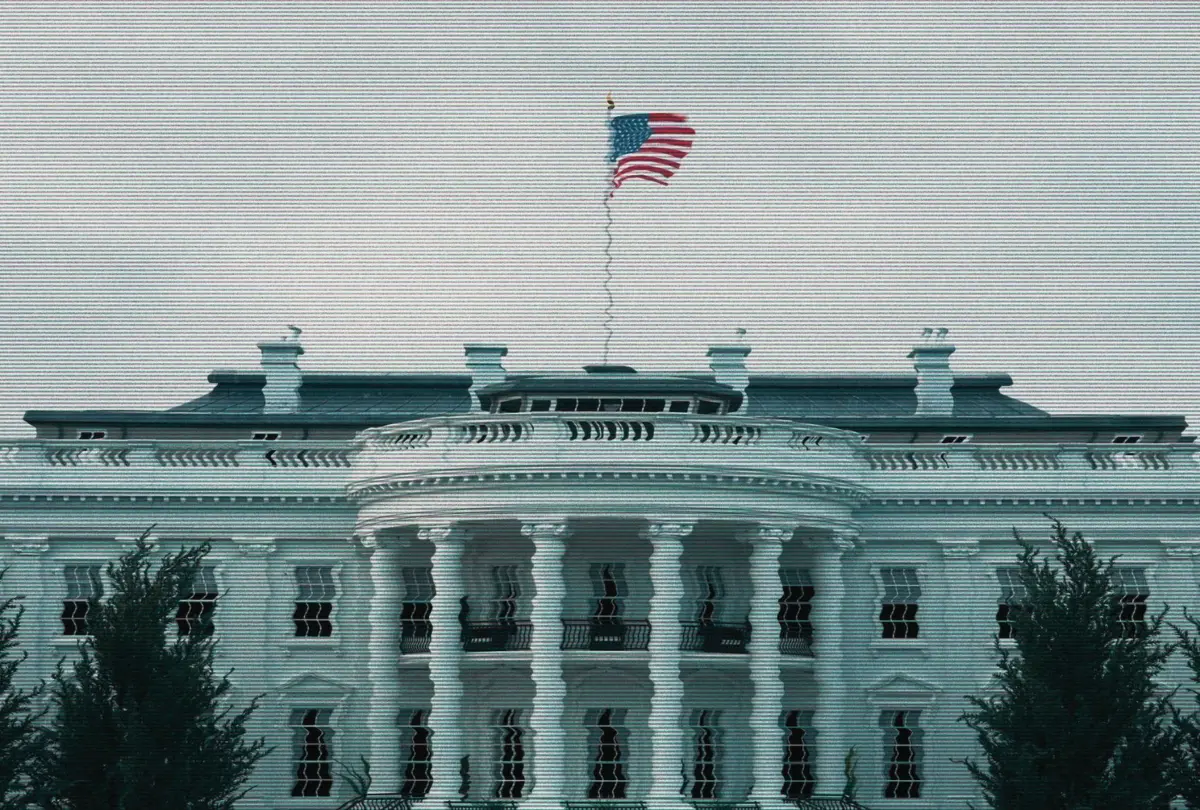
In an unprecedented and legally contentious pivot in national security policy, the Trump administration has introduced a radical framework empowering private-sector firms to execute proactive cyberattacks against transnational criminal syndicates and foreign adversaries.
Unveiled via a White House executive memorandum and accompanying fact sheets, the initiative seeks to bypass the traditional federal monopoly on offensive cyber operations by "incorporating the ingenuity of the private sector." While pitched as a necessary modernization to combat surging ransomware campaigns, phishing scams, and predatory extortion schemes, the policy has immediately drawn intense scrutiny from legal scholars, cybersecurity experts, and civil liberties advocates.
Critics argue that outsourcing offensive cyber capabilities mirrors the antiquated, chaotic era of state-sanctioned piracy and "letters of marque" from the Age of Sail. By lowering the legal and structural barriers that previously prohibited private corporations from initiating external hacks, the administration risks unleashing an unaccountable cohort of digital mercenaries.
These entities are driven by profit motives and perverse incentives to manufacture threats, inflate security budgets, and entrench the military-industrial complex within the Silicon Valley ecosystem. Furthermore, the initiative arrives against a backdrop of escalating geopolitical tensions, domestic infrastructure vulnerabilities, and mounting anxieties regarding state-sponsored mass surveillance, signaling a potentially perilous new chapter in American cybersecurity governance.
Detailed Chronology: From Water Utility Sabotage to Digital Letters of Marque
To understand the volatile context in which this new doctrine emerges, one must examine the escalating series of physical and digital disruptions that have recently targeted America’s critical infrastructure.
Late July 2026: The Water Sector Assault
According to federal advisories issued by the Federal Bureau of Investigation (FBI), municipal utility companies across at least seven U.S. states experienced coordinated cyberattacks in late July. Malicious operators remotely accessed the internet-facing programmable logic controllers (PLCs) of local water management systems.
These incursions directly impaired operational capabilities, inducing dangerous drops in water pressure and causing localized flooding. Most alarmingly, the FBI warned that untreated groundwater could seep into municipal distribution pipes, posing a direct threat to public health. In Minnesota alone, at least 30 municipal water facilities were compromised.
Intelligence assessments suggest these attacks were orchestrated by Iranian state-sponsored actors acting in retaliation amid the ongoing, broader conflict between the Islamic Republic, Israel, and the United States. Rather than remaining isolated incidents, these incursions represent the grim realization of a "new normal" where civilian infrastructure serves as the primary frontline in asymmetric geopolitical warfare.
August 13, 2026: TechCrunch Reveals the Policy Shift
As federal agencies grappled with foreign intrusions, tech industry reporting revealed a profound shift in U.S. cyber doctrine. TechCrunch reported that, for the first time, the federal government would permit specific, vetted private cybersecurity firms to conduct offensive cyber operations abroad—a radical departure from decades of established policy.
Historically, U.S. law strictly bifurcated the responsibilities of the digital domain: the private sector was legally permitted to build defenses and repel incoming intrusions, but the authority to launch and operate offensive cyberattacks remained exclusively under the purview of the military and intelligence agencies (such as U.S. Cyber Command and the NSA).
Mid-August 2026: The White House Memorandum
Formalizing this conceptual pivot, the White House released an official presidential memo and accompanying fact sheet titled Expanding Capabilities to Combat Transnational Cyber-Enabled Crime.
The administration framed the initiative as a bold step to protect American citizens from global cybercrime rings. However, the policy’s structural vagueness immediately alarmed watchdogs. By opening the door for private enterprises to carry out cyber-retaliation and disruption missions against foreign actors, the administration effectively established a modern-day equivalent of the historical "letter of marque and reprisal"—licenses once issued to private vessels authorizing them to plunder enemy shipping under the guise of state authority.
Supporting Context & Metrics: Historical Parallels and Structural Risks
The conceptual framework underpinning the White House’s new initiative bears an uncanny resemblance to maritime policies of the 18th and 19th centuries, raising profound questions about accountability, mission creep, and escalation control.
The Ghost of Privateering
During the Age of Sail, governments issued letters of marque to private shipowners, granting them legal immunity to capture enemy merchant vessels during wartime. While theoretically serving national interests, the system frequently degenerated into state-sanctioned piracy, lawlessness, and unprovoked aggression.
Privateers were driven by profit—capturing prizes yielded financial rewards—which systematically warped strategic objectives. Historical cautionary tales, such as that of Captain William Kidd—initially commissioned by the British Crown to hunt pirates before being executed for piracy himself—illustrate the inherent dangers of delegating state violence to profit-driven actors.
In the digital realm, transferring offensive capabilities to private contractors creates analogous vulnerabilities:
- Perverse Financial Incentives: Private cybersecurity and intelligence firms charge lucrative retainers and project fees. A firm tasked with hunting down transnational cybercriminals has a direct financial incentive to exaggerate threat landscapes, manufacture pseudo-crises, or prolong conflicts to secure ongoing government funding.
- Attribution and Escalation: When a sovereign nation launches an offensive cyberattack, it calculates geopolitical risk and potential retaliation. If a private, Silicon Valley-based firm attacks an overseas server or retaliates against an offshore syndicate, foreign governments may view the action as an aggressive proxy of the U.S. government—or worse, as rogue corporate aggression. This blurs the lines of state responsibility and dramatically increases the risk of unintended escalation.
- Erosion of Oversight: Traditional military and intelligence operations are subject to congressional oversight, the War Powers Resolution, and rigorous internal legal reviews (such as those by the Department of Justice Office of Legal Counsel). Private contractors operating in gray zones evade these constitutional guardrails, operating under corporate confidentiality agreements rather than public accountability.
The Silicon Valley Slush Fund and Domestic Spillover
Critics have been quick to point out the cozy alignment between the policy and the administration’s technology-sector allies. Prominent figures and data-mining conglomerates—such as Peter Thiel’s Palantir—stand to capture vast sums of federal capital under the guise of securing the digital frontier.
This corporate enrichment model compounds existing fears regarding mass surveillance and civil liberties abuses on the home front. Recent investigative reporting by outlets like Minnesota Public Radio revealed that the Department of Homeland Security engaged in covert surveillance against left-leaning Minnesota activists who engaged in vocal opposition to Immigration and Customs Enforcement (ICE).
The integration of private-sector offensive tools into domestic policing infrastructure represents a clear and present danger. Corporations that already track citizens with impunity—such as Flock Safety, whose automated license plate reader networks have been leveraged to monitor individuals seeking reproductive healthcare, or Clearview AI, which deploys facial recognition tools to track undocumented immigrants—demonstrate a consistent pattern: tools engineered for "external security" or "crime fighting" inevitably find their way into the apparatus of domestic population control.
Official Statements and Industry Reactions
The administration’s announcement has triggered a polarized debate across Washington, Silicon Valley, and the global cybersecurity community.
Proponents of the White House framework argue that traditional bureaucratic channels are too slow and rigid to match the agility of modern transnational cyber syndicates. A senior administration official, speaking on condition of anonymity, defended the initiative by emphasizing the need for flexibility:
"The threat landscape has evolved beyond the capacity of traditional bureaucratic defense mechanisms. To protect American families and critical infrastructure from agile, predatory criminal organizations operating across lax international borders, we must harness the unmatched ingenuity, speed, and technical prowess of the American private sector."
Conversely, legal scholars and national security veterans have expressed profound alarm over the erosion of the state monopoly on the use of force. Dr. Elena Vance, a senior fellow in cyber law at the Institute for Strategic Security, noted the severe regulatory and ethical pitfalls of the policy:
"By inviting private firms to cross the threshold from defense to offense, we are opening Pandora’s box. We are substituting national strategic interests with corporate bottom lines. When a private corporation launches an offensive exploit against a foreign server, it is an act of digital vigilantism. It bypasses the chain of command, complicates international diplomacy, and sets a dangerous global precedent that other nations will undoubtedly exploit."
Cybersecurity industry leaders are similarly fractured. While boutique offensive-security and intelligence contractors anticipate a windfall of lucrative government contracts, enterprise security leaders worry that legitimizing private hacking will invite retaliatory blows against commercial networks, transforming ordinary businesses into collateral damage in an unregulated digital proxy war.
Future Outlook: A Safer Path Forward
As the White House moves to finalize operational guidelines for private-sector offensive cyber participation over the coming months, the long-term ramifications for global stability and domestic civil liberties remain highly concerning.
To avert a catastrophic escalation of digital vigilantism and industrial-scale rent-seeking, cybersecurity experts advocate for a fundamental re-centering of federal strategy:
- Prioritize Defensive Infrastructure: Rather than financing private-sector mercenary hackers, federal funds should be heavily funneled into fortifying critical public infrastructure—such as upgrading vulnerable water treatment facilities, modernizing electrical grids, and hardening municipal digital networks. As the adage dictates, a robust defense remains the most effective deterrent.
- Establish a Digital Bill of Rights: Congress must enact comprehensive privacy legislation to restrict the predatory data-harvesting practices of tech corporations. Curbing the mass accumulation of citizen data by private entities diminishes the domestic surveillance apparatus that threatens civil liberties.
- De-escalate Geopolitical Flashpoints: A sustainable cyber strategy requires diplomatic engagement and robust international norms regarding critical infrastructure protection. Initiating retaliatory private-sector proxy wars only ensures an escalatory cycle of retaliatory hacks.
Until American leadership pivots away from perverse incentives and tech-bro slush funds, the digital frontier will remain perilous. In the interim, cybersecurity experts offer a pragmatic parting reminder for organizations and citizens alike: keep system software updated, enforce multi-factor authentication, maintain rigorous data backups, and prepare for a digital landscape where the lines between corporate enterprise and state warfare have been dangerously and permanently blurred.