

Executive Overview
The role of the chief marketing officer (CMO) and enterprise marketing leader has undergone a structural metamorphosis. No longer confined to the tactical execution of creative campaigns, brand messaging, and top-of-funnel awareness, contemporary marketing leadership functions as the primary commercial engine for the entire enterprise.
In a business ecosystem defined by technological disruption, shifting consumer behaviors, and relentless economic volatility, success requires a fundamental shift in mindset. Technical proficiency and creative intuition—once the sole currency of marketing executives—are no longer sufficient. Today’s top-tier commercial leaders must possess an interdisciplinary worldview that seamlessly bridges finance, corporate strategy, behavioral economics, and human psychology across traditional corporate silos.
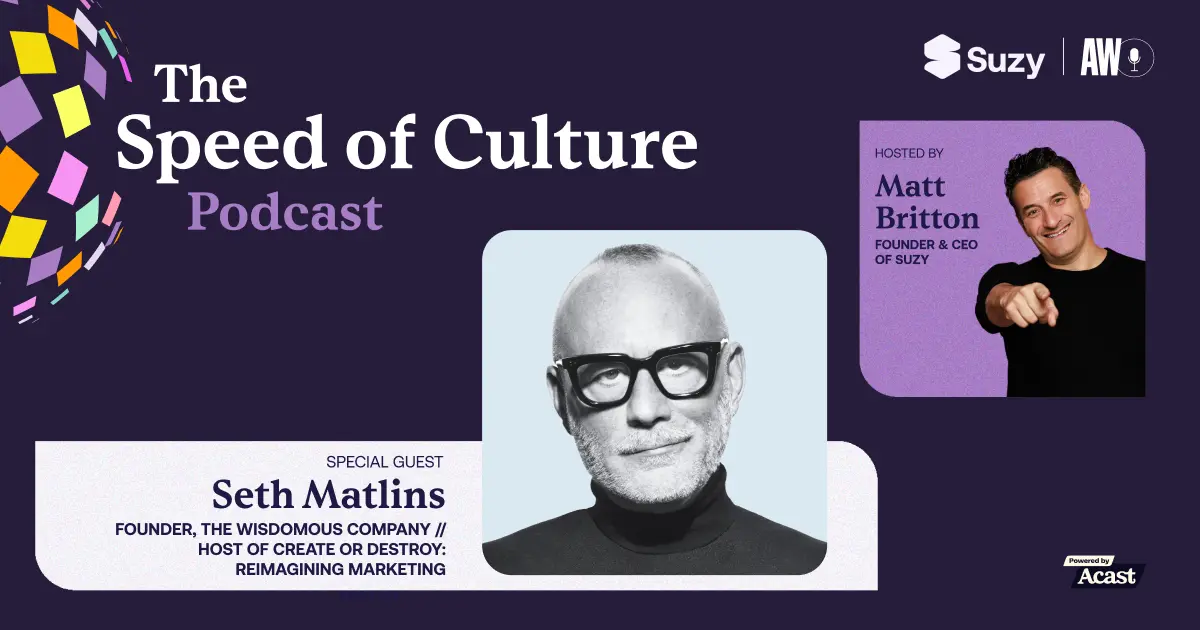
To explore these shifting paradigms, Seth Matlins—founder of The Wisdomous Company and host of the Create or Destroy: Reimagining Marketing podcast—recently joined Matt Britton on the Speed of Culture podcast. Bringing decades of leadership experience spanning the Forbes CMO network, Live Nation, Creative Artists Agency (CAA), Endeavor, and his foundational work with Rock the Vote, Matlins offered a provocative, highly strategic look at the forces reshaping brand identity and business growth heading into 2026.
This deep-dive analysis unpacks Matlins’ insights, examining the misunderstood metrics surrounding executive tenure, the necessity of horizontal thinking, the intersection of consumer identity and utility, and why marketing must be re-anchored as the ultimate financial engine of the modern corporation.
Detailed Chronology: The Evolution of Enterprise Marketing Leadership
The conversation between Matlins and Britton traces a clear developmental arc of modern marketing leadership, moving from historical misperceptions of executive instability to forward-looking mandates for organizational transformation.
Reevaluating the Narrative of Executive Tenure (04:19)
For years, industry publications and executive search firms have routinely cited data pointing to a crisis in marketing leadership: the notoriously short tenure of the CMO, which traditionally hovers around an average of 40 months. This figure is frequently weaponized to suggest that marketing leaders are set up to fail, misunderstood by their C-suite peers, or incapable of driving long-term value.
Matlins challenges this narrative head-on, arguing that the commonly cited data is stripped of its necessary, vital context.
"While the average time in a role may be around forty months, this number does not distinguish between those who leave due to failure and those who move on because of promotions, better opportunities, or retirement," Matlins explains.
Perpetuating a blanket negative narrative without nuance is not only inaccurate; it is self-defeating for the industry. When young professionals and board members internalize the myth that marketing leadership is an inherently doomed position, it poisons strategic patience.
Instead of obsessing over arbitrary tenure statistics, Matlins suggests the industry refocus its lens: Does the marketing leader have the organizational permission to succeed in their specific environment? Tenure is a lagging indicator of alignment, authority, and structural permission, rather than a leading indicator of executive competence.
Permission and the Power of Invention (07:16)
Building on the concept of organizational permission, Matlins argues that brilliant leadership requires a rare symbiosis: individual capability paired with a corporate culture that actively allows for real, structural transformation.
Drawing on the classic axiom that the most effective way to predict what comes next is to invent it yourself, Matlins urges leaders to break free from reactive postures. In a hyper-competitive marketplace, brands that merely respond to industry trends are perpetually playing catch-up. True commercial engines do not adapt to the future; they construct it.
This requires marketing leaders to possess the political capital and executive support necessary to take calculated risks. Without institutional permission to innovate, even the most visionary CMOs are reduced to administrative caretakers of legacy assets.
The Necessity of Horizontal Thinking (11:10)
Historically, corporate career paths have rewarded vertical specialization. Marketers spent decades climbing within distinct silos—climbing the ladder in digital acquisition, brand management, performance marketing, or public relations.
However, the modern enterprise operating environment demands a radical pivot toward horizontal thinking.
Matlins stresses that today’s marketing leaders must be able to see across the entire enterprise. They must function less like departmental managers and more like the "CEO of their department," thoughtfully allocating resources, capital, and human talent to drive broad, enterprise-wide business outcomes. A modern marketing leader who does not understand supply chain constraints, gross margin realities, or data architecture cannot effectively position their brand for sustainable growth.
Identity and the Emotional Side of Utility (14:32)
As digital channels crowd and product parity accelerates, the fundamental driver of consumer choice has shifted. While some direct-to-consumer and tech-enabled brands achieve rapid initial growth through pure product-led utility, established enterprises must maintain their market position by solving deeper emotional problems for their audience.
Matlins points back to enduring psychological frameworks like Maslow’s hierarchy of needs to explain consumer behavior. The choice between competing products is rarely driven by functional utility alone; it is inextricably tied to the human need for self-expression and identity.
Consumers use brands as badges of who they are, who they want to be, and how they wish to be perceived by the world. Even as the digital tools, algorithms, and channels of the trade undergo continuous reinvention, this fundamental human quest for identity remains an unchanging pillar of brand equity.
Marketing as a Strategic and Financial Engine (29:09)
In the concluding segments of the discussion, Matlins frames marketing through an uncompromising financial lens: it should be viewed as the greatest strategic and financial engine within an enterprise.
Every single decision a company makes—from pricing strategy and packaging to customer service policies and brand positioning—contributes directly to either the creation or the destruction of enterprise value.
For the next generation of marketing professionals, mastering creative execution is no longer enough. Aspiring leaders must learn how marketing levers directly drive top-line growth and bottom-line profitability through a rigorous understanding of corporate finance and behavioral economics. Crucially, Matlins notes that as the business landscape grows increasingly complex, the single most important trait for navigating this uncharted path is maintaining a high tolerance for the unknown.
Supporting Context & Metrics
To fully appreciate the weight of Seth Matlins’ insights, it is helpful to examine the broader macroeconomic and corporate governance trends defining the 2026 business landscape.
The Changing Anatomy of the C-Suite
Recent data from executive search and leadership advisory firms indicates that the boundaries separating the Chief Marketing Officer, the Chief Revenue Officer (CRO), and the Chief Financial Officer (CFO) are dissolving. Boards of directors increasingly expect commercial leaders to speak the language of capital allocation. According to recent enterprise leadership surveys:
- Over 65% of CEOs expect their marketing heads to directly tie campaign expenditures to customer lifetime value (LTV) and customer acquisition cost (CAC) payback periods.
- The "Siloed Marketer" is obsolete: Companies scaling successfully in 2026 are those where marketing leaders collaborate daily with product engineering, data science, and finance teams.
- The Valuation Shift: Intangible assets—chief among them brand equity, customer trust, and intellectual property—now account for more than 80% of the market value of S&P 500 companies. This elevates the marketing leader from a tactical cost-center supervisor to a steward of the majority of a firm’s balance sheet value.
Understanding Value Creation vs. Value Destruction
Matlins’ emphasis on "value creation or destruction" touches upon the core thesis of his work at The Wisdomous Company. In a fragmented market where consumer loyalty is fragile and easily swayed by macroeconomic pressures, misallocated marketing spend does not simply yield a neutral ROI—it actively erodes brand equity.
When brands chase short-term performance metrics at the expense of long-term emotional resonance, they suffer from brand depreciation. Conversely, enterprises that view marketing as an integrated commercial engine balance short-term conversion tactics with long-term brand building, insulating themselves against commoditization.
Official Insights & Thought Leadership
Seth Matlins on the Future of Brand Identity
"Brilliant leadership requires both individual capability and an organization that allows for real transformation. The most effective way to predict what comes next is to invent it yourself."
On Rethinking Tenure and Executive Support
"While the average time in a role may be around forty months, this number does not distinguish between those who leave due to failure and those who move on because of promotions, better opportunities, or retirement. Perpetuating a negative narrative without this context is self-defeating for the industry."
On the Financial Imperative of Modern Marketing
"Marketing should be viewed as the greatest strategic and financial engine within an enterprise. Every decision a company makes contributes to either the creation or the destruction of value."
Future Outlook: What Lies Ahead for Brand Leaders
As the corporate world moves deeper into 2026 and beyond, the blueprint for marketing leadership is permanently rewritten. The era of the purely creative CMO who operates in a functional vacuum has officially closed.
Looking forward, several key competencies will separate thriving enterprises from those that stall:
- Radical Cross-Functional Integration: Future marketing leaders will routinely rotate through or manage adjacent operational units. The ability to decode a balance sheet with the same fluency as a media plan will transition from a "nice-to-have" skill to a baseline hiring requirement.
- Balancing Utility with Identity: Artificial intelligence and automation will continue to commoditize functional utility, making products easier and faster to replicate. Consequently, brand differentiation will rely almost entirely on emotional resonance and identity alignment. Leaders who understand the psychological depths of Maslow’s hierarchy will successfully defend their margins against commoditization.
- Embracing Ambiguity as a Core Competency: As Matlins notes, maintaining a high tolerance for the unknown is vital. With emerging technologies, shifting privacy regulations, and evolving consumer habits moving at unprecedented speeds, rigid strategic plans are liabilities. Modern commercial leaders must build agile, resilient organizations capable of inventing the future rather than simply reacting to it.
For those looking to stay at the cutting edge of these developments, industry platforms like Brandweek continue to serve as critical crucibles where the future of brands is debated, designed, and decided. As the commercial engine of the enterprise roars into its next iteration, the mandate for marketing leaders is clear: think horizontally, master the financials, and have the courage to invent what comes next.