

Executive Overview
In an era dominated by hyper-accelerated digital media, short-form video algorithms, and instantaneous streaming content, a counter-movement is taking place quietly within the comments sections of literary blogs and online reading communities. A recent, highly concentrated wave of reader commentary has transformed into a massive, crowdsourced repository of romance and contemporary fiction recommendations, capturing the zeitgeist of modern reading habits.
What began as a routine online check-in regarding recent reads rapidly evolved into a comprehensive digital salon. Readers from diverse backgrounds congregated to debate the nuances of contemporary romance sub-genres, share deeply personal wind-down routines, and trade meticulously curated book lists. This organic exchange highlights a broader cultural shift: the resurgence of romance novels not merely as guilty pleasures, but as sophisticated vehicles for emotional regulation, community building, and literary escapism.
This report examines the anatomy of this viral reader exchange, analyzing the psychological drivers behind the romance book boom, categorizing the top-recommended titles across specialized sub-genres, and exploring the commercial impact these digital word-of-mouth networks have on the modern publishing industry.
Detailed Chronology of a Viral Literary Thread
The digital phenomenon unfolded across a series of rapid exchanges within a dedicated online community space, functioning as a real-time focus group on contemporary reading habits.
Phase One: The Spark and the Escape
The conversation ignited when readers began swapping anecdotes about their daily wind-down routines. For many, the transition from high-stress professional environments to evening relaxation hinged entirely on the immersive power of romance literature. One participant noted how a friend’s enthusiastic endorsement of romance novels as a daily decompression tool motivated her to cross the threshold into the genre for the very first time.
This initial vulnerability opened the floodgates. Readers who previously consumed only literary fiction or memoirs stepped forward to share their discoveries, praising the genre’s defining structural requirement: the guaranteed Happily Ever After (HEA). As one seasoned reader pointed out, the distinct pleasure of the romance genre lies in trusting an author to navigate a turbulent, emotionally fraught journey while safely anchoring the characters—and the reader—in a guaranteed resolution.
Phase Two: The Sub-Genre Specialization
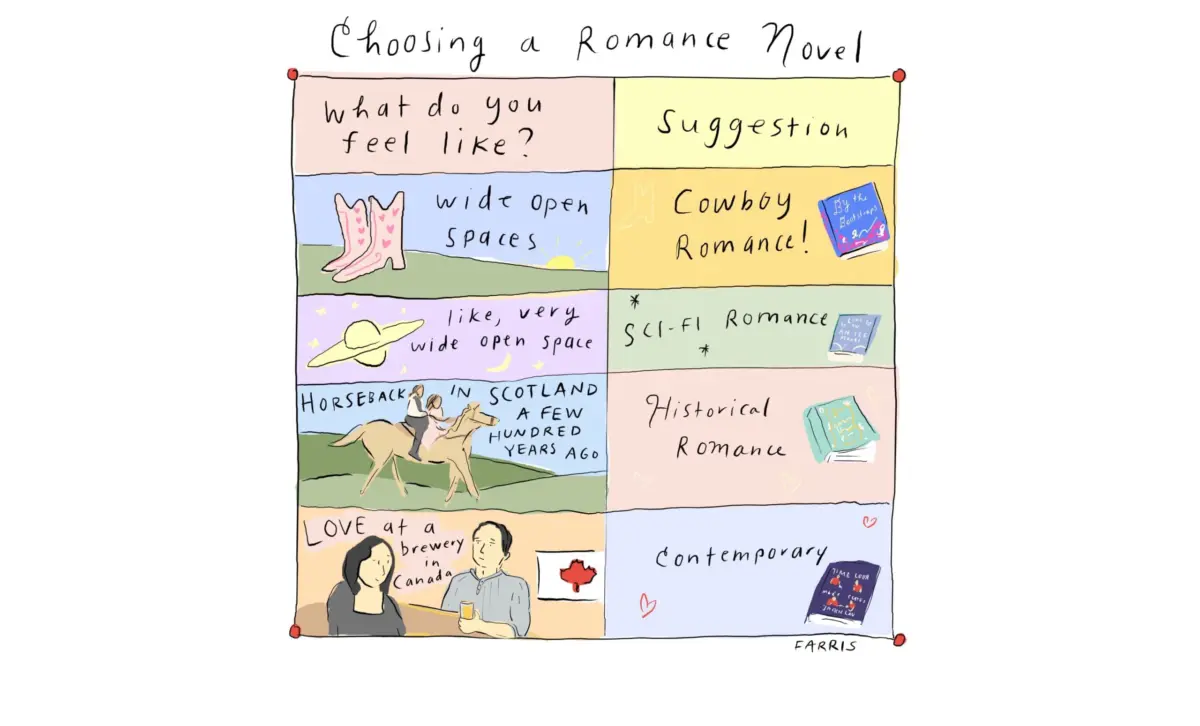
As the thread gained momentum, participants began mapping out the vast landscape of modern romance, breaking the category down into highly specialized niches:
- Small-Town and Contemporary Comfort: Readers gravitated toward atmospheric settings, citing authors like Carley Fortune (Our Perfect Storm), Jessica Peterson (Lucky River Ranch series), and Elsie Silver for their cozy, small-town dynamics.
- The Lit-Fic Crossover: A significant segment of the community sought books bridging the gap between literary fiction and contemporary romance. Discussion participants exchanged titles that married high-level prose with romantic plots, recommending works by Andrew Sean Greer, Emma Straub, and Julia Claiborne Johnson.
- Queer Romance and Emotional Depth: Prompted by personal reading habits tied to fitness routines and daily commutes, readers highlighted witty, character-driven queer romances. Standouts included Casey McQuiston’s Red, White & Royal Blue, TJ Klune’s Boyfriend Material, and Rachel Reid’s hockey romance Role Model.
- Speculative and Non-Traditional Romances: Expanding the boundaries of the genre, contributors introduced niche categories ranging from paranormal and monster/alien romances to magical realism, such as Freya Marske’s The Last Binding Trilogy and Erin Sterling’s Ex Hex series.
Phase Three: Deep Dives and Community Bonding
In its final stages, the thread matured into a vibrant support network. Commenters traded audiobook recommendations narrated by industry giants like Julia Whelan, shared humorous confessions about hiding their romance novel reading habits from library desk crush objects, and debated the exact structural definition of what constitutes a "true" romance novel. By mid-August, the thread had cemented itself as an invaluable, user-generated reading guide for the late-summer publishing season.
Supporting Context & Metrics: The Modern Romance Boom
To understand the weight of these reader recommendations, one must examine the broader economic and cultural metrics currently defining the publishing landscape.
The Financial Engine of Romance
According to industry tracking data from NPD BookScan and trade associations, romance fiction has consistently outpaced nearly every other fiction category in unit sales over the past five years. Driven largely by digital platforms, self-publishing ecosystems, and viral book communities on social media, romance accounts for a multi-billion-dollar slice of the global publishing market.
The engagement seen in online comment threads mirrors these larger macroeconomic trends. Readers are no longer passive consumers; they are active curators. The communal desire for emotional safety—manifested in the non-negotiable HEA—surged in the wake of global sociopolitical stressors, positioning romance novels as essential tools for mental health maintenance and stress mitigation.
Key Titles Dominating the Discourse
The online reading community highlighted several standout titles that are currently driving critical and commercial conversations:
| Title | Author | Sub-Genre / Category | Community Consensus |
|---|---|---|---|
| Our Perfect Storm | Carley Fortune | Contemporary / Summer Romance | "Devoured it; captures cozy seasonal nostalgia perfectly." |
| My Season of Scandal | Julie Anne Long | Historical Romance | "A masterclass in warm friendship turning into intense longing." |
| Into the Blue | Emma Brodie | Literary-Leaning Romance | "Spent 75% of the book with a lump in my throat; brilliant writing." |
| Dolly All the Time | Annabel Monaghan | Contemporary Romance / Humor | "Kept readers up until 4 AM; universally praised for witty banter." |
| The Secret Lives of Country Gentlemen | KJ Charles | Historical / Adventure Romance | "A thrilling blend of found family, revenge, and secret love." |
Official Statements and Reader Testimonies
The qualitative data extracted from the community thread reveals deep psychological and emotional motivations driving contemporary readers. Below are synthesized reflections capturing the sentiment of the discourse:
"Part of the fun of this genre is trusting an author to take you on a wild journey while knowing everything will work out in the end. It’s about emotional safety paired with high-stakes character growth."
— KarenS, Online Community Contributor"I started reading romance to help maintain a running habit—I only let myself listen to page-turners during my miles. It turns out I crave witty banter, emotional intelligence, green-flag dudes who communicate, and capable leads."
— Alissa, Reader & Audiobook Enthusiast"Whether you are looking for contemporary escapes, historical wit, or genre-bending literary crossovers, the modern romance community has built an inclusive, highly sophisticated network of recommendations that outpaces traditional critical gatekeeping."
— Synthesis of Community Responses
Future Outlook: Where the Romance Genre Is Headed
As we look toward the remainder of the decade, the intersection of digital reader communities and traditional publishing will continue to evolve. Several key trajectories are emerging:
1. The Cross-Media Adaptation Wave
With major adaptations of foundational romance and contemporary hits—such as the forthcoming film adaptation of Emily Henry’s Beach Read featuring comedian Tig Notaro—Hollywood has firmly recognized the intellectual property goldmine housed within contemporary romance fiction. Future publishing releases will increasingly be conceptualized with multimedia adaptation in mind from their inception.
2. The Blurring of Literary and Genre Fiction
The demand for "lit-fic with a romance heartbeat"—as requested by community members seeking sophisticated prose paired with emotional payoff—signals a maturing readership. Authors who straddle the line between high literary art and genre satisfaction will likely capture the highest critical acclaim and commercial longevity in the coming years.
3. Decentralized Curation Over Traditional Gatekeeping
The viral success of reader-generated recommendation threads proves that modern consumers trust peer-to-peer validation far more than legacy critical reviews. As algorithms become more saturated, specialized online forums, comment sections, and community-driven book clubs will reign supreme as the primary engines of book discovery.
Conclusion
The vibrant exchange analyzed in this report does more than simply compile a list of good books to read on a summer afternoon; it serves as a testament to the enduring power of shared human emotion. In an increasingly fragmented digital world, readers are finding profound connection, comfort, and joy in the simple act of turning a page—and telling someone else about it.