

Executive Overview
In the modern digital landscape, the intersection of celebrity culture and social media has created a high-stakes arena where public figures are subjected to relentless, microscopic scrutiny. No issue has proven more persistent—or more damaging—than body shaming. From the turquoise waters of an Italian vacation to the red carpets of global award shows, public figures are routinely forced to navigate a relentless barrage of unsolicited critiques regarding their weight, physical appearance, and personal choices.
This report examines the recent waves of digital harassment faced by prominent figures, spearheaded by body-positive model Tess Holliday, who once again found herself targeted by online trolls during an Italian getaway. Rather than retreating from the public eye, Holliday’s response—and those of fellow celebrities like Paris Jackson, Ava Phillippe, Bebe Rexha, and Selena Gomez—illustrates a broader, cultural shift. Celebrities are increasingly abandoning polite silence in favor of aggressive, unapologetic reclamation of their narratives.
By analyzing the mechanics of online harassment, the evolving psychology of celebrity digital boundaries, and the broader societal implications of the body-positivity movement, this feature explores how high-profile figures are rewriting the rules of engagement with internet trolls. Ultimately, this article provides an authoritative look at the modern state of digital discourse, the psychological toll of cyberbullying, and the unified pushback redefining beauty standards across generations.
Detailed Chronology: Anatomy of a Digital Backlash
The Italian Getaway and Tess Holliday’s Defiant Response
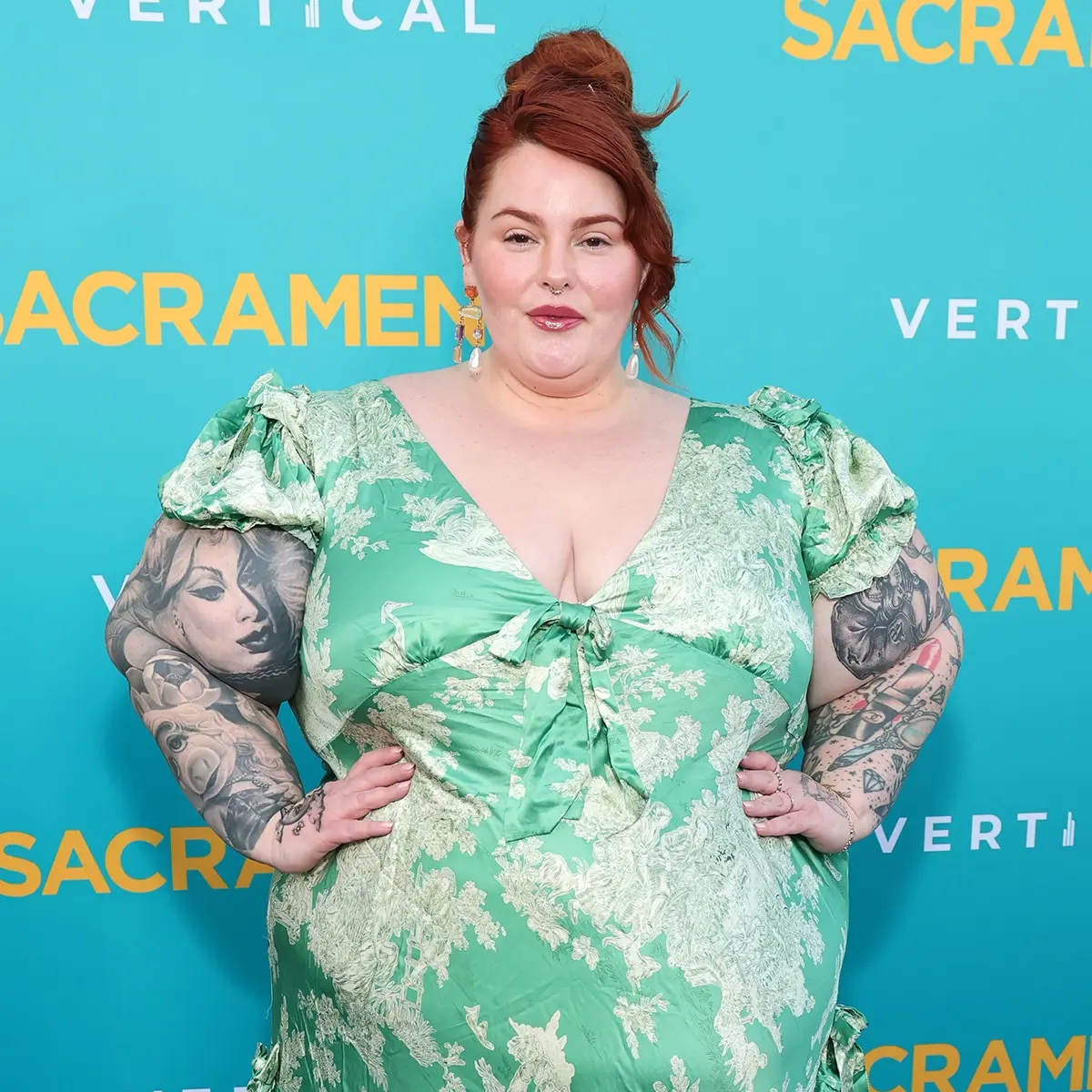
The latest chapter in the ongoing war against body shaming unfolded in August, centering on model, author, and activist Tess Holliday. While enjoying a Mediterranean vacation in Italy, Holliday documented her travels on social media, sharing a vibrant photograph of herself relaxing on a yacht in a bright green bikini.
What should have been a standard travel postcard quickly devolved into a flashpoint for cyberbullying. Trolls descended upon the comment sections, weaponizing Holliday’s size against her, as they have done consistently throughout her career. Rather than deleting the post or issuing a defensive statement—a playbook historically expected of public figures—Holliday chose a strategy of defiant amplification.
On August 21, Holliday uploaded a follow-up image, once again basking on the Italian yacht in her green swimsuit. Her caption was a masterclass in unapologetic resilience: "Another photo of me on a yacht in Italy just because my haters loved it so much. Feeling blessed."
The following day, Holliday expanded on her sentiments via Facebook, addressing the obsession internet critics maintain regarding her physical form: "People have always made my body the most interesting thing about me. I never have. I’m too busy living my life, loving myself, raising my kids, working, laughing, creating, and actually being happy. Maybe if some of you spent a little less time obsessing over the size of my body and a little more time tending to your own lives, you’d be happier too."
A Legacy of Defiance
Holliday’s August response is merely the latest in a decade-long crusade against unrealistic societal expectations. Since launching her modeling career in 2010, Holliday has steadily dismantled industry gatekeepers. In 2018, she founded the viral digital movement #EffYourBeautyStandards, a hashtag that quickly mobilized millions of users worldwide to reject narrow definitions of physical attractiveness.
Her trajectory includes landmark moments such as her 2019 New York Fashion Week debut with the inclusive swimwear brand Chromat, and the publication of her co-authored book, Take Up Space, Y’all, which offers practical guidance on navigating toxic digital landscapes and nurturing self-worth. Throughout her journey, Holliday has maintained a firm philosophical stance: she refuses to participate in the traditional requirement that public figures prove their health metrics to justify their physical size.
As she famously articulated in a 2018 interview with Self magazine: "The reality is I don’t owe you s—t and I don’t have to prove that I’m healthy or not, because it is nobody’s business."
Supporting Context & Metrics: The Broader Landscape of Celebrity Body Shaming
Holliday’s experience is far from an isolated incident; it represents a systemic issue plaguing the digital ecosystem. Across industries—music, film, modeling, and reality television—public figures face a dual-pronged assault: they are simultaneously criticized for being "too large" or "too thin," proving that the objective for internet trolls is not health or wellness, but control and degradation.
A Multi-Generational Battleground
The phenomenon transcends age and pedigree, affecting legacy celebrity offspring and seasoned award-winners alike.
- Ava Phillippe: In May 2024, Ava Phillippe—daughter of Hollywood royalty Reese Witherspoon and Ryan Phillippe—took to TikTok to highlight a depressing milestone in her online life. She revealed that she had received contradictory messages from internet strangers within the exact same timeframe: one accusing her of being "too fat" and suggesting weight-loss drugs, while another accused her of starving herself for being "too thin." Phillippe noted, "No one deserves to be picked apart for what they look like… Your beauty exceeds such superficial measures."
- Bebe Rexha: Pop star Bebe Rexha has repeatedly sparred with online commentators regarding her natural weight fluctuations. After facing a barrage of unsolicited opinions following performances and social media uploads, Rexha posted a blunt reminder to her critics: "Human beings go through weight fluctuations… it’s life and you don’t know what people are going through. Meds, disease, etc."
- Rumer Willis: Actress Rumer Willis faced a wave of aggressive commentary accusing her of looking "too skinny" after posting casual photographs. Willis fired back by highlighting the psychological damage inflicted by unsolicited body judgments, later doubling down with a cheeky, empowering bikini post directed squarely at her detractors.
- Celine Dion & Lizzo: Global icons have similarly drawn boundaries. Legendary vocalist Celine Dion addressed critics of her slender frame by emphasizing that her physique is the result of lifelong dedication to ballet and athletics, noting simply, "You can’t please everybody." Meanwhile, pop sensation Lizzo famously dismantled workout-culture trolls by clarifying that her fitness regimen is designed for her own physical strength and peace of mind, declaring her body type to be "none of your f—king business."
Official Statements and Industry Reflections
The psychological toll of digital harassment has prompted mental health professionals, public relations experts, and the celebrities themselves to demand institutional changes from social media platforms.
Historically, publicists advised clients to maintain a dignified silence in the face of online abuse, operating under the assumption that responding only "fed the trolls." However, contemporary cultural standards favor authenticity, direct confrontation, and boundary-setting. When celebrities like Holliday, Rexha, and Willis call out specific behaviors, they empower everyday social media users—who lack the protective armor of fame—to establish their own digital boundaries.
Furthermore, industry events and fashion houses are slowly being held accountable for exclusionary practices. Bebe Rexha’s high-profile 2019 call-out of designers who refused to dress her for the Grammy Awards due to her size 8 figure sparked a global conversation about size diversity in high fashion. Similarly, Paris Jackson’s recent defense of her body art against critics who claimed her tattoos made her look "dirty" underscores how deeply personal self-expression remains policed by anonymous internet commentators.
As public figures continue to draw a hard line, the consensus among cultural commentators is clear: the burden of reform does not rest on the shoulders of those being harassed, but on the platforms that monetize engagement driven by outrage and abuse.
Future Outlook: Reclaiming the Digital Frontier
As we look toward the future of social media and online culture, the battle lines between toxic digital mobs and empowered public figures have never been clearer. Several key trends are expected to define the coming years:
- Stricter Algorithmic Accountability: Advocacy groups and lawmakers are increasing pressure on social media conglomerates (Meta, TikTok, X) to implement stricter moderation tools that automatically filter or penalize coordinated body-shaming campaigns.
- The Rise of Digital Detoxing: More celebrities are adopting cyclical approaches to social media, stepping away from platforms entirely to safeguard their mental health, thereby reducing the direct access trolls have historically enjoyed.
- Shift in Media Narratives: Traditional and digital media outlets are increasingly pivoting away from publishing clickbait articles that analyze or scrutinize celebrity weight fluctuations, recognizing that participating in these narratives fuels the harassment cycle.
- Permanent Cultural Shift: Movements pioneered by Tess Holliday and her contemporaries have permanently altered the discourse. Younger generations entering the public eye—exemplified by figures like Ava Phillippe—are equipped with a sophisticated vocabulary around bodily autonomy, mental health, and digital hygiene, making them far less susceptible to internalizing online vitriol.
Ultimately, Tess Holliday’s defiant return to the Italian yacht serves as a powerful metaphor for the modern celebrity experience. Trolls may throw stones, but the targeted individuals are no longer ducking; they are standing tall, reclaiming their narratives, and reminding the digital world that their bodies, their art, and their lives belong entirely to themselves.