

Executive Overview
In the ongoing global battle against plastic pollution, polyvinyl chloride (PVC) has long represented one of the toughest obstacles for waste management and recycling facilities. Ubiquitous yet notoriously difficult to reprocess, PVC is found in everything from household plumbing pipes and window frames to vinyl siding and credit cards. Because it contains chlorine atoms and is routinely manufactured with a volatile, highly variable cocktail of chemical plasticizers and additives, traditional mechanical recycling methods often degrade the material rather than renew it. Consequently, millions of tons of PVC accumulate in landfills each year, where it resists natural degradation and poses long-term environmental hazards.
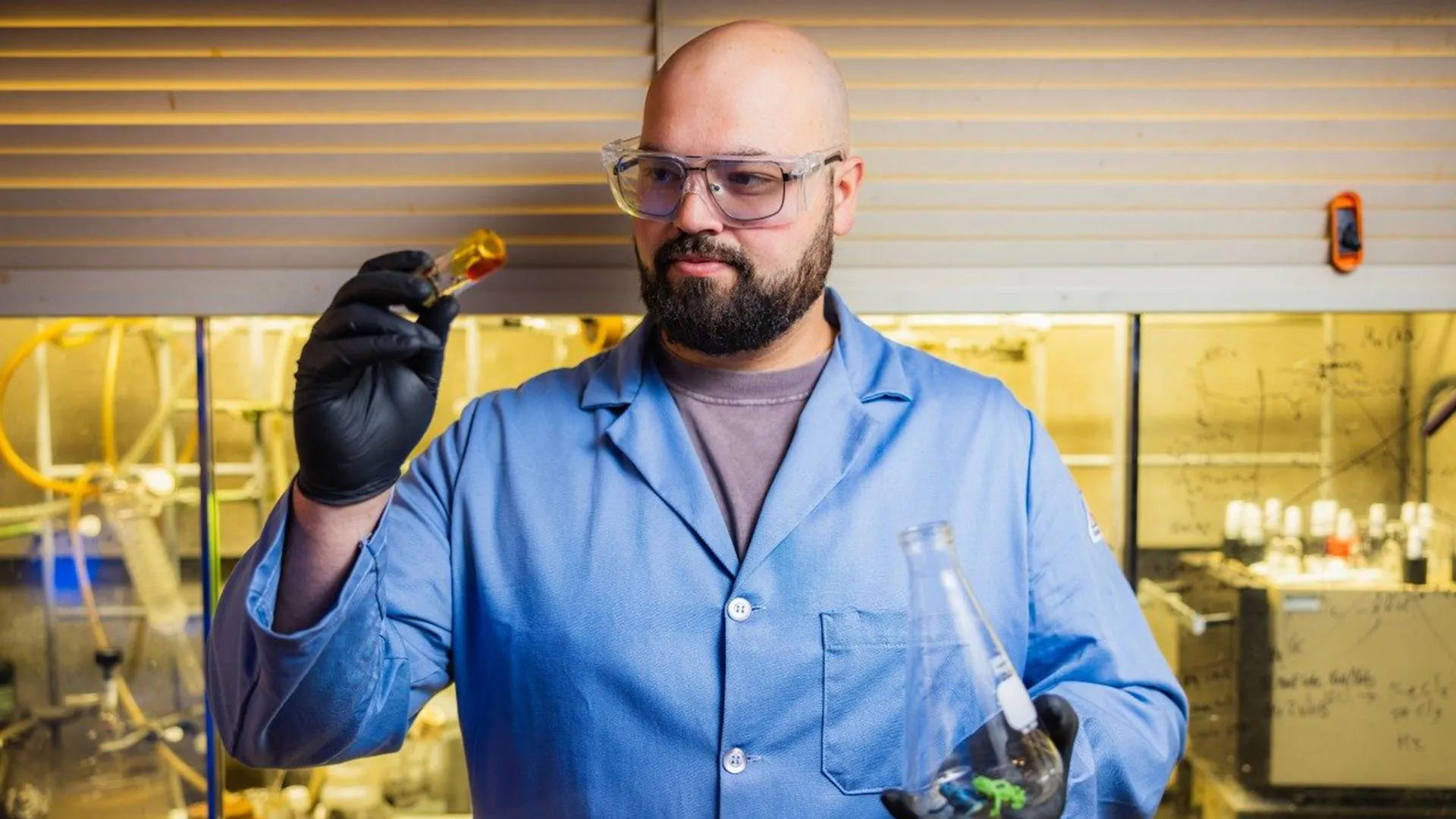
Now, a team of pioneering chemists and chemical engineers at Virginia Tech has unveiled a chemical breakthrough that could fundamentally transform how society handles this recalcitrant polymer. Led by Guoliang "Greg" Liu, an associate professor of chemistry, the research team has successfully developed a catalytic conversion method that upcycles discarded PVC waste directly into polyalphaolefins (PAOs)—the high-value, synthetic hydrocarbon oils that serve as the critical base stock for industrial lubricants, automotive engine oils, and heavy-duty machinery fluids.
Published in the esteemed scientific journal Nature, this milestone discovery offers a dual-pronged solution to two seemingly unrelated industrial crises: the intractable waste stream of chlorine-laden plastics and the carbon-intensive, environmentally costly manufacturing processes required to produce virgin synthetic lubricants. By turning a toxic liability into a high-performance market commodity, Liu and his collaborators have bridged the gap between waste mitigation and sustainable manufacturing.
This in-depth report examines the chronological evolution of the Virginia Tech project, details the underlying chemical processes, highlights the collaborative framework that validated the research, and explores the economic and industrial roadmap required to scale this laboratory innovation into a global commercial reality.
Detailed Chronology: From Lab Bench to Breakthrough
The road to transforming plastic waste into high-performance lubricants was neither linear nor immediate. It required a combination of foundational materials science, opportunistic scientific intuition, and a willingness to completely pivot when initial hypotheses failed.
Building on Plastic Upcycling Precedents
The project did not materialize in a vacuum. It represents the latest chapter in a broader, sustained research initiative led by Liu’s laboratory at Virginia Tech to tackle the world’s most challenging plastic waste streams. Prior to targeting PVC, Liu’s team made international headlines with successful breakthroughs in converting polyethylene and polypropylene—common packaging plastics—into valuable surfactants used in commercial soaps, detergents, and industrial emulsifiers. Those foundational studies, which were published in premier journals such as Science and Nature Sustainability, established the lab’s reputation for moving beyond traditional mechanical recycling and into the realm of chemical upcycling: breaking polymers down at a molecular level and rebuilding them into higher-value products.
Once those initial efforts proved successful, Liu and his colleagues turned their attention to the plastic industry’s ultimate problem child: PVC. "We want to help improve the recycling and upcycling of PVC," Liu noted, setting the stage for an intensive multi-year investigative effort.
To spearhead the day-to-day experimental work, Liu assembled a tight-knit trio of graduate researchers whom he affectionately dubbed "the three musketeers." Eric Munyaneza Nuwayo, a doctoral student in the final stages of his program, was chosen to lead the operational execution of the project. Connor S. Thompson, a chemistry graduate student who had originally been engaged in an entirely different research track, was invited by Liu to pivot toward this new, high-risk challenge—an invitation Thompson readily accepted. They were soon joined by Abby Civiello, a first-year graduate student whose rapid integration into the lab yielded critical experimental contributions during the project’s most demanding phases.
A Gooey Impasse Sparks a Pivot
In the early months of the project, the team relied on a relatively straightforward chemical hypothesis. Because PVC features a carbon backbone studded with chlorine atoms, it is one of the most chemically "activated" forms of polyethylene. The initial premise was simple: strip away or substitute the chlorine atoms and replace them with alternative chemical groups to systematically transform the polymer into entirely new molecular architectures.
However, nature rarely yields to overly simplistic assumptions. The early laboratory trials failed to produce the clean, predictable polymers the team sought. Instead, the chemical transformations yielded materials that were soft, uncomfortably gooey, and structurally deficient—falling far short of the mechanical and thermal performance metrics required for industrial applications.
Rather than abandoning the experiment, Liu recognized a conceptual turning point in the failure. "One day I realized—if this polymer is so gooey and so soft, why don’t I just keep breaking the polymer chains down to smaller segments?" Liu recalled.
That single conceptual shift altered the trajectory of the research. Instead of attempting to preserve or lightly modify the long-chain polymer, the team deliberately began cracking and degrading the PVC chains into much smaller, highly controlled molecular fragments. As they evaluated these shortened hydrocarbon chains, Liu realized they were no longer looking at a failed recycling attempt; they were witnessing the birth of a synthetic lubricant precursor.
The Chemistry of Upcycling: How PVC Becomes Engine Oil
To understand the magnitude of the Virginia Tech discovery, one must examine the chemical hurdles of PVC and the elegance of the newly engineered conversion process.
The PVC Recycling Dilemma
Polyvinyl chloride is the world’s third-most widely produced synthetic plastic polymer. Its chemical structure consists of a repeating carbon-carbon backbone where every other carbon atom is bonded to a chlorine atom. While this structure makes PVC rigid, durable, and resistant to environmental weathering—ideal for construction materials like vinyl siding, window frames, and sewage pipes—it is precisely this chlorine content that makes the plastic a nightmare for recyclers.
When heated during conventional mechanical recycling, PVC tends to degrade thermally, releasing corrosive hydrogen chloride (HCl) gas that can damage recycling machinery and contaminate batches of other plastics, such as polyethylene terephthalate (PET) or high-density polyethylene (HDPE). Furthermore, because PVC requires various plasticizers (such as phthalates) and heat stabilizers (often containing heavy metals like lead or cadmium) to remain pliable, the resulting waste stream is chemically heterogeneous and unpredictable.
The Catalytic Conversion Protocol
The method developed by Liu’s laboratory bypasses the traditional limitations of thermal degradation by executing a controlled chemical transformation in a liquid-phase reaction vessel.
The step-by-grade procedure unfolds as follows:
- Feedstock Preparation: Researchers take post-consumer or industrial PVC waste—comparable to the material found in household plumbing, vinyl flooring, or discarded credit cards.
- Solvent Introduction: The PVC waste is submerged in a specialized solvent designed to swell and dissolve the polymer matrix, making the rigid molecular chains accessible to chemical reagents.
- Catalytic Intervention: Aluminum trichloride ($textAlCl_3$) is introduced into the mixture alongside alpha olefins. Aluminum trichloride acts as a potent Lewis acid catalyst, facilitating the breakdown of the carbon-carbon bonds and driving targeted alkylation and oligomerization reactions.
- Thermal Treatment: The entire mixture is heated to a controlled temperature of approximately 158 degrees Fahrenheit (70 degrees Celsius) for a duration of three hours.
- Extraction and Refining: Following the reaction, the researchers extract a relatively thick, viscous oil from the solvent layer. This refined product functions as a polyalphaolefin (PAO)—a premier synthetic base fluid prized for its exceptional thermal stability, shear resistance, and lubricating properties.
"Number one, we have proved that it is feasible to use plastic waste to make high-performance lubricants. Number two, these lubricants are green, and they can meet the emerging needs for sustainability by the market," Liu emphasized.
Supporting Context & Metrics: Environmental and Industrial Imperatives
To appreciate the broader significance of the Virginia Tech breakthrough, it is necessary to examine the intersecting macroeconomic and environmental metrics surrounding both plastic waste and industrial lubricant consumption.
The Global Plastic Burden
Global plastic production continues to surge, surpassing 400 million metric tons annually. PVC accounts for roughly 10% to 12% of total global plastic production, translating to tens of millions of tons manufactured each year. Because recycling rates for PVC remain abysmal—often hovering below 1% to 2% globally due to the aforementioned chemical contamination issues—the vast majority of PVC products end up in municipal landfills or, worse, natural ecosystems. Unlike organic matter, PVC persists for centuries, gradually fragmenting into microplastics while occasionally leaching toxic additives into surrounding soils and groundwater.
The Silent Giant: The Lubricant Industry
Parallel to the plastic waste crisis is the massive, quiet industrial apparatus required to keep modern machinery moving. Lubricants are indispensable to global civilization. From residential lawn mowers and passenger vehicles to commercial freight trucks, industrial manufacturing robots, wind turbine gearboxes, and commercial jet engines, virtually every mechanical device featuring moving parts relies on synthetic or petroleum-derived oils to reduce friction, dissipate heat, and prevent catastrophic wear.
The global lubricating oils market commands tens of billions of dollars annually, with high-performance synthetic lubricants—specifically polyalphaolefins—commanding premium prices because they outperform traditional mineral oils across extreme temperature ranges. However, producing virgin PAOs traditionally requires petroleum extraction, fractional distillation, and energy-intensive chemical synthesis, carrying a significant carbon footprint.
By routing discarded PVC waste into the production stream, the Virginia Tech process achieves a dual environmental victory:
- Waste Diversion: It captures a historically unrecyclable plastic stream and locks its carbon content into a long-life industrial utility rather than a landfill.
- Offsetting Fossil Extraction: It replaces petroleum-derived feedstocks with recycled waste carbon, reducing the greenhouse gas emissions associated with virgin PAO manufacturing.
Collaborative Framework & Validation
No single academic laboratory can transition a discovery from a benchtop flask to a globally viable industrial process on its own. Recognizing this, Professor Liu deliberately built a multidisciplinary coalition of external experts to rigorously test, compute, and economically model the PVC-derived lubricant.
Empirical Validation at Texas A&M
To verify that the thick oil extracted from the PVC solvent mixture genuinely possessed the tribological properties required of a true lubricant, Liu partnered with tribology expert Ali Erdemir and his research team at Texas A&M University. Erdemir’s laboratory subjected the Virginia Tech samples to rigorous friction, wear, and load-bearing evaluations. The results confirmed that the upcycled oil performed on par with—and in some cases exceeded—commercial-grade synthetic base stocks, proving that the chemical architecture derived from waste plastic could withstand extreme mechanical stress.
Molecular Modeling at Caltech
To understand why the catalytic reaction yielded such high-performing molecules, Liu collaborated with computational chemistry pioneer William Goddard at the California Institute of Technology (Caltech). Goddard’s team utilized advanced chemical computations and molecular dynamics simulations to map out the exact pathways by which aluminum trichloride breaks down PVC chains and oligomerizes them into stable polyalphaolefin structures. This theoretical framework provides the mechanistic blueprint needed to fine-tune and optimize the reaction yield.
Techno-Economic Analysis at Virginia Tech
A green technology is only as viable as its balance sheet. To determine whether the process could be scaled economically, Liu enlisted the expertise of his Virginia Tech colleague Xi Chen. Chen conducted a comprehensive techno-economic and production analysis, formulating mathematical models to evaluate capital expenditures, energy inputs, and scaling logistics should a commercial facility attempt to manufacture the oil on an industrial scale.
Official Statements and Industry Perspective
The publication of the findings in Nature has drawn widespread attention from materials scientists, environmental advocates, and chemical engineering firms seeking actionable circular economy solutions.
Reflecting on the collaborative spirit that drove the project, Guoliang Liu praised his student-led research team:
"I often called them the three musketeers. Eric, Connor, and Abby brought tireless dedication and creative problem-solving to every phase of this investigation. What began as a theoretical hunch evolved into a tangible chemical reality because of their tenacity."
Emphasizing the hidden yet omnipresent nature of the market they are seeking to disrupt, Liu noted the cultural invisibility of the lubricant sector:
"Lubricants are the silent hero out there. We often don’t recognize they exist, but they are out there working quietly behind the scenes of modern life. We want to be able to produce this oil on a larger scale to reach more people in the world and demonstrate that circular manufacturing is not just an ideal, but an operational reality."
Industry analysts point out that if the Virginia Tech method can be successfully licensed and scaled, it could fundamentally alter the economics of plastic waste management. Waste-to-chemical operations could theoretically charge tipping fees to accept problematic PVC waste from demolition sites and plumbing manufacturers, and subsequently monetize the output as high-margin industrial lubricants—turning a historical loss-leader into a profitable enterprise.
Future Outlook: Scaling the Circular Economy
While the laboratory results published in Nature represent a monumental scientific achievement, the journey from a 500-milliliter round-bottom flask in a Blacksburg laboratory to a multi-ton commercial refinery is fraught with standard industrial scaling challenges.
Immediate Research Objectives
Moving forward, Liu’s laboratory, in coordination with their institutional partners, has outlined several critical research and development milestones:
- Catalyst Recovery and Regeneration: To maximize the "green" credentials of the process and minimize operational expenditures, the team is working on methods to efficiently recover, clean, and reuse the aluminum trichloride catalyst across multiple reaction cycles.
- Feedstock Tolerance: While the initial trials utilized clean, virgin PVC model compounds and selected post-consumer samples, future testing must determine how the catalytic process handles heavily weathered, additive-laden post-consumer PVC waste, such as degraded window frames or plasticized cables containing complex filler materials.
- Pilot-Scale Reactor Testing: Transitioning from bench-scale glassware to continuous-flow pilot reactors is the next logical step for evaluating heat transfer dynamics, fluid mixing efficiencies, and byproduct management under continuous industrial conditions.
The Broader Horizon
The success of transforming PVC into engine oil signals a profound philosophical shift in modern chemistry. For decades, synthetic polymers were designed for permanence, with little regard for their eventual post-consumer fate. By proving that even the most stubborn, chlorine-locked plastics can be systematically disassembled and re-engineered into high-value industrial fluids, the Virginia Tech research team has opened a new frontier in chemical upcycling.
As regulatory pressures mount on corporations to adopt circular economy mandates—and as consumers increasingly demand sustainably sourced automotive and industrial supplies—innovations like Liu’s PVC-to-lubricant pathway offer a beacon of hope. They demonstrate that trash and treasure are not fixed states of matter, but temporary conditions waiting for the right catalyst to bridge the gap.
