

Executive Overview
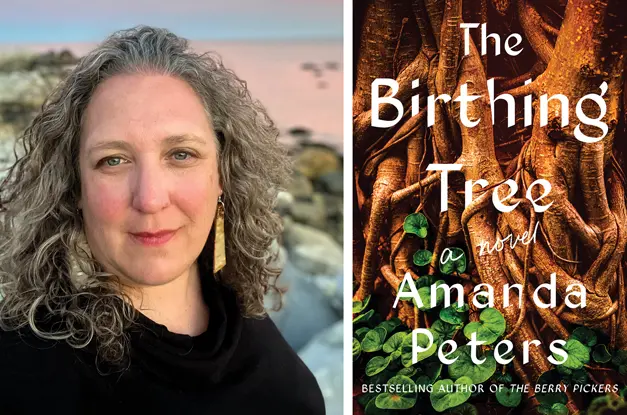
In late 2023, Amanda Peters emerged as one of North America’s most compelling literary voices. Her debut novel, The Berry Pickers, swept major literary accolades, captured international best-seller lists, and established the Nova Scotia-born author as a master of themes surrounding identity, loss, and the enduring resilience of Indigenous families. Following the release of her 2024 short story collection, Waiting for the Long Night Moon, Peters returns with her highly anticipated second novel, The Birthing Tree (Catapult).
Set for release this September, The Birthing Tree grapples with the historical suppression of Mi’kmaq maternal health practices and the institutionalization of Indigenous birth in Canada between the mid-1960s and the late 1990s. Grounded in a poignant, real-life memory involving Peters’ grandmother, the narrative uses the vehicle of fiction to bridge real-world gaps in Indigenous historical record.
This investigative literary report examines Peters’ career trajectory, the socio-historical realities underpinning her latest work, the psychological weight of writing a sophomore novel following sudden global acclaim, and the broader movement of First Nations literature restoring stolen heritage.
Detailed Chronology: From the Annapolis Valley to Global Acclaim
+-----------------------------------------------------------------------------------+
| CHRONOLOGY OF AMANDA PETERS' LIFE & LITERARY MILESTONES                           |
+-----------------------------------------------------------------------------------+
| Early Years        | Born and raised in Nova Scotia's Annapolis Valley; struggles |
|                    | with literacy until 6th grade before discovering BSC & classics.|
+-----------------------------------------------------------------------------------+
| Early Adult Years  | Age 19-20: Grandmother with dementia reveals a mysterious memory |
|                    | of a "birthing tree."                                        |
+-----------------------------------------------------------------------------------+
| Academic/Work Era  | Earns four Master's degrees; works abroad (UK, Japan, South  |
|                    | Korea) and in First Nations public administration.           |
+-----------------------------------------------------------------------------------+
| 2011               | Returns home to Annapolis Valley; begins writing local fiction.|
+-----------------------------------------------------------------------------------+
| 2023               | Debuts novel *The Berry Pickers*; wins B&N Discover Prize and|
|                    | Andrew Carnegie Medal for Excellence in Fiction.              |
+-----------------------------------------------------------------------------------+
| 2024               | Publishes story collection *Waiting for the Long Night Moon*.|
+-----------------------------------------------------------------------------------+
| September 2026     | Publication of *The Birthing Tree* by Catapult.              |
+-----------------------------------------------------------------------------------+
Early Life and Literacy Challenges
Growing up mixed-race in a working-class household in Nova Scotia’s Annapolis Valley, Peters’ early path to literature was far from traditional. Raised across a close-knit extended family—her parents separated early but maintained strong ties, giving her 18 aunts and uncles—Peters faced significant literacy hurdles during her primary education.
She struggled to read until the sixth grade, when the social momentum surrounding Ann M. Martin’s The Baby-Sitters Club series motivated her to catch up to her peers. She quickly advanced from juvenile mystery novels like Nancy Drew to adult thrillers by Sidney Sheldon and John Saul, eventually finding a permanent call toward literary fiction through John Steinbeck’s Of Mice and Men.
The Pragmatic Academic Path
Recognizing the economic precarity of her upbringing, Peters initially prioritized financial security over artistic pursuits. She completed degrees across multiple disciplines, eventually holding four master’s degrees:
- Master of Arts in Political Science
- Master of Public Administration
- Master of Information Management
- Master of Fine Arts in Creative Writing (University of New Mexico)
This multidisciplinary background equipped her with administrative and research capabilities, leading to a career in First Nations public administration and government services. Between academic stints, Peters spent years teaching English internationally across the United Kingdom, Japan, and South Korea, before returning permanently to the Annapolis Valley in 2011.
The Spark of Inspiration
Two pivotal events shaped Peters’ literary trajectory:
- The Berry Pickers Narrative: Encouraged by her father to explore his youth as a seasonal laborer in the blueberry fields of Maine, Peters traveled with him to Portland. That trip ignited the concept for her debut novel, The Berry Pickers, which explored the decades-long ripple effects of a four-year-old Mi’kmaq girl’s abduction.
- The Birthing Tree Fragment: When Peters was around 19 or 20 years old, her paternal grandmother—a Mi’kmaq woman suffering from dementia—looked out a window toward the edge of her property and stated offhandedly: "That’s where we used to give birth." When Peters inquired among family members about the tree’s significance, she was met with silence or evasive responses.
Years later, while interning for the Nova Scotia Department of Health and Wellness, Peters collaborated closely with Indigenous midwives. The professional experience reawakened her grandmother’s forgotten remark, providing the structural foundation for her sophomore novel.
Supporting Context & Metrics: Literary Footprint and Socio-Historical Context
Commercial and Critical Impact of The Berry Pickers
When Peters submitted the draft of The Berry Pickers under the representation of literary agent Marilyn Biderman at Transatlantic Agency, her expectations were modest. However, the novel became an international sensation.
+-----------------------------------------------------------------------------------+
| "THE BERRY PICKERS" METRICS & RECOGNITION                                         |
+-----------------------------------------------------------------------------------+
| Global Translations   | 25 Languages                                             |
+-----------------------------------------------------------------------------------+
| Major Awards Won      | • Barnes & Noble Discover Prize (Pre-us Launch)           |
|                       | • Andrew Carnegie Medal for Excellence in Fiction         |
+-----------------------------------------------------------------------------------+
| Geographical Scope    | Distributed across North America, Europe, Asia, and Latin |
|                       | America                                                   |
+-----------------------------------------------------------------------------------+
Socio-Historical Context: The Eradication of Traditional Indigenous Midwifery
The Birthing Tree addresses a documented yet frequently overlooked chapter in North American medical history: the systematically driven eradication of traditional Indigenous birthing practices during the mid-to-late 20th century.
+-----------------------------------------------------------------------------------+
| ERA & POLICY SHIFTS IN INDIGENOUS MATERNAL HEALTHCARE (CANADA, 1960s–1990s)        |
+-----------------------------------------------------------------------------------+
| Mid-1960s      | Accelerated government push to medicalize and centralize birth;  |
|                | regional hospital transfers become mandatory for Indigenous mothers.|
+-----------------------------------------------------------------------------------+
| 1970s–1980s    | Criminalization/disincentivization of traditional midwifery;      |
|                | displacement of community-based birthing customs and sacred sites.|
+-----------------------------------------------------------------------------------+
| Late 1990s     | Emergence of grassroots Indigenous reclamation movements;        |
|                | policy shifts advocating for community-centered maternal care.    |
+-----------------------------------------------------------------------------------+
Between 1960 and 1990, federal and provincial health policies across Canada increasingly mandated that pregnant Indigenous women leave their home reserves to give birth in distant, centralized hospitals. This process severed generational lines of maternal knowledge, effectively criminalizing or marginalizing the traditional Mi’kmaq midwives (kiju’nujij) who had facilitated births safely within community environments for centuries.
By centralizing delivery within state systems, federal authorities suppressed localized rituals and severed spiritual connections to specific physical geography—such as the sacred birthing trees that served as community sanctuaries.
Official Statements & Critical Analysis
The Psychological Weight of the Sophomore Effort
Speaking via video conference from her home in the Annapolis Valley, Peters addressed the anxiety that accompanied her sudden elevation to global literary prominence.
"The pressure has been horrifying. I spent a lot of time in my head, wondering if people would like this or that part of the new book. It stymied the story, and eventually, I had to just say, ‘If The Berry Pickers didn’t exist, how would you write this novel?’ I’m still terrified that people are going to absolutely hate it. But I’m hoping they don’t."
— Amanda Peters
Peters noted that her focus remains grounded in family and home life, prioritizing her identity as an aunt and caretaker over public notoriety. "My favorite title is auntie, and then maybe dog mom," Peters remarked. "Author comes last."
Historical Absence and Identity
Peters elaborated on the core themes that unite her body of work—specifically how systemic colonization alters personal memory and community record:
"My editor says I’m always going to write about identity. In Indigenous communities, there are a lot of gaps: gaps in our history, gaps in our stories. Colonization has not done well for us. Maybe, in my work, I’m unconsciously reflecting those gaps."
— Amanda Peters
The Narrative Mechanics of The Birthing Tree
In The Birthing Tree, the protagonist, Aliet—a half-Mi’kmaq woman—navigates grief, displacement, and return. Raised by her grandmother in the Annapolis Valley, Aliet flees to Halifax as a teenager following family tragedy, spending two and a half decades away before returning in her 40s to confront the past.
To address the historical silence surrounding her grandmother’s original story, Peters granted the book’s titular tree an explicit narrative voice, structuring several chapter openings around observations from the tree itself.
"I liked the idea of the tree as this caretaker of her people, and collector of their stories who stores them in the rings of her base."
— Amanda Peters
This literary choice is exemplified in a scene late in the novel, where Aliet constructs a protective fence around the tree after official channels refuse to recognize it as a historical site:
"I finally understood all the loneliness, the grief, the anger that had led me to this moment, to this tree, to this thing I was meant to do. I looked up into the branches, grey against a grey sky, leafless and resilient against weather and the ignorance of humans, and I smiled. ‘I hear you,’ I said."
— Excerpt from The Birthing Tree, by Amanda Peters
Future Outlook: Reclaiming Indigenous Narratives
The publication of The Birthing Tree represents a broader movement within contemporary North American literature: the active reclamation of First Nations histories through creative fiction. Where academic texts and government archives often record loss, writers like Amanda Peters utilize imaginative storytelling to reconstruct lost lineage, elevate suppressed healthcare customs, and offer emotional closure to intergenerational trauma.
Anticipated Impact and Trajectory
- Curricular and Historical Integration: Much like The Berry Pickers, which has been incorporated into academic syllabi globally, The Birthing Tree is expected to provoke policy discussions regarding Indigenous maternal care and birth sovereignty across Canada and the United States.
- Expansion of Mi’kmaq Literary Voices: Peters’ continued critical success opens doors for upcoming First Nations writers who seek to explore regional, community-specific histories without catering to mainstream colonial narratives.
- Sustained Artistic Evolution: Despite the mounting expectations of publishers and international audiences, Peters’ commitment to localized, deep-rooted regional narratives positions her as an enduring figure in contemporary Canadian and Indigenous literature.
Through The Birthing Tree, Amanda Peters does not merely document historical loss; she constructs an enduring monument to resilience—ensuring that the stories stored within the rings of the past continue to speak to future generations.
