


Executive Overview
Artificial intelligence is no longer an emerging novelty; it has firmly entrenched itself as the baseline operating system of the modern digital economy. For freelance writers, the strategic calculus has shifted dramatically. Those attempting to out-write or ignore advanced large language models (LLMs) are finding themselves trapped in an unsustainable cycle of overwork, while content creators who lean on AI indiscriminately are producing a sea of homogenized, instantly recognizable mediocrity that clients actively reject.
Yet, a thriving middle ground exists. The most successful freelance writers today are utilizing artificial intelligence not as an outsourced ghostwriter, but as an elite administrative, research, and ideation assistant. By delegating the mechanical friction of the writing process—such as overcoming the blank page, organizing structural outlines, mining transcripts, and tracking pipeline metrics—these professionals free up cognitive bandwidth to focus on what clients actually pay top dollar for: deep critical thinking, original reporting, proprietary expertise, and genuine human relationships. This report examines ten strategic workflows that empower freelance writers to leverage AI for maximum efficiency while safeguarding the unique perspective that makes their work indispensable.
Detailed Chronology & Industry Evolution
To understand where freelance writing stands today, one must trace the rapid evolution of generative AI within the creator economy over the past few years:
- Phase 1: The Novelty Wave (Early ChatGPT Era). Writers initially viewed AI with a mix of existential dread and simplistic experimentation. Many treated LLMs as turnkey essay-writing machines, flooding the market with low-effort, poorly sourced prose. Clients quickly developed a keen eye for generic AI tropes, leading to a widespread backlash against unedited machine-generated content.
- Phase 2: The Standardization and Specialization Era. As tools matured—incorporating web-search integrations (like Perplexity), advanced context windows (like Claude), and real-time audio transcription (like Otter.ai)—freelancers realized that whole-cloth content generation was a dead end. Instead, successful practitioners began atomizing the writing workflow, deploying AI strictly for isolated micro-tasks.
- Phase 3: The Operational Integration Era (Current State). Today, advanced freelancers treat AI as an integrated workflow partner. Beyond drafting assistance, tools are now embedded into back-office operations, CRM tracking, interview analysis, and multi-channel content repurposing. The focus has decisively shifted from what AI can write to how AI can streamline the business of freelancing without diluting human authority.
Supporting Context & Metrics: The 10 Pillars of AI-Enhanced Freelancing
Maximizing the utility of artificial intelligence requires systemic discipline. Below are ten proven use cases where AI dramatically accelerates a writer’s productivity without replacing core creative competencies.
1. Beating the Blank Page Syndrome
The psychological barrier of the blinking cursor has derailed countless writing projects. Knowing a topic inside and out does not automatically translate to knowing how to execute the first sentence.
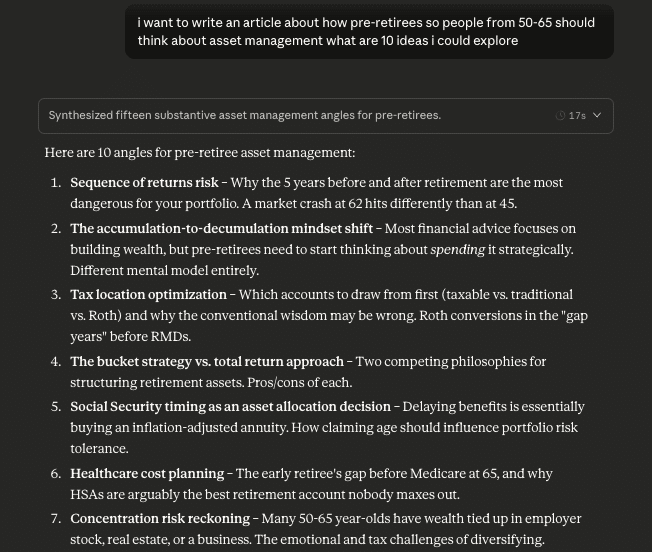
- The AI Workflow: Feed platforms like ChatGPT or Claude a prompt requesting ten disparate angles or opening hooks for a specific topic.
- The Strategic Value: The goal is not to accept the output verbatim, but to break cognitive paralysis. Reviewing a flawed or unexpected set of suggestions kickstarts lateral thinking, providing immediate traction against writer’s block.
2. Architectural Outlining
Structural integrity separates professional journalism from messy stream-of-consciousness blogging.

- The AI Workflow: Input a topic alongside raw notes regarding target audience, primary objectives, and supporting data points. Ask the AI to propose a logical hierarchy of subheadings and thematic sections.
- The Strategic Value: This operationalizes an intake process that rapidly surfaces angles, counter-arguments, or organizational flows that might have otherwise gone unconsidered, drastically cutting down initial planning time.
3. Advanced Research Triangulation
Freelance assignments demand exhaustive reviews of reports, academic papers, and dense industry analyses.
- The AI Workflow: Leverage dedicated search-augmented engines like Perplexity Pro to scan current web data, extract key statistics, and summarize lengthy source material with verified citations.
- The Strategic Value: This functions as an elite preliminary research assistant. It allows writers to triage documents in minutes—verifying dates, tracking down primary sources, and discarding outdated or irrelevant information before deep reading begins.
4. Drafting Outbound Letters of Introduction (LOIs)
Client acquisition relies heavily on consistent cold outreach, yet drafting repetitive introductory emails drains creative energy.
- The AI Workflow: Prompt an LLM to generate multiple variations of a cold pitch tailored to a specific marketing agency or corporate communications team.
- The Strategic Value: AI provides a structural framework (saving 70% to 80% of initial typing time). However, human intervention remains mandatory for the final 20%: adding hyper-personalized context, such as a company’s recent award, newly published study, or public milestone, which immediately distinguishes the outreach from automated spam.
5. Hook and Headline Optimization
An exceptional article remains unread if its headline fails to capture attention in saturated digital ecosystems.
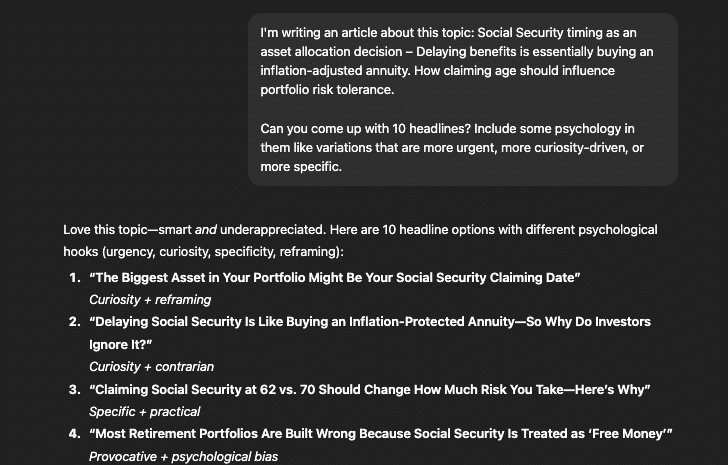
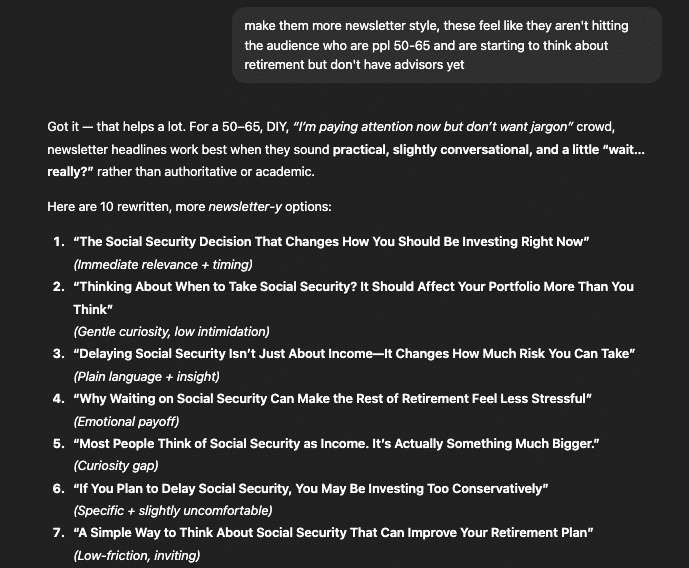
- The AI Workflow: Ask an AI model to generate ten distinct headline variants tailored to specific psychological triggers—such as high curiosity, urgency, or extreme specificity—or use it to punch up an existing draft.
- The Strategic Value: Generating a high volume of headline options prevents writers from settling on the first mediocre idea that comes to mind. Often, combining fragments of two or three AI-generated suggestions unlocks the optimal title.
6. Automated Proofreading and Editorial Roleplay
Human eyes are notoriously poor editors of their own writing, frequently filling in gaps with what the brain intended to write rather than what is actually on the page.
- The AI Workflow: Paste completed drafts into advanced grammar assistants (such as Grammarly) or conversational LLMs configured to roleplay as strict developmental editors or target audience members.
- The Strategic Value: This provides an objective diagnostic layer. Asking the AI to flag wordiness, convoluted phrasing, or logical gaps offers a vital second set of eyes before a piece goes to a human client.
7. Scalable Content Repurposing
Producing a comprehensive 1,500-word feature article represents only the heavy lifting; promoting it across social channels, newsletters, and micro-blogging sites requires an entirely different format.
- The AI Workflow: Input a finalized long-form piece into Claude or ChatGPT with precise parameters: "Extract five distinct data-driven hooks for LinkedIn, and outline three newsletter snippets emphasizing alternative angles."
- The Strategic Value: This maximizes the return on investment for primary research. Writers can instantly multiply their digital footprint, generating a multi-week promotional campaign from a single piece of core content while refining skills that can subsequently be sold to clients as an upsell service.
8. Expert Interview Preparation
Conducting high-impact Subject Matter Expert (SME) interviews requires sharp, sophisticated questioning.

- The AI Workflow: Brief the AI on the interviewee’s background, corporate context, and the core thesis of the article. Request ten probing, highly specific questions designed to extract actionable insights rather than canned corporate answers.
- The Strategic Value: This rapidly brings the writer up to speed in unfamiliar industries, ensuring they do not waste valuable interview time on basic foundational queries that could have been resolved via a standard search engine.
9. Streamlining Transcript Analysis
Post-interview workflows often leave writers staring at sprawling, unformatted transcripts generated by tools like Otter.ai.
- The AI Workflow: Utilize the native chat functionalities within modern transcription platforms or upload transcript files to an LLM to isolate specific quotes, map out thematic clusters, or summarize complex technical explanations.
- The Strategic Value: Instead of manually scrubbing a one-hour transcript three times to locate a single data point on regulatory compliance, writers can instantly retrieve exact segments—provided every extracted quote is rigorously cross-referenced against original audio prior to publication.
10. Pipeline and Marketing Analytics
Maintaining consistent client acquisition often falls apart due to the friction of updating manual spreadsheets.
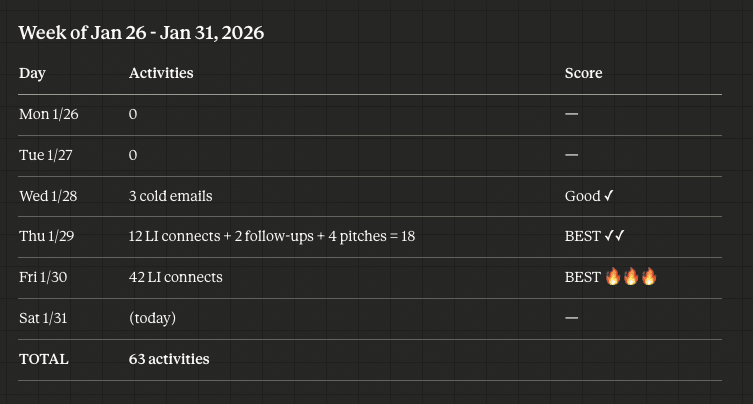
- The AI Workflow: Use conversational data-tracking systems (such as Claude Cowork) to log outreach efforts—recording dates, contact names, outreach channels, and response statuses in a conversational format. Periodically request executive summaries and monthly performance scorecards.
- The Strategic Value: Over time, these conversational analytics reveal critical operational metrics (e.g., precise conversion rates on cold emails versus LinkedIn outreach). Gamifying this data review sustains motivation and transforms marketing from an administrative chore into a data-driven science.
Official Guidelines: What NOT to Do with AI
To maintain professional integrity and client trust, freelance writers must draw a hard boundary against misuse. Industry standards dictate several absolute restrictions:
- Never Outsource Core Critical Thinking: If an assignment requires original analysis, nuanced synthesis, or deep investigative reporting, handing the intellectual heavy lifting to an LLM results in hollow, commoditized text.
- Never Skip Source Verification: Relying blindly on AI-generated statistics or unverified transcript quotes invites factual errors that destroy professional credibility.
- Never Submit Raw, Unedited Output: Passing off unpolished machine-generated copy to paying clients is a direct breach of contract that signals a lack of professional craftsmanship.
Future Outlook
The trajectory of the freelance writing industry is clear: artificial intelligence will continue to absorb administrative drag, data aggregation, and structural formatting. Writers who refuse to adapt will find themselves outpaced by competitors operating at ten times their speed. Conversely, those who master AI as a foundational force multiplier will elevate their strategic value.
By offloading the tedious mechanics of the trade, modern freelancers can dedicate their finite cognitive energy to the irreplaceable human elements of the profession—original insights, empathetic interviewing, robust relationship-building, and uncompromised creative voice. The future belongs not to the artificial intellect, but to the augmented professional who commands it.
