

Executive Overview
For decades, popular self-help literature has focused extensively on the setting of grand goals: losing fifty pounds, writing a novel, or doubling one’s income. Yet, as behavioral scientists and millions of readers have discovered through James Clear’s groundbreaking bestseller, Atomic Habits, the true catalyst for sustained personal change is not the magnitude of the objective, but the architecture of the system behind it.
Rather than relying on fleeting bursts of willpower, true transformation is the byproduct of compounding micro-habits—small, seemingly insignificant adjustments that accumulate into remarkable results over time. But how do these abstract frameworks translate into the chaotic reality of daily life?
To answer this question, this report examines a curated collection of thirty real-world case studies submitted directly by readers of Atomic Habits. These vignettes serve as a macroscopic lens into human psychology, illustrating how ordinary individuals have deployed identity shifts, environmental design, habit stacking, and behavioral substitution to conquer addiction, enhance productivity, and completely rewrite their daily routines.
Detailed Chronology and Categorical Breakdown of Behavioral Interventions
To understand how behavioral modifications take root, it is essential to examine the chronological evolution of a habit. The following case studies, categorized by the core psychological levers identified in Atomic Habits, trace the trajectory of how readers translated theoretical frameworks into actionable, lifelong systems.
1. Identity-Based Habits: Rewiring the Self-Image
The foundational thesis of modern behavioral design posits that lasting change starts from the inside out. Rather than focusing on what one wishes to achieve, individuals must focus on the type of person they wish to become.
- The Paradigm Shift in Nutrition: A reader named Roland struggled for years with yo-yo dieting, repeatedly failing when attempting to restrict junk food. The breakthrough occurred when he abandoned outcome-based goals ("I want to stop eating bad food") in favor of an identity-based declaration: "I am someone that eats healthy and lives a healthy life." By anchoring his daily decisions to this new self-concept, the friction of choosing nutritious foods dissolved into natural behavior.
- The Linguistics of Smoking Cessation: Quitting nicotine is notoriously difficult due to the psychological burden of sacrifice. Robert, another reader, restructured his cognitive framing by shifting from "I can’t smoke" to "I don’t smoke." This semantic adjustment transformed a perceived loss of pleasure into an active investment in his future well-being, eliminating the feeling of deprivation.
- Monetizing Identity Reinforcement: Taking identity formation a step further, one reader combined a mindset shift with external reinforcement. Adopting the mantra, "I am no longer a drinker," they established a reward system: placing $10 into a dedicated fund for clothing and household items after every successful sober day. Over time, the internal identity took hold, the financial rewards became obsolete, and the individual achieved six years of continuous sobriety.
2. Cue Management and Visual Triggers
Human behavior is rarely driven by internal discipline alone; it is persistently solicited by environmental cues. Readers demonstrated immense success by intentionally augmenting positive cues while systematically eradicating negative ones.
- Engineering an Intellectual Environment: To combat reading inertia, a reader named Lisa instituted a pipeline strategy: she maintained 20 to 30 library books on continuous hold. This reduced browsing friction and leveraged strict three-week deadlines to propel her reading volume forward.
- Hydration Architecture: Heather utilized strategic placement and aesthetic appeal to increase water intake. By pouring water into an aqua-colored bottle—her favorite hue—and placing it directly on her nightstand, she engineered an inescapable visual cue upon waking.
- Eliminating Triggers: Conversely, Max recognized that his e-cigarette usage was inextricably bound to his morning coffee ritual. By eliminating both triggers simultaneously, he severed the associative loop that prompted the craving.
3. Habit Stacking: Anchoring the New to the Old
Popularized by Stanford professor B.J. Fogg, habit stacking (or anchoring) allows individuals to leverage existing routines as launching pads for new behaviors.
- Immersive Language Acquisition: Relocating to China, one reader committed to speaking Mandarin to taxi drivers during every cab ride—averaging five times a day. By anchoring language practice to an inevitable daily transit routine over a two-year period, they achieved complete fluency.
- The Keystone Habit of Mindfulness: David utilized a foundational morning routine to introduce a mental health habit, meditating for twenty minutes immediately after brushing his teeth.
4. Environmental Design: Increasing and Decreasing Friction
Our physical and digital surroundings constantly dictate our choices through what behavioral architects call choice architecture. By deliberately manipulating this architecture, readers successfully locked out bad habits while paving wide paths for good ones.
- Physical Friction as a Shield Against Relapse: Cyd neutralized her family’s weakness for Pringles by introducing severe physical friction: the snacks were relocated to a locked car parked in the cold. The barrier of retrieval proved sufficient to curb midnight snacking.
- Digital Minimalism: Viet harnessed human laziness to combat social media addiction. By deleting the Facebook app and forcing himself to access the platform via a mobile browser with manual login credentials, the marginal increase in effort was enough to break the loop. Hardware-level intervention was deployed by Rahul, who physically removed his computer’s graphics card to curb a severe video game addiction.
- Reducing Friction for Positive Outcomes: Natalie eliminated laundry clutter by placing a small basket directly beside her bedroom door, dropping the number of steps required to store stray socks to near zero. Similarly, Justin joined a CrossFit gym less than a mile from his house, eliminating travel excuses and cementing a workout frequency of eight to ten sessions per week.
5. Habit Substitution and Mindset Hacks
When a habit loop is deeply ingrained, trying to erase it entirely often leads to failure. Successful transformers instead intercept the routine phase of the loop, substituting destructive behaviors with constructive ones.
- The Backyard Weight Bench: To break a smoking habit tied to his backyard environment, one reader installed a weight bench outdoors. Every nicotine craving was met with a set of weightlifting repetitions, simultaneously building muscle and extinguishing the craving.
- Gradual Weaning (The Stair-Step Method): Mark and Marc both tackled heavy alcohol consumption through methodical substitution. Mark replaced beer with flavored sparkling water, while Marc transitioned through a nine-month sequence of fruit juice, iced tea, and seltzer water, reducing his intake by one drink per week until cravings vanished entirely.
- Cognitive Reframing: Caelan overcame smoking cravings by refusing to quit "for good." Instead, he postponed his cheat days progressively further into the future, transforming the binary choice of "now versus never" into a manageable "now versus later."
Supporting Context & Metrics: The Mechanics of Compounding Behavior
To contextualize these qualitative case studies, it is critical to analyze the mathematical and psychological principles governing habit formation.
[Cue] ---> [Craving] ---> [Response] ---> [Reward]
  ^                                         |
  |-----------------------------------------|
          (The Habit Loop Feedback)
The Mathematics of Marginal Gains
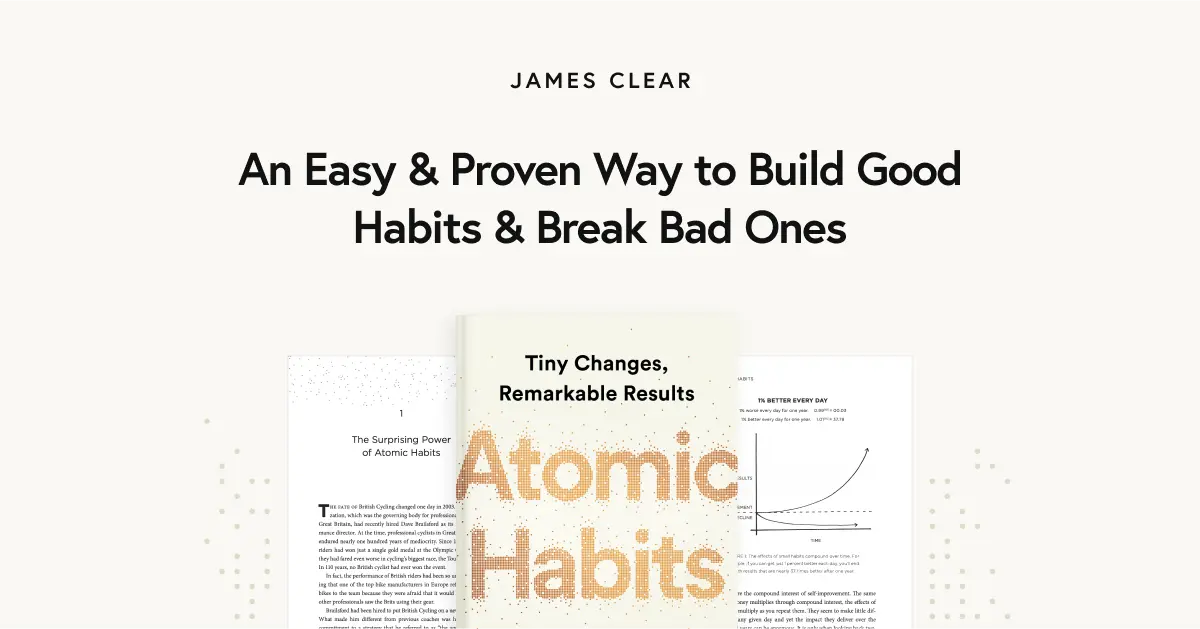
If an individual improves by just 1 percent each day in a given area, those gains compound remarkably over the course of a year. Mathematically expressed:
$$text1.01^365 approx 37.78$$
Conversely, declining by 1 percent daily deteriorates performance to near zero:
$$text0.99^365 approx 0.03$$
The real-world accounts detailed in this report—such as Cindy utilizing a visual wall calendar to track six months of unbroken progress and subsequently losing 30 pounds—demonstrate this compounding principle in action. Tracking habits creates a visual feedback loop that validates progress and reinforces the identity-based shift required for long-term adherence.
Official Statements and Expert Insights
Behavioral scientists and productivity experts have continually validated the methodologies highlighted within these case studies.
"You do not rise to the level of your goals. You fall to the level of your systems."
— James Clear, Author of Atomic Habits
In various institutional forums, habit researchers emphasize that human agency is heavily constrained by environmental design. Dr. Wendy Wood, Provost Professor of Psychology and Business at the University of Southern California, notes that people with high self-control actually use less willpower in daily life; instead, they have optimized their environments to make good behaviors automatic.
The reader case studies corroborate this assertion. Whether it is sleeping in running clothes to bypass morning decision fatigue or locking snacks in a vehicle, the overarching consensus from behavioral experts is clear: designing your world is vastly more effective than fighting your impulses.
Future Outlook: The Evolution of Personal Behavior Modification
As society becomes increasingly digitized, the battlefield for human attention and habit formation has shifted from the physical pantry to the digital screen. The future of behavioral design will require individuals to apply these timeless principles—identity formation, friction manipulation, and habit stacking—to virtual environments.
The rise of dedicated habit journals, automated app-blockers, and smart-home environmental controls indicates a growing public awareness that mastery over one’s life begins with mastery over one’s micro-decisions. As illustrated by the diverse experiences of readers spanning from China to local suburban neighborhoods, the tools for transformation are universally accessible. By focusing on systems rather than outcomes, and by making good habits easy and bad habits impossible, individuals are equipped to author their own psychological evolution for decades to come.
