

Executive Overview
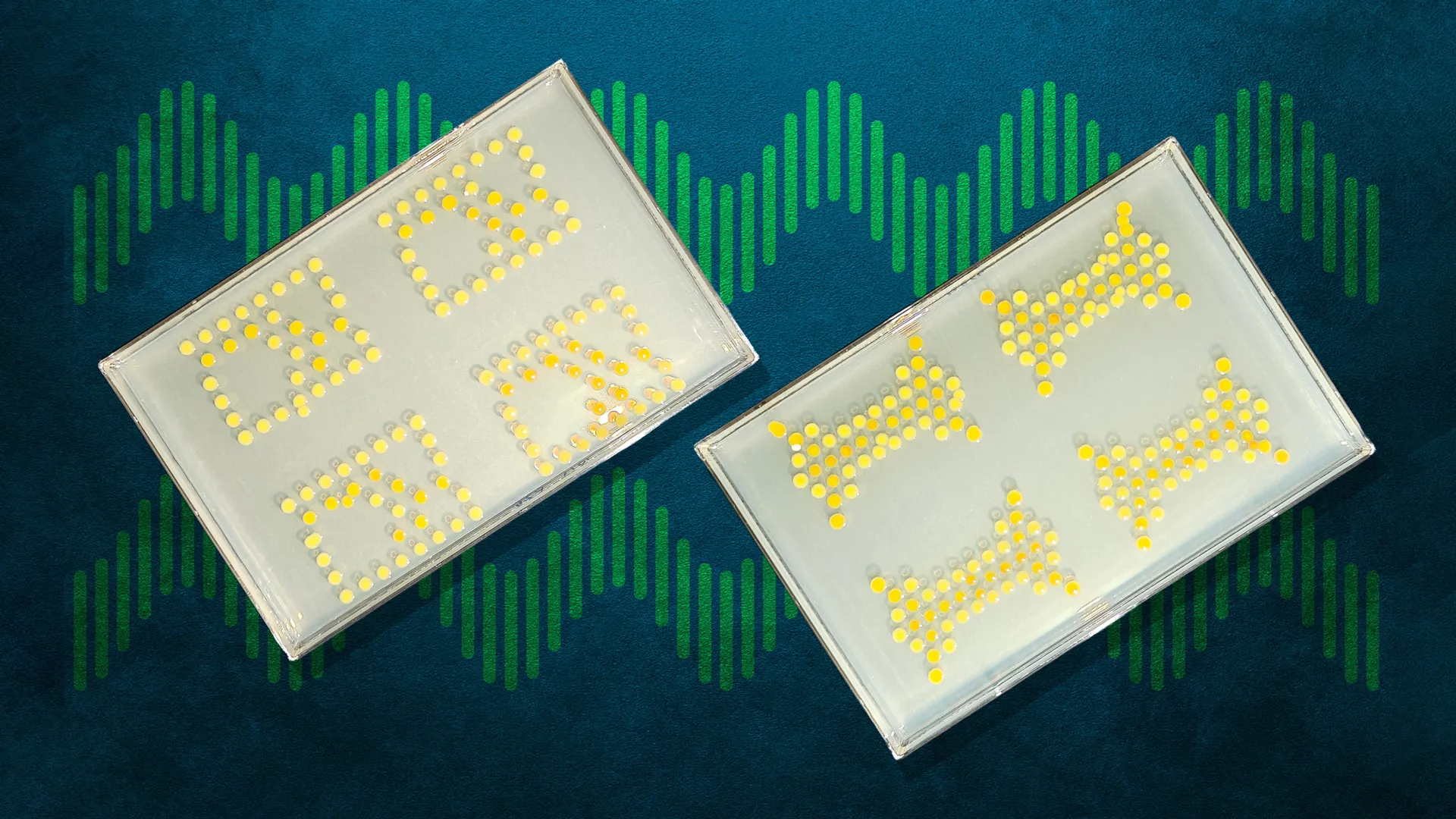
In a monumental leap forward for synthetic biology, a team of researchers at the Massachusetts Institute of Technology (MIT) has successfully engineered living bacteria to function as organic transistors. By reimagining how cellular architecture handles information, the MIT bioengineers have effectively created printable, living "circuit boards" that can be cultured directly onto growth medium inside a standard Petri dish.
Traditional synthetic biology has long been stymied by a fundamental bottleneck: attempting to cram complex, multi-tiered logic circuits into the confines of a single cellular wall. When researchers overload an individual cell with too many transcription factors and engineered proteins, the cell’s delicate internal machinery quickly becomes overwhelmed, leading to signal interference, cellular exhaustion, and system failure.
The MIT research team, led by senior author Christopher Voigt and lead author Hamid Doosthosseini, bypassed this biological traffic jam through a paradigm shift inspired by traditional computing. Instead of building monolithic, all-in-one cellular computers, they distributed the workload. By engineering a modular toolkit consisting of just five distinct bacterial strains—two acting as specialized transistors and three serving as signal relays—the team has unlocked the ability to construct virtually any logical operation imaginable.
Published in Nature Chemical Biology, this breakthrough transitions synthetic biology from a decentralized mess of overloaded cells into an organized, modular engineering discipline. While these biological circuits operate at a vastly different temporal scale than silicon chips—taking roughly eight hours to complete a single calculation—their potential applications are profound. From smart agricultural crops outfitted with microbial sentinels that monitor root health and deploy targeted defenses, to sophisticated bio-manufacturing systems, this research bridges the gap between digital computing and living organisms.
Detailed Chronology: From Single-Cell Limits to Multi-Colony Architectures
The Traditional Bottleneck of Synthetic Biology
To understand the magnitude of the MIT breakthrough, one must examine the historical limitations of genetic engineering. For decades, synthetic biologists have constructed cellular circuits by introducing foreign DNA into cells, compelling them to synthesize specific proteins and transcription factors. These biological components interact in ways that mimic electronic logic gates, allowing cells to detect specific chemical inputs and generate corresponding outputs.
However, these early systems faced a severe ceiling on scalability. Each distinct logical operation within a circuit generally required its own unique transcription factor to prevent cross-talk and signal interference. Because nature provides only a limited roster of mutually compatible transcription factors, scientists quickly hit a wall regarding how complex a single-cell circuit could become. Packing excessive genetic programming into one host cell also diverted vital metabolic resources away from the cell’s survival, compromising its viability.
Rethinking the Paradigm: Distributed Cellular Computing
Recognizing that silicon microprocessors do not rely on a single, monolithic transistor to perform complex computations, the MIT team sought a modular, distributed architecture. They turned to Pantoea agglomerans, a hardy bacterium commonly found thriving on plant surfaces and in natural environments.
Rather than burdening a single bacterium with an entire computational routine, the researchers assigned specialized, elementary tasks to individual bacterial cells. They engineered two distinct variations of bacterial transistors that respond to a foundational signaling molecule known as OC 6:
- The "On" Transistor: Activates and switches on when it encounters the OC 6 molecule.
- The "Off" Transistor: Deactivates and switches off in the presence of the same molecule.
To add layers of operational complexity, both transistor variants were also designed to sense a secondary environmental target molecule, designated as OC 12. Depending on whether OC 12 is present and the primary state dictated by OC 6, the engineered bacterial cell produces a specific output molecule called OHC 14.
Wiring the Living Circuit Board
The invention of the bacterial transistor was only half the battle; the researchers also needed a way to transmit signals between these isolated biological switches. To achieve this, the team engineered three additional strains of Pantoea agglomerans to function exclusively as signal relays.
These relay cells intercept the OHC 14 output signal, translate it, and convert it into a fresh chemical output that can seamlessly serve as the input for the next neighboring transistor in the sequence. By arranging these specialized colonies in precise spatial layouts, the researchers successfully "wired" living cells together in a manner functionally identical to traces on a printed circuit board (PCB).
To assemble these biological systems physically, the team utilized agar plates as a foundational growth medium. Using precise deposition techniques, they printed bacterial colonies onto the agar, maintaining a strict spatial separation of approximately five millimeters between neighboring colonies. This precise spacing is critical: it ensures that chemical signaling molecules diffuse only to the immediate downstream colony, preventing chaotic cross-contamination and forcing information to flow through the circuit in a strictly linear, unidirectional path.
Supporting Context & Metrics: Scalability, Logic Gates, and Computational Equivalency
The modular framework developed by the MIT laboratory is remarkably versatile. Through strategic spatial positioning, the team demonstrated that the exact same bacterial transistor strain could be repurposed to perform multiple distinct logic operations, including "multi-input," "OR," and "IMPLY" gates.
By linking these foundational components into larger networks, the researchers scaled up the complexity of their biological systems. Among their demonstrations was a functional demultiplexer—a complex circuit that ingests a single incoming signal and intelligently routes it to one of several predetermined destinations based on an independent control signal.
The crowning achievement of the study was the construction of their largest living circuit to date: an intricate network comprising 24 interconnected bacterial colonies explicitly engineered to perform multi-input addition.
Performance Metrics and the Speed Trade-Off
When evaluating living computers against their silicon counterparts, a stark contrast emerges regarding operational velocity:
- Silicon Electronics: Modern microprocessors execute billions of cycles per second, processing complex calculations in fractions of a nanosecond.
- Bacterial Circuits: Each discrete calculation executed by the MIT bacterial circuit takes approximately eight hours to complete.
Despite this vast temporal disparity, the researchers emphasize that biological computing is not intended to replace silicon hardware in consumer electronics or high-frequency trading platforms. Instead, biological circuits are designed for domains where integration with living systems and biological timescales are paramount. In agricultural environments, a computational turnaround time of eight hours—or an overnight processing cycle—is more than fast enough when measured against the seasonal timeline of plant growth and environmental adaptation.
Official Statements & Expert Insights
Senior author Christopher Voigt, head of MIT’s Department of Biological Engineering, reflected on the profound philosophical and practical implications of the research during interviews accompanying the publication in Nature Chemical Biology.
"Computationally, there’s nothing that your iPhone can do that these circuits couldn’t do," Voigt stated, emphasizing the theoretical universality of the engineered bacterial architecture.
However, Voigt was careful to contextualize the practical utility of the technology, steering expectations toward biological integration rather than digital substitution:
"We’re not trying to replace computers, but rather put computational control into biology. If you have bacteria on the root of a plant, or the plant itself is doing the computing, running a simple calculation overnight is fast enough relative to a growth season."
Lead author Hamid Doosthosseini, an MIT postdoc who spearheaded the study, underscored the modular elegance of the five-strain toolkit:
"We’ve built some initial computer architecture components that are commonly used, but any operation can be built with these five strains."
The research itself represents a collaborative triumph within MIT’s bioengineering division, with contributions from former MIT postdoc Haorong Chen. Financial backing for the project was provided by major defense and intelligence research institutions, specifically the U.S. Defense Advanced Research Projects Agency (DARPA) and the U.S. Intelligence Advanced Research Projects Activity (IARPA), highlighting the long-term national security and industrial relevance of programmable biological hardware.
Future Outlook: Living Computers in Agriculture and Beyond
The successful demonstration of printable, transistor-like bacterial circuits opens an expansive frontier for synthetic biology, with agriculture standing as the most immediate beneficiary.
Smart Agriculture and Responsive Crop Protection
Modern farming faces unprecedented pressures from climate change, soil degradation, and aggressive pathogen strains. Traditional agricultural interventions—such as blanket applications of pesticides, fungicides, or synthetic fertilizers—are frequently inefficient and ecologically burdensome.
The integration of MIT’s living circuits into agricultural ecosystems offers a precision-engineered alternative. By coating plant seeds, roots, or foliage with specialized symbiotic bacteria embedded with these logic circuits, researchers envision a new generation of "smart" crops.
Imagine a microbial network residing on a maize root system programmed to continuously monitor local soil chemistry and moisture levels:
- Sensing Stress: The bacteria detect early chemical markers associated with pathogen invasion or severe drought stress.
- Internal Computation: The living circuit processes these multiple environmental inputs through its internal logic gates (e.g., verifying both low moisture and elevated pathogen signaling molecules).
- Targeted Response: Upon confirming the threat, the bacterial consortium triggers a localized biological response, such as synthesizing and excreting a targeted natural fungicide or signaling the plant’s own immune pathways to activate defenses.
Expanding Horizons: Biomanufacturing and Environmental Remediation
Beyond agronomy, the principles established in this study could revolutionize industrial biomanufacturing. Complex chemical synthesis often requires multi-step enzymatic reactions that are difficult to coordinate within a single fermentation vessel. By distributing biosynthetic pathways across modular, networked bacterial colonies printed on specialized bioreactor matrices, manufacturers could achieve unprecedented control over cellular factories.
Furthermore, environmental remediation efforts could deploy intelligent microbial sheets capable of detecting heavy metal contamination in wastewater, computing the concentration levels, and systematically releasing neutralizing agents or sequestering toxins in real time.
As synthetic biology continues to mature, the boundary between machine logic and living matter grows increasingly porous. By successfully translating the fundamental language of electronic engineering into the biochemistry of living cells, the MIT research team has provided humanity with a powerful new toolkit—one where life itself learns to compute.
