

Executive Overview
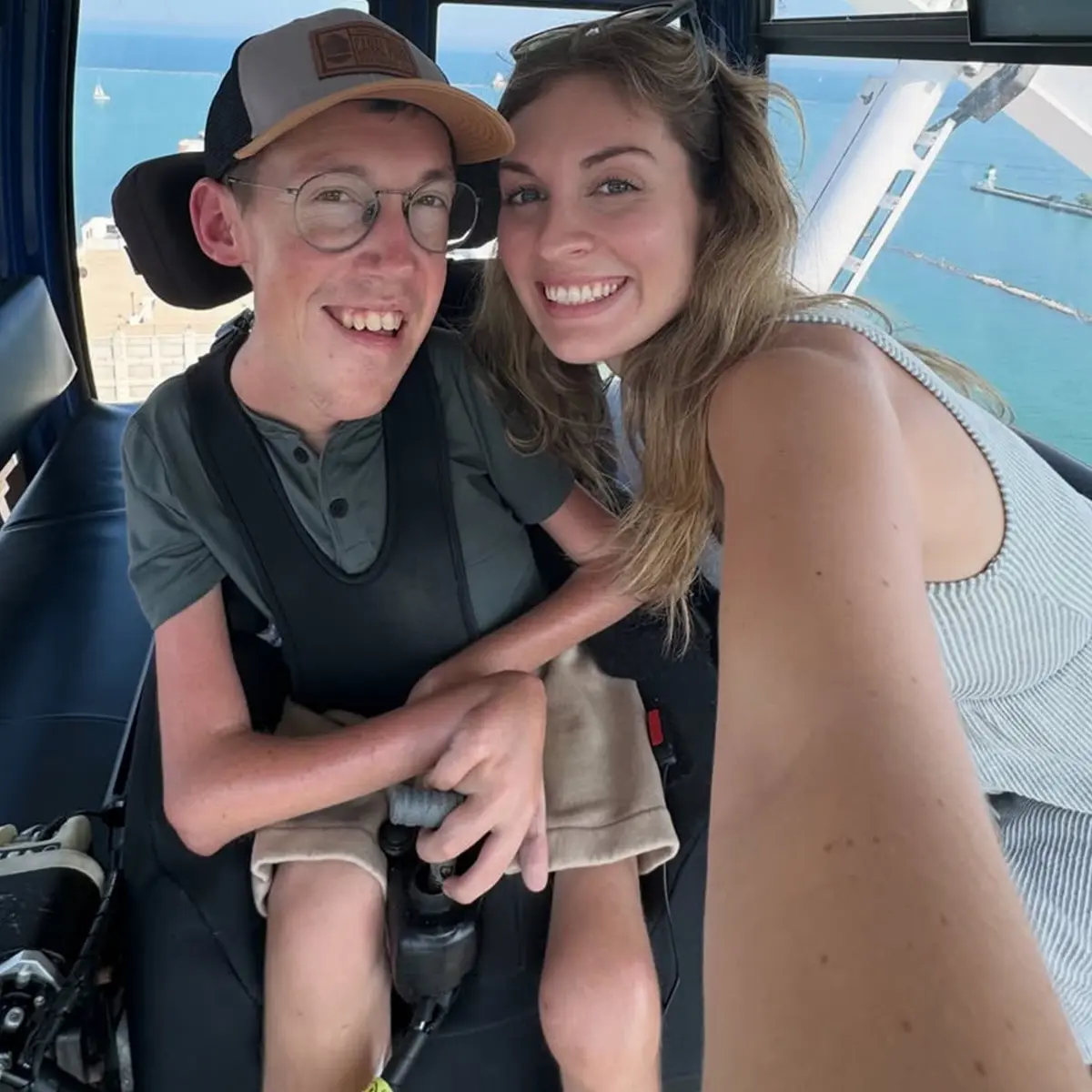
The intersection of digital content creation, personal vulnerability, and public advocacy reached a poignant milestone when popular influencers Shane and Hannah Burcaw—beloved by millions online as "Squirmy and Grubs"—announced they are expecting their first child. After years of navigating arduous fertility treatments, the couple shared that Hannah is 20 weeks pregnant, with their new baby expected to arrive this coming January.
This announcement represents much more than a routine celebrity or influencer milestone. Shane Burcaw lives with spinal muscular atrophy (SMA), a severe genetic neuromuscular disorder, and the couple has spent the better part of a decade dismantling invasive misconceptions about disability, romance, and parenting. Their journey to conception included years of unsuccessful in vitro fertilization (IVF), a grueling medical and emotional gauntlet familiar to countless families worldwide.
By opening up about their fertility struggles, the Burcaws join a growing cadre of public figures who are peeling back the polished veneer of social media to reveal the raw, often heartbreaking realities of trying to conceive. From endometriosis and egg freezing to ectopic pregnancies and multi-year IVF cycles, celebrities are increasingly using their platforms to demystify fertility challenges. This article explores the Burcaws’ landmark announcement, the historical context of their relationship and advocacy, and the broader, vital conversation surrounding modern reproductive health journeys in the public eye.
Detailed Chronology
To understand the magnitude of the Burcaws’ pregnancy announcement, one must trace the timeline of their relationship, their online advocacy, and the quiet resilience required to reach this chapter.
- 2016: Shane and Hannah begin dating, quickly establishing a partnership built on humor, mutual respect, and absolute transparency regarding Shane’s disability.
- 2019: The couple opens up in a widely read interview with Today, directly addressing misconceptions from viewers who assumed Shane’s spinal muscular atrophy precluded them from having an active intimate life or building a family. They explicitly state their desire to have children down the road.
- 2020: Amid the height of the COVID-19 pandemic, Shane and Hannah tie the knot. Because of social distancing restrictions and health considerations, their loved ones witness the nuptials virtually over Zoom.
- 2023: The couple begins sharing their private fertility struggles online, revealing that they have embarked on an arduous, multi-year IVF journey characterized by repeated setbacks.
- September 8, 2025: Shane and Hannah make their monumental joint Instagram announcement. They reveal that Hannah is 20 weeks pregnant with their first child, due in January, and that they have launched a dedicated baby blog to chronicle their path to parenthood.
Supporting Context & Metrics: Breaking Down Misconceptions and Infertility Realities
The path to parenthood for Shane (34) and Hannah (30) was fraught with societal hurdles long before they ever stepped into a fertility clinic. For years, the couple faced unwarranted skepticism regarding their capacity to be parents. In their 2019 Today interview, they highlighted the pervasive myth that a relationship involving a partner with a severe physical disability must inherently be devoid of physical intimacy or domestic partnership.
Furthermore, the couple had to proactively address ignorant commentary regarding the heritability of Shane’s condition. Spinal muscular atrophy is an autosomal recessive genetic disorder. Shane meticulously explained the genetic mechanics to their audience: unless Hannah is an asymptomatic carrier of the specific genetic traits causing SMA, their children will not inherit the disease. Even if she were a carrier, the statistical probability would be a 50/50 chance.
Beyond disability-related misconceptions, the Burcaws’ journey highlights the staggering statistical realities of modern fertility struggles. According to the Centers for Disease Control and Prevention (CDC), approximately 1 in 5 (19%) married women aged 15 to 49 in the United States are unable to get pregnant after one year of trying (infertility). Furthermore, roughly 1 in 4 (26%) women in this demographic have difficulty getting pregnant or carrying a pregnancy to term (impaired fecundity).
When couples turn to assisted reproductive technologies like IVF—as the Burcaws did for years—the emotional and financial toll is immense. Success rates per cycle vary widely based on maternal age, underlying medical conditions, and genetic factors, often turning the process into a grueling test of endurance. By acknowledging the pain that pregnancy announcements can inflict on those still struggling to conceive, the Burcaws demonstrated deep empathy rooted in their own years of negative pregnancy tests and failed IVF cycles.
Official Statements and Public Reflections
The emotional resonance of the Burcaws’ announcement was captured in their joint social media statements, which balanced unbridled joy with profound sensitivity toward others experiencing infertility.
“We are beyond ecstatic to announce that we’re expecting our first child this coming January!” the couple shared in their September 8 Instagram post, accompanied by intimate sonogram images. “Hannah is 20 weeks pregnant, and although we’ve been thoroughly enjoying this special time in privacy so far, we’ve also missed sharing all the joy with you, and there’s SO MUCH to share!”
Recognizing the complex emotions that baby announcements can trigger for individuals and couples currently navigating infertility, the couple added a deeply considerate caveat:
“After going through IVF unsuccessfully for many years, we understand all too well the difficulties that many people experience when trying to conceive, and how seeing announcements can feel. Our hearts go out to you.”
Regarding their future approach to digital content, the Burcaws emphasized a shift toward privacy and deliberate boundaries once their child arrives. While they have chronicled much of their adult lives online, they noted:
“We want to be thoughtful and intentional about what and how we share our child with the world.”
Future Outlook: A Broader Cultural Shift in Celebrity Fertility Advocacy
The Burcaws are far from alone in using their platforms to strip away the stigma associated with reproductive struggles. In recent years, a diverse array of public figures have come forward to share their own harrowing, beautiful, and complex paths to building a family. This collective transparency is fundamentally altering how society perceives fertility, framing it not as a private failure when things go wrong, but as a shared human vulnerability.
A Mosaic of Resilience Across the Public Sphere
- Bella Robertson and Jacob Mayo: The Duck Dynasty star and her husband opened up about their quiet struggles with infertility during a joint interview regarding their family’s new reality series. They emphasized that social media often masks the private grief individuals carry, making authentic storytelling essential.
- Olivia Culpo and Christian McCaffrey: Two years prior to announcing her pregnancy, the former Miss Universe detailed her severe endometriosis diagnosis. Culpo used her platform to educate the public on how endometrial tissue growth, ovarian impact, and scarred fallopian tubes can jeopardize future fertility.
- Caelynn and Dean Bell: The Bachelor Nation alumna has provided candid, vulnerable updates regarding the emotional toll of trying to conceive since their 2023 wedding, choosing to lean into medical testing and self-compassion rather than unrealistic timelines.
- Bunnie Xo and Jelly Roll: The podcast host and her country music star husband have openly documented their grueling, emotional IVF rollercoaster since mid-2024. Bunnie has consistently spoken about placing her faith in the process while keeping adoption open as a viable path forward.
- Julianne Hough: The Dancing With the Stars cohost has openly discussed her journey with endometriosis and her proactive measures to preserve her reproductive future, notably undergoing her third round of egg freezing in mid-2025.
- Whitney Port: The Hills alum has balanced the joy of raising her son Sonny with the profound grief of navigating multiple pregnancy losses and miscarriages, alongside her surrogate’s losses, while maintaining faith in her fertility doctors as she explores growing her family.
- Michelle Yeoh: The Academy Award-winning actress revealed the profound sense of personal failure she experienced while undergoing fertility treatments during her first marriage, ultimately learning the liberating lesson that acceptance and letting go are vital components of the human experience.
- Eve and Maximillion Cooper: The rapper and actress courageously detailed a harrowing 2006 ectopic pregnancy in her memoir, Who’s That Girl?, shedding light on the physical and emotional devastation of pregnancy loss while working under intense industry pressure.
- Mary and Romain Bonnet: The Selling Sunset star has been transparent about her surgery to correct a septate uterus and her measured approach to fertility, emphasizing that she and her husband refuse to let stress dictate their health or happiness.
- Erin Andrews and Jarret Stoll: After enduring a grueling 10-year fertility journey complicated by a 2017 cervical cancer diagnosis, the NFL sportscaster used her voice to dismantle the numbness and isolation often felt during IVF, welcoming their son Mack in July 2023.
What Lies Ahead for the Burcaws and Their Community
As Shane and Hannah Burcaw prepare for the arrival of their baby in January, they stand at the forefront of a modern parenting revolution. Their newly launched baby blog promises to document the next chapter of their lives, providing a window into how disability, adaptation, and intense love intersect in a domestic setting.
Shane has previously joked with trademark wit about his plans to pull their children around in a wagon attached to the back of his wheelchair—a vision that is now months away from becoming reality. More importantly, by normalizing the struggles of IVF, challenging ableist assumptions about parenting, and modeling profound empathy for others experiencing infertility, the Burcaws have cemented their legacy not just as entertaining digital creators, but as compassionate advocates for human resilience.
