

Executive Overview
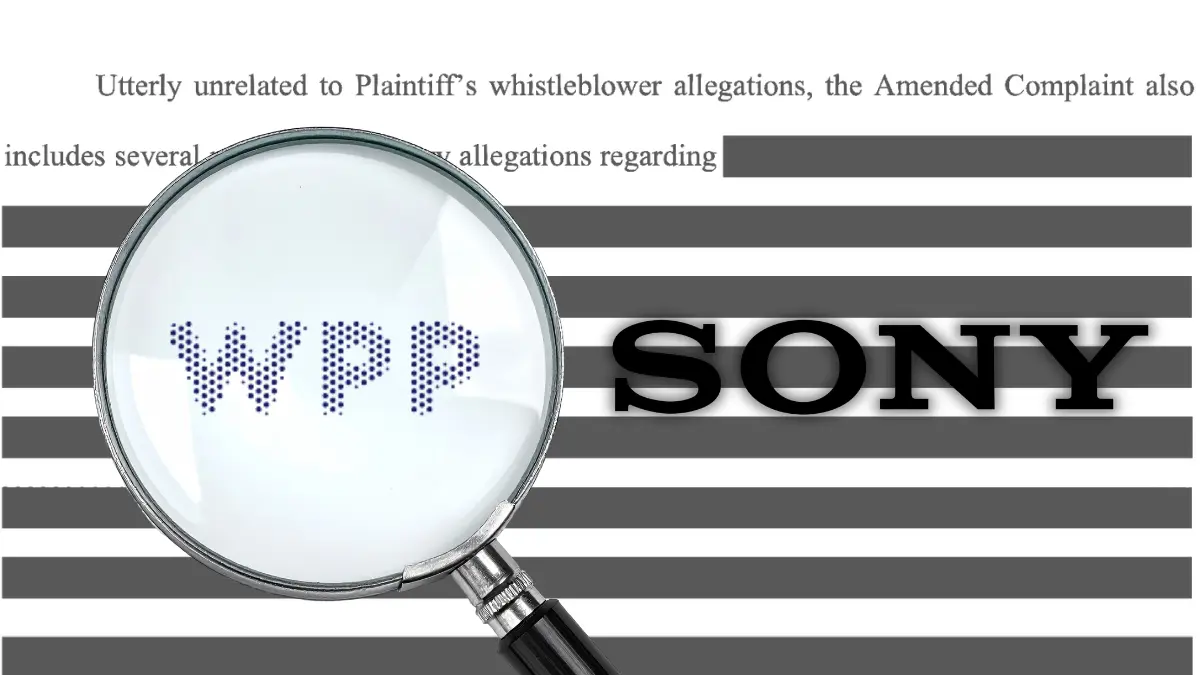
The high-stakes legal battle between advertising giant WPP and Richard Foster, the former CEO of GroupM’s Motion Entertainment, has entered a tumultuous new phase. Newly unsealed court documents filed Thursday morning shed light on a surprising development: entertainment conglomerate Sony reportedly provided information voluntarily to the defense regarding its own internal investigation into WPP’s business practices.
This revelation significantly elevates the pressure on WPP, which has been fiercely defending itself against allegations of orchestrating a sweeping, global illegal rebate scheme. The core of the legal dispute centers on Foster’s October 2025 wrongful termination lawsuit. In his initial filing, Foster claimed that WPP systematically retaliated against him and ultimately terminated his employment because he actively attempted to expose corrupt financial practices within the company.
The introduction of Sony’s internal investigative findings into the court record—first brought to light through an amended complaint filed by Foster’s legal team on August 13—adds a formidable layer of corroboration to the whistleblower’s claims. For an industry built on trust, transparency, and multi-billion-dollar media investments, these developments threaten to unearth uncomfortable truths regarding media buying practices, agency-client relationships, and the integrity of global financial transactions.
This comprehensive report examines the trajectory of the litigation, the implications of Sony’s independent probe, the broader context of media rebate controversies, and what this high-profile legal showdown means for the future of the advertising ecosystem.
Detailed Chronology: From Internal Alarm Bells to Courtroom Showdown
To fully understand the gravity of Thursday’s court filings, it is essential to retrace the timeline of events that transformed a corporate disagreement into a high-profile legal war.
The Genesis of the Dispute (Pre-2025)
Long before legal briefs were filed, the friction began inside the halls of GroupM and its specialized entertainment arm, Motion Entertainment. Richard Foster, operating as CEO, reportedly raised repeated internal red flags concerning how funds, media space, and rebates were managed across international markets. According to court filings, Foster identified what he perceived to be systemic financial irregularities—specifically, hidden or improperly allocated rebates that bypassed standard disclosures and potentially violated global anti-fraud and trade regulations.
Rather than prompting a welcome internal audit, Foster’s whistleblowing allegedly triggered a defensive corporate machinery. Instead of investigating the practices he highlighted, WPP leadership reportedly marginalized Foster, diminished his operational responsibilities, and eventually severed ties with him.
The Initial Lawsuit: October 2025
In October 2025, Foster officially filed a wrongful termination lawsuit against WPP. The initial complaint laid bare explosive accusations, alleging that WPP operated a coordinated global rebate scheme designed to siphon financial benefits away from clients and into the holding company’s ledger through opaque operational loops. Foster’s legal team argued that his termination was a textbook act of retaliation against a conscientious employee fulfilling his ethical and legal duties by reporting corporate malfeasance.
The August 13 Amended Complaint
The litigation took a dramatic turn on August 13, when Foster’s legal counsel filed an amended complaint containing crucial new evidence. Among the most damaging additions were documents detailing an independent investigation conducted by Sony.
According to the legal filing, Sony—a major corporate partner and stakeholder in various media ventures—had launched its own internal inquiry into WPP’s business practices. The findings of this probe reportedly "corroborated Foster’s years of whistleblower reports," providing an objective, external validation of the exact financial discrepancies Foster had flagged internally years prior.
Thursday Morning’s Revelations
The latest batch of court documents, filed Thursday morning, expanded upon the August disclosures. They suggest that Sony did not merely arrive at these conclusions independently, but actively and voluntarily provided information to the defense regarding its investigative findings. This cooperative posture from a major enterprise partner like Sony signals a potential shifting of tides, as corporate entities increasingly distance themselves from legal liabilities associated with opaque media practices.
Supporting Context & Metrics: The Anatomy of Media Rebates
To grasp why the allegations against WPP carry such devastating weight, one must understand the complex, multi-layered world of media rebates and agency trading desks.
What Are Media Rebates?
In the advertising industry, media rebates are financial incentives or volume-based discounts paid back by media vendors (such as television networks, digital publishers, and out-of-home billboard companies) to media agencies or holding companies. While transparently disclosed and passed back to clients, rebates can become legally problematic when they are hidden, artificially inflated, or diverted away from the brands paying for the media space.
Critics of traditional holding company models argue that opaque rebate structures create inherent conflicts of interest. If an agency steers client budgets toward specific media vendors solely to secure lucrative back-end rebates for itself—rather than serving the client’s best interest—it breaches fiduciary duty.
The Scale of WPP and GroupM
As the world’s largest advertising holding company by billings, WPP manages tens of billions of dollars in global marketing budgets annually through its media investment arm, GroupM. Because of its sheer size, GroupM commands massive negotiating leverage with media owners.
When a holding company of this magnitude faces allegations of operating a "global illegal rebate scheme," the potential financial exposure extends far beyond a single wrongful termination settlement. It opens the door to:
- Class-Action Lawsuits: Advertisers and corporate clients who feel cheated out of rightful discounts could launch collective legal actions.
- Regulatory Scrutiny: Antitrust and trade commissions, such as the U.S. Federal Trade Commission (FTC) or European competition authorities, may initiate independent inquiries into industry-wide trading practices.
- Reputational Damage: Enterprise clients increasingly demand absolute transparency. Sustained allegations of systemic deception can prompt major brands to review, suspend, or terminate their agency contracts.
Official Statements and Industry Reactions
As the legal documents circulate through media and legal circles, stakeholders across the advertising and entertainment landscapes are closely monitoring developments.
WPP’s Defense Strategy
WPP has consistently and vigorously denied the allegations brought forward by Foster. In previous statements and legal responses, representatives for the holding company have characterized the lawsuit as a baseless attack by a disgruntled former executive attempting to extract financial settlements through public pressure and distorted characterizations of standard commercial practices.
WPP maintains that its business operations adhere strictly to legal and ethical standards, and that compliance mechanisms are robustly enforced across all operating companies, including GroupM and Motion Entertainment. Legal experts note that WPP’s defense will likely focus heavily on challenging the admissibility of the Sony documents, questioning how internal corporate intelligence was shared, and arguing that Foster’s termination was performance-based rather than retaliatory.
Foster’s Legal Position
Richard Foster’s legal team has framed the case as a watershed moment for corporate accountability within the advertising holding company model. By incorporating Sony’s independent investigative findings, Foster’s attorneys have bolstered their core argument: that the whistleblowing was not an isolated misinterpretation by a disgruntled employee, but rather the identification of a systemic, multi-party operational reality.
"The corroboration provided by external corporate investigations validates every warning Mr. Foster raised internally," noted an analyst familiar with the case. "It shifts the burden of proof heavily onto WPP to explain why an outside partner’s probe uncovered the exact same financial anomalies."
The Silence of Sony
To date, Sony has maintained a relatively low public profile regarding the specifics of its internal investigation, choosing instead to let the court documents speak for themselves. However, the voluntary transmission of investigative materials to the legal process underscores the seriousness with which enterprise clients view financial transparency in their media supply chains.
Future Outlook: What Lies Ahead for WPP and the Industry
As the legal proceedings continue to unfold through the fall, several critical milestones and potential ramifications loom on the horizon.
Upcoming Legal Milestones
- Discovery Phase Expansion: With Sony’s investigative files now part of the public record, Foster’s legal team is expected to push for expanded discovery, potentially subpoenaing additional corporate partners and former executives who may have knowledge of the alleged rebate flows.
- Motions to Dismiss and Summary Judgments: WPP’s legal defense will likely file rigorous motions attempting to dismiss specific counts of the amended complaint, arguing against the legal standing of certain claims and challenging the interpretation of the Sony documents.
- Trial Preparation: Should the case survive preliminary motions and proceed toward a trial—slated potentially for late 2026 or 2027—it promises to expose the inner mechanics of media trading desks to unprecedented public scrutiny.
Broader Industry Implications
Beyond the courtroom, this lawsuit serves as a profound catalyst for self-reflection and reform within the global advertising industry.
- Accelerated Demand for Transparency: Advertisers are increasingly demanding zero-based transparency, programmatic verification, and direct access to media contracts. Incidents like the WPP-Foster litigation provide ammunition to brand procurement officers seeking tighter governance clauses.
- The Evolution of Agency-Client Contracts: Contracts are expected to feature even stricter audit rights, allowing clients to independently verify that all rebates, discounts, and financial efficiencies are being accurately credited back to brand budgets.
- Whistleblower Protections: The case highlights the critical, albeit perilous, role of corporate whistleblowers. The outcome of Foster’s suit will establish an important legal precedent regarding how holding companies handle internal dissent and whether executives can safely flag financial irregularities without facing professional ostracization.
Conclusion
The collision of Richard Foster’s wrongful termination suit, Sony’s independent investigative findings, and WPP’s unyielding defense marks one of the most significant legal dramas in modern advertising history. As the case proceeds toward its next phase in Midtown and beyond, the industry watches with bated breath. The ultimate verdict—whether reached in a courtroom settlement or a prolonged public trial—will not only determine the professional fate of the individuals involved, but may permanently reshape the economic architecture of global media buying.
