

Executive Overview
For decades, the conventional understanding of oncology has treated cancer primarily as a disease of time. The longer a human being walks the earth, the more opportunities cellular machinery has to malfunction, accumulate genetic errors, and allow runaway tumor growth. Age has long been considered the single greatest catalyst for cancer development.
However, a troubling epidemiological shift over the past several decades has begun to shatter this simplistic paradigm. Across the globe, clinicians are diagnosing cancer with alarming frequency in younger adults—individuals in their thirties, forties, and early fifties. More concerning still is a generational compounding effect: each successive birth cohort appears to face a substantially higher risk of early-onset malignancies than the generation that preceded it.
This unsettling trend has forced a radical pivot in cancer research. A prominent international study, spearheaded by investigators at the Washington University School of Medicine in St. Louis and conducted alongside global initiatives like Cancer Grand Challenges, has unveiled a provocative hypothesis: younger generations are accumulating biological damage at an accelerated rate, causing their bodies to age prematurely.
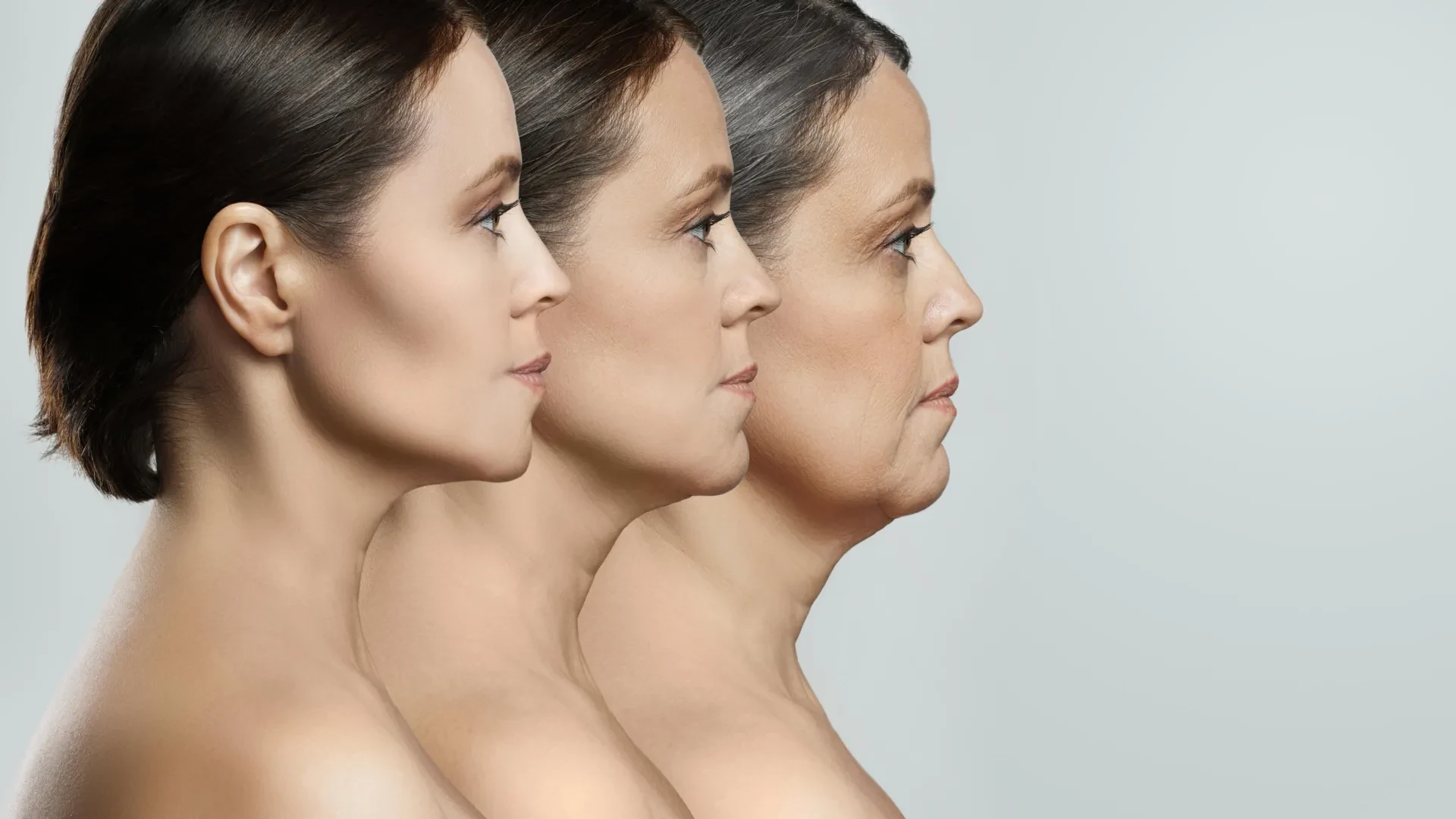
The research, published in the prestigious journal Nature Medicine, reveals a tangible gap between chronological age (the number of birthdays a person has celebrated) and biological age (the physiological wear-and-tear visible within cells, tissues, organs, and metabolic systems). According to the findings, younger cohorts possess biological profiles that make them look significantly older at equivalent chronological milestones compared to older generations. Crucially, this phenomenon of accelerated biological aging is intimately tied to a heightened susceptibility to early-onset solid tumors—generally defined as cancers diagnosed at age 55 or younger.
By analyzing massive health databases spanning hundreds of thousands of lives in the United Kingdom and the United States, scientists are beginning to map out how modern environmental pressures, metabolic shifts, and lifestyle factors become biologically embedded within the human body. The ultimate ambition of this work is nothing short of revolutionary: to decode these patterns, move cancer prevention upstream, and transition from broad, generalized public health recommendations to highly personalized, biology-driven interventions long before a tumor ever forms.
Detailed Chronology: Unraveling the Mystery of Early-Onset Malignancies
The journey toward understanding the intersection of biological aging and early-onset cancer began with a frustrating clinical observation. For years, molecular epidemiologists and oncologists noted incremental increases in cancers of the breast, colon, rectum, uterus, and lung among populations well below the traditional screening age of 50.
The Limits of Single-Factor Explanations
Initially, researchers attempted to explain these shifts through individual lifestyle and environmental risk factors. Dr. Yin Cao, a molecular epidemiologist and associate professor of surgery and medicine at WashU Medicine—alongside her colleagues at the Alvin J. Siteman Cancer Center at Barnes-Jewish Hospital and WashU Medicine—spent years analyzing myriad variables known to influence cancer risk over a lifetime.
Their exhaustive lookups included examinations of:
- Rising rates of obesity and systemic metabolic dysregulation
- Shifts in dietary patterns, specifically the proliferation of ultra-processed foods
- Sedentary lifestyles and physical inactivity
- Alcohol consumption trends
- Early-life factors, such as delivery via cesarean section
While each of these elements offered valuable puzzle pieces, none of them could single-handedly account for the sweeping, cross-generational acceleration of early-onset cancers. The math did not add up. A deeper, more systemic driver had to be at play—something capable of capturing the cumulative, compounding weight of modern living environments over time.
Pivoting to a Holistic Metric: Biological Age
Recognizing that isolated risk factors were insufficient, Dr. Cao and her team pivoted toward a broader conceptual framework: measuring systemic and organ-specific biological aging.
Supported by the international research initiative Cancer Grand Challenges—co-founded by the National Cancer Institute (NCI) in the U.S. and Cancer Research UK—Dr. Cao co-leads Team PROSPECT, a multidisciplinary global coalition dedicated to solving the mystery of early-onset cancers. This international backing provided the scale necessary to investigate generational biological aging across unprecedented population sizes.
The research team analyzed extensive records from two massive repositories:
- The UK Biobank: Encompassing data from more than 154,000 young adults characterized by rigorous biological, health, and lifestyle tracking.
- The All of Us Research Program: An initiative managed by the U.S. National Institutes of Health (NIH) designed to build a diverse health database spanning over 1 million Americans, from which the team analyzed a cohort of more than 10,000 participants.
Led by first author Ruiyi Tian, a doctoral student in the Cao lab, the researchers deployed advanced clinical biomarkers and blood proteomic profiles to quantify how rapidly different generations were aging, and whether those aging velocities correlated directly with early-onset cancer diagnoses.
Supporting Context & Metrics: Quantifying the Generational Gap
To understand how researchers proved that younger generations are biologically older than their predecessors, it is essential to distinguish between the two primary ways science measures human aging.
Chronological Age vs. Biological Age
- Chronological Age: A simple, immutable count of the calendar years a person has been alive.
- Biological Age: A dynamic, measurable reflection of physiological decline. It evaluates how old the body actually appears based on molecular signatures, metabolic health, organ function, and cellular damage.
To calculate systemic biological age across the body as a whole, the researchers utilized established clinical biomarker algorithms, including PhenoAge and the Klemera-Doubal Method, alongside a metabolomic age score. PhenoAge, for instance, evaluates nine foundational blood chemistry markers—such as albumin (produced by the liver) and creatinine (a metabolic waste product cleared by the kidneys)—to estimate physiological wear.
To evaluate aging at the organ-specific level, the team examined blood proteomic data. By measuring the circulating levels of specific proteins associated with distinct organ systems, the researchers estimated the biological age of individual anatomical structures, such as the lungs, immune system, and adipose (fat) tissue.
The Generational Shift in Numbers
When the research team compared biological ages within distinct birth cohorts, striking generational divergences emerged across both British and American populations.
- The UK Cohort: When examining participants from the UK Biobank, researchers found that individuals born between 1965 and 1974 exhibited systemic biological aging that was 23% of one standard deviation higher than those born between 1950 and 1954—even after adjusting for chronological age. In practical terms, members of the later generation possessed slightly older biological profiles than their older peers did at the exact same point in their lives.
- The U.S. Cohort: The generational acceleration proved even more pronounced in the American data pulled from the All of Us program. Participants born between 1990 and 1999 demonstrated systemic aging that was 92% of one standard deviation higher than those born between 1965 and 1969.
Connecting Accelerated Aging to Cancer Risk
The critical phase of the study involved mapping these biological aging disparities against cancer incidence. The statistical findings were unambiguous:
- Overall Risk: Greater systemic biological aging in younger cohorts was associated with an 8% increased risk of developing early-onset solid tumors.
- The Extremes of Aging: When participants were categorized into three distinct tiers based on their biological aging scores, those exhibiting the most advanced systemic aging faced a 15% higher risk of early-onset solid cancer compared to peers showing the least advanced biological aging.
- Genetics vs. Environment: Crucially, these associations held true even after researchers controlled for inherited genetic cancer risks and known genetic predispositions to accelerated aging, highlighting that environmental and lifestyle inputs play a commanding role.
- Organ-Specific Vulnerabilities: The study revealed that rapid aging does not affect every bodily system uniformly. Instead, localized accelerated aging predicted specific malignancies:
- An immune system that appeared biologically older was directly linked to an elevated risk of early-onset lung cancer.
- Adipose (fat) tissue that displayed advanced biological aging was specifically associated with an increased risk of early-onset colorectal cancer.
Official Statements: Perspectives from the Scientific Vanguard
The implications of these findings have sent ripples through the international oncology and epidemiological communities. Leaders of the research coalition emphasize that these metrics offer a crucial window into disease prevention.
Dr. Yin Cao underscored the transformative potential of decoding these physiological markers:
"Our ultimate goal is to decode how modern environments become biologically embedded to drive cancer risk, transforming prevention from broad recommendations to personalized interventions. This brings us closer to identifying risk earlier and developing prevention strategies that are tailored to an individual’s biology."
Dr. Cao further emphasized the practical clinical utility of these discoveries for healthy populations:
"If we can identify younger people with the highest cancer risk when they are still healthy, we can focus on prevention and early-detection strategies for the individuals who will benefit most from early interventions."
Weighing in from the administrative and global collaboration standpoint, Dr. David Scott, Director of Cancer Grand Challenges, highlighted the necessity of cross-disciplinary, large-scale science in confronting this modern epidemic:
"Right now, we don’t have a definitive answer to what’s driving the rise of early-onset cancers around the world, but studies like this are helping us piece together the bigger picture, showing that cancer may be influenced not just by changes inside individual cells, but by wider changes happening across the body as a whole. Research on this scale is possible through Cancer Grand Challenges, which brings together scientists from different fields around the world to tackle these complex questions together."
Future Outlook: Shifting Paradigm from Treatment to Preemptive Interventions
The revelation that younger generations are biologically older than their chronological years suggest a paradigm shift in how modern medicine must approach oncology. For decades, cancer care has remained predominantly reactive: waiting for symptoms to manifest, screening populations based solely on birth-year milestones (such as starting mammograms at 40 or colonoscopies at 45), and treating malignancies after they have established a foothold.
The integration of biological age profiling points toward a radically different future.
1. Reimagining Risk Stratification
Traditional cancer screening guidelines operate on broad population averages. However, as Dr. Cao’s research demonstrates, chronological age is a blunt instrument. Two 40-year-old adults may have vastly different biological ages. By incorporating multi-omic blood tests, clinical biomarkers, and organ-specific aging clocks into routine health assessments, physicians could soon calculate an individual’s true physiological susceptibility to cancer.
2. Preemptive and Tailored Interventions
Identifying accelerated biological aging in a seemingly healthy 30- or 40-year-old opens a vital therapeutic window. If a patient exhibits advanced immune system aging or accelerated fat-tissue degradation, clinical teams can deploy hyper-targeted surveillance protocols—such as earlier targeted scans or tailored lifestyle and metabolic interventions—long before malignant transformations occur.
3. Unmasking the Modern Environment
As Team PROSPECT continues its investigations under the Cancer Grand Challenges umbrella, the scientific community remains committed to identifying the exact environmental vectors driving this premature cellular wear-and-tear. Whether through chronic low-grade inflammation, shifts in the human microbiome, exposure to novel chemical stressors, or altered developmental environments in utero and early childhood, researchers are closing in on the root causes.
Ultimately, this line of inquiry heralds a hopeful horizon for cancer defense. By understanding how modern life imprints itself upon our biology, medicine is moving closer to an era where cancer can be intercepted before it starts—transforming healthcare from a system of managing late-stage disease into a discipline of proactive, personalized preservation.
