

Executive Overview
The relationship between the executive branch and the American press corps has reached a historic flashpoint. Following an unprecedented directive by President Donald Trump barring CNN, MS NOW, and Politico from White House grounds, the architecture of presidential reporting has been fundamentally upended. What began as an administration’s grievance over critical coverage has swiftly devolved into a constitutional showdown, a multi-network boycott of the daily White House TV pool, and a high-stakes federal lawsuit seeking to restore revoked press credentials.
While the administration attempts to normalize these restrictions through coordinated talking points and defenses framed by senior officials like Secretary of State Marco Rubio, major journalistic institutions are digging in their heels. The struggle spilled onto the global stage on Tuesday during the United Nations General Assembly, where President Trump sparred openly with reporters while utilizing a U.N.-provided broadcast feed that circumvented the domestic broadcast blackout. Concurrently, legal battles are advancing through the federal judiciary, testing the boundaries of the First Amendment and executive authority over press access.
Beyond the White House briefing room, the American media landscape is experiencing simultaneous tectonic shifts. Mergers involving corporate giants like Paramount and Warner Bros. Discovery are prompting high-profile departures, such as CNN contributor Kara Swisher seeking an exit from her contract. Meanwhile, traditional newsmagazines like CBS’s 60 Minutes navigate fluctuating ratings, and late-night satire targets the absurdity of the ongoing media war. This report provides a comprehensive analysis of the legal, political, and corporate dynamics shaping the current state of journalism.
Detailed Chronology: From Briefing Room Ban to the United Nations Stage
The current crisis ignited on Friday when the White House announced an immediate ban on CNN, MS NOW, and Politico, prohibiting their reporters from entering the complex or participating in the daily operational press pool. Citing persistent dissatisfaction with their reporting on the administration’s domestic and foreign policies—particularly concerning ongoing military actions involving Iran—the administration initiated an unprecedented division within the Fourth Estate.
In an immediate show of solidarity, the remaining members of the White House TV pool—ABC, CBS, Fox News, and NBC—refused to operate their cameras or supply daily pool coverage while their journalistic colleagues remained locked out. This collective action effectively halted the traditional pool-sharing system that has historically guaranteed uninterrupted visual and logistical coverage of the presidency for the American public.
The United Nations Bypass and On-Camera Clashes
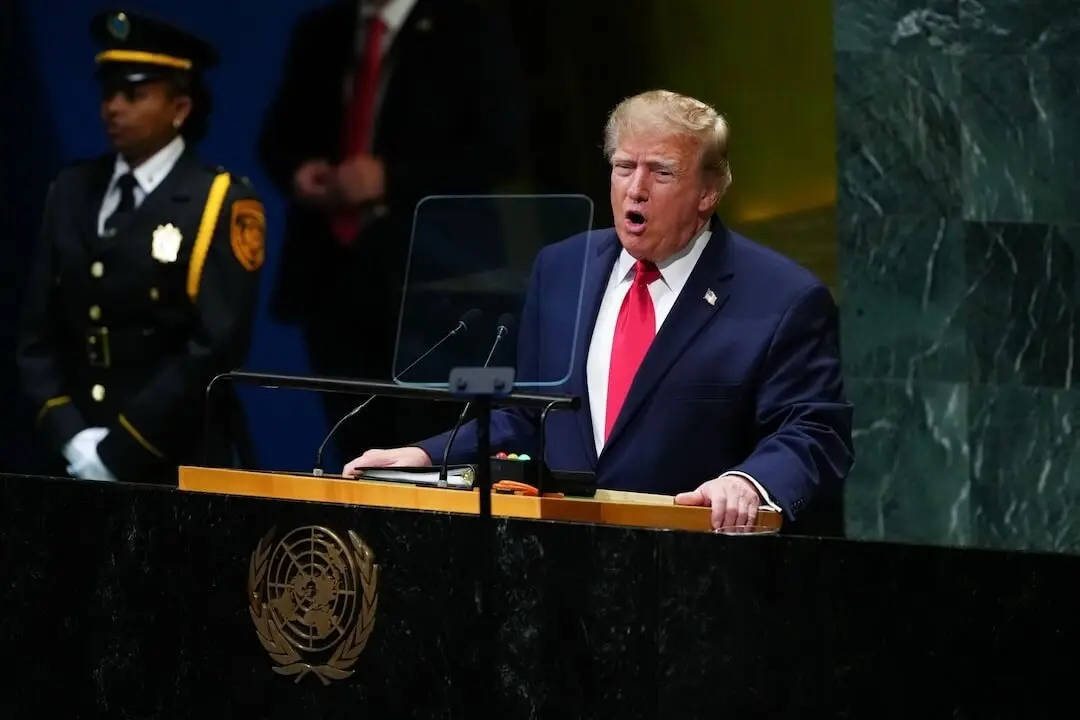
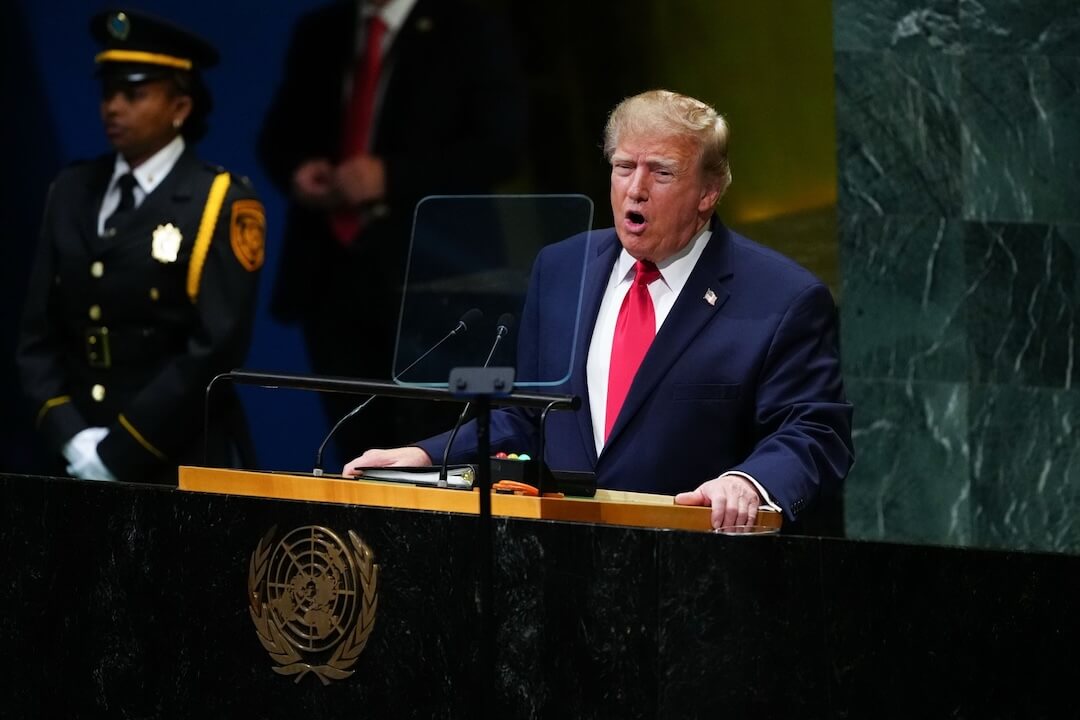
By Tuesday, President Trump was back on television screens nationwide, not through the standard White House pool feed, but via the United Nations General Assembly broadcast. U.N. television cameras recorded speeches during the assembly, and major news organizations distributed the live feed to their audiences, typically inserting onscreen graphics to distinguish the international body’s footage from their own proprietary reporting.
Network responses to the address varied wildly. Fox News aired the 40-minute speech from beginning to end. MS NOW chose to cut away before the conclusion of the address to immediately transition into live fact-checking of the president’s claims. CNN, maintaining its structural boycott stance, did not carry the speech live, opting instead to broadcast short clips and analysis. During the broadcast, CNN anchor Wolf Blitzer informed viewers:
"Despite the White House barring CNN and other news organizations from the presidential press pool, we do have a live signal of the president’s remarks provided by United Nations television. We will monitor his speech and bring you any newsworthy moments as they happen."
The tensions between the administration and the banned outlets were further underscored during an exchange at the United Nations. When CNN correspondent Kaitlan Collins attempted to question President Trump regarding polling data that indicated low public confidence in the U.S. war strategy in Iran, the president openly questioned her presence.
"It’s an honor to be here. I’m surprised that CNN is here covering me," Trump said.
When Collins calmly replied, "The United Nations allowed us in, sir," the president snapped back, "You should not be here covering me. You said you weren’t going to cover me. You shouldn’t be covering me."
To clarify, neither CNN nor Collins ever stated they would forgo covering the administration. Addressing the exchange, a senior CNN executive told The Daily Beast’s Julia Ornedo, "We will not be deflected from our duty to hold the government and other public bodies to account, and we will continue to report on the actions and processes of this administration without fear or favor."
Legal Battles and Judicial Precedent
Following the initial ban, CNN, MS NOW, and Politico filed a joint federal lawsuit against the administration, seeking an immediate injunction to restore their White House press credentials. U.S. District Judge Timothy Kelly scheduled a videoconference hearing to weigh the outlets’ request for emergency relief.
Judge Kelly, an appointee of President Trump, carries significant judicial history regarding executive press access. In 2018, Kelly was the presiding judge who ordered the White House to restore the press credentials of then-CNN reporter Jim Acosta after the administration attempted to revoke his access following a contentious press conference. The outcome of the current proceedings before Judge Kelly is anticipated to set a modern legal precedent regarding whether executive branch workspace privileges constitute a First Amendment right for accredited news organizations.
Fact-Checking the UN Address
President Trump’s 40-minute address to the United Nations General Assembly on Tuesday drew immediate scrutiny from media fact-checkers. Central to his speech was a stark ultimatum regarding the war in Iran:
"I have a big decision to make. Will a deal be made with Iran that lets them rebuild and create a far greater country than it ever was before, maybe one of the greatest in the Middle East or even the world? Or do I annihilate the Islamic Republic and do it quickly, never giving them a chance to kill and destroy people and countries again?"
Reporting from The New York Times characterized the speech as "rife with falsehoods and exaggerations." Concurrently, Poynter’s PolitiFact published an exhaustive breakdown titled "President Donald Trump misleads on Iran war, AI in speech to UN," detailing discrepancies in the president’s claims regarding international military capabilities and emerging technologies.
Supporting Context, Official Statements, and Metrics
The Administration’s Defense: Rubio on NBC
The administration’s rationale for restricting media access was defended by U.S. Secretary of State Marco Rubio during an appearance on NBC’s Today show on Tuesday. During a testy exchange with co-host Craig Melvin, Rubio was pressed on whether he planned to implement similar bans on the pool reporters traveling with the State Department.
Rubio offered a defense of the president’s actions, asserting:
"Look, the White House feels very strongly and the president feels very strongly that the coverage he gets… and I can’t blame him. Look, I got to be honest with you, and maybe you’re not going to like to hear this, but I watch a lot of American news coverage, and it sounds, in some cases, for example, like they’re rooting for Iran. It sounds like they highlight anything Iran says in all their public statements as true and they downplay everything American officials say as wrong."
While Melvin did not directly challenge Rubio’s assertion that networks were "rooting for Iran," he questioned the fundamental justification of barring outlets simply due to negative coverage. Rubio played semantics, insisting that the organizations had not been "banned," but rather "just not allowed to work from the workspace at the White House."
White House Talking Points Revealed
The political strategy behind the ban was further exposed when MS NOW congressional reporter Mychael Schnell obtained an internal White House memo distributed to Republican members of Congress. The talking points, circulated shortly after the media lawsuit was filed, instructed GOP lawmakers to emphasize that "no president has been more transparent or offered more of his time to the press." Furthermore, the guidance asserts that the First Amendment does not grant individual reporters an inherent right to physical workspace within the White House complex.
Broadcast Ratings: 60 Minutes and NFL Dominance
In the broader television ecosystem, ratings data for the second week of the new season of CBS’s 60 Minutes—operating under new executive producer Nick Bilton—revealed an audience of 6.77 million viewers. While representing a 5% increase compared to the equivalent week of the previous season, the number marked a decline from the 7.9 million viewers who tuned into the season premiere.
Industry analysts attributed the dip primarily to CBS’s lack of a marquee late-afternoon NFL game. Conversely, Fox Sports capitalized on the Sunday late-window slot with a high-profile matchup between the Dallas Cowboys and the Washington Commanders, which drew a massive audience of 27.2 million viewers.
The most recent episode of 60 Minutes featured newly appointed correspondent Ross Douthat conducting the first television interview with Patrick Clancy following the mistrial in Massachusetts regarding the tragic deaths of his three children. Due to CBS broadcasting the 2026 MTV Video Music Awards this coming Sunday, 60 Minutes will dark before returning on October 4.
Late-Night Satire
The media war has naturally become prime material for late-night comedy. During The Tonight Show, host Jimmy Fallon quipped: "Over the weekend, Trump banned reporters from CNN, MS NOW and Politico from the White House. In a related story, Melania just applied to be a reporter for CNN, MS NOW and Politico."
Corporate Upheaval: Kara Swisher Seeks CNN Exit
Amid the operational challenges facing journalism, structural corporate shifts are also altering the media landscape. With state attorneys general settling their antitrust lawsuit against Paramount, the company’s multi-billion-dollar acquisition of Warner Bros. Discovery (WBD) is finalized to close within weeks.
The impending merger has prompted high-profile departures. CNN contributor Kara Swisher, whose network is owned by WBD and will soon fall under Paramount’s corporate umbrella, has expressed vocal opposition to incoming leadership. Swisher has leveled sharp criticisms against Paramount CEO David Ellison and his father, Oracle co-founder Larry Ellison, stating previously:
"I don’t think they’ll be good owners, I don’t think they’ve already shown several times, including editorial choices… that they have no interest in journalism. And I refuse to work for an organization that doesn’t respect journalists."
On a recent episode of the Pivot podcast co-hosted with Scott Galloway, Swisher confirmed she is acting on those words:
"I have asked my agent to get me out of my contract. It ends Dec. 31, so it’s only a few months, right? I just can’t… I was trying to figure out ways I could work with them in some like licensing way, but then I thought, [Expletive] these guys! I don’t want to work for them. I just don’t want to."
Future Outlook
As the legal proceedings before Judge Timothy Kelly unfold, the immediate future of the White House press corps hangs in the balance. Should the federal court rule in favor of the media outlets, it would reinforce established First Amendment protections against retaliatory executive exclusion. Conversely, a ruling upholding the administration’s restrictions could redefine the parameters of access journalism for decades to come.
Simultaneously, the steadfast solidarity of the remaining TV pool networks suggests that the traditional collaborative framework of presidential reporting is undergoing an unprecedented stress test. With corporate consolidation reshaping major newsrooms and ongoing hostilities dividing the government from the press, the boundaries of public accountability, presidential transparency, and constitutional rights remain deeply contested terrain.