

Executive Overview
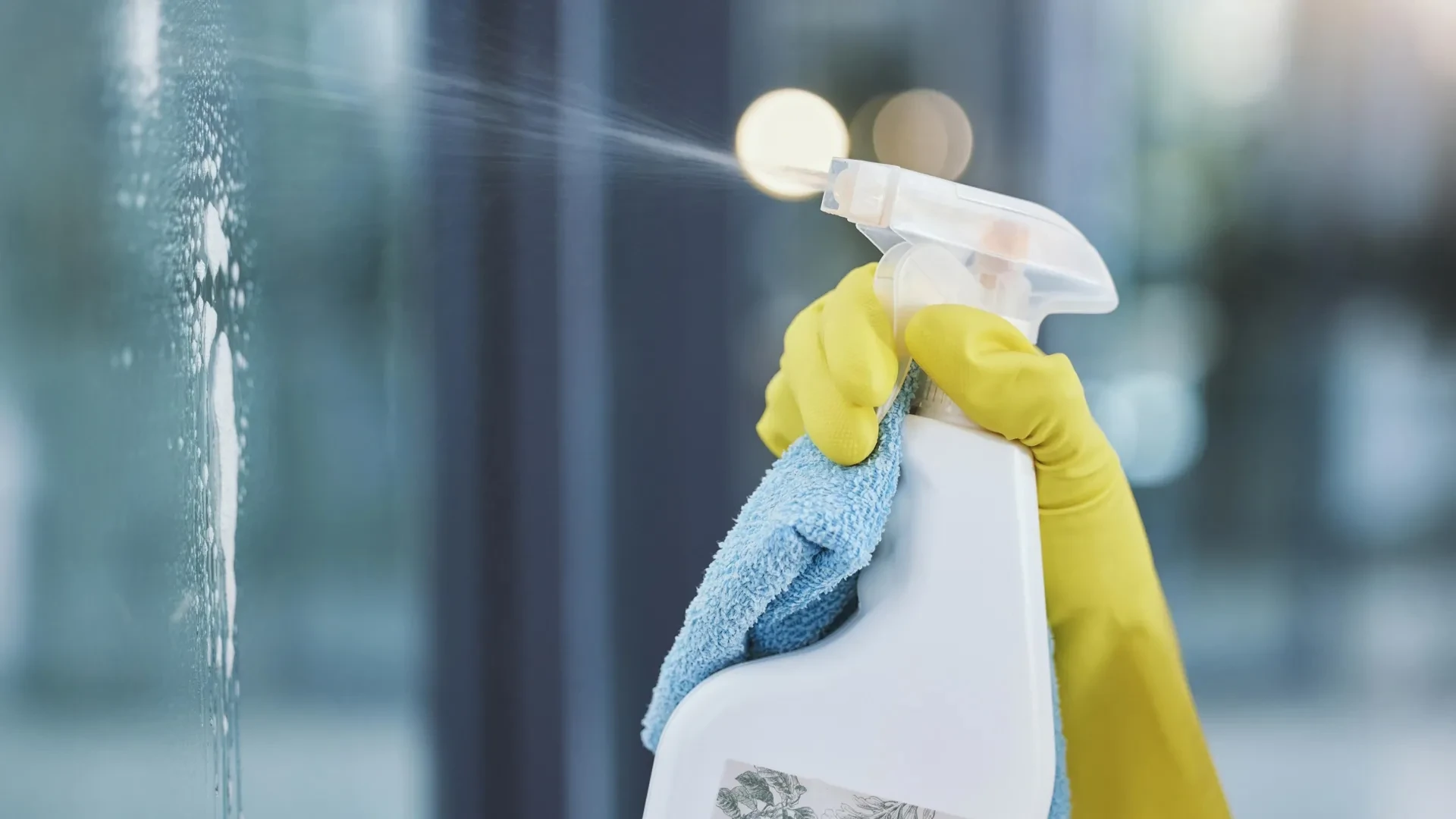
For generations, the sensory experience of a thoroughly cleaned home has been inextricably linked to specific aromatic profiles: the sharp, crisp burst of citrus, the earthy aroma of pine, or the calming, floral notes of lavender. These fragrances have long served as olfactory proof of cleanliness, signaling to our brains that a space is sanitized, refreshed, and safe. However, groundbreaking new research from Purdue University reveals an unsettling paradox at the heart of modern domestic hygiene. The very scents designed to make indoor environments feel pure are actively triggering complex chemical reactions in the air, transforming living rooms, kitchens, and offices into generators of invisible, microscopic air pollution.
Led by Brandon Boor, an associate professor of civil and construction engineering at Purdue University, a team of researchers has discovered that fragrance compounds released by both conventional household cleaners and botanical, essential oil-based products react rapidly indoors. These reactions generate trillions of ultrafine nanoparticles that remain completely invisible to the naked eye. Unlike the smoke, dust, or haze associated with traditional air pollution, this chemical generation occurs silently.
The health implications are profound. When inhaled, these minuscule particles—ranging from 1 to 30 nanometers in diameter—bypass the body’s upper respiratory defenses and penetrate deep into the most vulnerable regions of the human lungs. According to Boor’s findings, the respiratory dose of secondary pollutants a person inhales during routine cleaning can equal or even exceed the particulate exposure experienced by standing alongside a congested, heavy-traffic roadway.
This comprehensive investigation examines the atmospheric chemistry occurring within our homes, breaks down the empirical data gathered in Purdue’s specialized model house, explores the compounding danger of combining scented cleaners with modern air-disinfection technologies, and outlines actionable mitigation strategies for consumers striving to balance surface hygiene with respiratory health.
Detailed Chronology: Uncovering the Invisible Threat
The investigation into indoor atmospheric chemistry did not begin in a traditional chemistry lab, but rather in the shadow of a global crisis.
The Pandemic Catalyst
When the COVID-19 pandemic swept across the globe in early 2020, public health directives emphasized rigorous surface disinfection. Households, schools, commercial offices, and healthcare facilities dramatically increased their usage of chemical disinfectants, surface sprays, and cleaning wipes. At Purdue University, Brandon Boor and his colleague Nusrat Jung, also an assistant professor of civil and construction engineering, began investigating how these aggressive cleaning regimens altered indoor environmental quality.
As they monitored volatile organic compounds (VOCs) and indoor air parameters, one feature quickly stood out: the overwhelming prevalence of strong fragrances. Manufacturers added these synthetic and botanical scents to create what Boor terms a "pleasant smellscape" in enclosed spaces. Yet, as the researchers analyzed the dynamic shifts in indoor chemistry, a troubling realization emerged. The products designed to protect human health from biological pathogens were simultaneously degrading indoor air quality through chemical synthesis.
Recreating Reality: The Purdue Model Home
To move beyond theoretical computer models and examine these phenomena under realistic, everyday conditions, Boor’s research team utilized a unique facility on the Purdue campus: a fully functional model home.
This experimental residential structure features a complete kitchen, a bathroom, wooden flooring, and typical residential geometry, allowing researchers to simulate ordinary household chores with absolute fidelity. In this controlled environment, the team tested a wide array of commercially available cleaning products, ranging from conventional multi-purpose liquid sprays to botanical disinfectant wipes formulated with essential oils.
The experimental protocol mirrored everyday human behavior. Researchers performed routine tasks such as mopping hardwood floors, spraying countertops, and wiping down high-touch surfaces. Utilizing high-resolution, real-time instrumentation capable of detecting volatile organic compounds down to the nanocluster aerosol regime (1-3 nanometers), the team tracked the immediate atmospheric response.
The results were astonishing in both their speed and magnitude. Within minutes of initiating cleaning tasks—often before the chores were even completed—the air within the model home experienced a massive burst of nanoparticle formation.
The Convergence of Cleaning and UV Disinfection
Seeking to understand how emerging indoor technologies interact with chemical cleaners, Boor teamed up with Ernest Blatchley, a professor of civil and construction engineering at Purdue, to investigate the impact of germicidal far-ultraviolet (UV-C) lamps. These lamps have grown increasingly popular in public and residential spaces for continuous air disinfection, as they neutralize airborne pathogens without harming human skin or eyes.
However, when UV-C lamps operate in an indoor environment, they interact with ambient oxygen molecules to generate low levels of ozone ($O_3$). When Boor and Blatchley tested the use of scented surface cleaners in the presence of these UV-C devices, the results revealed a compounding danger.
In experiments conducted within the tiny home, ozone concentrations rose to between 20 and 40 parts per billion (ppb)—levels comparable to moderate outdoor air pollution. When these elevated ozone levels encountered the massive cloud of terpenes evaporating from scented cleaning agents, the rate of nanoparticle formation skyrocketed. This hazardous synergy demonstrated that technologies intended to purify indoor air could inadvertently accelerate the creation of secondary chemical pollutants if used alongside fragranced products.
Supporting Context & Metrics: The Science of Secondary Organic Aerosols
To understand why a lemon-scented floor cleaner can rival the pollution of a busy highway, one must examine the atmospheric chemistry occurring at a microscopic level.
The Outdoor Blueprint vs. Indoor Realities
Atmospheric scientists have long understood that plants release natural organic compounds that react with outdoor ozone. Terpenes—such as pinene, emitted by pine trees—participate in slow-moving chemical reactions in forests. Over hours or days, these reactions generate tiny airborne particles that eventually grow large enough to seed clouds, playing a critical role in Earth’s climate system.
In the great outdoors, this chemistry proceeds at a leisurely pace because ambient terpene concentrations are generally quite low, measured in fractions of a part per billion.
Indoors, however, the physical dynamics are entirely inverted. When a consumer sprays a multi-purpose cleaner or mops a floor with a botanical disinfectant, fragrance compounds rapidly evaporate from liquid droplets and treated surfaces. Common cleaning liquids contain high concentrations of potent terpenes and terpenoids, including:
- $alpha$-pinene and $beta$-pinene: Associated with pine and woody scents.
- Limonene: The primary chemical driver of citrus aromas (lemon, orange, lime).
- Thymol: Derived from thyme, frequently utilized in botanical disinfectants.
- Linalool: A major floral fragrance component found in lavender and other aromatic plants.
During active cleaning, the indoor mixing ratios of these terpenes surge dramatically. Boor’s research indicates that airborne terpene concentrations inside a residential room can spike to tens or even hundreds of parts per billion (ppb)—reaching levels 10 to 1,000 times higher than those measured in dense, forested environments.
Trillions of Ultrafine Particles
When these artificially elevated terpene concentrations meet indoor oxidants—primarily ozone infiltrating from outdoors or generated by indoor appliances and UV lamps—a chemical process known as new particle formation or nucleation occurs.
As the terpenes oxidize, they form less volatile intermediate products that rapidly condense, coalescing into solid or liquid nanoparticles. Routine household tasks generate staggering quantities of these particles:
- Total Output: Billions to trillions of particles are generated during a single cleaning session, depending on the product formulation and surface area treated.
- Size Distribution: The vast majority of these newly formed particles measure between 1 and 30 nanometers in diameter, placing them squarely in the ultrafine and nanocluster aerosol categories.
- Concentration Spikes: Transient indoor particle number concentrations during active cleaning reached magnitudes of $10^5$ to $10^8$ particles per cubic centimeter ($textcm^-3$), with nucleation rates approaching $10^5text cm^-3text s^-1$ and condensational growth rates reaching up to 300 nanometers per hour.
The Blind Spot of Consumer Air Monitors
One of the most concerning aspects of this phenomenon is its invisibility. Traditional, commercially available indoor air quality monitors are typically designed to detect larger particulate matter, such as $textPM2.5$ (particles 2.5 micrometers or smaller) or $textPM10$ (dust and pollen).
Because the secondary organic aerosols generated by cleaning products consist overwhelmingly of nanoparticles measuring under 30 nanometers, they fall well below the detection thresholds of standard consumer sensors. A homeowner monitoring their indoor air quality via a commercial device might see completely normal readings, remaining entirely unaware that the room is saturated with trillions of ultrafine particles.
Health Implications: Penetrating the Deep Lung
From a toxicological standpoint, particle size dictates physiological impact. While larger dust and pollen particles are typically trapped by the hairs and mucus membranes in the nasal passages and upper respiratory tract, ultrafine nanoparticles behave differently.
Due to their minuscule scale, these particles navigate the entire respiratory tree with ease. When inhaled during and immediately after cleaning, they deposit throughout the respiratory tract, penetrating deep into the alveolar regions of the lungs. Once deposited in these delicate air sacs, they can:
- Induce localized oxidative stress and cellular inflammation.
- Exacerbate chronic respiratory conditions such as asthma and chronic obstructive pulmonary disease (COPD).
- Potentially cross the alveolar-capillary membrane, entering the human bloodstream and circulating systemically throughout the body.
Official Statements and Expert Insights
The findings, presented by Brandon Boor and his research collaborators during the American Chemical Society (ACS) fall meeting in Chicago—specifically at the symposium titled "Healthy Indoor Spaces: Bridging the Microbiome and Chemistry"—have challenged foundational assumptions regarding indoor hygiene.
Summarizing the core paradox of modern cleaning, Brandon Boor emphasized the urgent need for consumer awareness:
"Importantly, cleaning removes viruses and bacteria from surfaces, but it can also generate invisible air pollution. There’s no visible dust or smoke in the air, but these particles are forming."
Elaborating on the severity of human exposure, Boor drew a direct comparison to outdoor pollution sources that command significantly more regulatory and public attention:
"We showed that indoor ozone reactions with fragrances from cleaning produce nanoparticles that carry a respiratory dose comparable to, or greater than, what you would experience from standing outside along a busy road. The particles are different in terms of their composition, but the total dose can be higher. You’re not seeing smoke, dust, or haze in the air. Instead, you think the air smells great so it must be clean."
Addressing the sensory conditioning that drives consumer purchasing habits, Boor noted that the chemical industry has successfully trained the public to associate heavy fragrances with sanitation, a trend he believes requires re-evaluation:
"That’s often to create a pleasant smellscape in the indoor space. But clean air should not smell like highly concentrated citrus fruit. It should not really smell of anything."
Reflecting on the unexpected velocity of the chemical reactions observed in Purdue’s model home, Boor highlighted the immediate nature of the exposure risk:
"By the time you finish cleaning up an indoor space, you’ve already formed a lot of nanoparticles and inhaled them."
Future Outlook: Redefining Indoor Hygiene
The revelation that routine cleaning generates high levels of secondary organic aerosols does not imply that society should abandon hygiene practices. Disinfection remains a vital pillar of public health, essential for neutralizing pathogenic viruses and bacteria on high-touch surfaces, particularly in hospitals, schools, and homes.
Instead, Boor and his fellow researchers advocate for a paradigm shift that encompasses product formulation, building engineering, and consumer behavior. Addressing this invisible indoor air pollution requires a multi-layered approach:
1. Product Reformulation and Ingredient Transparency
Manufacturers of household and commercial cleaning agents must reconsider the heavy reliance on fragranced compounds. While consumer preference has long favored scented products, the chemical burden of high-terpene formulations outweighs their aesthetic benefits. Regulatory bodies and manufacturers should prioritize the development and widespread adoption of truly unscented or low-emission cleaning products that achieve microbial disinfection without releasing volatile organic compounds into the atmosphere.
2. Enhanced Building Ventilation
Because indoor chemical reactions occur rapidly upon application, mechanical ventilation is critical for mitigating human exposure. Building designers and homeowners must ensure that indoor spaces are adequately ventilated during and immediately after cleaning activities. Simple measures—such as operating dedicated exhaust fans in kitchens and bathrooms or opening windows to facilitate cross-ventilation—can rapidly flush out concentrated terpenes and newly formed nanoparticles before they accumulate to hazardous levels.
3. Avoiding Ozone-Generating Devices During Cleaning
The synergistic effect observed when combining scented cleaners with ozone-generating technologies—such as germicidal UV-C lamps or electronic air cleaners—highlights the need for operational protocols in smart buildings. Homeowners and facility managers should ensure that ozone-producing devices are powered off while cleaning with fragranced products is actively taking place.
4. Consumer Empowerment and Education
Ultimately, safeguarding indoor air quality depends on consumer awareness. By understanding that "clean air shouldn’t smell like citrus," individuals can make informed purchasing decisions, intentionally selecting unscented or fragrance-free cleaning agents, minimizing aerosol spray usage in favor of direct liquid application where appropriate, and actively ventilating their living spaces.
As urban populations spend an estimated 90% of their lives indoors, the air within our homes and workplaces deserves the same rigorous scientific scrutiny and regulatory protection historically reserved for the great outdoors. Purdue’s pioneering research marks a crucial step toward clearing the invisible haze from our indoor spaces, ensuring that the pursuit of cleanliness no longer compromises human respiratory health.