


Executive Overview
Artificial intelligence is no longer a futuristic novelty or a peripheral trend in the digital landscape; it is the operational baseline. For modern freelance writers, resisting AI entirely or relying on it blindly to auto-generate low-quality prose spells professional peril. The industry divide is stark. On one side are the struggling writers ignoring the technology or using it as a lazy crutch, churning out predictable, homogenized content that discerning clients spot instantly. On the other side are thriving professionals who leverage AI as a cognitive force multiplier.
By offloading the mechanical friction of the craft—such as blank-page paralysis, initial research, transcription sorting, and marketing administration—these top-tier writers preserve their bandwidth for the human-centric work that commands premium rates: critical thinking, investigative interviews, subject-matter expertise, and relationship building.

This guide outlines ten strategic, practical ways freelance writers can integrate AI into their daily workflows to maximize efficiency, protect their unique voice, and build a more resilient, scalable business.
Detailed Chronology & Workflow Integration
The integration of artificial intelligence into the freelance writing lifecycle does not happen overnight. Successful adoption requires a phased, intentional approach that maps AI tools directly to the operational friction points of the writing process.
Phase 1: Ideation and Conceptual Architecture
The earliest stages of content creation—staring at a blinking cursor and wrestling with structural outlines—traditionally consume hours of unpaid labor.
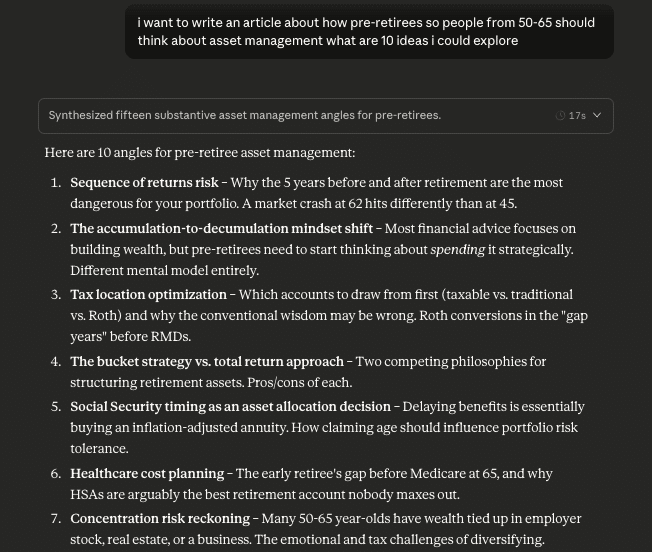
- 1. Beating the Blank Page: The hardest part of any writing project is ignition. Rather than tasking an LLM (like ChatGPT or Claude) with writing a full article, writers use it to break psychological inertia. By prompting the model for ten distinct angles, creative opening hooks, or potential reader pain points, writers generate raw material to react against. This shifts the creative burden from generation to editing, instantly dissolving writer’s block.
- 2. Outlining and Structuring: Organization is the backbone of clear writing. Freelancers can use AI to build structural frameworks for blog posts, essays, and pitches. By feeding an AI tool an intake brief containing audience data, primary goals, raw thoughts, and research notes, writers receive structural blueprints and subheadings. While the final architecture is always massed by human hands, AI frequently uncovers adjacent angles or necessary sections that might otherwise have been missed.
Phase 2: Information Gathering and Sourcing
Modern content requires rigorous backing, but data collection can easily become a time sink.

- 3. Accelerated Research: Cutting-edge search tools like Perplexity Pro allow writers to triage large volumes of information rapidly. By ingesting long-form industry reports or querying live web data with verified citations, writers can quickly establish thematic fluency. This initial legwork ensures that facts are current, quotes are contextually relevant, and hours are not wasted reading dead-end articles.
- 4. Interview Preparation: High-level subject-matter expert (SME) interviews demand sharp, sophisticated questions. Freelancers can brief an AI on their interview subject and overarching angle to generate ten targeted, high-yield questions. This preparation ensures writers bypass basic, easily-Googled queries and maximize the value of their time with industry leaders.
Phase 3: Drafting, Outreach, and Personalization
While automated text generation has its place, personalization remains the cornerstone of client acquisition.
- 5. Crafting Cold Emails and Letters of Introduction (LOIs): Prospecting is an exhausting numbers game. AI can rapidly produce framework drafts for cold outreach or follow-ups, saving writers from starting from zero. However, the golden rule of outreach remains absolute: the opening sentence must be deeply personalized. AI can provide the structural 80%, but the human writer must supply the bespoke hook proving they understand the prospect’s recent company milestones, awards, or public achievements.
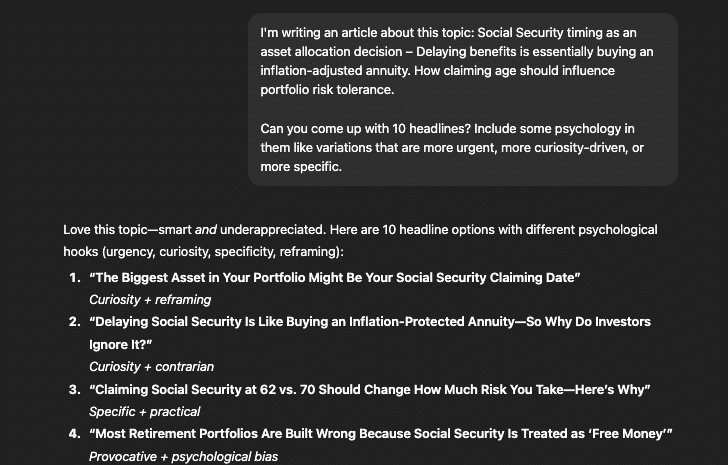
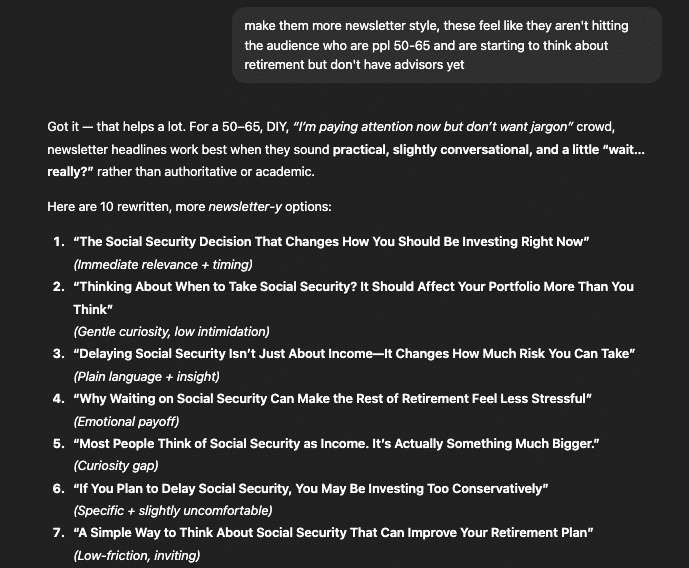
- 6. Headlines and Hooks: Click-through rates hinge on compelling titles and introductory paragraphs. AI excels at volume generation, offering variations spanning urgency, curiosity, and specificity. Writers can mix, match, and refine these suggestions to craft punchy headlines that capture audience attention without sliding into clickbait.
Phase 4: Refinement, Repurposing, and Business Operations
The value of a written piece extends far beyond the final draft. Smart freelancers maximize their intellectual property through systematic distribution and tracking.
- 7. Advanced Editing and Proofreading: Human eyes naturally skip over typos and syntactic errors in their own work, filling in gaps with what they meant to write. Tools like Grammarly, alongside conversational prompts in Claude or ChatGPT, provide an objective second set of eyes. Writers can ask AI models to act as critical editors or simulate specific reader personas to flag confusing phrasing or logical gaps before publication.
- 8. Intelligent Transcription Management: For writers conducting recorded SME interviews, tools like Otter.ai transform chaotic transcripts into searchable repositories. Using built-in chat functions, writers can instantly pull exact quotes, summarize key themes, or locate specific data points without manually scrubbing through hours of audio. (Note: Human verification of all direct quotes against raw audio remains mandatory prior to publication).
- 9. Multi-Platform Content Repurposing: A 1,500-word deep-dive article should never live in isolation. By feeding a finished piece into an LLM, freelancers can instantly spin up tailored promotional assets: a sequence of five LinkedIn posts with optimized hooks, a Twitter/X thread, or newsletter highlights. This turns a single intensive writing session into an entire week’s worth of multi-channel distribution assets.
- 10. Marketing Tracking and Client Analytics: Tracking outbound marketing efforts via manual spreadsheets often leads to abandonment. By utilizing workspace assistants like Claude Cowork, freelancers can log daily outreach data—contacts made, pitches sent, responses received—and request monthly performance summaries. Over time, these systems reveal vital conversion metrics, helping writers pinpoint precisely how many cold emails or LOIs are required to land a new client contract.
Supporting Context & Metrics
The shift toward AI-augmented freelancing is driven by measurable efficiency gains and economic realities within the digital media landscape.
- Time-to-Publish Reduction: Industry case studies indicate that freelancers incorporating structured AI outlining and research triaging reduce their pre-writing preparation phase by an average of 40% to 60%.
- Outreach Volume vs. Conversion: Data tracking across modern freelance cohorts reveals that standard cold outreach yields an average client conversion rate between 1% and 3%. Utilizing AI-assisted tracking systems (such as weekly gamified scorecards) allows freelancers to maintain consistent follow-up cadences, effectively doubling response rates through persistent, targeted engagement.
- The Content Explosion: With billions of pieces of content published daily, generic AI-generated text has flooded the market. Brands and publications face severe content fatigue, driving up the market value of original reporting, exclusive interviews, human vulnerability, and verified domain expertise.
Official Statements and Industry Perspectives
Thought leaders in the digital publishing and freelance economy emphasize that technology must serve human creativity rather than supplant it.
"AI tools aren’t new anymore. If you’re a freelance writer and you’re not using them, you’re working harder than you need to. But there’s a difference between using AI well and using it badly. The freelancers who are thriving right now use AI to handle the tedious parts of the job so they can focus on the work that actually matters: the thinking, the interviews, the expertise, the relationships."
— Sean Ogle, Founder of Location Rebel
Industry analysts echo this sentiment, warning that writers who rely on turnkey automated generation risk alienating clients and destroying their professional credibility. The consensus among veteran publishers is clear: AI is a productivity engine, not a creative substitute.

Future Outlook: What NOT to Do With AI
As artificial intelligence capabilities expand, the line between high-value writing and commoditized noise will sharpen. To remain competitive, freelancers must avoid specific, detrimental pitfalls:
- Do Not Outsource Thinking and Strategy: If you let an AI dictate your core arguments, unique worldview, and strategic framing, you reduce yourself to an easily replaceable commodity.
- Do Not Publish Raw, Unedited AI Output: Clients and readers immediately spot the standardized tone, repetitive transitions, and bland generalizations characteristic of unpolished AI text.
- Do Not Neglect Fact-Checking: Hallucinations remain a persistent risk. Relying on AI without verifying underlying data, statistics, and interview quotes exposes a writer to severe reputational damage and liability.
The Bottom Line
Artificial intelligence is an inescapable fixture of the modern digital economy. Freelancers who master these tools will scale their outputs, eliminate burnout, and command higher fees for their strategic insight. Those who refuse to adapt risk being left behind by an evolving marketplace.

Begin by integrating just one or two of these workflows into your daily routine. Build comfort, establish boundaries, and let technology handle the friction so you can focus on the irreplaceable human elements that make your voice truly valuable.