In the rapidly evolving landscape of digital marketing, organic search visibility remains a cornerstone of sustainable business growth. However, the days of throwing random keywords against a wall and hoping for algorithmic alignment are long gone. Today, sophisticated search engine optimization (SEO) demands a surgical, data-driven approach to uncovering user intent, mapping competitive landscapes, and structuring topical authority.
At the vanguard of this data-driven revolution sits Semrush, an enterprise-grade platform that has redefined how marketers discover, filter, and operationalize keyword intelligence. Boasting a massive database of over 24 billion keywords, the platform equips digital strategists, e-commerce managers, legal professionals, and affiliate marketers with the tools needed to completely dominate their respective niches.
This comprehensive guide serves as an authoritative masterclass in leveraging Semrush’s premier toolsets—namely the SEO Toolkit, Keyword Magic Tool, Keyword Gap analyzer, and Keyword Manager. Whether you are aiming to capture quick organic traffic wins from your existing content footprint, reverse-engineer high-converting competitor funnels, or construct robust topical clusters from scratch, this tutorial provides actionable, real-world frameworks designed to be implemented immediately. For practitioners looking to follow along hands-on, a 14-day full-access trial is widely available to test out every feature detailed in the strategies below.
Detailed Chronology and Operational Frameworks
To maximize organic search performance, digital marketers must move away from isolated keyword hunting and instead adopt a systematic, multi-phase workflow. The process begins with identifying low-hanging fruit within an existing domain, transitions into aggressive competitor analysis, expands through topical brainstorming, and concludes with precise semantic clustering.
When managing a website that already possesses an established content footprint, the most lucrative starting point is not building something new, but rather optimizing what is already indexed. Specifically, target keywords where your domain is currently ranking between positions 4 and 15—the threshold of page one and page two.
Access the SEO Toolkit: Navigate to the Organic Research >> Positions report inside Semrush.
Apply Advanced Filters: Filter the incoming data using precise parameters tailored to your business model. Typically, setting a Position filter between 4 and 15, establishing a minimum Volume threshold, and capping the Keyword Difficulty (KD) ensures you focus exclusively on attainable, high-demand targets.
Segment and Build Lists: Extract these terms and segment them into distinct master lists—categorized into Existing and New—to prevent duplicate targeting and streamline your content optimization pipeline.
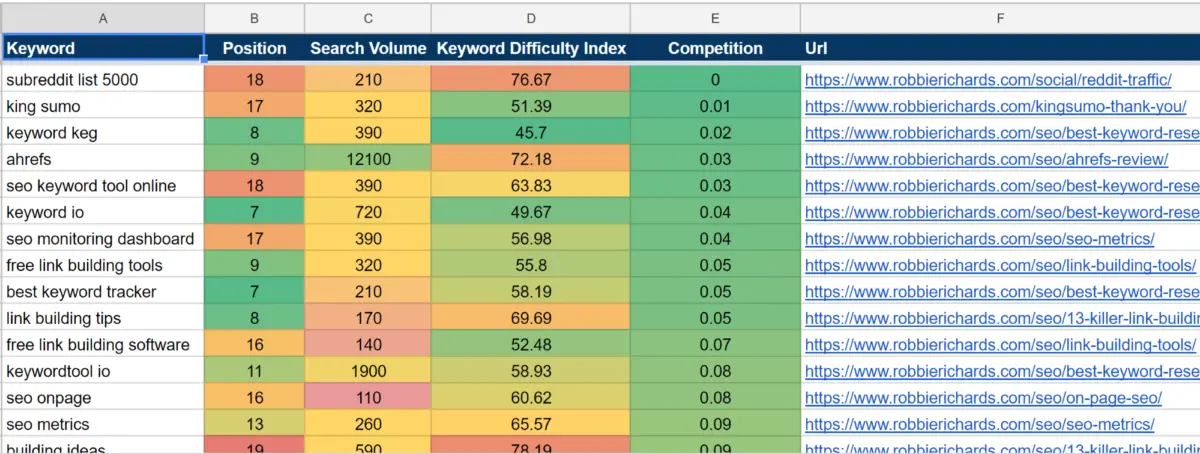
External Workflow Tip: For analysts who prefer working outside the browser interface, exporting these positions into a customized spreadsheet template automates formatting and color-coding, instantly highlighting high-volume, low-competition SERP anomalies.
Phase 2: Reverse-Engineering Competitor Success
Spying on your digital rivals is one of the fastest routes to high-intent traffic generation. Semrush facilitates this through several advanced reporting pathways:
Top Pages Report Analysis: By inputting a competitor’s domain (e.g., examining an e-commerce brand like Beardbrand or a legal practice like Dolman Law Group), marketers can analyze the exact URLs driving the lion’s share of organic traffic.
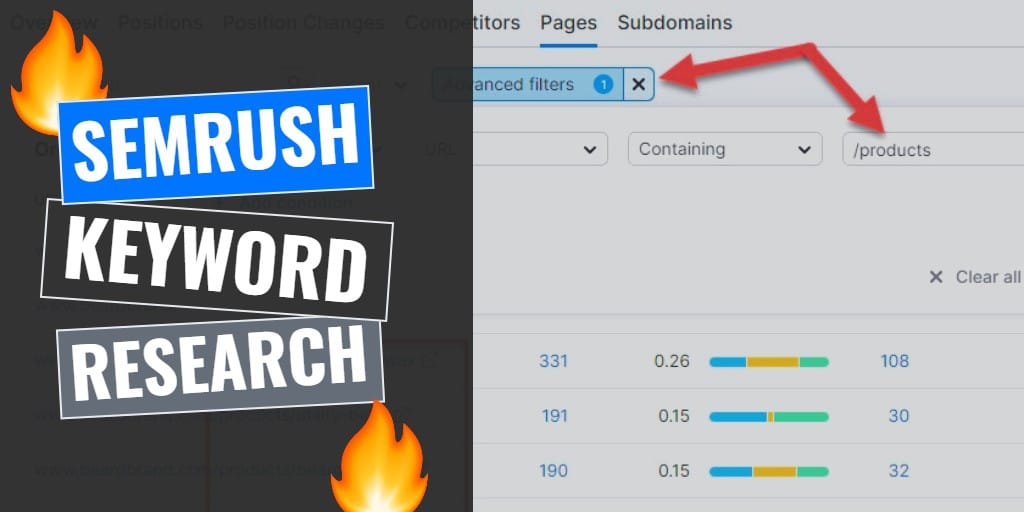
Subfolder Filtering: By applying URL filters—such as /products/ for e-commerce or /legal-services/ for localized agencies—strategists can isolate high-value transactional pages and cross-reference them against their own site architecture to identify glaring content gaps.
Keyword Modifiers: If competitors do not use clean subfolder structures, apply custom modifier filters (e.g., terms containing "best," "review," or specific software names) to isolate lucrative affiliate or product-comparison targets.
Phase 3: Advanced Keyword Gap and PPC-Organic Analysis
The Semrush Keyword Gap tool allows you to cross-examine multiple competitor domains simultaneously against your own. This uncovers two critical categories of untapped potential:
Missing Keywords: Terms that your competitors rank for in the top 100, but your domain does not touch at all.
Weak Keywords: Terms where your domain ranks, but your position lags significantly behind rival properties, signaling an urgent need for content refreshment or structural overhauls.
Furthermore, advanced PPC-organic cross-analysis allows brands to identify keywords where they rank outside the top three organic positions and are not currently bidding on paid search. This creates an immediate "air cover" strategy, letting marketers deploy paid ads to capture conversions while simultaneously working on organic optimization.
Phase 4: Scaling Topical Authority with the Keyword Magic Tool
Moving beyond direct competitors, the Keyword Magic Tool allows users to input seed phrases and instantly sift through millions of variations. By leveraging intent filters (Informational, Navigational, Commercial, Transactional) and grouping metrics, marketers can pinpoint consideration-stage keywords—such as software comparison queries ("Ahrefs vs. Semrush")—that yield exceptionally high conversion rates.
Phase 5: Constructing Semantic Keyword Clusters
To satisfy modern search engine algorithms and build true topical authority, individual keywords must be organized into logical content hubs. Using the Semrush Keyword Manager, users can either upload an existing keyword list or generate clusters from scratch using seed phrases.
The tool automatically groups related terms, calculates aggregate search volumes, assigns average difficulty ratings, and highlights "high ranking potential" clusters. Crucially, reviewing the Content References section reveals whether competitors are ranking using dedicated landing pages or broad overview posts, guiding your decisions on site architecture and new page creation.
Supporting Context and Metrics
The integration capabilities of Semrush serve as a major force multiplier for digital marketing teams. Traditional SEO workflows often suffer from fragmented tool stacks, requiring marketers to manually export data from research tools, port them into rank trackers, and pass them on to content writers via separate document editors.
Semrush eliminates this friction through deep ecosystem integration:
Direct Hand-offs: Once a high-value keyword list is finalized within the Keyword Manager, users can instantly dispatch those terms to the Position Tracking tool to monitor day-to-day ranking fluctuations.
Content Production Synergy: Keywords can be pushed directly into the SEO Writing Assistant, giving copywriters real-time feedback on semantic richness, readability scores, and target keyword usage while drafting articles natively.
This closed-loop environment drastically compresses the timeline from raw data extraction to published, optimized content, allowing agencies and in-house teams to scale their publishing output without sacrificing strategic rigor.
Official Statements and Industry Insights
Top-tier SEO practitioners and platform analysts consistently emphasize the shift from keyword-density metrics to intent-driven semantic mapping.
"When managing a website with an existing content footprint, you should never start your keyword research from scratch," notes veteran SEO consultant Robbie Richards. "Extracting the terms sitting on pages one and two—positions 4 through 15—unlocks immediate, low-hanging fruit that can be harvested with minimal content updates, delivering rapid organic traffic gains before you even touch new production."
Industry analysts also highlight the importance of subfolder segmentation, particularly in competitive localized verticals like legal, medical, and SaaS. By isolating high-intent directories rather than analyzing raw domain-level data, brands can reverse-engineer the exact site structures that industry leaders use to capture localized or transactional search demand.
Future Outlook
As search engines continue to integrate generative AI, zero-click search features, and advanced natural language processing into their core algorithms, the nature of keyword research is undergoing a fundamental transformation. Basic exact-match keyword targeting is steadily giving way to comprehensive semantic exploration and entity-based optimization.
Platforms like Semrush are positioned at the bleeding edge of this transition, continuously expanding their intent-classification models, global database sizes, and automated clustering algorithms. In the coming years, successful SEO strategies will rely less on individual keyword rankings and more on establishing undisputed topical authority across entire semantic webs.
Marketers who master advanced gap analysis, intelligent subfolder filtering, and seamless tool integration today will be uniquely equipped to navigate the algorithmic shifts of tomorrow—ensuring sustained visibility, qualified traffic, and measurable ROI in an increasingly crowded digital marketplace.