

Executive Overview
In an era defined by an unrelenting 24-hour news cycle, algorithmic distribution, and a widespread crisis of public trust in media, the mechanics of how a story makes it to air or print have never been more critical. Every day, journalists grapple with ethical minefields: Should a graphic video of a mass shooting be broadcast? Is a viral social media clip from a conflict zone authentic, or is it sophisticated state-sponsored propaganda? How do you ethically report on vulnerable minors, and when does the public’s right to know outweigh the individual’s right to privacy?
For decades, major national networks like NBC News have relied on specialized national standards teams to navigate these complex questions. These departments function as the ethical compass of a newsroom, working alongside reporters, producers, and executives to ensure that coverage remains accurate, fair, and transparent. However, as the media landscape shifts—marked by contracting newsroom budgets, the decimation of local journalism, and the rise of decentralized digital-first operations—the luxury of a dedicated, multi-person standards bureau is increasingly confined to the upper echelons of corporate media.
This reality leaves thousands of local and regional newsrooms vulnerable. Operating under extreme deadline pressure and with historically lean staffs, these outlets often rely on reporters or assignment editors to make high-stakes ethical judgments on the fly, entirely unshielded by institutional safety nets.
This article, the first in a comprehensive series exploring the modern mechanics of journalistic standards, examines how decisions made behind closed conference room doors shape global events. It explores the foundational moments that define a standards editor’s career, outlines the practical framework required to protect journalistic integrity in resource-constrained environments, and presents a blueprint for why every newsroom—regardless of size—urgently needs a designated in-house standards advocate.
Detailed Chronology: The Watershed Moment of February 2022
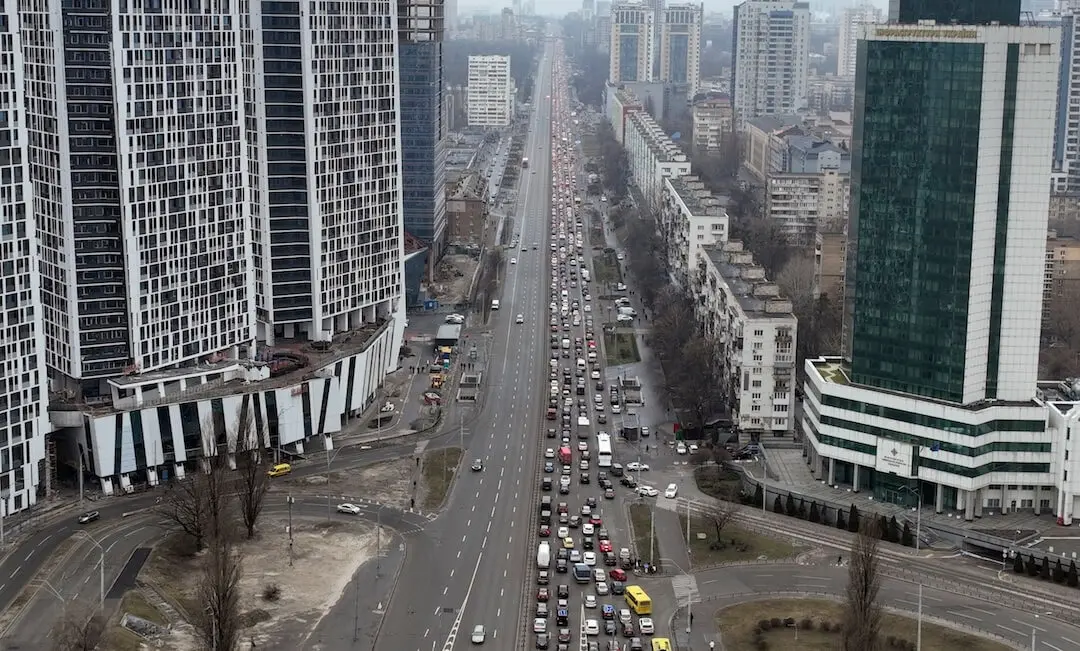
To understand the immense weight carried by a standards editor, one must examine the crucible in which many modern editorial policies are forged. In February 2022, the geopolitical landscape shifted abruptly when the Russian Federation launched a full-scale, unprovoked military invasion of Ukraine. The cascading global fallout was instantaneous, transforming international relations and thrusting journalists onto the front lines of an unprecedented information war.
For many professionals stepping into national newsrooms at that exact moment, the transition was jarring. Freshly appointed to the national standards team at NBC News, one editor found themselves immediately immersed in the chaos of a breaking global catastrophe. In the initial hours and days following the crossing of the border, the daily routine consisted of an intense triage of breaking news. Reporters, editors, and producers across the organization brought forward stories they were actively wrestling with, posing tough, foundational questions: Are we being accurate? Are we being fair? Are we being transparent?
Often, no pre-existing newsroom rulebook provided a clear-cut answer. There was no regulatory code or operational manual to settle the matter instantly. Instead, the process relied on rigorous debate, collaborative deliberation, and, ultimately, a high-stakes judgment call.
Defining the Unimaginable: Invasion vs. War
Among the first major operational dilemmas faced by the standards team was a seemingly semantic choice that carried immense symbolic and practical power: What do we call this event?
- Is it still an “invasion,” a term that could imply a localized or contained military operation?
- Is it a “conflict,” a softer, more politically neutral designation often used to temper escalation?
- Or do we characterize it in a way that would carry the most serious geopolitical ramifications—a term that would fundamentally shape the global and national conversation: a war?
The weight of this decision extended far beyond a simple vocabulary choice. To officially designate the event as a war meant a radical restructuring of daily broadcasting and publishing operations:
- Visual Presentation: Television lower-third banners, digital headlines, and persistent anchor bugs would require immediate redesign.
- Tonal Shift: The editorial tone of every newscast would pivot from reporting a regional border skirmish to covering a historic, systemic global crisis.
- Resource Allocation: Executive producers and news directors would be justified in mobilizing millions of dollars in capital, deploying additional correspondents to the front lines, and dedicating extended blocks of broadcast time to the unfolding tragedy.
The clock was ticking, the audience was waiting, and the industry was watching to see how NBC News would frame the narrative. It was the standards team’s call to make.
Within days, the hesitation evaporated. Every television, print, and digital journalist at NBC News—and soon, across the vast majority of Western media outlets—was explicitly calling it a war. But the psychological imprint of that decision remained with the standards team. It served as a stark introduction to the profound influence that internal newsroom governance holds over public discourse, demonstrating that a decision made inside a conference room in New York or Washington could instantly synchronize the vocabulary of millions of people worldwide.
Sifting Truth from the Digital Noise
As the war ground on through its first grueling year, the nature of the standards work evolved from macro-level framing to granular, digital forensics. The standards team spent countless hours reviewing raw video feeds, user-generated content, and social media clips uploaded from the combat zones. Working in tandem with specialized social newsgathering units—colloquially referred to within the newsroom as the "social media forensics team"—the objective was absolute verification.
In an era of hyper-accelerated digital sharing, deepfakes, and recycled footage from entirely different historical conflicts, the standards desk acted as a firewall against misinformation. Every piece of user-generated content had to be meticulously cross-referenced, geolocated, and analyzed for metadata manipulation before it could be cleared for broadcast. Concurrently, the team had to parse a relentless stream of official state-sponsored press releases and military briefings, separating verifiable battlefield reports from calculated propaganda campaigns.
This high-intensity vetting process was not limited to international geopolitics. The desk weighed in on a continuous spectrum of sensitive, highly volatile domestic and international stories:
- Active-shooter incidents and school shootings.
- Graphic, unedited police body-camera footage.
- Verifiable claims versus politically motivated falsehoods.
- Disturbing images and reporting involving minors.
Every sensitive or controversial pitch that crossed the newsroom threshold eventually landed on the standards desk. Each case presented unique risks, forcing editors to constantly calculate two competing imperatives: What does the public genuinely need to know? and How can this information be reported ethically without causing gratuitous harm?
Supporting Context & Metrics: The Human and Systemic Toll
Working as a standards editor requires a specialized psychological fortitude. For professionals with decades of traditional reporting experience in local and national markets, transitioning to the standards desk is often described as an entirely humbling, almost disorienting experience. Traditional reporting relies on hustle, source cultivation, and getting the story first. Standards work, by contrast, demands institutional restraint, systematic skepticism, and a willingness to hit the brakes when an entire newsroom is clamoring to hit publish.
The pressure is palpable. An erroneous standards decision can permanently damage a network’s reputation, invite multi-million-dollar defamation lawsuits, or cause irreversible harm to innocent individuals caught in the crosshairs of media sensationalism. Conversely, an overly cautious or obstructionist approach can lead to a news organization missing a vital public interest story.
The Disparity Between National Networks and Local Newsrooms
While major media conglomerates like NBC News maintain dedicated infrastructure—complete with legal teams, multiple levels of executive oversight, and specialized standards committees—the vast majority of the American media ecosystem operates under radically different conditions.
- The Local News Crisis: According to data from Northwestern University’s Medill School of Journalism, thousands of local newspapers and broadcast outlets across the United States have closed or merged over the past decade, leaving vast "news deserts" and forcing surviving local newsrooms to operate with skeleton crews.
- The Resource Gap: In a typical local newsroom, there is no luxury of turning to a specialized standards department. An overextended executive producer, a solo digital editor, or a young beat reporter is often left to make instantaneous ethical judgments on complex issues—such as whether to publish the name of a juvenile suspect, how to handle a gruesome crime scene photo, or whether a local politician’s claim crosses the line into outright defamation.
- The Consequence of Isolation: When standards decisions are made in isolation under extreme deadline pressure, consistency collapses. Newsrooms resort to ad-hoc decision-making, increasing their vulnerability to bias, oversight errors, and loss of community trust.
Why Every Newsroom Needs an In-House Standards Advocate
Despite severe financial and staffing constraints, resource-limited newsrooms cannot afford to ignore journalistic standards. The solution is not necessarily hiring a fleet of full-time compliance officers, but rather designating and empowering at least one trained editor to act as the in-house standards expert.
This individual acts as the organizational conscience. They ensure that even when a newsroom is racing against digital competitors, someone is empowered to pause and ask the fundamental questions:
- Do we actually have this right, or are we just rushing to be first?
- Will this headline misinform the public if read out of context?
- Will this photograph haunt an innocent subject for the rest of their lives?
- Is our correction transparent, clear, and comprehensive, or is it buried where readers will never see it?
The guiding philosophy of a true standards advocate is captured in a timeless journalistic maxim: "I’d rather be late than wrong." In a media ecosystem intoxicated by speed and engagement metrics, this counter-cultural stance is the ultimate bulwark against institutional failure.
Official Statements and Ethical Frameworks
To navigate the complex moral terrain of modern reporting, standards editors do not operate in a vacuum of personal opinion. They anchor their decisions in established professional codes of ethics while continuously developing institutional guidelines tailored to their specific audiences.
The Society of Professional Journalists (SPJ) Code of Ethics
The bedrock foundation for almost all Western journalistic standards remains the Society of Professional Journalists (SPJ) Code of Ethics. The code is anchored in four core principles:
- Seek Truth and Report It: Ethical journalism should be accurate and fair. Journalists should be honest and courageous in gathering, reporting, and interpreting information.
- Minimize Harm: Ethical journalism treats sources, subjects, members of the public, and colleagues as human beings deserving of respect.
- Act Independently: The highest and primary obligation of ethical journalism is to serve the public.
- Be Accountable and Transparent: Ethical journalism means taking responsibility for one’s work and explaining one’s decisions to the public.
As veteran newsroom leaders note, while the SPJ Code provides an invaluable compass, it cannot automatically generate the answer to a specific, breaking ethical dilemma. General principles must be translated into actionable operational policies. That is precisely why an active standards editor is necessary—to bridge the gap between abstract ethical theory and the messy, real-world pressures of daily news production.
Future Outlook: The Evolving Role of Standards in the AI Era
As the media industry moves deeper into the 21st century, the challenges facing standards editors are multiplying exponentially. The advent of generative artificial intelligence (AI), deepfake video technology, and hyper-targeted programmatic misinformation campaigns means that the volume of unverified, synthetic content flooding the public sphere will only accelerate.
The Expanding Mandate of the Standards Editor
- AI Governance: Newsrooms are increasingly experimenting with AI tools for transcription, headline generation, and preliminary data analysis. Standards editors must establish rigorous guardrails to ensure that automation does not compromise accuracy or introduce algorithmic bias.
- Combating Synthetic Media: As hyper-realistic audio and video forgeries become accessible to everyday actors, standards teams will be tasked with deploying advanced forensic tools to authenticate digital assets before they pollute the news cycle.
- Rebuilding Public Trust: In an era of rampant political polarization, transparency is the single most effective antidote to accusations of "fake news." Standards editors will play an increasingly outward-facing role, explaining how and why editorial decisions are made to an increasingly skeptical audience.
The Blueprint for Moving Forward
The role of a standards editor is ultimately an act of public stewardship. Whether situated within the gleaming glass towers of a major national broadcast network or operating out of a modest, single-room regional news office, the core mission remains identical: to safeguard the truth, protect the vulnerable, and hold power to account with unwavering fairness.
Every community deserves local reporting that is executed with care, deliberation, and rigorous ethical oversight. By investing time, training, and institutional authority into a designated standards advocate, newsrooms can ensure that they do not merely react to the news of the day, but that they report it with the integrity, dignity, and accuracy that the public demands and deserves.
This is Part 1 in an ongoing investigative series examining the critical role of the standards editor in modern journalism.