

Executive Overview
In an era where traditional 30-second television spots are increasingly fighting for the fractured attention of digital-first consumers, fast-food titan KFC has taken a radical leap into long-form entertainment. On Wednesday, September 30, KFC UK & Ireland premiered “Don’t Crack,” a bespoke, 30-minute game show built entirely around unscripted consumer devotion. Far from utilizing hired actors or rented influencers, the production cast real, everyday superfans sourced directly from a nationwide casting call.
The initiative follows a viral TV and social media campaign that posed a deceptively simple yet polarizing question: “How Much Do You Believe in Chicken?” The response was nothing short of staggering, with more than 50,000 ardent consumers applying for a spot on the stage. Ultimately, 30 individuals were selected to participate in a grueling, high-stakes series of challenges designed to test their physical endurance, mental fortitude, and absolute loyalty to the brand’s iconic fried chicken.
This bold foray into branded long-form television signals a fundamental shift in modern advertising strategy. By discarding the standard ninety-second commercial window in favor of a full half-hour broadcast, KFC is betting that authentic audience immersion and character-driven storytelling will generate deeper brand equity than traditional reach metrics ever could. As marketing budgets face heightened scrutiny and consumer ad-fatigue reaches an all-time high, “Don’t Crack” offers a compelling blueprint for how brands can transform passive viewers into active, emotionally invested participants.
Detailed Chronology: From Digital Callout to Prime-Time Experiment
To understand the cultural and strategic weight of “Don’t Crack,” it is essential to trace the precise trajectory of the campaign—a journey that transformed a digital thought experiment into a fully realized television event.
Phase 1: The Incubation and the Hook
The genesis of the project began months prior to the September 30 airdate, rooted in an internal desire by KFC UK & Ireland’s marketing division to break free from conventional campaign frameworks. The team identified a persistent fatigue among modern television audiences regarding standard product-benefit messaging. Consumers, particularly younger demographics, have developed sophisticated filters against overt corporate selling.
Instead of shouting louder about product quality or secret recipes, KFC opted to shift the spotlight away from the corporation and onto its most eccentric resource: its consumer base. The conceptual framework was built around a challenge of faith—not spiritual, but gastronomic. How far would an ordinary person go to prove their love for Kentucky Fried Chicken?
Phase 2: The Nationwide Casting Call
In late summer, the brand launched a multi-platform teaser campaign across linear television and prominent social media channels. The call-to-action was direct and unpretentious, anchored by a single, provocative query: “How Much Do You Believe in Chicken?”
Expectations within the agency and corporate offices were high, but the sheer velocity of the public response exceeded all internal projections. Within weeks, over 50,000 applications flooded the digital portal. The applicant pool was a diverse cross-section of the British public, united solely by an eccentric, vocal passion for fried poultry.
From this massive pool, a shortlist was compiled, vetted, and ultimately winnowed down to 30 fierce competitors. Crucially, casting directors avoided professional background actors or seasoned reality television veterans. The objective was to curate a roster of authentic obsessives whose reactions to pressure, prizes, and poultry would be entirely unpredictable and genuinely unscripted.
Phase 3: Production and the 30-Minute Format
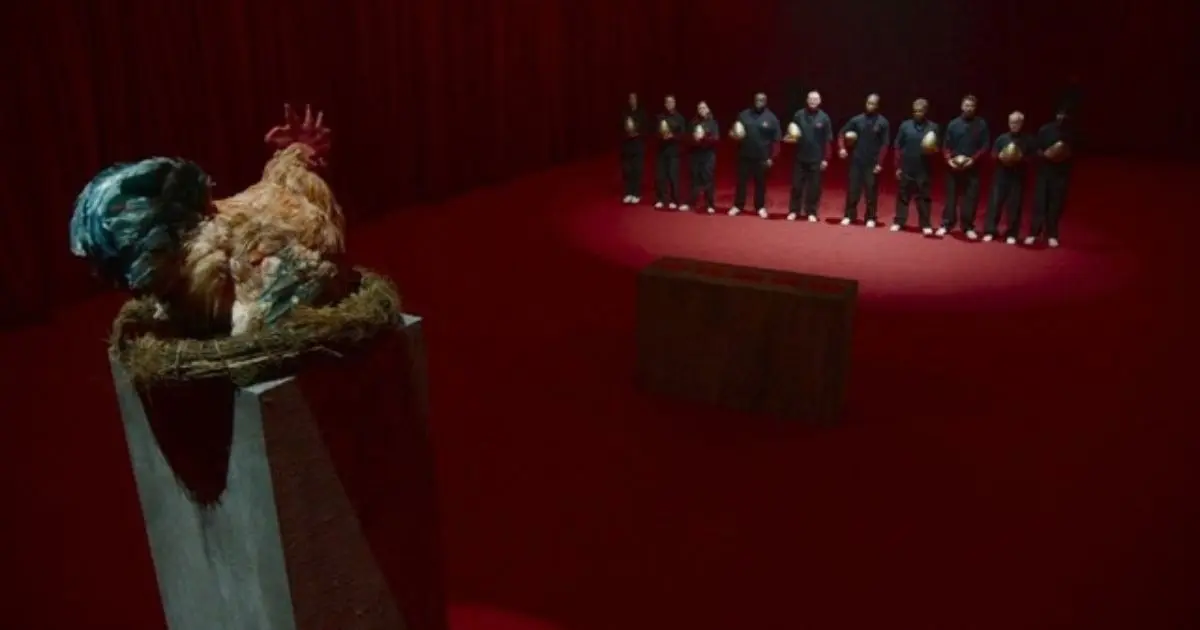
With the contestants locked in, production commenced on a custom-built game show set designed to mimic the high-energy, high-stakes environment of prime-time television. The format abandoned standard promotional pacing. Instead, producers mapped out a rigorous 30-minute narrative arc.
The contestants faced a battery of themed challenges. These obstacles were not merely physical trials of speed or strength, but psychological gauntlets designed to test their resolve. Would they sacrifice personal comfort, face bizarre phobias, or endure grueling tests of patience, all in the name of KFC glory?
Phase 4: The Premiere (September 30)
The culmination of this massive operational effort arrived on Wednesday, September 30, with the official broadcast of “Don’t Crack.” Dropping straight into the media landscape, the special bypassed standard ad-break interruptions to deliver an uninterrupted narrative flow. Viewers across the United Kingdom tuned in not to watch a slickly polished corporate advertisement, but to witness regular people sweat, laugh, and occasionally break under pressure in pursuit of ultimate chicken validation.
Supporting Context & Metrics: The Economics of Long-Form Engagement
The launch of “Don’t Crack” does not exist in a vacuum; it represents a calculated tactical response to shifting media consumption habits, ad-fraud concerns, and the declining efficacy of short-form commercial breaks.
The Metrics of Mass Appeal
- 50,000+ Applications: The primary quantitative validation of the campaign’s top-of-funnel pull. In the modern marketing landscape, securing 50,000 high-intent consumer touchpoints without relying on cash giveaways or celebrity endorsements is a formidable achievement.
- 30 Contestants: A carefully calibrated number large enough to ensure dynamic interpersonal conflict and diverse representation, yet small enough to allow viewers to learn individual names and backstories.
- 30 Minutes: A deliberate temporal investment. While traditional media planners often argue that consumer attention spans are shrinking toward TikTok-length snippets, KFC’s leadership took the counterintuitive stance that attention is not scarce—it is simply starved of quality.
The Death of the "Rented Audience"
In advertising parlance, brands frequently "rent" audiences by partnering with high-follower influencers or sponsoring established entertainment properties. While effective for immediate reach, this tactic often lacks intrinsic brand alignment; the audience is there for the personality, not the product.
By building an ecosystem from scratch and casting everyday consumers, KFC inverted the paradigm. The brand did not lease attention; it cultivated a proprietary community. The contestants are the audience, filtered through a lens of extreme fandom. This creates a psychological mirror for the viewer at home: if these ordinary people can care this deeply about fried chicken, perhaps the product holds a more significant place in everyday culture than a standard commodity warrants.
The Evolution of Fast-Food Marketing
To appreciate the audacity of “Don’t Crack,” one must look at the historical evolution of fast-food advertising. For decades, the playbook was uniform: macro-closeups of dripping grease, acoustic jingles, and celebrity tie-ins.
Over the last ten years, brands like Wendy’s (via their famously snarky social media persona) and Burger King (through provocative stunts) proved that humor and cultural agility outperform dry product promotion. KFC’s game show venture represents the next frontier of this evolution: moving away from commentary about culture and toward the direct creation of entertainment properties. KFC is no longer just a buyer of commercial airtime; it is acting as a television producer.
Official Statements & Industry Perspectives
The philosophy driving this high-risk experiment was articulated clearly by the leadership team behind the campaign.
Monica Silic on the Philosophy of Time and Authenticity
Monica Silic, Chief Marketing Officer at KFC UK and Ireland, provided deep insight into the strategic rationale during the campaign’s rollout:
"We haven’t rented someone else’s audience for this. We’ve put our chicken-obsessive fans on screen, and we’ve given it over thirty minutes rather than ninety seconds, because long-form is what it takes before you genuinely care who wins."
Silic’s commentary strikes at the heart of modern advertising’s greatest flaw: the assumption that speed equals efficacy. By demanding a thirty-minute commitment from the viewer, KFC is placing a bet on narrative empathy. In a 90-second spot, a viewer can process a joke or register a visual, but they cannot form an emotional stake in the outcome. By allowing contestants to struggle, celebrate, and occasionally fail over the course of a half-hour program, the brand engineers a viewing environment where the stakes—however absurd the premise—feel real to the audience at home.
Industry Reception and Critical Analysis
Media analysts and advertising critics have closely monitored the rollout of “Don’t Crack.” Initial commentary suggests that the campaign could serve as a watershed moment for how brands approach branded entertainment.
Traditional television networks, desperate for innovative content formats that can compete with subscription streaming services, have increasingly welcomed brands willing to underwrite original programming. By blending the voyeuristic appeal of reality television with the low-brow joy of fast-food culture, KFC has successfully blurred the line between commercial interruption and prime-time entertainment.
Future Outlook: What “Don’t Crack” Means for the Future of Advertising
As the dust settles on the initial broadcast of “Don’t Crack,” industry observers are left wondering whether this is a one-off publicity stunt or the vanguard of a broader industry trend.
1. The Rise of Branded Reality Television
The success of the casting call—yielding over 50,000 applicants—proves that consumer appetite for participating in brand-adjacent narratives is virtually limitless, provided the execution is entertaining rather than overtly corporate. We are likely to see other major quick-service restaurant (QSR) chains and consumer packaged goods (CPG) giants attempt to replicate this model, commissioning bespoke game shows, docuseries, and competition formats tailored for digital streaming platforms and linear television alike.
2. The Re-Valuation of Long-Form Content
For years, the industry narrative has been dominated by the truncation of media: stories must fit into 15 seconds, 6 seconds, or a vertical scroll. “Don’t Crack” serves as a timely reminder that long-form content possesses a unique psychological stickiness. When executed with high production values and genuine character arcs, long-form branded content commands a level of cognitive immersion that short clips can never replicate.
3. Authenticity as the Ultimate Currency
As generative artificial intelligence begins to flood the market with hyper-slick, synthetic imagery and automated copywriting, authentic human messiness is becoming a premium luxury. The charm of “Don’t Crack” lies precisely in its imperfections—the nervous stammers of non-actors, the unscripted comedic timing, and the raw, unfiltered reactions of people who genuinely love fried chicken. In a future saturated with synthetic perfection, the unpolished reality of the everyday consumer will be the most valuable asset a brand can own.
Conclusion
KFC UK & Ireland’s “Don’t Crack” is far more than a clever television special; it is a masterclass in modern cultural positioning. By trading the safety of the traditional 90-second commercial for the unpredictable chaos of a 30-minute game show, KFC has proven that when a brand treats its fans not as passive targets, but as the protagonists of the story, the results can be both culturally resonant and commercially potent. As the advertising industry watches from the sidelines, one thing is abundantly clear: when it comes to capturing the modern consumer’s imagination, KFC didn’t just play the game—they changed the rules.