

Executive Overview
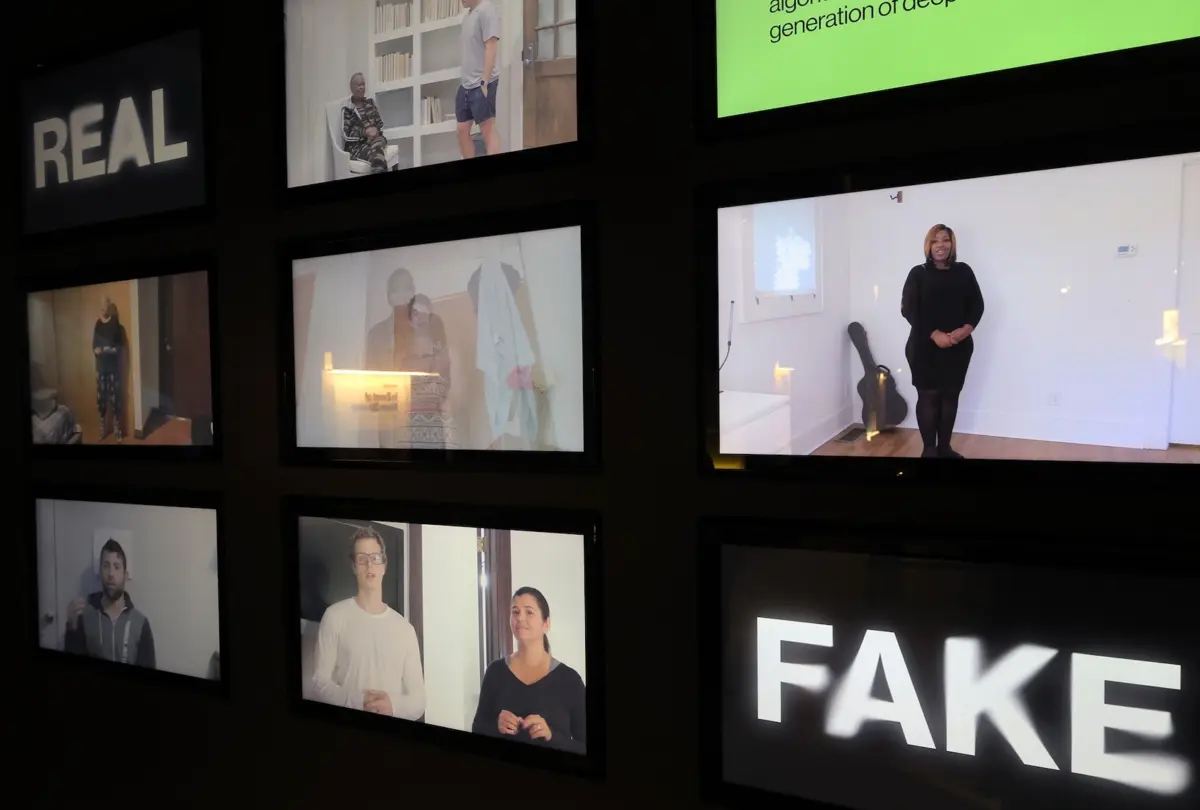
The 2026 United States midterm elections have ushered in a transformative and deeply contentious era in modern campaigning. For the first time in electoral history, generative artificial intelligence is not merely an experimental novelty or an isolated talking point; it has embedded itself into the core of political media strategies, appearing regularly across television screens and social media feeds nationwide.
According to data compiled by researchers from the Wesleyan Media Project—utilizing media reports, student coders, and ad-tracking metrics from the firm AdImpact—political campaigns and interest groups have funneled approximately $80 million into nearly 170 unique AI-generated or AI-enhanced advertisements thus far in the 2026 cycle.
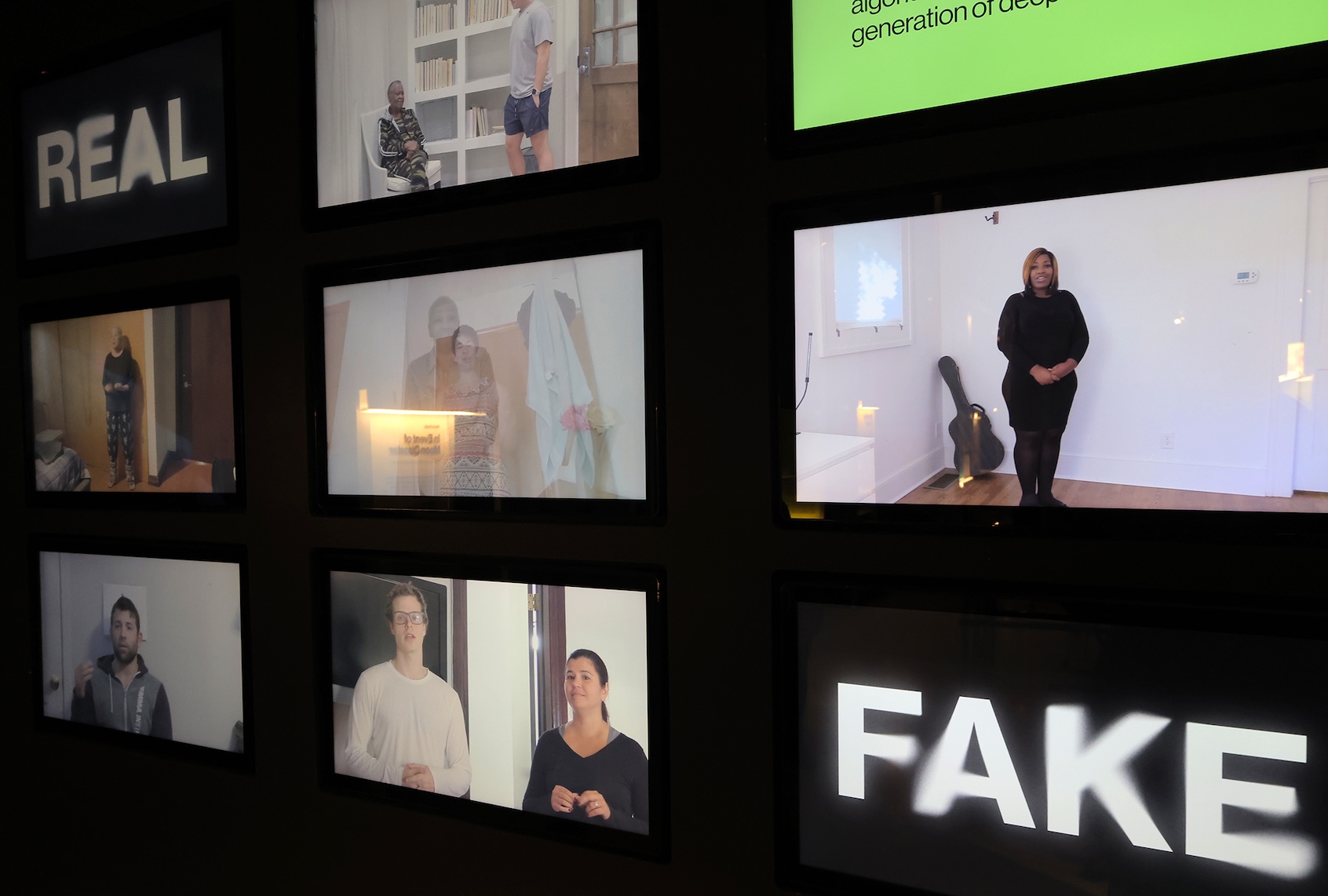
The integration of artificial intelligence spans a dramatic spectrum. On one end lie hyperrealistic deepfakes designed to place prominent politicians in absurd, controversial, or entirely fabricated scenarios. On the other end are subtle visual enhancements, background crowd generations, and audio alterations that blur the line between reality and synthetic creation.
Compounding the anxiety among voters, election integrity watchdogs, and legal scholars is a fractured, inconsistent regulatory landscape. A chaotic patchwork of state-level legislation governs AI in political advertising, leaving a significant portion of these synthetic ads completely devoid of disclosures. Furthermore, new research reveals a striking partisan asymmetry: Republican candidates and aligned outside spenders are deploying AI-generated media at a vastly higher rate than their Democratic counterparts. As voters express overwhelming concern over deceptive media, the 2026 midterms serve as a high-stakes stress test for American democracy, digital literacy, and regulatory enforceability.
Detailed Chronology of the 2026 AI Ad Boom
The rise of generative AI in political advertising did not happen overnight, but the 2026 midterm cycle marks the definitive tipping point where synthetic media transitioned from fringe experiments to mainstream political weaponry.
- Late 2024 to 2025 (The Prelude): Following the experimental use of AI images and conceptual deepfakes in the 2024 presidential cycle, political consultants began experimenting more deeply with generative video tools. Incidents such as former President Donald Trump sharing AI-modified videos of House Minority Leader Hakeem Jeffries in late 2025 demonstrated the potent, viral capacity of synthetic media to command news cycles and bypass traditional media vetting.
- Early 2026 (Primary Season Kickoff): As primary elections heated up in early 2026, state-level lawmakers rushed to pass legislation targeting deepfakes. However, implementation lagged far behind technological capability. Early spring ads began integrating subtle AI touches—such as digitally generated crowds and enhanced background visuals—making it increasingly difficult for ordinary viewers to distinguish between authentic footage and AI manipulation.
- May 2026 (The Minnesota Test Case): Despite state statutes explicitly targeting election deepfakes, enforcement proved murky. In May 2026, an advertisement featuring a synthetic video of Democratic Senate candidate Peggy Flanagan aired in Minnesota. The ad tested the legal boundaries of what constitutes a "reasonable person" standard under state deepfake statutes, highlighting the profound enforcement challenges facing local election officials.
- Summer to Fall 2026 (Midterm Advertising Surge): By the peak of the 2026 midterm advertising blitz, tracking data confirmed that spending had surpassed $80 million across nearly 170 distinct AI-utilizing ads. The landscape matured into a chaotic arena where hyperrealistic deepfakes of high-profile figures—ranging from Donald Trump and Kamala Harris to Alexandria Ocasio-Cortez and Dr. Anthony Fauci—became commonplace fixtures of political attack ads.
Supporting Context & Metrics: The Anatomy of AI Ads
To understand the scale and shape of the 2026 AI ad phenomenon, researchers from Washington State University, Wesleyan University, and Bowdoin College turned to empirical data. Their findings shed light on the mechanics, targets, and partisan dynamics of generative political media.
The Spectrum of Manipulation: From Deepfakes to Subtle Edits
Generative AI in political ads is not monolithic. Advertisers have utilized the technology for a variety of creative—and deceptive—purposes:
- Hyperrealistic Deepfakes of Politicians: High-profile federal figures have routinely found themselves starring in synthetic videos depicting events that never occurred. Representative Alexandria Ocasio-Cortez (D-N.Y.) has emerged as a frequent target for Republican-aligned advertisers, appearing in at least five distinct AI-driven spots. Other deepfakes have placed prominent political figures into surreal narratives:
- A Republican Senate candidate from Louisiana is depicted driving a school bus full of undocumented immigrants.
- A Republican gubernatorial candidate from South Carolina is shown walking arm-in-arm with drag queens.
- An ad features prominent political figures Liz Cheney, Mitt Romney, and Mike Pence carrying pitchforks across the White House lawn.
- Non-Politician Figures and Synthetic Crowds: Public figures outside elected office have also been synthesized. One widely tracked ad featured a fake Dr. Anthony Fauci running around a state fair carrying a giant syringe, aimed at evoking pandemic-era controversies. Other spots have relied on AI to populate campaign rallies with entirely fictional crowds and constituents.
- Subtle Visual Enhancements: Not all AI usage involves fabricating a person doing something they did not do. Many campaigns use AI tools simply to clean up footage, alter lighting, or polish visuals. For instance, an ad from Oklahoma gubernatorial candidate Chip Keating included an AI disclaimer without specifying how the technology was utilized. These aesthetic touch-ups look identical to pre-AI media, leaving viewers defenseless against potential manipulation.
The Partisan Asymmetry
One of the most striking discoveries of the 2026 cycle is the pronounced partisan gap in AI ad deployment. Research indicates that Republican candidates, super PACs, and 501(c) organizations are disproportionately utilizing generative AI tools compared to Democrats.
- The Numbers: Republican candidates or pro-Republican outside groups were responsible for roughly 80% of all tracked AI ads and accounted for 83% of total spending in this category.
- Underlying Philosophies: While researchers can only speculate on the exact drivers of this gap, broader ideological approaches to governance and regulation likely play a role. Historically, Democrats favor a regulatory framework for campaign finance and digital disclosures—evidenced by unified Democratic support for the 2022 DISCLOSE Act. Conversely, Republicans have traditionally championed a free-market approach to speech and campaigning. These differing philosophies appear to translate into how aggressively each side adopts emerging, unregulated technological tools.
Public Opinion and Voter Anxiety
Voters are acutely aware of—and deeply unsettled by—the influx of synthetic media. Polling indicates robust, bipartisan support for reigning in deceptive AI content. Roughly 78% of registered voters favor strict bans or heavy regulations on AI-generated media that makes false or deceptive claims about political candidates.
Official Statements and Regulatory Realities
The legal and regulatory framework governing AI in political advertising can best be described as a maze. Because federal legislation has stalled, regulation has fallen to a fragmented patchwork of state-level laws.
The Disclaimer Paradox
An analysis of ads across 35 states revealed that only 31% of tracked AI ads—representing 22% of total spending—disclosed the use of artificial intelligence. Furthermore, the wording of these disclaimers varied wildly from jurisdiction to jurisdiction, creating immense confusion for voters:
- A Georgia ad stated simply: "This video has been manipulated or generated with artificial intelligence."
- An Oklahoma ad framed its synthetic visuals under the guise of humor: "Political satire. AI-generated images do not depict actual events."
- A North Carolina state Senate ad took a casual approach: "You guessed it! AI was definitely used to generate these silly video clips."
Why State Laws Fail to Drive Compliance
Perhaps the most counterintuitive finding from election researchers is that the existence of a state AI law does not reliably correlate with increased disclosure.
- In states without laws governing AI in political ads, 32% of tracked ads contained a disclaimer.
- In states with laws governing AI, only 29% contained a disclaimer.
This discrepancy stems from several factors. Many state laws are narrowly drafted; for example, Colorado’s statutes apply exclusively to candidate deepfakes, entirely omitting other uses of generative AI like background manipulation or synthetic crowds. In other cases, laws were enacted after ads had already been produced and aired. Furthermore, enforcement mechanisms remain notoriously weak, leaving campaigns with little immediate incentive to comply voluntarily unless explicitly threatened with steep penalties.
Future Outlook: Navigating the New Normal
As the 2026 midterms serve as a proving ground for generative AI in politics, the road ahead presents formidable policy and societal challenges. The fundamental questions facing lawmakers, tech platforms, and election officials center on three pillars: transparency, enforceability, and voter education.
- The Transparency Deficit: Without uniform national standards or clear, standardized disclaimers, voters are left to navigate a sea of manipulated media largely unaided. Moving forward, policymakers must determine whether voluntary disclosures are sufficient or if a mandatory, standardized federal labeling system is required for all synthetic political media.
- Enforceability of Existing Statutes: State-level bans and restrictions face significant hurdles due to fast-evolving technology, jurisdictional boundaries, and the subjective nature of legal thresholds (such as proving whether a reasonable person would be deceived). Legal scholars argue that until federal guidelines establish clear baseline definitions, state-level enforcement will remain an uphill battle.
- Restoring Voter Trust: As generative AI tools become cheaper, faster, and increasingly indistinguishable from reality, the ultimate casualty risks being public trust in the democratic process itself. When voters can no longer trust the audio and video evidence before their eyes, the foundational shared reality required for democratic debate fractures.
The 2026 midterms have proven that generative AI in political advertising is no longer a futuristic dystopia—it is here, it is well-funded, and it is reshaping elections in real-time. Whether democratic institutions can adapt fast enough to preserve electoral integrity before the next major cycle remains the defining question of our digital age.