

Executive Overview
In an era defined by the escalating threat of antimicrobial resistance, modern medicine faces a profound paradigm shift. For decades, the standard approach to managing harmful bacteria—whether in clinical environments, food safety, or personal hygiene—has been built on an eradication model. Disinfectants, harsh mouthwashes, and broad-spectrum antibiotics are deployed to wage chemical warfare on microbes, aiming for total sterilization. Yet, bacteria are remarkably resilient organisms, possessing an evolutionary aptitude for adaptation that allows them to quickly outsmart traditional pharmacological assaults. When harmful species develop resistance, simple infections can transform into complex medical challenges.
However, a groundbreaking study published in the 2025 volume of npj Biofilms and Microbiomes offers a radically different perspective. Rather than viewing bacteria merely as hostile invaders to be systematically destroyed, a collaborative team of researchers from the College of Biological Sciences and the School of Dentistry has demonstrated that we can strategically influence microbial behavior. By focusing on the intricate chemical language that bacteria use to coordinate, scientists have found a way to shift the composition of dental plaque toward a healthier ecosystem.
This research centers on quorum sensing—the biological mechanism through which microorganisms monitor their population density and execute collective behaviors. By deploying specialized enzymes known as lactonases to disrupt these chemical conversations, the research team successfully altered the trajectory of dental plaque development. Instead of allowing harmful, disease-associated bacterial colonies to take root, the intervention steered the microbial community back toward a harmonious, health-associated state. Funded by the National Institutes of Health (NIH), this discovery not only paves the way for advanced preventative treatments for periodontal disease but also hints at broader therapeutic applications for microbiome management across the entire human body.
Detailed Chronology: Unraveling the Mechanics of Microbial Communication
To understand the magnitude of the 2025 breakthrough, it is necessary to examine the step-by-step evolution of how scientists investigated, tested, and ultimately manipulated the micro-ecosystem of the human mouth.
Phase 1: Mapping the Oral Ecosystem
The human mouth is far from a sterile cavity; it is a bustling, highly complex biological metropolis housing roughly 700 distinct species of bacteria. These microorganisms do not drift aimlessly in isolation. Instead, they aggregate on the hard surfaces of our teeth, forming dental plaque.
For years, researchers understood that dental plaque behaves less like a random collection of cells and more like a structured forest ecosystem. The process begins with pioneer species—predominantly harmless Streptococcus and Actinomyces bacteria that establish the initial foundations of the community. In a healthy mouth, these early colonizers maintain a stable, benign environment.
However, over time, the plaque matures. Increasingly diverse late colonizers join the ecosystem. Among the most concerning of these are the "red complex" bacteria, most notably Porphyromonas gingivalis, which are strongly linked to the onset and progression of periodontal disease. The central question facing the research team was simple yet profound: What guides this ecological succession? How do late-arriving pathogenic bacteria know when it is safe to colonize?
Phase 2: Decoding Quorum Sensing in the Mouth
The answer lies in quorum sensing, a sophisticated system of chemical communication. Bacteria continuously synthesize and release signaling molecules into their immediate environment. When the local population density is low, these molecules diffuse away, registering a faint signal. But as the bacterial population multiplies, the concentration of these signaling molecules rises past a specific threshold.
The bacteria detect this high concentration, signaling a collective "quorum," and switch on genes that control group behaviors, such as biofilm formation, toxin production, and virulence. In the oral cavity, a primary class of these signaling molecules consists of N-acyl homoserine lactones (AHLs).
The researchers set out to determine whether manipulating these AHL signals could fundamentally alter the behavior and makeup of dental plaque. If quorum sensing acts as the master switch for pathogenic collaboration, intercepting or destroying the signal might halt the progression of plaque toward a disease state.
Phase 3: The Discovery of the Oxygen Gradient
One of the most critical breakthroughs in the study occurred when researchers analyzed how these chemical signals behave across different physical zones within the mouth—specifically, above and below the gumline.
Dental plaque exists across a profound environmental gradient. Above the gumline, the environment is aerobic, meaning oxygen is readily available. Beneath the gumline, the environment shifts dramatically into an anaerobic zone, starved of oxygen.
The research team discovered that bacteria residing in the aerobic environments above the gumline actively produced AHL signals. Crucially, these chemical messages did not stay put; they diffused downward, crossing the gumline into the anaerobic zones beneath. This cross-boundary communication is vital because the oxygen-depleted conditions below the gumline naturally favor the proliferation of anaerobic bacteria associated with periodontal disease.
Phase 4: Enzymatic Interruption and Community Shifts
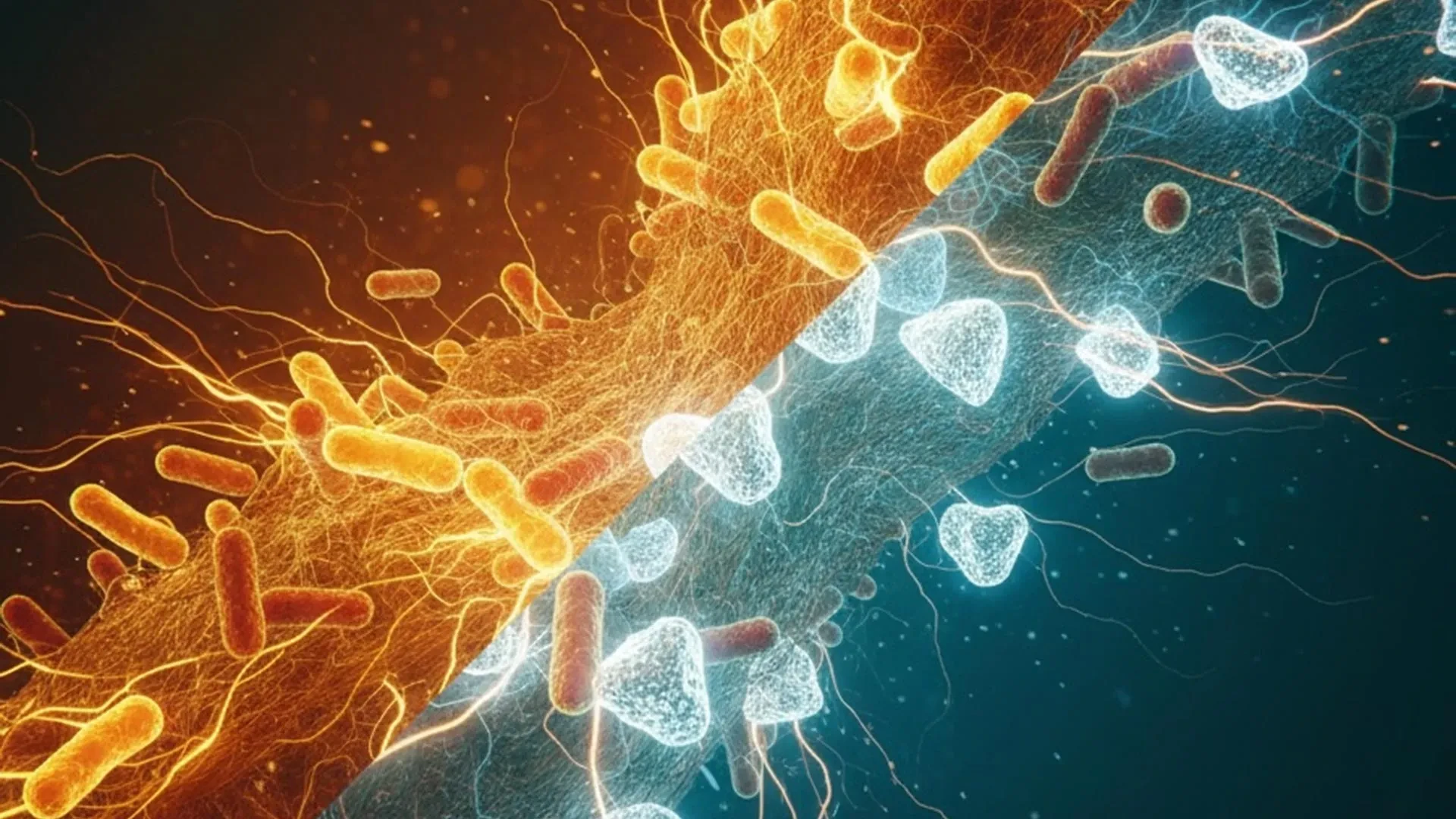
Having mapped out the presence and movement of AHL signals, the researchers deployed a biological countermeasure: specialized enzymes called lactonases. These enzymes act as molecular scissors, specifically targeting and breaking down the AHL communication molecules.
When the team introduced lactonases to dental plaque models, the bacterial conversation was effectively jammed. Without the ability to exchange quorum-sensing signals, the microbial community underwent a striking transformation. Rather than progressing toward a complex, disease-prone biofilm dominated by late colonizers, the plaque community shifted backward in its ecological succession, favoring harmless, health-associated species.
Furthermore, the team observed that oxygen availability completely dictates the outcome of these chemical signals. Blocking AHL signaling in aerobic conditions promoted health-associated bacteria, whereas introducing AHLs under anaerobic conditions actively stimulated the growth of disease-associated late colonizers. This dual mechanism proved that quorum sensing plays entirely distinct roles depending on the microenvironment, offering a highly targeted roadmap for future therapeutic interventions.
Supporting Context & Metrics: The Scale of the Oral Microbiome
To fully appreciate the implications of this research, it is essential to look at the broader context of oral health, microbial ecology, and the limitations of current medical practices.
The Global Burden of Periodontal Disease
Periodontal disease—ranging from mild gingivitis to severe periodontitis—is one of the most prevalent chronic inflammatory conditions globally. According to public health data, severe periodontal disease affects a substantial percentage of the adult population worldwide, contributing not only to tooth loss but also to systemic health complications. Chronic inflammation in the gums has been linked in numerous epidemiological studies to systemic conditions such as cardiovascular disease, diabetes complications, and adverse pregnancy outcomes.
Traditional interventions rely heavily on mechanical removal (scaling and root planing) combined with antimicrobial mouthwashes, antibiotics, or surgical treatments when the disease has advanced. While these methods are necessary for managing acute flare-ups, they are inherently reactive. Antibiotics, in particular, present a double-edged sword: while they temporarily beat back bacterial loads, they decimate beneficial oral flora indiscriminately, leaving the ecosystem vulnerable to repopulation by aggressive, resistant pathogens.
The Microbial Ecosystem Metrics
- 700+ Species: The estimated number of distinct bacterial species that inhabit the human oral cavity, creating a hyper-diverse biological community.
- Pioneer vs. Late Colonizers: Early communities are dominated by benign Streptococcus and Actinomyces species, whereas pathological states are driven by complex groupings like the "red complex" (Porphyromonas gingivalis).
- The Aerobic/Anaerobic Divide: The physiological boundary of the gumline creates starkly contrasting oxygen zones, which dictate whether quorum-sensing signals promote health or trigger disease progression.
Official Statements and Expert Insights
The research team behind the npj Biofilms and Microbiomes study emphasizes that their findings represent a fundamental pivot in how microbiology and dentistry should approach infectious and inflammatory diseases.
Mikael Elias, associate professor in the College of Biological Sciences and senior author of the study, illustrated the ecological nature of the research using an environmental metaphor:
"Dental plaque develops in a sequence, much like a forest ecosystem," Elias explained. "Pioneer species like Streptococcus and Actinomyces are the initial settlers in simple communities—they’re generally harmless and associated with good oral health. Increasingly diverse late colonizers include the ‘red complex’ bacteria like Porphyromonas gingivalis, which are strongly linked to periodontal disease. By disrupting the chemical signals bacteria use to communicate, one could manipulate the plaque community to remain or return to its health-associated stage."
Elias underscored the overarching philosophy of the research, noting that the goal is not to eradicate life in the mouth, but to manage it intelligently:
"Understanding how bacterial communities communicate and organize themselves may ultimately give us new tools to prevent periodontal disease—not by waging war on all oral bacteria, but by strategically maintaining a healthy microbial balance."
Rakesh Sikdar, lead author of the study, highlighted the surprising and pivotal role that environmental chemistry plays in mediating these microbial interactions:
"What’s particularly striking is how oxygen availability changes everything," Sikdar noted. "When we blocked AHL signaling in aerobic conditions, we saw more health-associated bacteria. But when we added AHLs under anaerobic conditions, we promoted the growth of disease-associated late colonizers. Quorum sensing may play very different roles above and below the gumline, which has major implications for how we approach treatment of periodontal diseases."
Future Outlook: Beyond Dentistry and Toward Systemic Microbiome Control
As the research team looks toward the horizon, the implications of manipulating bacterial communication extend far beyond the routine management of dental plaque.
Next Steps in Oral Therapeutics
The immediate future of this research involves mapping out how quorum-sensing networks vary across diverse human populations and among individuals at different stages of periodontal disease progression. Translating these laboratory findings into clinical applications will require the development of safe, stable delivery mechanisms—such as specialized toothpastes, gels, or professional dental treatments infused with lactonases or other quorum-quenching compounds.
Instead of asking patients to use aggressive mouthwashes that burn away all microorganisms, future dental hygiene regimens could feature intelligent enzymes designed to gently intercept bacterial chatter, keeping the oral microbiome locked in its early, harmless, health-associated forest stage.
Implications for Whole-Body Health
Perhaps the most exciting frontier for quorum-quenching technology lies in its potential applicability to other parts of the human body. The human microbiome is not confined to the mouth; trillions of microbes inhabit the gut, skin, respiratory tract, and urogenital systems.
When these delicate internal ecosystems fall out of balance—a state known as microbiome dysbiosis—it can trigger a cascade of pathological conditions. Dysbiosis has been increasingly implicated in inflammatory bowel diseases, metabolic syndromes, autoimmune disorders, and even certain types of cancer.
By proving that complex microbial communities can be gently steered back toward health by targeting their chemical language rather than deploying scorched-earth antimicrobial treatments, this 2025 study opens a compelling new frontier in medicine. The future of therapeutic science may no longer rely on eliminating our microbial partners, but rather on learning to speak their language, intercepting their harmful messages, and guiding them toward a state of harmonious coexistence.