

Executive Overview
As the digital advertising landscape navigates a post-cookie reality, privacy regulations, and shifting consumer behaviors, brands are locked in a continuous search for high-intent, measurable environments. Enter the era of Retail Media Networks (RMNs) and commerce media—a paradigm shift that has moved far beyond digital banner ads on e-commerce homepages. Today, commerce media encompasses the entire consumer journey, bridging the physical and digital worlds to create powerful new touchpoints for brands.
This transformative shift took center stage during ADWEEK House Advertising HQ, where a trio of insightful commerce connection sessions—co-hosted in partnership with SMG—unpacked the complexities, opportunities, and strategic mandates driving the industry forward. From quantifying the elusive impact of in-store media to crafting connected omnichannel campaigns for grocery shoppers and unlocking the high-value potential of travel media networks, industry leaders are aggressively rewriting the playbook for consumer engagement.
The overarching takeaway from these discussions is clear: commerce media is no longer a peripheral line item in a marketing budget; it is a foundational ecosystem. However, this maturation brings distinct hurdles. Advertisers are demanding transparent measurement, authentic engagement over intrusive disruption, and a holistic view of performance that accounts for multi-touch attribution, offline behavior, and emotional resonance. As media networks evolve into powerful publishers in their own right, brands must master the nuances of physical environments, grocery routines, and mobile travel ecosystems to capture the modern consumer’s attention.
Detailed Chronology: Sessions at ADWEEK House
The immersive commerce series at ADWEEK House was structured around three distinct, deeply tactical panel discussions and fireside chats, each addressing a critical pillar of modern retail and commerce media.
Session 1: Building on the In-Store Experience ("Choose Your Player: The Battle for In-Store Leadership")
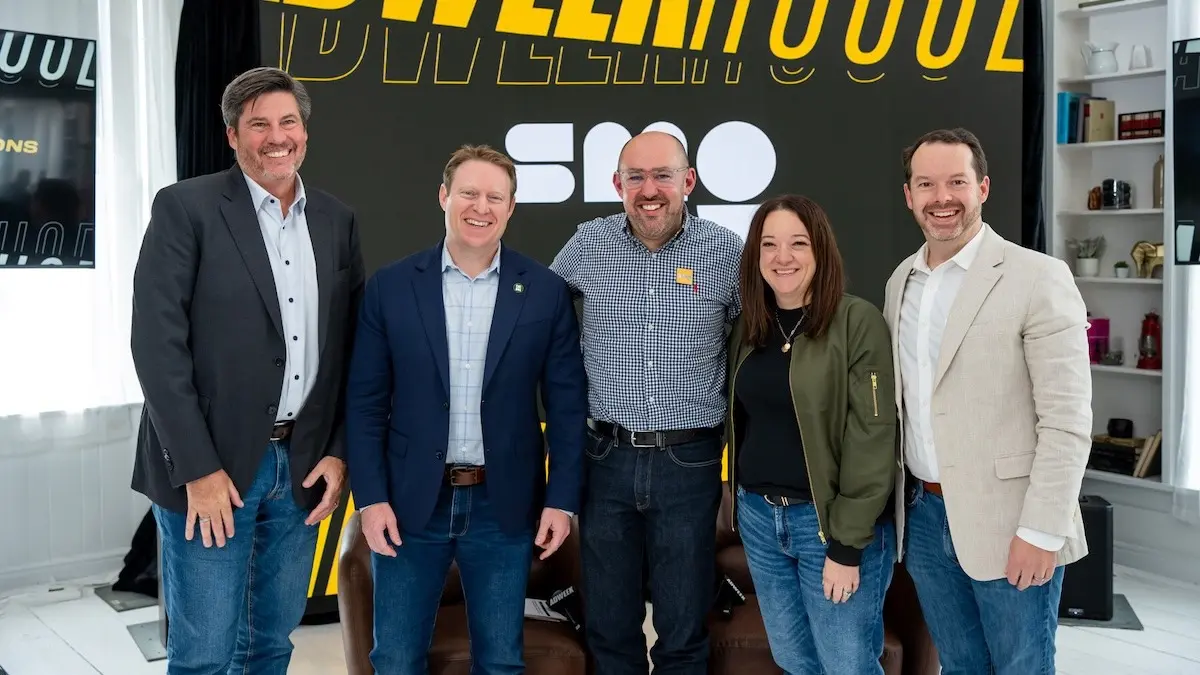
The first panel tackled the physical retail space, exploring how digital innovation is breathing new life into brick-and-mortar stores. Moderated by Ollie Shayer, senior director of global strategy and innovation at SMG, the session featured a powerhouse lineup of industry experts: Collin Colburn, VP of commerce and retail media at IAB; Chip Harding, EVP of simon media and experiences at Simon Property Group; Austin Leonard, VP and general manager of DG Media Network; and Britt Polihronis, COO of RedMedia at Hy-Vee, Inc.
The conversation immediately zeroed in on the holy grail of in-store media: measurement. Panelists noted that while digital environments offer straightforward click-through and conversion data, the physical store presents a more complex measurement matrix. In large-scale environments like malls, foot traffic, dwell time, and attributed sales serve as vital performance signals. Conversely, in grocery and discount retail settings, immediate shopper behaviors—such as picking up a product off the shelf, examining packaging, or engaging with an end-cap display—provide immediate qualitative and quantitative insights.
Despite these differing metrics, the core demand from advertisers remains uniform: proof of incremental sales. Brands want to know that their in-store ad dollars are driving purchases that wouldn’t have happened organically. Beyond metrics, the panel emphasized that in-store media must prioritize the consumer experience. Rather than cluttering physical spaces with invasive signage, successful networks are curating brand offerings, designing interactive discovery zones, and facilitating product trials that add genuine value to the shopping trip.
Session 2: The Unique Challenges of Marketing to Grocery Shoppers ("From Story to Store: Connected Campaigns")
Shifting focus from physical architecture to consumer routines, the second session featured an intimate fireside chat between Zoë Ruderman, chief content officer at ADWEEK, and Liz Roche, VP of media and measurement at Albertsons Media Collective.
This discussion centered on the unique psychology of grocery shopping—an essential, recurring habit woven into the weekly lives of consumers. Because grocery shopping is continuous rather than seasonal or episodic, marketing campaigns must mirror this cadence. Roche stressed that brands cannot rely solely on point-of-sale tactics; they must meet consumers at every step of their daily routines.

A prime example highlighted during the session was the strategic integration of Connected TV (CTV) and digital video. By deploying targeted video campaigns before consumers even step foot inside a store—or open a delivery app—brands can plant the seed of consideration. Furthermore, Roche delivered a critical critique of traditional performance metrics like Return on Ad Spend (ROAS) and Incremental ROAS (iROAS) within media networks. She argued that these metrics can be volatile and easily manipulated depending on the underlying attribution methodology. Instead, she urged marketers to adopt a mindset of critical thinking, analyzing a broader swath of data points, including category growth and total brand lift in-store.
Session 3: The Future of Travel Media Networks ("Media on the Move: Winning Across the Travel Journey")
The final panel of the series expanded the definition of commerce media beyond traditional retail, exploring the untapped potential of travel ecosystems. Moderated by Sean Crawford, managing director of North America at SMG, the panel featured Katie Blackburn (WHSmith North America), Shane Dwyer (Lyft Ads), Chris Norton (Marriott Media), and Steven Paganelli (Tripadvisor).
The session explored why travelers represent one of the most lucrative and attentive audiences for advertisers. Beyond possessing high disposable incomes and above-average education levels, travelers exhibit heightened purchase intent across key categories, including retail, alcoholic beverages, and home improvement. Moreover, travel is inherently associated with positive emotions—excitement, anticipation, and relaxation—which makes consumers psychologically more receptive to brand messaging.
However, capturing the attention of a traveler requires a specialized approach. The panelists underscored that traditional retail metrics fall short in travel ecosystems. While conversion and brand lift still matter, success in travel media relies on understanding the entirety of the journey. This includes recognizing the distinct emotional highs and lows of travel and deploying contextual, highly relevant products and services precisely when the consumer needs them—whether they are waiting at an airport terminal, hailing a rideshare, or checking into a hotel room.
Supporting Context & Metrics: The State of Commerce Media
To fully appreciate the urgency and depth of the discussions at ADWEEK House, one must examine the broader macroeconomic and digital marketing trends shaping the retail and travel media landscapes.
The Exponential Growth of Retail Media Networks
Retail media has evolved from a nascent experimental budget allocation into a multi-billion-dollar global industry. According to industry forecasts, global retail media ad spend is projected to surpass $100 billion, quickly closing in on traditional search and social channels. This surge is driven by three primary factors:
- The Deprecation of Third-Party Cookies: As privacy regulations tighten and signal loss plagues traditional digital advertising, retailers sit on a goldmine of deterministic, first-party customer data.
- Proximity to the Point of Purchase: Retail media networks allow brands to reach consumers when they are in a transactional mindset, collapsing the funnel from awareness to conversion.
- High Profit Margins for Retailers: For brick-and-mortar giants and e-commerce platforms alike, media networks represent high-margin revenue streams that diversify their traditional retail businesses.
The In-Store Renaissance
While digital RMNs dominated headlines over the last five years, the industry is currently experiencing a massive "in-store renaissance." Approximately 70% to 80% of all retail transactions still happen physically in-store. Recognizing this, media networks are rapidly digitizing physical spaces through programmatic digital out-of-home (DOOH) screens, smart shopping carts, beacon technology, and interactive kiosks.
However, scaling in-store media comes with distinct operational friction. Standardizing measurement across fragmented physical store footprints remains a formidable challenge. Advertisers are pushing for interoperability and third-party verification to ensure that impressions delivered via an in-store digital display can be audited with the same rigor as a digital banner ad on a desktop browser.
The Diversification of Commerce Media
The success of retail media has inspired non-traditional retail entities to build their own media networks. Travel companies (such as airlines, hotel groups, rideshare platforms, and travel booking engines) realize that their customer ecosystems are just as valuable as those of grocery chains or department stores. By leveraging first-party travel data, companies like Marriott, Tripadvisor, and Lyft are offering brands hyper-targeted ways to reach consumers in high-intent, contextually relevant moments.

Official Statements and Industry Insights
The thought leadership shared during the ADWEEK House sessions highlighted several key philosophies from top executives driving the space forward:
-
On In-Store Measurement and Incrementality:
"Across both mall and grocery environments, advertisers are no longer satisfied with vanity metrics. They want definitive evidence of incremental sales to justify their capital investment, forcing networks to innovate rapidly in attribution modeling." — Industry Consensus from Session 1.
-
On Moving Beyond Single-Metric Fallacies:
"We have to challenge the reliability of traditional metrics like ROAS and iROAS in media networks because data shifts dramatically depending on the methodology used. Marketers must cultivate critical thinking and look at a broader view of performance that factors in overall category and brand health in-store." — Liz Roche, VP of Media and Measurement, Albertsons Media Collective.
-
On the Emotional Power of Travel Media:
"Travelers are an exceptionally attractive audience not only because of their purchasing power, but because the positive emotions associated with travel make them fundamentally more receptive, attentive, and open to brand messaging." — Insights from the Travel Media Panel (Session 3).
-
On Omnichannel Continuity:
"Because shopping and traveling are continuous parts of human routines, campaigns cannot afford to operate in silos. Success belongs to brands that orchestrate connected campaigns meeting consumers across every touchpoint, from CTV living room screens to physical shelves and mobile apps." — Synthesized takeaway from ADWEEK House Commerce Sessions.

Future Outlook: Where Commerce Media Is Headed
As we look toward the horizon of the digital and physical advertising landscape, several defining trends will shape the next evolution of retail and travel media networks:
1. Standardization and Unified Measurement
The lack of standardized metrics across disparate RMNs has long been a frustration for major brand advertisers. In the coming years, industry bodies like the Interactive Advertising Bureau (IAB) will play a critical role in establishing universal measurement frameworks. Expect to see greater alignment on how foot traffic, physical impressions, and multi-touch attribution are reported, making it easier for brands to compare ROI across different retail and travel partners.
2. The Fusion of In-Store and Digital Data
The artificial divide between "digital commerce" and "in-store retail" will continue to dissolve. Advanced machine learning, computer vision, and identity resolution will allow brands to track a consumer from a targeted CTV ad viewed at home, to a digital screen inside a shopping mall, to the final purchase at a grocery checkout counter. This seamless omnichannel loop will become the baseline expectation for enterprise marketing campaigns.
3. Expansion of Non-Endemic Advertising
Retail and travel media networks are increasingly opening their inventory to "non-endemic" brands—advertisers that do not directly sell products within that specific store or ecosystem. For instance, an automotive brand advertising on a travel booking platform, or a financial services firm sponsoring a grocery network. This expansion significantly scales the revenue potential of media networks while offering brands access to highly qualified, segmented audiences based on real-world behavior.
4. Artificial Intelligence and Contextual Relevance
AI-driven personalization will transform how ads are delivered within physical and digital commerce environments. Programmatic DOOH screens in stores and airports will dynamically adjust creative messaging based on real-time factors such as weather, store foot-traffic volume, and local inventory levels. This level of contextual intelligence will reduce ad fatigue and elevate advertising from an interruption to a helpful, welcomed part of the consumer experience.
In conclusion, the dialogues at ADWEEK House made one reality abundantly clear: commerce media is maturing from an experimental channel into the bedrock of modern advertising strategy. By embracing rigorous measurement, respecting consumer routines, and capitalizing on the emotional and physical contexts of shopping and traveling, brands and media networks alike are poised to unlock unprecedented value in the years ahead.