

Executive Overview
In modern home cooking, few culinary practices are as unnecessarily constrained by rigid documentation as the creation of a simple salad dressing. Generations of home cooks have dutifully turned to glossy cookbooks, digital recipe cards, and measuring spoons to mix a combination of oil, acid, and seasoning—a practice that culinary authorities argue is not only tedious, but fundamentally counterintuitive to intuitive cooking.
Enter the "Back to Basics" culinary movement, championed by Brooklyn-based food writer, recipe developer, and bestselling cookbook author Casey Elsass. In a paradigm shift that aims to permanently change how domestic kitchens approach meal preparation, Elsass is leading a charge against the tyranny of the recipe card. His thesis is simple yet radical: true culinary freedom begins the moment you stop measuring your vinaigrette and start mastering its core mechanics.
Rather than committing another complex formulation to memory, Elsass’s philosophy—detailed in his recent masterclass on intuitive dressing—focuses on structural comprehension. By understanding the foundational triad of oil, acid, and salt, alongside the science of dynamic flavor balancing, home cooks can transform a collection of pantry orphans and refrigerator scraps into a vibrant, restaurant-quality vinaigrette in under sixty seconds. This report examines the mechanics of the Elsass method, the chemical rationale behind his step-by-step approach, and the broader cultural movement toward intuitive, zero-recipe home cooking.
Detailed Chronology: The Anatomy of a Masterclass
The methodology behind the Elsass approach is not a random throwing together of pantry items; it is a systematic, sequential process designed to optimize flavor, chemical emulsification, and balance. To understand how to construct a vinaigrette without a recipe, one must trace the chronological steps of the process as outlined by culinary professionals.
Phase 1: Selecting and Commencing with the Acid
The foundational error made by novice cooks is pouring oil into a bowl first. According to Elsass, the procedural journey must always begin with the acid.
The choice of acid sets the conceptual and flavor profile of the entire dish. The market is rich with options, ranging from sharp, classic red wine vinegar and crisp white wine vinegar to effervescent champagne vinegar, complex sherry vinegar, mellow apple cider vinegar, delicate rice vinegar, or the bright, enzymatic bite of freshly squeezed citrus juice.
For the uninitiated, starting with a straightforward medium like red wine vinegar or fresh lemon juice provides a reliable baseline. However, as culinary confidence grows, the kitchen doors open to experimentation. Advanced cooks can mix and match acids—such as pairing lemon juice with a splash of white wine vinegar—to achieve a layered, nuanced acidity that elevates the dressing from a simple condiment to a complex flavor component.
Phase 2: Layering Flavor Profiles
Once the acid rests at the bottom of your mixing vessel, the second phase invites creativity. This is where personal taste and refrigerator inventory dictate the outcome.
Elsass advocates for flavor boosts that lean into sweet, savory, umami, or pungent notes. Popular additions include:
- Sweetness: A drizzle of raw honey, maple syrup, or a spoonful of fig jam.
- Emulsifiers & Sharpness: A dollop of Dijon mustard or whole-grain mustard.
- Aromatics: Finely grated garlic or meticulously minced shallots.
- Umami & Depth: A teaspoon of white or red miso paste, the final scrape of pesto from a nearly empty jar, or a single anchovy fillet mashed into a paste.
- Brine & Heat: A splash of pepperoncini brine or a pinch of red pepper flakes.
Crucially, Elsass notes a vital timing detail when dealing with aggressive alliums: if utilizing pungent ingredients like raw garlic or shallots, they should be allowed to macerate directly in the acid for approximately five minutes. This brief chemical pause takes the harsh, fiery "bite" out of the raw allium while allowing its aromatic oils to steep into the liquid.
Phase 3: The Chemical Imperative of Salting Early
One of the most valuable technical takeaways from Elsass’s methodology is the inversion of the traditional seasoning timeline. Most cooks instinctively salt a dish at the very end. When making a vinaigrette, however, salt must be incorporated before the oil is introduced.
From a food science perspective, sodium chloride dissolves readily in water-based liquids like vinegar and citrus juice, but it does not dissolve in fat. By adding salt directly to the acid, the salt crystals dissolve completely, ensuring an even, homogenous distribution throughout the dressing. Elsass advises cooks to be relatively aggressive with their initial pinch of salt, remembering that this single batch of dressing must ultimately season an entire bowl of greens, vegetables, or grains. A vigorous whisk or shake at this juncture ensures the foundation is fully integrated.
Phase 4: Determining the Ideal Ratio
With the acid, flavorings, and salt fully incorporated, the fourth phase introduces the fat. The culinary world has long clung to the classic French vinaigrette ratio of three parts oil to one part acid (3:1).
However, culinary preference is rarely uniform. Elsass notes that he personally prefers a punchier, sharper profile, pulling his ratio closer to 2:1. To avoid dirtying unnecessary measuring spoons and whisk attachments, the modern home cook is encouraged to eyeball the pour. Simply eyeball an amount of oil that is roughly two to three times the volume of the acid sitting in your bowl, depending on personal taste tolerances. A final, vigorous whisk or shake marries the components into a cohesive emulsion.
Phase 5: Tasting "In Situ"
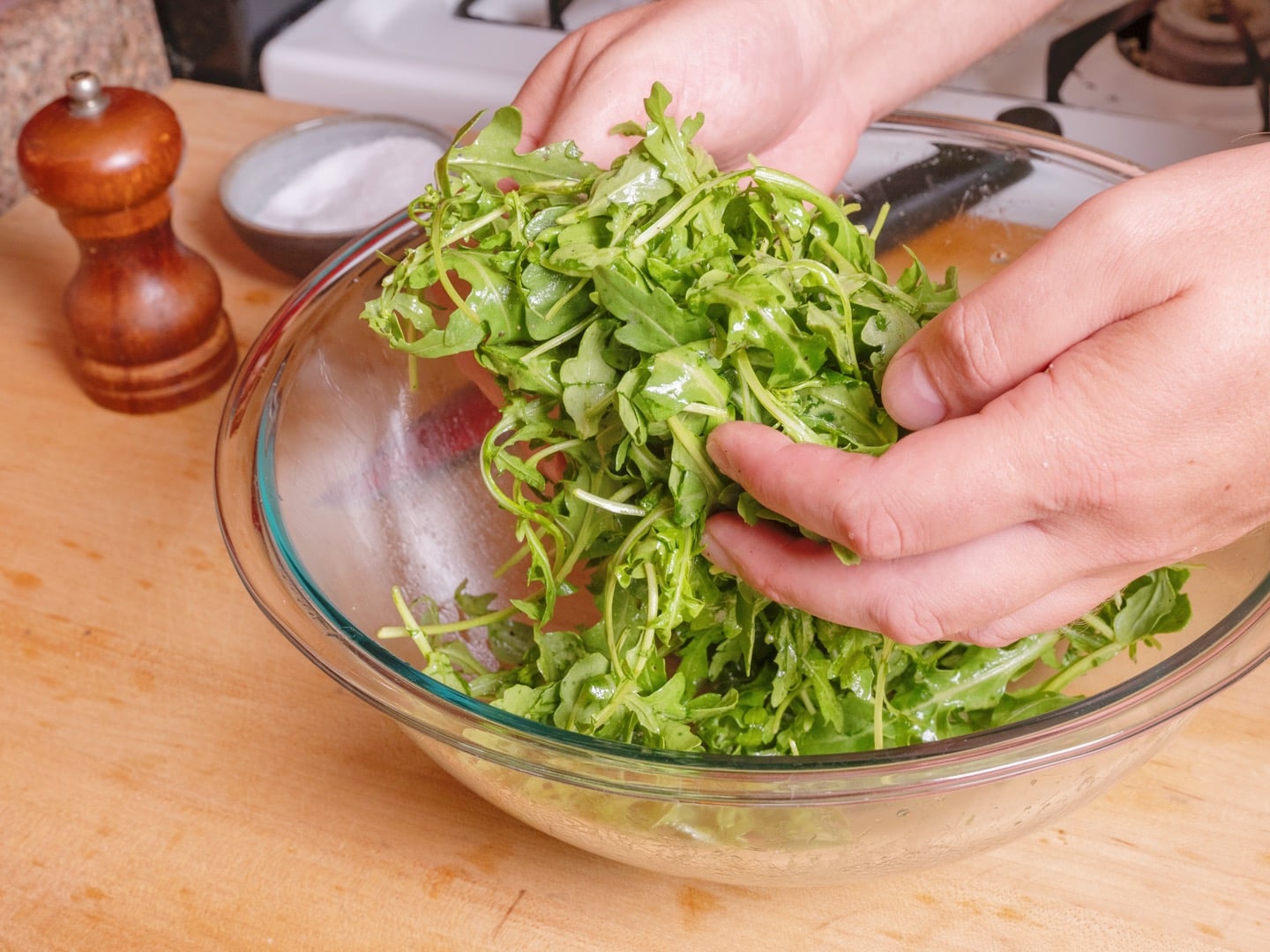
The ultimate litmus test for any dressing is not tasted off the tip of a metal spoon. Because a vinaigrette is designed to coat foliage, tasting it in isolation can lead to miscalculations; a dressing that tastes too sharp on a spoon may taste perfectly balanced when wrapped around the bitter leaves of an endive or the earthy weight of massaged kale.
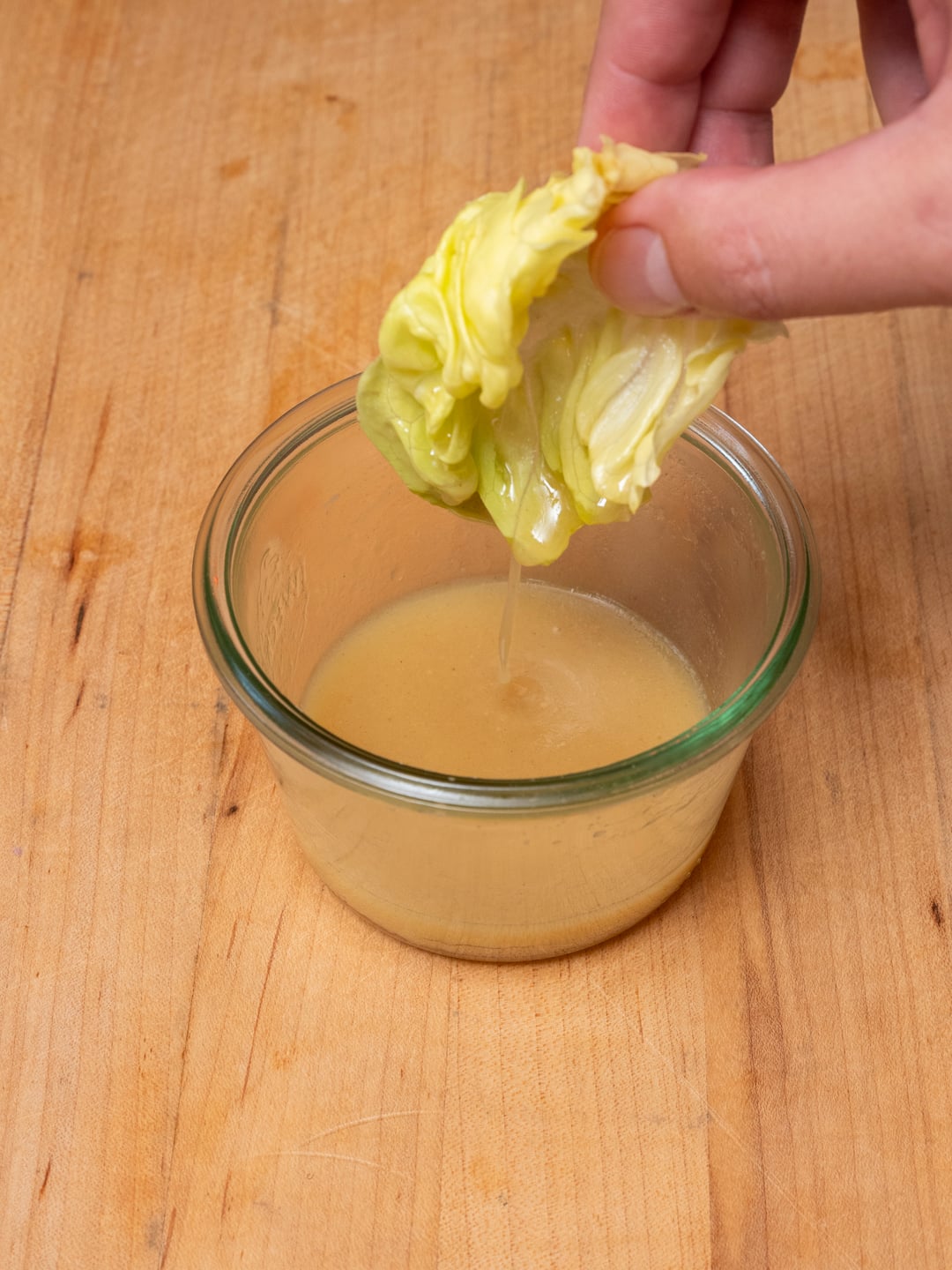
Elsass’s definitive rule for evaluation is simple: taste in situ. Pull a single leaf from your salad greens, dip it directly into the freshly shaken or whisked dressing, and evaluate the composite bite.
This sensory feedback loop immediately reveals necessary course corrections:
- Too sharp or acidic? Introduce a bit more oil to coat the palate and soften the bite.
- Too bland or heavy on fat? Add a splash more acid to wake up the flavor profile.
- Too bitter? A microscopic squeeze of honey or agave will round out the edges.
- Too flat? A micro-pinch of salt will instantly brighten the notes.
- Too salty? Balance it out by streaming in a touch more oil.
By making minute, iterative adjustments based on the leaf test, the cook achieves absolute culinary equilibrium.
Phase 6: Embracing Intuitive Cooking
The culmination of this chronological process is a mindset shift. As Elsass aptly observes, giving a person a rigid vinaigrette recipe feeds them for a single meal, but teaching them the mechanics of a vinaigrette feeds them for a lifetime.
Once the foundational technique is internalized, a half-used lemon, three stray sprigs of dill, and the crusty bottom of a mustard jar cease to be kitchen waste—they become the exciting starting line for a brand-new culinary creation.
Supporting Context & Metrics: The Evolution of Home Cooking
The push toward intuitive cooking arrives at an interesting cultural crossroads. According to recent culinary industry reports and consumer surveys, home cooks are suffering from severe "recipe fatigue." With the proliferation of food blogs, social media video tutorials, and digital recipe repositories, the average modern cook is bombarded with thousands of overly prescriptive instructions daily.
However, data indicates a notable behavioral shift:
- Decline in Precision Baking vs. Cooking: While baking remains a strict chemical science requiring exact measurements, savory cooking is seeing a massive surge in "freestyle" interest, with searches for "how to cook without a recipe" increasing by over 45% year-over-year.
- Pantry Sustainability & Food Waste: With rising grocery costs, sustainable cooking has become paramount. Techniques that teach cooks how to utilize the "bottom of the jar" or leftover citrus directly address household food waste, saving the average family an estimated hundreds of dollars annually in discarded condiments.
- Time Efficiency: Kitchen metrics show that measuring ingredients, washing measuring spoons, and cross-referencing digital devices add an average of 4.2 minutes of extraneous labor to weeknight meal prep—time that is entirely eliminated when adopting the eyeball-and-whisk method.
Official Statements and Industry Perspective
Culinary professionals and food media figures have increasingly rallied around the philosophy of unscripted, foundational cooking. Casey Elsass, whose extensive background includes co-authoring more than 30 cookbooks and writing for premier publications such as The New York Times, Bon Appétit, and Food52, emphasizes that his approach is rooted in reducing kitchen anxiety.
"I don’t think I’ve measured the ingredients for a salad dressing in years," Elsass shares in his instructional guide. "Once you understand the basic formula—and, more importantly, what to do when it doesn’t taste quite right—there’s really no reason to follow a recipe. The base of a vinaigrette is an easy combo of oil plus acid plus salt, and everything after that is an opportunity for flavor."
Industry peers have lauded this back-to-basics methodology as a necessary antidote to culinary gatekeeping. By demystifying the emulsification process and encouraging home cooks to trust their palates via the "leaf test," professional chefs note that confidence in the kitchen skyrockets. When a home cook realizes they do not need a digital scale or a cup measure to dress a head of lettuce, the psychological barrier to cooking fresh meals at home drops dramatically.
Future Outlook: The Death of the Recipe Card?
As we look toward the future of domestic gastronomy, the trend lines point decisively away from rigid rote memorization and toward flexible, framework-based cooking techniques.
The success of Elsass’s "Back to Basics" philosophy suggests a broader educational shift in culinary media. Consumers are no longer looking for prescriptive lists that dictate every single gram; instead, they are demanding foundational masterclasses that explain why ingredients interact the way they do. By understanding the science of acid-fat ratios, early salt dissolution, and flavor balancing, home cooks are reclaiming autonomy over their kitchens.
In the years to come, we can expect to see a decline in single-purpose recipe books in favor of technique-driven guides that empower readers to open their refrigerators, survey their random remnants, and confidently whip up a masterpiece without ever picking up a measuring spoon. The kitchen of the future belongs not to the recipe follower, but to the intuitive creator.