

Executive Overview
While high-profile legal battles over press credentials play out in the federal courts—with major media organizations challenging White House access restrictions—a parallel, quieter crisis is unfolding across the United States. From statehouses in Utah and Kansas to city halls in Miami and Fountain Hills, local and state journalists are confronting an escalating campaign of exclusion, stonewalling, and retaliation by public officials.
This deterioration of the press-government relationship is transforming the local news landscape. Independent journalists and reporters at digital-first, nonprofit outlets are increasingly denied press credentials, hit with punitive administrative hurdles, and subjected to viewpoint-based discrimination. Local officials, empowered by a broader cultural shift toward political polarization and the erosion of legacy media infrastructure, are bypassing traditional journalistic filters entirely. By communicating directly with constituents via social media and closed digital channels, these politicians are sidestepping accountability and rendering the vital watchdog role of the local press increasingly difficult.
The consequences of this coordinated pushback extend far beyond newsrooms. When reporters are forced to work with restricted access, delayed public records, and closed-door governance, the public is left with less information, less transparency, and fewer tools to hold elected officials accountable.
Detailed Chronology: A Cascading National Trend
The systematic erosion of local and state press access did not happen in a vacuum. While seasoned reporters point to shifting cultural norms beginning around 2016 and accelerating through the COVID-19 pandemic, the past few years have marked a sharp, aggressive escalation in legislative and municipal hostility toward the media.
The Kansas Statehouse Crackdown (2025)
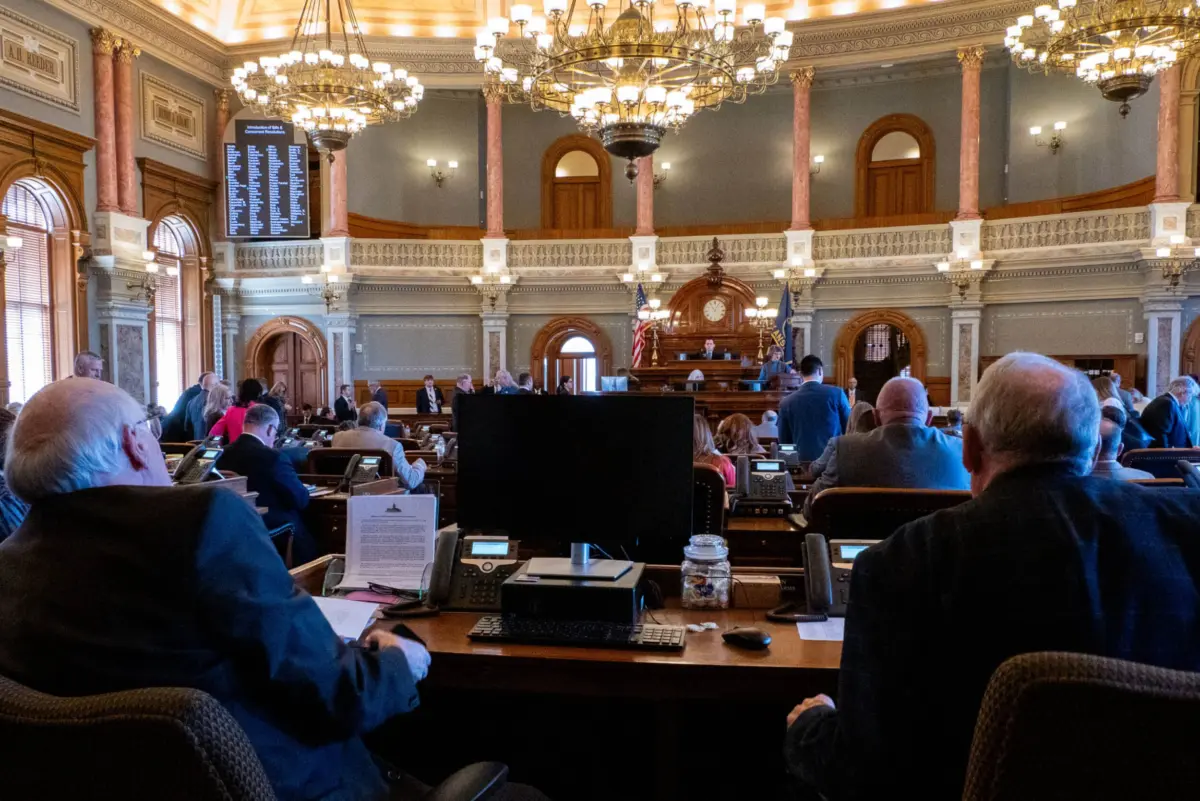
In early 2025, following national political shifts, the Kansas House of Representatives implemented a series of sweeping measures designed to restrict journalists and curtail open government:
- January 2025: House Speaker Dan Hawkins eliminated the chamber’s designated press workspace. Reporters were banned from reporting directly from the House floor and relegated to the back wall. Under the new rules, journalists could observe and take photos from a distance, but were barred from taking notes or approaching lawmakers for impromptu interviews.
- Spring 2025: Kansas House Republicans systematically closed their caucus meetings to reporters—a sharp departure from prior years when such closures were rare. This private access allowed lawmakers to debate bills in secret and coordinate votes without public scrutiny or explanation.
- March 2025: State Senator Virgil Peck proposed hiking the annual rent for statehouse press offices from a flat rate of $100 per year to $1 per square foot per month, raising collective costs for outlets to $16,000 annually. Peck openly justified the measure by targeting outlets for publishing stories he deemed "inaccurate." Though unsuccessful, the move signaled an explicit financial strategy to penalize critical coverage.
Legal Confrontations in Utah and Iowa (2024–2026)
Independent journalists across the country have been forced into federal court to secure basic access to the legislative bodies they cover:
- Utah (January 2025): Longtime political journalist Bryan Schott, founder of Utah Political Watch, filed a federal lawsuit against Utah legislative staff after being denied press credentials for the 2025 session. Staffers explicitly told him that credentials were not issued to blogs or independent journalists—a decision made shortly after Schott published investigative pieces scrutinizing state leadership. In summer 2025, a federal appeals panel revived Schott’s lawsuit, sending it back to a lower court to determine if the legislature had engaged in unconstitutional viewpoint discrimination.
- Iowa (January 2024): Independent political reporter Laura Belin, editor of Bleeding Heartland, filed a federal lawsuit against House Clerk Meghan Nelson after years of having her credential applications rejected under the guise that she was a "member of the public" rather than a professional journalist. The lawsuit forced the House to grant her credentials for the remainder of the session, though she continues to face ongoing exclusion from select campaign events and press briefings.
Municipal Standoffs: Miami and Arizona
The hostility is equally pronounced at the municipal level:
- Miami (June 2025): The Coconut Grove Spotlight filed a lawsuit against the City of Miami. The legal action challenged a dormant 2011 media policy suddenly enforced by city officials, which required all municipal employees to obtain prior communications approval before speaking with reporters. The policy effectively silenced city workers and prompted months-long delays on vital public records requests.
- Fountain Hills, Arizona (2025): Town council members took direct punitive action against the Fountain Hills Times Independent, removing a designated press table from the back of the council chambers explicitly to "send a message" regarding coverage they disliked. Council members also instituted a policy of ignoring media inquiries altogether, leaving constituents in the dark.
Supporting Context & Metrics: The Shrinking Watchdog Ecosystem
The modern wave of press restriction is deeply intertwined with the structural decline of local journalism. As legacy newspapers downsize, merge, or close entirely, the institutional buffer that once protected beat reporters has fractured.
According to a 2026 study by Muck Rack and Rebuild Local News, the number of full-time local journalists in the United States has plummeted by a staggering 75% since 2002. This massive contraction has left many municipal and state governments entirely unmonitored, or covered by a revolving door of inexperienced, underpaid reporters.
Fewer journalists covering government means public officials are increasingly unaccustomed to robust, face-to-face scrutiny. Without a substantial press corps to form a physical and professional barrier—demanding immediate answers and blocking exits until questions are addressed—lawmakers face virtually zero friction when choosing to ignore the media.
Furthermore, the rise of independent digital outlets and nonprofit newsrooms has filled some of the void left by legacy media layoffs, but these entities lack the institutional backing of legacy conglomerates. As Bryan Schott noted regarding his exclusion in Utah, independent operators are far more vulnerable to targeted intimidation and viewpoint discrimination because they stand alone.
Compounding these access hurdles is the weaponization of administrative delay. Public records laws—historically the bedrock of accountability journalism—are routinely bogged down by months-long backlogs, exorbitant fee demands, and unlawful stonewalling. Outlets like the Coconut Grove Spotlight and investigative reporters in Iowa have been forced to repeatedly resort to costly litigation merely to compel government agencies to fulfill basic Freedom of Information requests.
Official Statements and Responses
Despite the mounting body of evidence and federal court filings, the public officials and legislative leaders driving these access restrictions have largely maintained a wall of silence.
Requests for comment sent to key figures—including Kansas House Speaker Dan Hawkins, Kansas State Senator Virgil Peck, Utah legislative media liaisons Alex Musselman and Aundrea Peterson, Iowa Governor Kim Reynolds, and the City of Miami—either went unanswered or were met with flat refusals to engage.
However, the public rhetoric accompanying these restrictive policies often reveals the underlying motivations of lawmakers. When proposing punitive rent hikes for statehouse reporters, Senator Peck openly complained to constituents about charging nominal fees to journalists who "frequently are inaccurate." Similarly, staff in Utah justified credential denials by dismissing independent reporters as mere "bloggers" or individuals who merely "claim to be a journalist."
For the journalists targeted by these measures, the intent is transparent. As Bryan Schott observed:
"I’m sure that they’re asking themselves, ‘Why do we need to have our message filtered through a reporter, a journalist, an outside organization when just as easily, we can decide what is said about our policies? Why should we give equal access to the media who might not report things the way that we want?’"
Despite these systemic barriers, the resolve among local watchdogs remains unbroken. Laura Belin of Bleeding Heartland aptly summarized the defiant sentiment shared across the independent press corps when facing closed doors and restricted press boxes:
"It’s like trying to write the story with one hand tied behind your back… But they can’t stop me from continuing to report on them."
Future Outlook: Implications for American Democracy
The ongoing legal battles in federal courts—spanning from challenges against White House press restrictions to appellate rulings on state legislative credentials in Utah and Iowa—will establish critical legal precedents for the First Amendment in the digital age.
If courts ultimately rule that legislative bodies and municipal governments can arbitrarily withhold press credentials, enforce vague internal media policies, and engage in viewpoint-based discrimination against independent outlets, the implications for American democracy will be severe. A statehouse or city hall operating without independent oversight inevitably slides toward opacity, self-dealing, and reduced public trust.
The erosion of local press access is not merely an operational inconvenience for reporters; it is a direct threat to the public’s right to know. When local governments successfully sideline independent watchdogs and replace investigative reporting with sanitized, self-published social media feeds, accountability vanishes.
As these legal challenges wind their way through the judiciary, the survival of robust local journalism depends on the resilience of independent reporters willing to fight for their constitutional rights—and on a public that recognizes that an unhindered press is the ultimate safeguard of a free society.