Red light therapy (RLT) has evolved far beyond the confines of clinical dermatology suites and the early trend of basic LED face masks. As we navigate through 2026, the technology has firmly established itself as a cornerstone of the modern wellness and biohacking landscape. What was once viewed as a futuristic, highly specialized beauty treatment is now a multi-faceted industry encompassing full-body blankets, high-tech hair growth caps, targeted joint wraps, and advanced circadian-support devices.
As the holiday season approaches, these high-tech modalities are dominating gift guides, positioning themselves as the ultimate present for wellness-obsessed consumers. However, the rapid commercialization of RLT has brought an influx of options, leaving buyers to navigate a complex marketplace filled with varying specifications, price points, and functional claims. Understanding the difference between wavelengths, irradiance, pulsed electromagnetic fields (PEMF), and far-infrared heat has never been more critical.
To demystify this booming market, E! spoke with Dr. Susanna Søberg, a renowned scientist and member of BON CHARGE’s Scientific Advisory Board. Through expert insights and a comprehensive review of the market’s leading devices, this guide explores how red light therapy is redefining skincare, athletic recovery, sleep optimization, and total-body longevity in 2026.
Detailed Chronology: The Evolution of Photobiomodulation
To understand the widespread cultural and commercial adoption of red light therapy in 2026, it is necessary to examine how photobiomodulation (PBM) journeyed from laboratory experiments to consumer-grade wellness gadgets.
The NASA Origins and Early Clinical Roots
The foundational science behind red light therapy dates back decades, heavily influenced by research conducted by NASA in the late 20th century. Scientists originally investigated light-emitting diodes (LEDs) to promote plant growth in space missions. Researchers soon noticed that these specific light wavelengths also had a profound effect on human tissue, accelerating wound healing and tissue regeneration in astronauts. This discovery opened the door for decades of clinical research into photobiomodulation, demonstrating how specific light frequencies could stimulate cellular mitochondria, increase ATP (adenosine triphosphate) production, and reduce oxidative stress.
The Face Mask Boom (2020–2024)
For a long time, clinical-grade light therapy was restricted to dermatologist offices, high-end medspas, and specialized physical therapy clinics. The turning point toward consumer adoption occurred in the early 2020s, sparked by advances in flexible LED technology and silicon manufacturing. Hard-shelled panels gave way to wearable, flexible silicone face masks. These devices democratized skincare, allowing everyday consumers to incorporate 630nm red light and near-infrared wavelengths into their nightly routines. Brands flooded the market with cordless, rechargeable masks, transforming an expensive clinical treatment into an accessible at-home beauty ritual.
The 2026 Expansion: Beyond the Face
By 2026, the RLT market underwent a paradigm shift. Consumers were no longer satisfied with facial treatments alone. Recognizing that cellular recovery, inflammation, and circadian rhythms are systemic processes, manufacturers expanded light therapy applications to every corner of the body.
Targeted Hair Care: The introduction of LED headbands and red light hats addressed localized hair thinning and scalp health.
Full-Body Recovery: The launch of full-body RLT blankets and multi-joint wraps bridged the gap between skincare and sports medicine.
Sleep and Circadian Integration: Sleep-specific red light devices calibrated for eyelid penetration transformed how consumers approach their evening wind-down rituals.
Supporting Context & Metrics: Understanding the Science
Not all red light therapy devices are created equal. Investing in a wellness gadget requires a clear understanding of the underlying physics and biology. Dr. Susanna Søberg emphasizes that shoppers must look beyond glossy marketing campaigns and examine technical specifications.
Key Metrics to Evaluate RLT Devices:
Wavelengths (Nanometers – nm): Different wavelengths penetrate human tissue to varying depths.
Red Light (typically 630nm to 660nm): Ideal for surface-level treatments, stimulating collagen production, improving skin tone and texture, and addressing fine lines.
Near-Infrared Light (NIR, typically 800nm to 850nm): Invisible to the human eye, NIR light penetrates deeper into muscles, joints, and tissue, making it the preferred choice for athletic recovery and deep tissue comfort.
Blue Light (around 420nm): Frequently combined with red light in specialized devices to target acne-causing bacteria on the skin’s surface and support a healthy scalp foundation.
Irradiance: This measures the power output or light intensity delivered to the skin per unit area (typically measured in milliwatts per centimeter squared, or $mW/cm^2$). High irradiance means shorter treatment times, while lower irradiance requires longer sessions.
Session Time and Consistency: Cumulative exposure matters more than sporadic, high-intensity use. Establishing a consistent routine yields significantly better results than intermittent, lengthy sessions.
Official Statements and Expert Analysis
Navigating the crowded wellness landscape requires guidance from those leading the scientific charge. Dr. Susanna Søberg shares critical advice for consumers looking to purchase RLT devices as gifts or personal investments.
"Start with your main goal, preferred coverage, and price point,"Dr. Susanna Søberg advises consumers embarking on their RLT journey. Whether the priority is combating fine lines, soothing sore post-workout muscles, or enhancing evening wind-down rituals, defining the primary objective dictates the appropriate form factor—be it a mask, a blanket, a hat, or a panel.
Regarding athletic recovery and muscle comfort, Dr. Søberg notes:
"There is promising clinical research exploring red and near-infrared light for muscle or joint discomfort and recovery. For post-workout comfort, look for a device that combines red and near-infrared wavelengths that can cover a larger area of the body. Near-infrared light can penetrate deeper into tissue, which is why it is often used in recovery-focused routines."
When evaluating sleep and nighttime routines, Dr. Søberg places RLT within a broader behavioral framework:
"There is emerging research around red light and sleep, but I would view it as one piece of a broader nighttime routine. In the evening, the goal is to minimize bright stimulating light, and support your natural circadian rhythm."
Finally, as multi-modal wellness devices gain popularity—such as mats combining infrared heat with Pulsed Electromagnetic Fields (PEMF)—Dr. Søberg clarifies the technological distinctions:
"PEMF stands for pulsed electromagnetic field and uses low-frequency electromagnetic pulses rather than light. Red and near-infrared light are wavelengths commonly used in photobiomodulation, while far-infrared technology is experienced as heat."
Curated 2026 Gift Guide: Head-to-Toe Red Light Therapy
To help shoppers navigate the vast array of available products, the market’s standout devices are categorized below by their primary wellness applications.
1. Glowing Skin & Complexion Care
For the skincare aficionado, targeted facial devices offer a clinical-grade boost to topical regimens.
BON CHARGE Red Light Face Mask (Editor’s Pick): Delivers precise 630nm red and 850nm near-infrared light to support healthier-looking skin, helping refine skin tone and texture while reducing the appearance of fine lines.
SolaWave 4-in-1 Skin Care Wand: A compact, travel-friendly skincare wand utilizing microcurrent, therapeutic warmth, facial massage, and red light to target dark circles, fine lines, and puffiness in as little as five minutes a day.
Shark CryoGlow LED Face Mask: An innovative at-home mask combining red, blue, and deep infrared light with targeted under-eye cooling technology to firm the skin, combat blemishes, and refresh tired eyes.
HigherDose Red Light Face Mask: A cordless, flexible LED mask designed for the multitasking beauty enthusiast, featuring an extra head strap that allows users to wear it comfortably while stretching or working.
HigherDose Red Light Neck Enhancer: Specifically engineered to target the delicate skin of the neck and chest, utilizing red and NIR light to stimulate collagen production and reduce redness.
2. Athletic Recovery & Deep Tissue Comfort
For fitness enthusiasts seeking to optimize their physical recovery, larger-surface devices are essential.
Fringe Red Light Multi Joint Wrap: A flexible, wireless wrap packing 360 LED chips combining 660nm red and 850nm infrared light to deliver targeted, comforting warmth to knees, elbows, and larger muscle groups.
Lifepro Red Light Therapy Panel (660nm/850nm): A powerful full-body LED panel equipped with a hanging kit and timer, providing consistent light coverage to support circulation, relaxation, and muscle comfort.
3. Sleep Optimization & Evening Relaxation
For individuals focused on winding down and improving their nighttime restorative routines.
Helight Sleep: A specialized device calibrated to emit a precise 630nm red light intensity capable of penetrating eyelids, signaling photosensitive cells to prompt natural relaxation and sleep onset.
Bon Charge Red Light Therapy Blanket: A full-body thermal wrap utilizing 660nm and 850nm wavelengths to ease muscle tension, improve skin appearance across the body, and foster deep relaxation.
4. Advanced Longevity & Total-Body Wellness
For the biohacker who has tried everything, these high-tech modalities represent the cutting edge of home wellness.
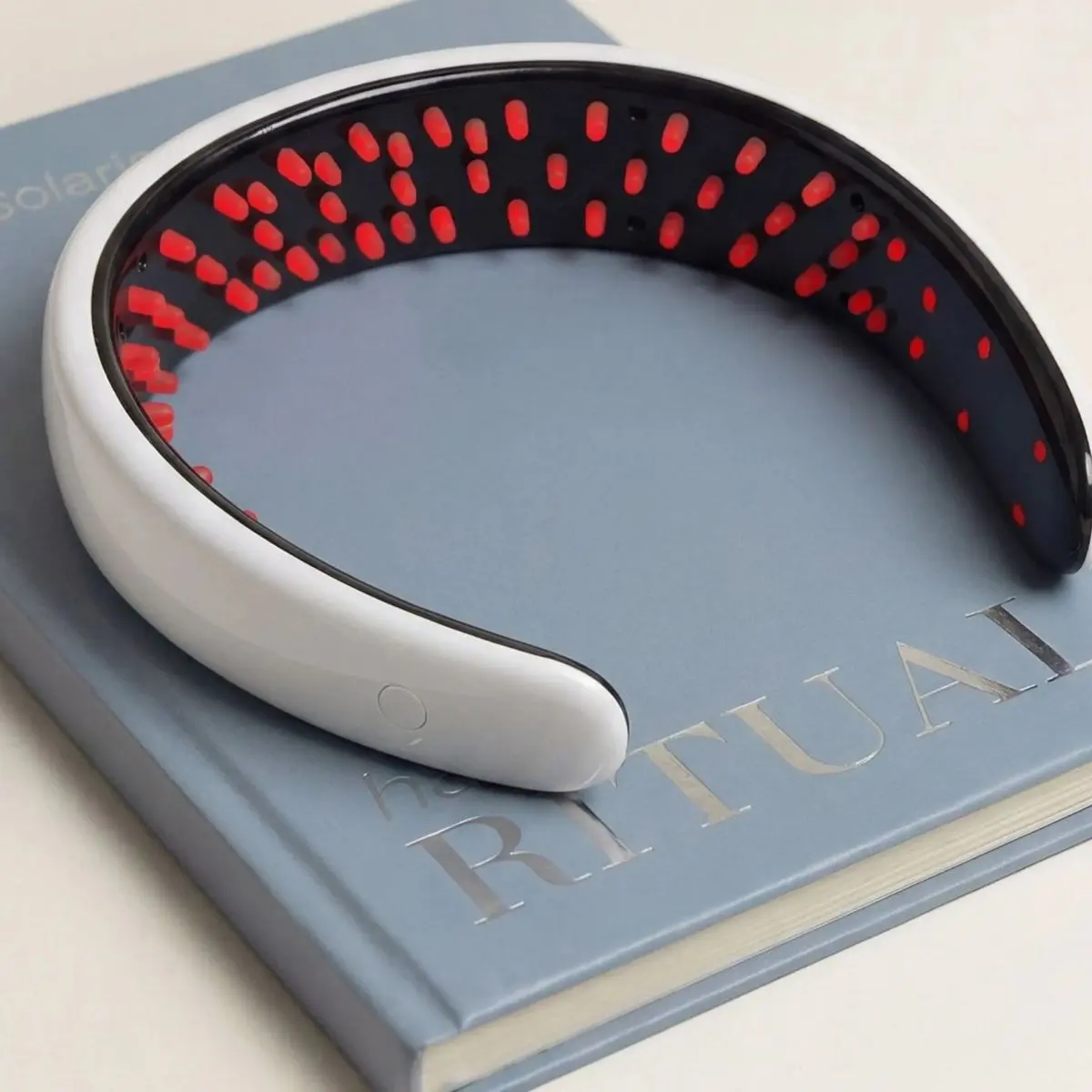
SOLARIS LABORATORIES NY Intensive Red LED Headband: Features precision 630nm/660nm red light alongside 420nm blue light to energize the scalp, support root health, and target thinning areas along the hairline.
HigherDose Red Light Hat: A hands-free wearable cap utilizing 650nm red light to seamlessly integrate scalp care into a weekly routine.
Bon Charge Infrared PEMF Mat Max (Editor’s Pick): A luxury wellness mat combining infrared heat with Pulsed Electromagnetic Field therapy. It uses Theta waves for deep relaxation, Delta waves to support restorative sleep, and Alpha waves to maintain a balanced, recharged feeling throughout the day.
Future Outlook: Where is Light Therapy Heading Next?
As we look beyond the 2026 holiday season, the trajectory of red light therapy points toward even greater integration, personalization, and portability.
Smart Biometric Integration: Future iterations of RLT devices will likely sync with wearable health trackers (such as smart rings and advanced fitness watches). By analyzing real-time biometric data—including heart rate variability (HRV), sleep stages, and skin moisture levels—AI-driven apps will automatically adjust light intensity, session duration, and wavelength combinations to meet the user’s daily biological needs.
Miniaturization and Wearability: As battery technology and flexible semiconductor materials advance, we can anticipate nearly invisible, feather-light garments that deliver therapeutic wavelengths discreetly under everyday clothing, allowing continuous, passive photobiomodulation throughout the workday.
Stricter Industry Standards: With the exponential growth of the RLT market, regulatory bodies and scientific advisory boards are pushing for greater transparency. Manufacturers will face increased pressure to independently verify irradiance claims, wavelength accuracy, and electromagnetic safety, ultimately protecting consumers from underperforming devices.
Conclusion
Red light therapy has successfully transitioned from an experimental scientific niche into an essential pillar of modern health and beauty routines. Whether chosen as a thoughtful holiday gift or a personal investment in longevity, RLT offers a scientifically backed pathway to enhanced cellular health, superior recovery, and deeper relaxation. By prioritizing quality specifications—such as verified wavelengths and appropriate irradiance—consumers can harness the full power of light to transform their well-being in 2026 and beyond.