

Executive Overview
As organizations globally rush to integrate generative artificial intelligence into their core operations, a familiar and alarming pattern is emerging. To digital strategist and author Paul Boag, the current corporate rollout of AI feels less like a calculated strategic maneuver and more like a theatrical farce—the kind of unbelievable misstep that, if adapted for film, would be dismissed by critics as wildly unrealistic.
Yet, this reality is playing out across boardrooms worldwide. The primary driver of this institutional frustration is simple yet profound: we have been here before.
Over a decade ago, organizations made identical errors during the crest of the "digital transformation" wave. In his 2014 Smashing Magazine book, Digital Adaptation, Boag diagnosed the systemic failures plaguing companies as they attempted to overhaul their digital footprints. Today, as enterprise leaders substitute "digital" for "AI," the foundational mistakes remain completely unchanged.
The most pervasive and dangerous misconception is treating AI adoption as primarily a technological challenge. While acquiring enterprise software licenses and deploying large language models requires technological deployment, hardware and software are merely the tip of a very deep iceberg. True artificial intelligence adoption is a profound cultural, psychological, and operational shift. When businesses approach AI as an IT upgrade rather than a human transformation, they inevitably trigger a cascade of employee resistance, operational bottlenecks, dangerous "Shadow AI" workarounds, and stifled innovation.
Navigating the AI era successfully requires organizations to unlearn the heavy-handed, top-down approaches of the past. Instead, leadership must pivot toward prioritizing psychological safety, aligning productivity gains with employee incentives, abandoning rigid governance structures in favor of adaptable principles, and listening to the organic experimentation already happening on the front lines.
Detailed Chronology: A Decade of Déjà Vu
To understand why modern artificial intelligence rollouts are faltering, one must trace the historical parallels between the digital transformation boom of the 2010s and the generative AI gold rush of the 2020s.
The 2014 Digital Adaptation Era: Building Systems Nobody Wanted
Back in 2014, the corporate world was gripped by a singular buzzword: digital transformation. Chief Information Officers and IT departments were tasked with modernizing legacy infrastructures. They systematically rolled out Content Management Systems (CMS), Customer Relationship Management (CRM) platforms, and internal intranets. Simultaneously, customer-facing divisions rushed to launch slick new websites, native mobile applications, and personalized user interfaces.
However, a fatal flaw undermined nearly all these initiatives: companies invested almost zero effort into understanding how human beings would actually interact with these systems.
- Internal tools were engineered with steep learning curves and frustrating user experiences.
- Customer-facing digital assets were built based on executive assumptions rather than genuine consumer needs, leading to products that users either ignored entirely or actively disliked.
- IT departments worked in strict isolation, handing down standardized solutions that failed to meet department-specific operational realities.
The Present Day: Repeating History with Copilot and ChatGPT
Fast forward to the current AI landscape, and the script has barely changed. Senior executives, heavily influenced by breathless media headlines and vendor hype, demand immediate organization-wide AI integration.
In response, IT departments purchase enterprise-wide licenses for tools like Microsoft Copilot Studio, deploy them across the company, and declare victory. A generic, one-size-fits-all training webinar is broadcasted to the workforce, and management checks the box on artificial intelligence adoption.
Meanwhile, employees are left bewildered, staring at sophisticated tools with no clear guidance on how to incorporate them into their daily responsibilities. Worse yet, they face mounting pressure to deliver instant productivity metrics using technologies they barely understand. Just as organizations built complex CMS platforms that employees avoided a decade ago, today’s enterprises are deploying AI platforms that staff view with a mixture of confusion, apathy, and existential dread.
Supporting Context & Metrics: The Human Element of AI Adoption
Why do employees resist tools that are ostensibly designed to make their lives easier? The answer lies in a fundamental misalignment of incentives and a failure to account for human psychology in enterprise change management.
The Productivity Trap and Employee Motivation
From the perspective of senior management, artificial intelligence is an unmitigated boon because it promises unprecedented productivity. Staff can theoretically draft emails, analyze datasets, generate code, and summarize reports in a fraction of the traditional time.
From the perspective of the individual worker, however, this equation looks entirely different:
- No Personal Benefit: Workers are still contracted for a standard 9-to-5 workday. Achieving higher output in less time does not automatically translate to shorter working hours, increased compensation, or genuine time recovered for personal wellbeing. Instead, it frequently translates to an expectation that they simply do more work within the exact same timeframe.
- The Threat of Displacement: Unlike the software upgrades of the past, generative AI carries an existential shadow. Employees have read the same prognostications about automation replacing human labor. Corporate platitudes assuring staff that "AI won’t replace you, but a person using AI will" do little to quell the underlying anxiety of potential redundancy.
Consequently, before organizations demand that their workforce enthusiastically embrace artificial intelligence, they must answer a critical question: What is the motivation for the employee?
Successful adoption strategies begin by helping staff identify the most tedious, frustrating, and monotonous aspects of their current roles—the tasks they genuinely hate—and demonstrating how AI can eliminate that specific friction. People are inherently receptive to technological evolution when it is framed as a direct upgrade to their day-to-day working lives rather than an optimization tool for executive metrics. Beyond efficiency, forward-thinking organizations must explore tangible incentives, such as career progression pathways, performance bonuses, or structured reductions in working hours tied to productivity gains.
Procedural Knowledge and the Cost of Time
Adopting AI is not as simple as clicking a button or completing a 30-minute tutorial. It requires professionals to fundamentally challenge, deconstruct, and rebuild working practices they have spent years—sometimes decades—perfecting.
This deep-seated expertise, known in cognitive science as procedural knowledge, cannot be rewritten overnight. Yet, the typical corporate environment is characterized by overworked employees drowning in overflowing to-do lists. Asking these professionals to carve out time for deep experimentation without clearing their existing workloads is a recipe for burnout.
Furthermore, formal training courses fall short. While structured educational programs provide a baseline, true mastery requires dedicated time for trial, error, and contextual experimentation within specific job functions.
The Power of Social Proof Over Top-Down Memos
During the digital transformation era, top-down directives routinely failed. The most successful adoption milestones occurred organically when internal innovators showcased their own pragmatic solutions to peers.
Boag notes that internal conferences—where staff demonstrated what they had successfully built and implemented—achieved far higher adoption rates than any memo issued by the C-suite. Employees are exponentially more likely to adopt a new tool when they witness a colleague in a parallel role utilizing it to solve a shared, everyday problem.
Rather than wasting valuable resources trying to convert the most resistant individuals first, organizations should identify the internal enthusiasts—the people already experimenting with AI in the shadows—and give them the time, platform, and space to share their successes across departments.
Official Statements & Expert Insights: Safety, Governance, and Shadow AI
Transitioning an enterprise into the age of artificial intelligence requires rethinking three operational pillars: psychological safety, governance frameworks, and technological flexibility.
1. The Necessity of Safe-to-Fail Cultures
Innovation is inherently messy. Learning how to prompt effectively, verify model outputs, and integrate AI agents into complex workflows guarantees that mistakes will happen. Unfortunately, many corporate cultures remain mired in a paralyzing fear of failure.
In both the digital transformation era and the current AI landscape, management frequently sends dangerously mixed signals:
- They demand rapid technological innovation and agility.
- They simultaneously enforce rigid Key Performance Indicators (KPIs) and penalize errors harshly during annual performance reviews.
When employees are reprimanded for minor missteps—such as consuming excessive token budgets during experimental phases or making a prompt-engineering error—they quickly calculate that experimentation carries career risks. The rational response to a punitive culture is self-preservation: it is safer to maintain the status quo and do things the old way.

To foster genuine AI adoption, management must actively curate a "safe-to-fail" environment. This requires temporarily adjusting KPIs, modifying performance review criteria, and offering organizational grace while staff climb the steep learning curve of generative technologies.
2. Striking the Right Balance with Governance
Governance is a notoriously tricky balancing act. Too little oversight invites chaos and security vulnerabilities; too much oversight stifles creativity and grinds innovation to a halt.
Historically, organizations defaulted to extreme bureaucracy. Lengthy compliance manuals detailing every prohibited data-sharing practice created an atmosphere of intimidation. When the rules are so complex that employees fear breaking them accidentally, they simply avoid using the tools altogether.
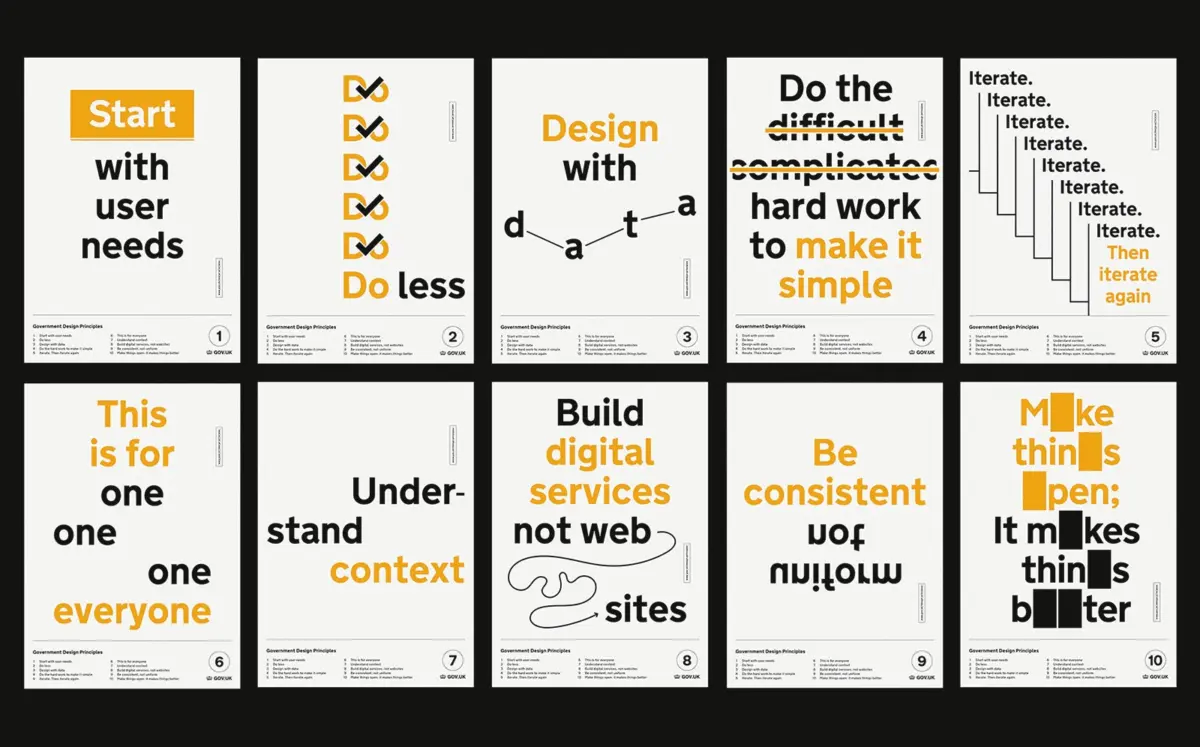
Instead of voluminous compliance documents, organizations should look to models like the GOV.UK Design Principles—a concise set of core tenets that can fit neatly onto a poster. Once foundational boundaries are established, leadership must demonstrate institutional trust, empowering employees to apply common sense within reasonable parameters.
3. The Danger of Rigid IT and the Rise of "Shadow AI"
Perhaps the most critical operational pitfall is the centralized, inflexible IT rollout. When overstretched IT departments select a single enterprise tool (such as standard Copilot licenses) and forbid anything outside that ecosystem, they ignite a dangerous phenomenon: Shadow AI.
Consider the case of a modern User Experience (UX) team eager to build an AI-powered research repository or dynamic user personas. If the corporate-approved software lacks the necessary capabilities, the team is forced to submit requests to an AI steering committee bogged down by bureaucratic inertia.
As months pass with no resolution, employee enthusiasm evaporates. Driven by deadline pressures, staff bypass official channels entirely. They open personal accounts on ChatGPT, Claude, or specialized applications using their personal smartphones and home laptops.
“In trying to lock everything down, organizations end up pushing the risk somewhere they cannot see it.” — Paul Boag
When sensitive corporate data, proprietary code, and confidential client communications enter consumer-grade tools devoid of enterprise oversight, the security vulnerability is infinitely greater than the risk the original restrictions were designed to prevent.
Rather than clamping down with draconian policies, website blocks, and disciplinary threats—which only drive employee behavior further underground—organizations must treat Shadow AI as a diagnostic symptom. Shadow AI reveals precisely where official enterprise tools are failing. By interviewing staff about the unauthorized applications they utilize, IT leaders can gather invaluable data to shape the next phase of official technological deployment.
Future Outlook: Navigating the Human Frontier of Enterprise Intelligence
As organizations look toward the horizon, the stakes of artificial intelligence adoption could not be higher. The path forward demands an unflinching acknowledgment that AI is not an IT project; it is a fundamental test of organizational culture, change management, and human empathy.
| Era | Primary Focus | Major Pitfall | Solution |
|---|---|---|---|
| Digital Transformation (2014) | CMS, CRM, Websites | Building systems without considering human UX | Internal showcases, peer-led adoption, flexibility |
| AI Era (Present) | LLMs, Copilot, Automation | Treating AI as an IT upgrade, fear of failure, Shadow AI | Psychological safety, lean principles, addressing employee incentives |
Organizations that cling to command-and-control methodologies, ignore employee motivations, and punish experimental errors will find themselves falling further behind agile competitors. Conversely, enterprises that embrace an adaptive, human-centric rollout—one that prioritizes psychological safety, respects procedural knowledge, and treats technological friction as valuable feedback—will successfully unlock the transformative power of artificial intelligence.
The lessons from Digital Adaptation remain as urgent today as they were a decade ago: technology evolves at breakneck speed, but human nature remains constant. The sooner corporate leadership recognizes that successful AI adoption is entirely about people, culture, and trust, the sooner the farce of modern implementation will give way to genuine, sustainable enterprise progress.