

Executive Overview
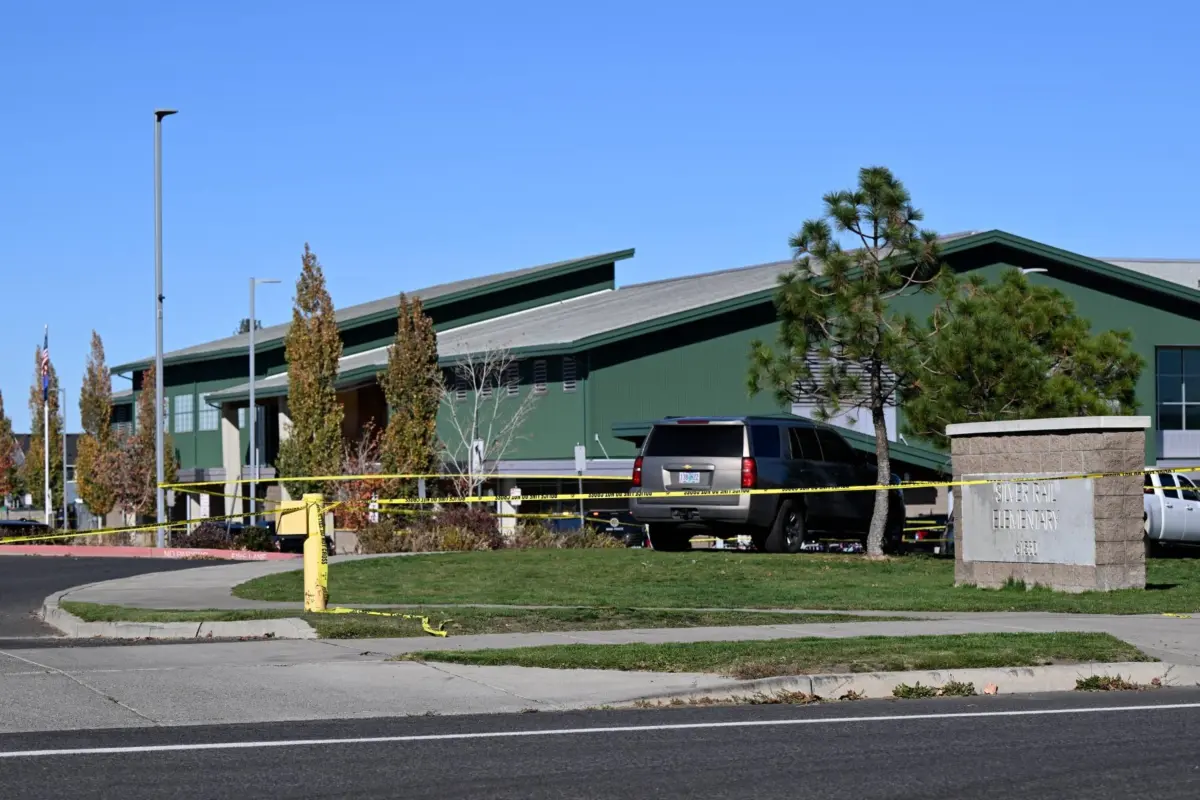
BEND, Oregon — A quiet Thursday afternoon in this picturesque Central Oregon community was violently shattered by an active shooter incident at Silver Rail Elementary School, leaving four people dead and two others critically injured. The attack, perpetrated by a 16-year-old local resident wielding a long gun, ranks among the most harrowing acts of school violence in the state’s modern history.
According to Bend Police Chief Mike Krantz, the bloodshed began just before 1:00 p.m. when the assailant opened fire from a vehicle before breaching the perimeter of the elementary school. Within minutes, the campus transformed from a place of learning into a zone of terror. The rapid response of local law enforcement, combined with the intervention of an armed community member who engaged and fatally shot the teenage suspect, likely prevented a far greater catastrophe.
The confirmed dead include three children—aged five, eight, and 11—and one teacher. Two others, a seven-year-old child and a second teacher, sustained critical injuries and were rushed to regional medical facilities for emergency trauma care.
As investigators comb through physical and digital evidence to piece together a motive, local and state leaders are left grappling with the familiar, agonizing questions surrounding youth access to firearms, school security vulnerabilities, and community resilience. This comprehensive report details the chronology of the attack, the emergency response, official statements from state and local authorities, and the broader context of school violence in the United States.
Detailed Chronology: The Anatomy of a Crisis
Law officials have released a minute-by-minute account of the sequence of events that unfolded on Thursday, outlining a rapid escalation from an initial street-level disturbance to a full-scale mass casualty event inside an elementary school.
Phase 1: The Initial Shots Fired
At approximately 12:58 p.m., the Bend Police Department’s 911 dispatch center received a frantic call from a motorist. The caller reported that a vehicle had been targeted and fired upon multiple times by an individual brandishing a long gun near the vicinity of Silver Rail Elementary School.
Dispatchers immediately began relaying descriptions of the suspect and the weapon to units on patrol. However, before units could intercept the shooter on the roadway, the situation escalated exponentially.
Phase 2: Breach of the School and Lockdown Protocol
Within moments of the initial 911 call, a cascade of emergency calls flooded dispatch lines. Callers reported that an armed individual had forced entry into Silver Rail Elementary School.
Recognizing the imminent danger, law enforcement agencies issued a priority tone alert at 1:00 p.m. to all officers in the jurisdiction. One minute later, at 1:01 p.m., administrative staff and emergency dispatchers coordinated to trigger the school’s automated emergency lockdown system, sealing interior corridors and instructing classrooms to shelter in place.
Despite these swift administrative measures, the suspect had already penetrated the building and begun discharging his weapon.
Phase 3: Armed Intervention and Threat Neutralization
As the gunman moved through the interior hallways of the school, an armed community member who had witnessed the initial outdoor confrontation followed the suspect inside.
According to Chief Krantz, this bystander engaged the 16-year-old shooter, returning fire and fatally wounding him. The swift intervention brought an end to the active threat phase of the incident within minutes of the initial breach, preventing the suspect from moving deeper into populated classrooms.
Phase 4: Law Enforcement Sweep and Triage
As police swarmed the campus, officers secured the perimeter and conducted a systematic room-by-room sweep of the facility to ensure no other suspects were present. Simultaneously, emergency medical services (EMS) personnel established a triage station outside the building.
First responders discovered a scene of devastation inside the school. Three children—identified by age as five, eight, and 11—and one adult teacher were pronounced dead at the scene. Paramedics identified two additional victims—a seven-year-old student and another teacher—suffering from critical, life-threatening gunshot wounds. Both were stabilized on-site before being transported under police escort to regional trauma centers.
Supporting Context & Metrics: The Shadow Over American Schools
The tragedy at Silver Rail Elementary School underscores a grim, persistent reality across the United States: the vulnerability of soft targets like educational institutions to heavily armed young offenders.
Youth Violence and Long Guns
The use of long guns—rifles and shotguns—in school shootings remains a defining characteristic of high-casualty incidents. Law enforcement officials confirmed that the 16-year-old suspect utilized a long gun during the Bend attack. Public health researchers note that access to high-powered firearms significantly increases the lethality of attacks perpetrated by adolescents.
According to data compiled by organizations tracking gun violence in America, school shootings involving adolescent perpetrators frequently point to underlying mental health crises, accessibility of unsecured domestic firearms, and social isolation. While federal and state lawmakers continue to debate legislative remedies—ranging from extreme risk protection orders (red flag laws) to mandatory safe-storage requirements—communities in states like Oregon are left to mourn the human cost of these systemic vulnerabilities.
The Debate Over Armed Bystanders
The intervention of the armed community member in Bend has reignited a complex national debate regarding the role of armed citizens during active shooter incidents.
While pro-gun advocates point to the Bend incident as proof that an armed citizen can successfully halt a mass shooter before law enforcement arrives, tactical and law enforcement experts urge caution. Police frequently emphasize that introducing additional armed individuals into a chaotic, active-shooter environment can complicate police response, increase the risk of friendly fire incidents, and create confusion for responding officers attempting to identify the primary threat.
Nevertheless, in the specific context of Thursday’s tragedy, investigators acknowledged that the armed bystander’s action brought a rapid end to the violence.
Official Statements and Community Response
In the wake of the shooting, municipal, police, and state leaders addressed a traumatized public, calling for unity while promising a transparent and comprehensive investigation.
Bend Police Department
During a late-afternoon press conference, Bend Police Chief Mike Krantz struggled to maintain his composure while delivering the grim casualty figures.
"Please know that we are working hard to ensure that we conduct a thorough investigation," Krantz told reporters, families, and community members. "This is a time that we know this deeply impacts the community. We ask everyone to lean on each other and be there for each other."
Krantz confirmed that the suspect was a 16-year-old resident of Bend. Out of respect for the ongoing investigation and the privacy of grieving families, police withheld the names of the victims, the deceased suspect, and the armed bystander. He confirmed, however, that the families of all victims had been officially notified.
State Leadership: Governor Tina Kotek
Oregon Governor Tina Kotek released a heartfelt statement addressing the residents of Bend and the broader state community, urging compassion and collective healing.
"There is going to be time for answering all those questions we all have right now, and searching for more ways to prevent this from happening in the future," Governor Kotek said. "लेकिन for now, let’s hold each other close in grief and put as much love into the world as possible."
State agencies, including the Oregon State Police and the Department of Human Services, deployed crisis response teams, grief counselors, and victim advocates to Bend to support students, families, and school district employees.
Future Outlook: Healing and Accountability in Bend
As the initial shock of Thursday’s massacre gives way to the agonizing process of grief, the community of Bend faces a long and arduous road to recovery.
The Ongoing Investigation
The Bend Police Department, alongside federal partners including the FBI and the Bureau of Alcohol, Tobacco, Firearms and Explosives (ATF), is executing a multi-jurisdictional investigation. Investigators are executing search warrants on the suspect’s residence, analyzing digital footprints, social media activity, and school records to determine what drove a 16-year-old to commit such an unspeakable act. Critical questions remain regarding how the teenager acquired the long gun and whether he communicated his intentions to anyone prior to the attack.
School Safety and Policy Implications
Silver Rail Elementary School, like schools across the nation, will face intense scrutiny regarding its physical security protocols, entry points, and emergency response readiness. Educational administrators in the Bend-La Pine School District announced that all district schools will implement heightened security measures and provide extensive mental health support services when classes resume.
Ultimately, the tragedy in Bend serves as a painful reminder of the fragility of community safety. As families bury three young children and an educator, and as two survivors fight for their lives in hospital intensive care units, the community is left to reckon with the indelible scars left by a few minutes of senseless violence.