

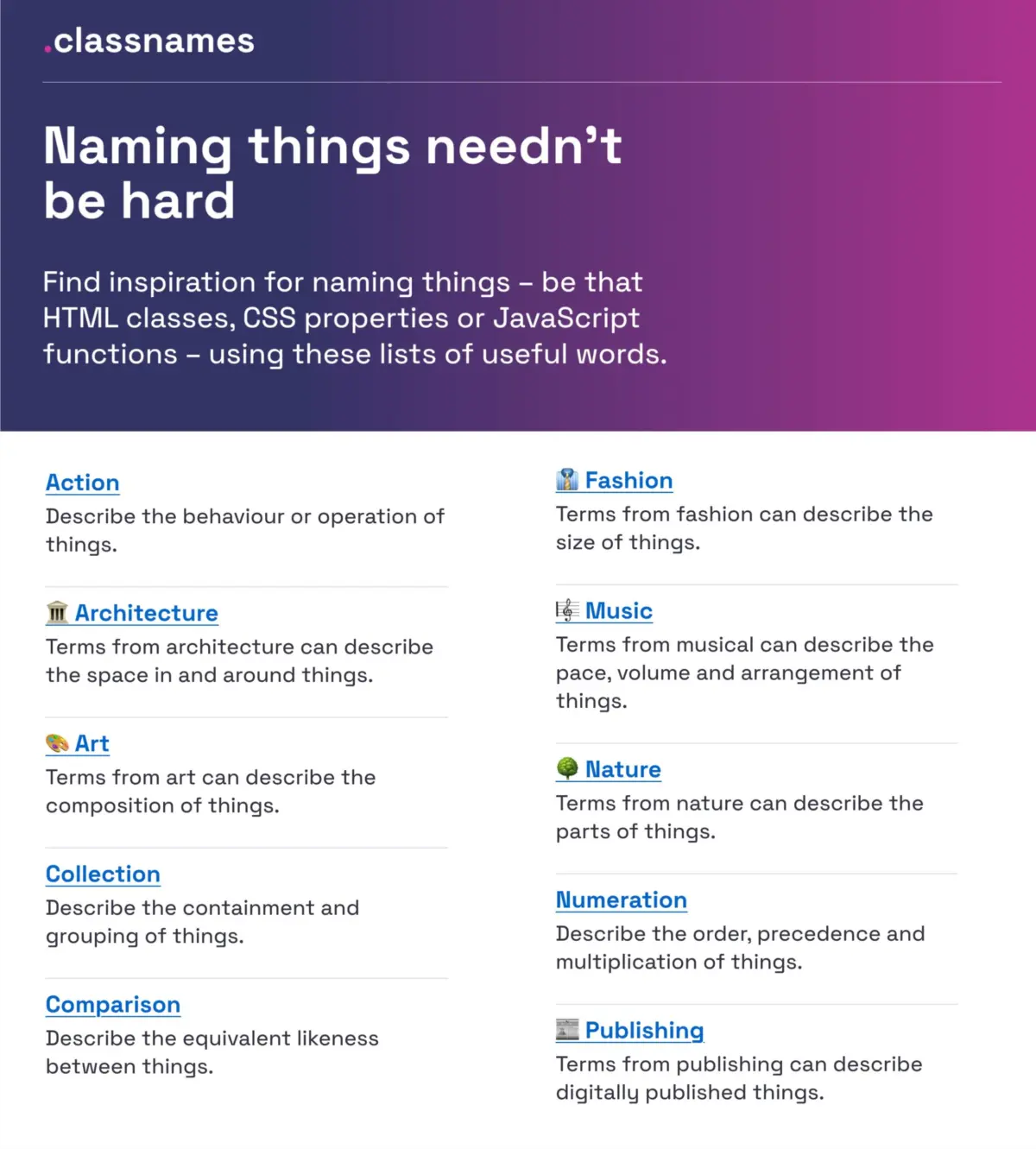
Executive Overview
In the realm of digital product design and software engineering, few challenges are as universally acknowledged yet chronically under-addressed as the act of naming. As Phil Karlton famously quipped, "There are only two hard things in Computer Science: cache invalidation and naming things." Whether we are defining HTML classes, structuring CSS properties, mapping design tokens, organizing design file layers, or introducing a brand-new user-facing feature, the words we choose do far more than merely act as labels. They shape our cognitive frameworks, dictate the clarity of cross-functional conversations, and fundamentally influence how users interact with our software.
Poor nomenclature introduces friction at every level of the product development lifecycle. When developers speak in database schemas, designers in visual aesthetics, product managers in business value, and users in colloquial tasks, communication fractures into disparate dialects. This linguistic fragmentation leads to low feature adoption, bloated codebases, inconsistent design systems, and pervasive organizational confusion.

This comprehensive guide explores the multifaceted discipline of digital taxonomy. Drawing upon industry best practices, expert frameworks, and a curated repository of community resources, we will examine how to build scalable, intuitive, and future-proof naming structures for UI components, colors, layers, design tokens, and features. By bridging the gap between technical architecture and human language, teams can eliminate ambiguity and foster a shared vocabulary that scales.
Detailed Chronology: The Evolution of Digital Taxonomy
The way the tech industry approaches nomenclature has undergone a dramatic evolution over the past two decades. Understanding this trajectory helps contextualize why modern design systems and codebases require sophisticated, systemic approaches to naming rather than ad-hoc, developer-driven labeling.

Phase 1: The Wild West of Ad-Hoc Naming (Early Web Era)
In the early days of web development and digital design, naming was treated as an afterthought. Developers relied on idiosyncratic shortcuts (#red-box, .left-col-2), while designers saved layers as Rectangle 40Copy or Group 12. This lack of standardization worked well enough for single-page sites or solo creators, but as software scaled into massive enterprise applications, this approach collapsed under its own weight. Codebases became brittle, and design files turned into impenetrable labyrinths.
Phase 2: Methodologies and Modular Constraints (BEM and OOCSS)
Recognizing the unsustainable nature of ad-hoc naming, the industry pivoted toward strict structural methodologies. Frameworks like BEM (Block, Element, Modifier), SMACSS, and OOCSS introduced predictable predictability to CSS architecture. Naming became algorithmic (.block__element--modifier), forcing teams to think about component relationships and encapsulation. While highly effective for styling, these methodologies often struggled to bridge the gap between design tools (like Figma or Sketch) and front-end code repositories.

Phase 3: The Design Systems Boom and Multi-Platform Scalability
Today, we reside in the era of comprehensive Design Systems—interconnected ecosystems that serve both designers and engineers simultaneously. Modern products span multiple brands, themes, viewports, and platforms (web, iOS, Android, watchOS). Consequently, naming is no longer just about identifying a button or a shade of blue; it is about creating resilient, multi-tiered taxonomies. Design tokens, semantic layers, and component APIs now require a shared, institutionalized language that can translate seamlessly across human speech, design tooling, and production code.
Supporting Context & Metrics: The Cost of Ambiguity
Why should organizations invest precious time and engineering hours into standardizing their naming conventions? The metrics and behavioral patterns surrounding digital product adoption provide a clear answer.

The Cognitive Load of Over-Generic vs. Over-Specific Names
When establishing naming conventions, teams typically fall into one of two traps:
- Too Generic: Names like
.wrapper,.item, or--color-primary-altlack semantic meaning. They force developers and designers to inspect the implementation details to understand the intent, destroying reusability and introducing cognitive fatigue. - Too Specific: Names like
.sidebar-red-submit-buttontie abstract UI elements to temporary contexts. The moment the button moves to the footer or changes color during a brand refresh, the name becomes a misnomer, triggering costly refactoring cycles.
Feature Discoverability and User Friction
According to UX research synthesized across enterprise product teams, a significant percentage of low feature adoption is not caused by poor utility, but by poor discoverability and nomenclature. Users do not think in internal product engineering jargon (e.g., "Synchronized Asynchronous Ledger Engine"). They think in terms of outcomes and tasks ("Export My Invoices"). When feature names fail to map directly to the user’s mental model, discovery stalls, adoption plummets, and ROI diminishes.

Practical Frameworks: How to Name Everything
To resolve these challenges, industry leaders have open-sourced a wealth of tools, guides, and methodologies. Below is a comprehensive breakdown of how to approach naming across every layer of the digital stack.
1. Naming UI Components and Elements
When struggling to name a UI component, looking at how established design systems solve the problem is the most effective shortcut.
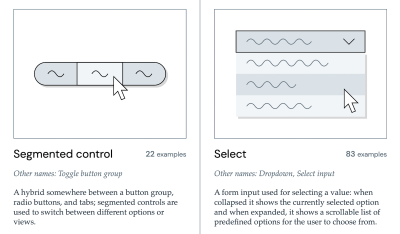
- The Component Gallery: Created by Iain Bean, this invaluable resource collects real-world interface components from dozens of design systems, detailing how different organizations name over 50 distinct UI patterns—from accordions to visually hidden elements.
- Name That UI: A practical visual dictionary designed to align cross-functional teams on standard component nomenclature.
2. Naming Colors and Tokens
Color naming has historically plagued digital projects. Designers use poetic descriptors like "Midnight Plum," while developers rely on cryptic hex codes like #2A0845.
- Color Names Repository: Maintained by David Aerne, this massive repository compiles over 30,000 unique color names sourced from community contributions and design standards. Paired with interactive pickers like Color Parrot, it provides a shared dictionary for visual assets.
- Intuit’s Design Token Taxonomy: Enterprises managing multi-brand ecosystems (such as Mailchimp, QuickBooks, and TurboTax) require scalable taxonomies. Nate Baldwin’s documentation on Intuit’s token system illustrates how to structure tokens beyond single brand themes into foundational systems.
- Vodafone UK Variables Taxonomy Map: A masterclass in multi-brand, multi-themed design system architecture. Available as a Figma community resource, it maps out collections from brand primitives to semantic page tokens, building upon Nathan Curtis’s foundational work.
- Design Token Naming Guide + Builder: Created by Romina Kavcic, this interactive tool helps teams configure their own token naming structures across components, categories, states, and roles, complete with an inventory spreadsheet template.
3. Naming Layers and Groups in Design Files
Cluttered design files are a notorious source of friction during developer handoff. Javier Cuello’s guidelines on design best practices establish clear rules for layer and group naming:

- Logical Structure: Names should follow a predictable hierarchy.
- Conciseness and Meaning: Avoid clutter while ensuring the label describes the function, not just the visual appearance (e.g., use
Card/User-Profilerather thanGroup 43). - Universal Recognition: Use terminology that both junior and senior team members instantly understand.
4. Naming Features and Products
Erin Gannon’s practical guide, "What Do We Call This Thing?", outlines how to name features so that users can discover, understand, and actually utilize them:
- Job-to-Be-Done Focus: Drive feature names by user needs and outcomes rather than internal engineering milestones.
- Colloquial Alignment: Audit user testing sessions, customer support tickets, and sales calls to harvest the exact words users naturally employ to describe their problems.
- Onym: For product and service naming, open-source repositories like Onym provide brainstorming tools, vetting methodologies, and etymological guides to avoid costly trademark and cultural missteps.
Expert Insights and Official Perspectives
Industry thought leaders consistently emphasize that nomenclature is an organizational culture issue disguised as a technical detail.

"The right name is the one that is well-understood and actively used by both the team and the users," notes design strategist Vitaly Friedman. "So much time is wasted speaking about the very same thing but in different dialects—the designer’s dialect, the developer’s dialect, the product manager’s dialect, and the user’s dialect. That fragmentation is the root cause of systemic frustration."
When design systems scale, maintaining this linguistic alignment requires governance. Establishing token naming conventions that flow transparently from primitive values (e.g., --color-blue-500) to semantic intent (e.g., --color-action-primary-default) ensures that when business requirements shift, the underlying architecture adapts without breaking production interfaces.

Future Outlook: The Horizon of Digital Nomenclature
As we look toward the future of digital product development, the intersection of automated tooling, AI-driven code generation, and collaborative design platforms will place an even greater premium on structured naming.
- AI-Assisted Taxonomy Enforcement: Emerging AI linters integrated into IDEs and design tools will automatically flag non-compliant layer names, un-tokenized color values, and ambiguous component APIs in real time.
- Unified Semantic Graphs: Future design system pipelines will maintain a bi-directional live mapping between user-facing product copy, design token variables, and code repository classes, eliminating translation gaps entirely.
- Cross-Disciplinary Glossaries: Organizations will increasingly employ dedicated Design Operations (DesignOps) professionals whose primary mandate is maintaining the corporate lexicon—ensuring that product documentation, codebases, and marketing terminology speak with one unified voice.
By investing in robust naming conventions, leveraging community-driven resources like the Component Gallery and token taxonomies, and prioritizing user-centric language over internal shorthand, organizations can build digital products that are not only easier to maintain, but profoundly more intuitive for the humans who use them.