

Executive Overview
The fastest way to diminish the strategic value of marketing within a modern enterprise is to treat it as just another isolated department. In an era where corporate agility and rapid digital transformation dictate market survival, chief marketing officers (CMOs) can no longer afford to cocoon themselves within the traditional silos of brand awareness, creative campaigns, and customer communications.
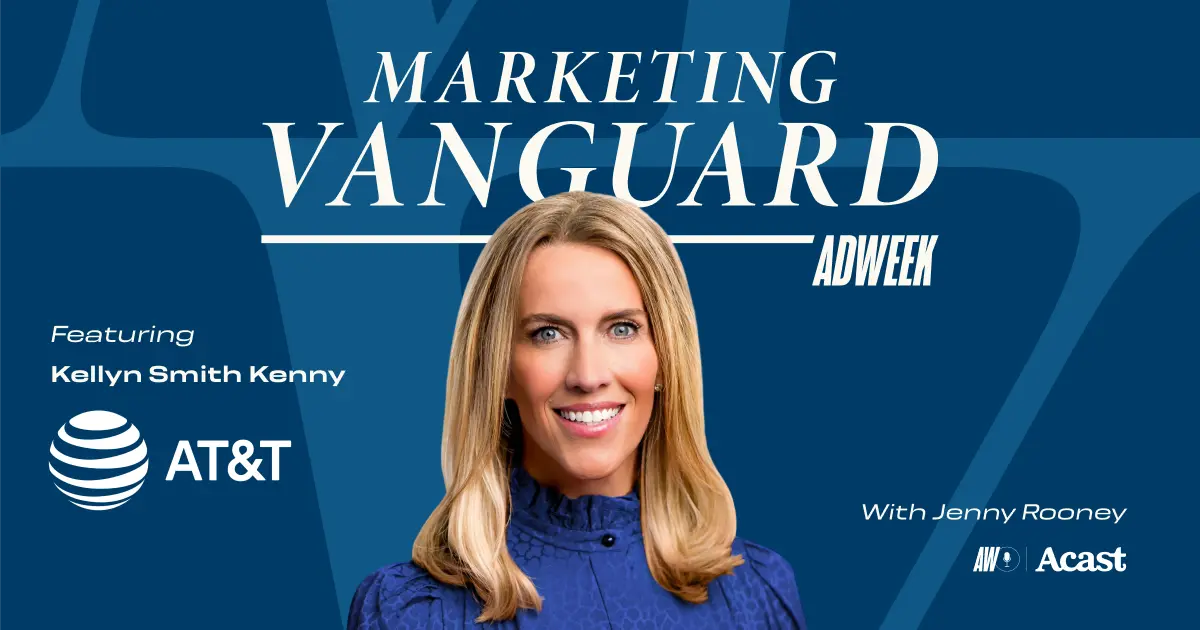
In a recent, highly anticipated episode of Marketing Vanguard, host Jenny Rooney sat down with Kellyn Smith Kenny, Chief Marketing and Growth Officer at AT&T. The resulting conversation serves as a masterclass in modern executive leadership, stripping away corporate jargon to reveal the stark realities of what the CMO role demands today. Kenny argues persuasively that marketing must operate as a core economic engine for growth, that true leadership is defined by the environment created for others, and that conviction without patience is merely a recipe for organizational whiplash. Furthermore, she issues a timely warning regarding artificial intelligence: before organizations look to deploy advanced machine learning models, they must first fix their foundational data structures.
Drawing on an extensive career that spans industry titans such as Capital One, Uber, Hilton, and now AT&T, Kenny offers a blueprint for how marketing executives can transcend traditional departmental boundaries to become vital enterprise-wide leaders. This report explores the core themes of their conversation, providing a deep dive into the evolving mandate of the contemporary Chief Marketing and Growth Officer.
Detailed Chronology: Insights from the Front Lines of Growth
Marketing as an Enterprise Growth Engine
Reference point from the interview: [10:43]
For decades, the marketing function has fought an uphill battle to prove its direct contribution to the bottom line. Too often viewed by finance and operations as a cost center rather than a revenue driver, marketing has frequently found its budgets scrutinized during economic downturns. Kellyn Smith Kenny strips the CMO role back to its first principles to counter this vulnerability: marketing exists to help grow the company.
According to Kenny, a modern marketer cannot afford to remain exclusively focused on creative outputs, campaign metrics, or surface-level customer sentiment. Instead, they must deeply understand how the organization makes money, how its operational cogs turn, and where time, financial resources, and corporate influence actually flow.
This requires a fundamental shift in literacy. If a CMO cannot read a balance sheet, understand unit economics, or articulate how marketing investments translate directly into customer lifetime value (LTV) and customer acquisition cost (CAC) ratios, they cannot credibly claim to be driving business growth. By aligning the creative vision with rigorous business acumen, Kenny demonstrates how marketing can earn its rightful place at the executive table, shedding its reputation as an auxiliary function and stepping into the role of a primary growth engine.
Cultivating Excellence: The Duty to Raise the Bar
Reference point from the interview: [11:57]
Leadership is frequently misunderstood as a mechanism for comfort or protection. However, Kenny reframes the core responsibility of a senior leader around the environment they actively construct for their teams. Her definition is uncompromising: the job of a leader is to create the conditions that allow talented people to produce the best work of their lives.
Crucially, this does not mean lowering expectations to foster a stress-free workplace. Rather, it means building a culture where excellence is the baseline and the standard continuously rises. Kenny argues that great leadership refuses to let the bar stand still. Protecting a team from high expectations ultimately deprives them of growth and stifles their true potential. By providing robust support, clear strategic guardrails, and psychological safety, leaders can demand world-class execution without burning out their talent. The outcome is a self-sustaining ecosystem of high performance where individuals exceed even their own expectations.
Company Leader First, Marketing Manager Second
Reference point from the interview: [12:15]
One of the most profound distinctions Kenny draws during her conversation with Rooney is linguistic yet deeply structural: she identifies as a "company leader," not merely a "manager of the marketing organization."
This distinction carries immense weight in the corporate hierarchy. A senior marketer’s responsibility does not—and cannot—end at the arbitrary borders of their departmental function. True company leaders participate in shaping the overarching strategy, culture, and galvanizing purpose of the entire enterprise.
When a CMO falls into the trap of thinking their mandate is restricted to optimizing ad spend, managing agency relationships, and launching product campaigns, they actively shrink the value of their office. Modern businesses face complex, cross-functional challenges—ranging from digital disruption and shifting consumer privacy regulations to cultural integration post-merger. By viewing the enterprise through a holistic lens, a Chief Marketing and Growth Officer can break down organizational silos, bridge the gaps between product, sales, and engineering, and champion a unified customer experience that permeates every layer of the corporation.
Balancing Conviction and Patience in Transformation
Reference point from the interview: [16:18]
Transformational leadership is frequently romanticized in business literature and media profiles. The archetype of the visionary leader who storms into an organization, radically redefines everything in a matter of weeks, and commands instant compliance is a persistent myth. Kenny argues that this caricature is not only unrealistic; it is actively destructive.
True transformation requires an uncomfortable balancing act: the bold conviction to articulate what excellence looks like, paired with the deep patience required to bring people along on the journey. Raising standards takes unwavering clarity of vision, but changing the human and operational behaviors of a large organization takes time.
If a leader acts solely with conviction and zero patience, they create fear, alienation, and organizational whiplash. Conversely, if they possess endless patience without conviction, the enterprise stagnates and standards erode. The hard work of modern leadership lies in holding both realities simultaneously—remaining steadfast on the ultimate destination while walking the path at a pace the organization can absorb, adapt to, and ultimately own.
The Artificial Intelligence Imperative: Fixing the Foundation First
Reference point from the interview: [19:51]
As artificial intelligence dominates boardrooms and marketing conferences alike, organizations are rushing to deploy generative tools, machine learning algorithms, and automated workflows. However, Kenny warns of a foundational mistake that many marketers are primed to make: they are looking at AI as a magic wand rather than an operational accelerator.
Kenny asserts that world-class marketing powered by AI depends entirely on the high-quality information sitting underneath every investment and strategic decision. AI cannot fix a broken data infrastructure; it will merely accelerate and amplify whatever data it is fed—garbage in, garbage out.
Before typing the first prompt or integrating complex predictive models, marketing leaders must audit their data hygiene, governance frameworks, and customer insights repositories. Furthermore, Kenny emphasizes that human insight remains irreplaceable. While AI can process vast datasets at lightning speed and optimize repetitive tasks, strategic judgment, emotional intelligence, and creative vision must still originate from human minds. The defining question for contemporary marketing leaders is not simply, "How are we using AI?" but rather, "What data are we feeding it, and how are we applying human judgment to its outputs?"
Supporting Context & Metrics: The Evolution of the CMO Role
To contextualize Kellyn Smith Kenny’s insights, it is necessary to examine the broader macro-environment in which modern CMOs operate. Over the past decade, the tenure of the Chief Marketing Officer has remained notoriously volatile, often hovering as the shortest among C-suite executives—frequently averaging between 38 to 41 months according to various industry benchmarks from firms like Spencer Stuart.
This volatility is symptomatic of a fundamental disconnect. When boards view marketing purely as a tactical expense rather than a strategic growth lever, expectations become misaligned, and short-term metrics overshadow long-term brand equity building. Executives who successfully buck this trend—such as Kenny—typically do so by bridging the gap between creative excellence and hard financial accountability.
The Dual Mandate: Brand Equity Meets Growth Economics
The merging of the "Marketing" and "Growth" portfolios—reflected explicitly in Kenny’s title at AT&T—is an institutional response to this tension. Historically, brand building and direct-response performance marketing existed in separate universes. Brand teams focused on long-term emotional resonance, while growth teams chased immediate conversions and lower acquisition costs.
Today, successful enterprise leaders recognize that brand is growth, and growth is sustained by brand equity. By integrating these functions under a single executive leader, organizations can eliminate internal friction and ensure that every dollar spent on top-of-funnel awareness is intrinsically linked to bottom-of-funnel conversion metrics and long-term customer retention.
The AI Readiness Gap
Industry data underscores the urgency of Kenny’s warning regarding AI infrastructure. While over 70% of enterprises have adopted some form of AI within their marketing stacks, studies consistently show that less than 30% feel confident in the quality, accessibility, and cleanliness of their underlying customer data. This "AI readiness gap" leads to wasted capital, misguided personalization efforts, and fragmented customer experiences. Kenny’s thesis—that data governance must precede technological deployment—serves as a vital corrective to the current market hysteria surrounding generative AI adoption.
Official Statements & Key Takeaways
While the conversation between Jenny Rooney and Kellyn Smith Kenny was dynamic and conversational, several core philosophical tenets emerged that define Kenny’s executive framework:
- On Marketing’s Identity: "If you do not understand the business, you cannot credibly claim to be driving its growth." Marketing must transcend campaign management to master the economics of the enterprise.
- On Leadership Responsibility: "Your job is to create the best work of people’s lives." Leadership is about designing an environment of elevated standards, not shielding teams from expectations.
- On Enterprise Scope: "Be a company leader, not a marketing manager." CMOs must actively shape the broader organizational purpose rather than optimizing their department in a vacuum.
- On Organizational Change: "Conviction without patience is not leadership." Boldness must be tempered with the empathy and time required to bring people along.
- On Technological Adoption: "AI doesn’t start with AI. It starts with data." Technology accelerates execution, but it cannot substitute for foundational data integrity and human insight.
Future Outlook: The Next Era of Marketing Leadership
As we look toward the remainder of the decade, the pressures on marketing leaders will only intensify. Economic uncertainty, privacy-first regulatory landscapes, hyper-fragmented media channels, and the rapid maturation of artificial intelligence demand a new breed of executive.
The traditional marketing generalist—skilled primarily in creative direction and media planning—is being phased out in favor of the commercial polymath: leaders who speak fluently across finance, data science, product development, and organizational psychology. Kellyn Smith Kenny’s journey across high-growth, highly competitive brands like Capital One, Uber, Hilton, and AT&T provides a compelling roadmap for this evolution.
For aspiring CMOs and established marketing executives alike, the message is clear: stop acting like a department head and start acting like an enterprise builder. Master the balance between bold conviction and patient execution. Fix your data before chasing technological fads. Most importantly, remember that your ultimate legacy as a leader is not measured solely by the campaigns you launch, but by the exceptional environment you create and the growth you unlock for the entire organization.