

Originally published in The Student Press Report, a national news desk highlighting the successes and challenges facing college journalism.
Executive Overview
Government officials and public institutions have mastered a quiet, insidious art form: they no longer have to say "no" to public records requests. Instead, they can simply make acquiring those documents so prohibitively difficult, time-consuming, and expensive that nobody dares to try.
This bureaucratic obstructionism has morphed into a sophisticated system of administrative deterrence. By burying public records requests under a mountain of procedural red tape, missed legal deadlines, frivolous exemptions, and exorbitant fees, agencies across the United States are effectively rewriting freedom of information laws. The result is a profound chilling effect on watchdog journalism, eroding public accountability and leaving citizens in the dark.
For student journalists—operating on tight academic deadlines, thin budgets, and within high-pressure campus newsrooms—this systemic stonewalling is more than an inconvenience; it is an active deterrent. When reporting the truth requires navigating a labyrinth of legal appeals and enduring months of psychological exhaustion, the cost of accountability becomes too high to bear.
Detailed Chronology: Anatomy of a Campus Stonewall
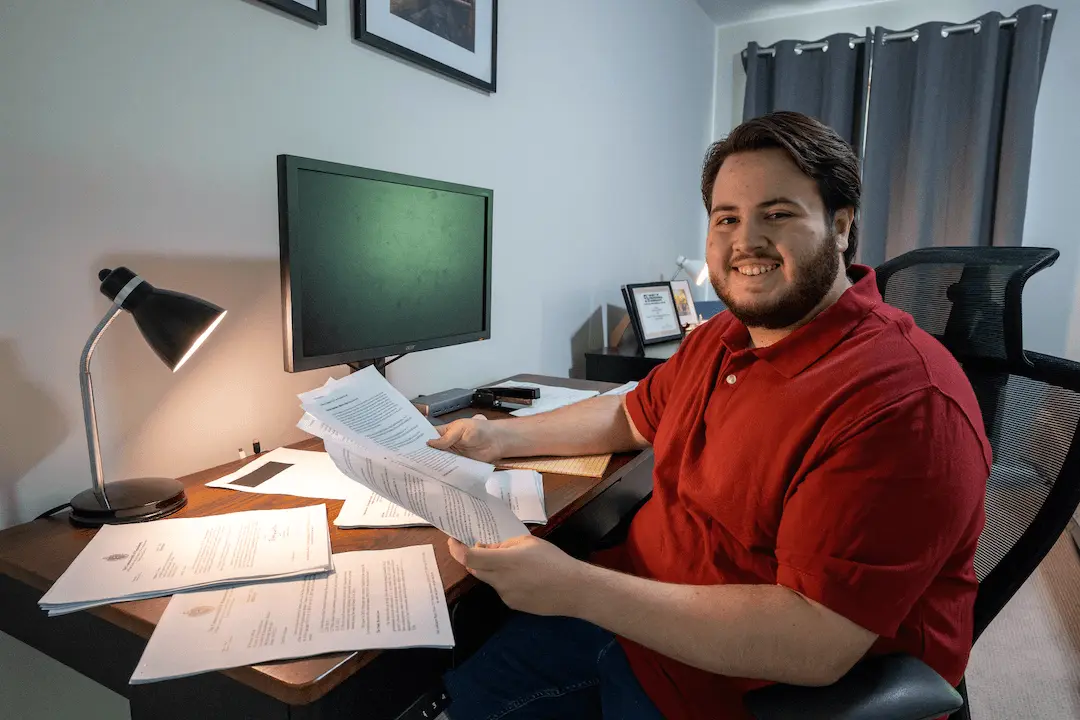
The human cost of bureaucratic delay is best understood through firsthand experience. Earlier this year, while reporting for the campus newspaper The Mass Media, an investigation was launched into the University of Massachusetts Boston (UMass Boston) and its financial involvement in a Vatican climate initiative.
What should have been a straightforward records request turned into a nearly year-long battle against institutional resistance. At every conceivable turn, university administrators deployed delaying tactics designed to grind the reporting process to a halt.
The Playbook of Delay
The obstruction followed a predictable, exhausting trajectory:
- Missed Legal Deadlines: Administrators routinely ignored statutory windows for responding to requests, forcing continuous follow-ups and establishing a baseline of disrespect for transparency statutes.
- Frivolous Exemptions: The university repeatedly invoked sweeping exemptions to withhold documents. Many of these were subsequently rejected or heavily questioned by the state’s supervisor of records.
- Exorbitant Financial Barriers: UMass Boston levied fees exceeding $1,000 for the simple act of retrieving and reviewing emails—placing a heavy financial burden on a student publication’s operational budget.
The Appeal Illusion
Under Massachusetts law, requesters denied access can appeal to the supervisor of records, an official empowered to order timely relief and refer persistent violations to the attorney general. On paper, this mechanism appears robust. In practice, it operates as a legally sanctioned administrative loop.
The appeals process follows a grueling cycle:
- The supervisor of records takes up to 10 business days to evaluate an appeal.
- If the supervisor rules in favor of the requester, they issue an order commanding the public custodian to provide a "revised response."
- The custodian is granted another 10 business days to comply.
Rather than releasing documents, agencies often provide a reworded refusal that does not substantively change their position. This forces the requester to launch an entirely new appeal.
This routine breeds a grim familiarity. Weeks are spent tracking deadlines, consulting legal aid organizations, crafting legal arguments, researching state case law, drafting appeal letters, and organizing dozens of mandatory email attachments. When the supervisor’s order finally arrives in the inbox, it inevitably details every flaw in the university’s withholding rationale, only to conclude with the same hollow directive:
"UMass is ordered to provide a response to the request, provided in a manner consistent with this order, the Public Records Law, and its Regulations within ten (10) business days… The requester may appeal the substantive nature of UMass’ response within 90 days."
Having read those exact words dozens of times, it is clear what they truly mean: zero progress toward publication. The system is not designed to enforce compliance; it is designed to wear down the journalist until they simply walk away.
Supporting Context & Metrics: A National Crisis of Transparency
The struggles at UMass Boston are far from isolated incidents. Across the country, the framework of open government is buckling under the weight of institutional evasion.
Massachusetts: The "Black Hole" State
The systemic failure of public records laws in the Commonwealth is so pronounced that the Society of Professional Journalists (SPJ) awarded the entire state its annual Black Hole Award. This dubious distinction highlights "the most heinous violations of the public’s right to know," citing broad statutory exemptions, chronically weak enforcement mechanisms, and systemic delays that effectively lock away government information.
Federal Deficits: The Declining FOIA
This hostility toward transparency is mirrored at the highest levels of the federal government. A comprehensive analysis by The New York Times revealed that federal agencies successfully fulfilled only about 47% of Freedom of Information Act (FOIA) requests in fiscal year 2025—a steep decline from the 63% fulfillment rate recorded in 2010.
Furthermore, despite a statutory 20-day response deadline under federal law, requesters faced an average wait time of 240 days for a response. Compounding these structural failures, the Department of Justice’s Office of Legal Counsel published a memorandum in April arguing that the Presidential Records Act—the Nixon-era legislation ensuring presidents preserve records for public release—is unconstitutional, threatening to dismantle another cornerstone of government accountability.
The Weaponization of FERPA in Higher Education
Public educational institutions have cultivated a unique expertise in dodging transparency by weaponizing the Family Educational Rights and Privacy Act (FERPA). Designed strictly to protect students’ private academic records, colleges routinely cite FERPA as a catch-all shield to withhold any document containing even a passing mention of a student.
The Student Press Law Center (SPLC) has documented these abuses for decades, dating back to 2005. Schools have notoriously withheld:
- Parking ticket logs
- Public committee meeting minutes
- Lists of football ticket recipients
- Detailed records regarding Name, Image, and Likeness (NIL) athletic contracts
These sweeping withholding justifications crumble under basic legal scrutiny. The U.S. Supreme Court has explicitly ruled that FERPA applies solely to documents directly related to an individual student and maintained as part of their permanent educational file (Owasso Independent School District v. Falvo). State appellate courts in California, Maryland, Michigan, North Carolina, and Ohio have consistently upheld a narrow interpretation of the statute.
As a North Carolina appeals court aptly noted: "FERPA does not provide a student with an invisible cloak so that the student can remain hidden from public view while enrolled." Despite clear judicial precedent, universities continue to abuse the statute, leveraging the chilling effect to deter future inquiries.
Official Statements and Institutional Perspectives
While public relations offices and university counsels routinely defend their record-keeping practices under the banner of privacy and regulatory compliance, transparency advocates and legal experts view these administrative barriers as a direct assault on democratic norms.
In various legal briefs and public statements regarding public records disputes, institutional representatives frequently point to the administrative burdens of managing thousands of electronic records. They argue that safeguarding sensitive data—such as student identities, proprietary financial information, and internal deliberations—requires meticulous, time-consuming redactions that naturally push statutory deadlines.
Conversely, press freedom organizations argue that these justifications mask a deeper institutional self-preservation instinct. Legal scholars emphasize that when universities and government agencies treat public records as proprietary secrets rather than public property, they actively undermine civic trust.
Open-government advocates stress that the administrative cost of transparency is a necessary cost of democracy. When public entities receive taxpayer funding—or, in the case of public universities, tuition dollars and state appropriations—their internal communications and financial transactions belong to the public sphere, not to the filing cabinets of risk-averse administrators.
Future Outlook: The Chilling Effect on the Next Generation of Watchdogs
The cumulative impact of procedural delays, financial intimidation, and legal stonewalling takes a heavy toll on journalists, particularly those training in academic newsrooms.
The Cost to Student Reporters
For student journalists, the tradeoff of pursuing public records is exceptionally punishing. Beyond managing rigorous coursework, midterms, and finals, student reporters must carve out hours to battle state agencies and university legal teams.
This dynamic fosters an instinctive avoidance of investigative reporting. When faced with the reality that filing a public records request means inviting months of conflict, stress, and bureaucratic gaslighting, many reporters make a pragmatic calculation. They pass on critical stories because:
- Deadlines loom large, and campus newspapers must be published weekly or monthly.
- Stories that take an entire academic year to report are often stale by the time documents are finally surrendered.
- The emotional and professional toll burns out young reporters before their careers even begin.
Reclaiming the Public’s Right to Know
Public records are the lifeblood of investigative journalism. They expose municipal corruption, track the misuse of public funds, hold university leadership accountable, and ensure that power does not operate unchecked in the shadows. Without timely and reliable access to documents, the press is left to blindly parrot official press releases, reducing journalism to a mouthpiece for the powerful.
The underlying principle remains absolute and non-negotiable: The government belongs to the people. So do its records.
Until lawmakers enact severe penalties for bad-faith delays, streamline enforcement mechanisms, and strip public institutions of their ability to weaponize privacy laws, the paper wall will remain standing. For the sake of democracy and institutional integrity, government officials and academic leaders must be forced to act like public servants whose work is owed to the public eye.