

Executive Overview
For decades, modern medicine has struggled to effectively target the deepest mechanisms of human sleep without relying on a cocktail of sedatives, heavy pharmaceuticals, or invasive surgical interventions. Sleep, while universally recognized as a biological necessity, has largely remained a black box—we know that we need it, but selectively manipulating its individual stages with precision has felt akin to performing surgery with a sledgehammer.
That paradigm may be on the verge of a seismic shift.
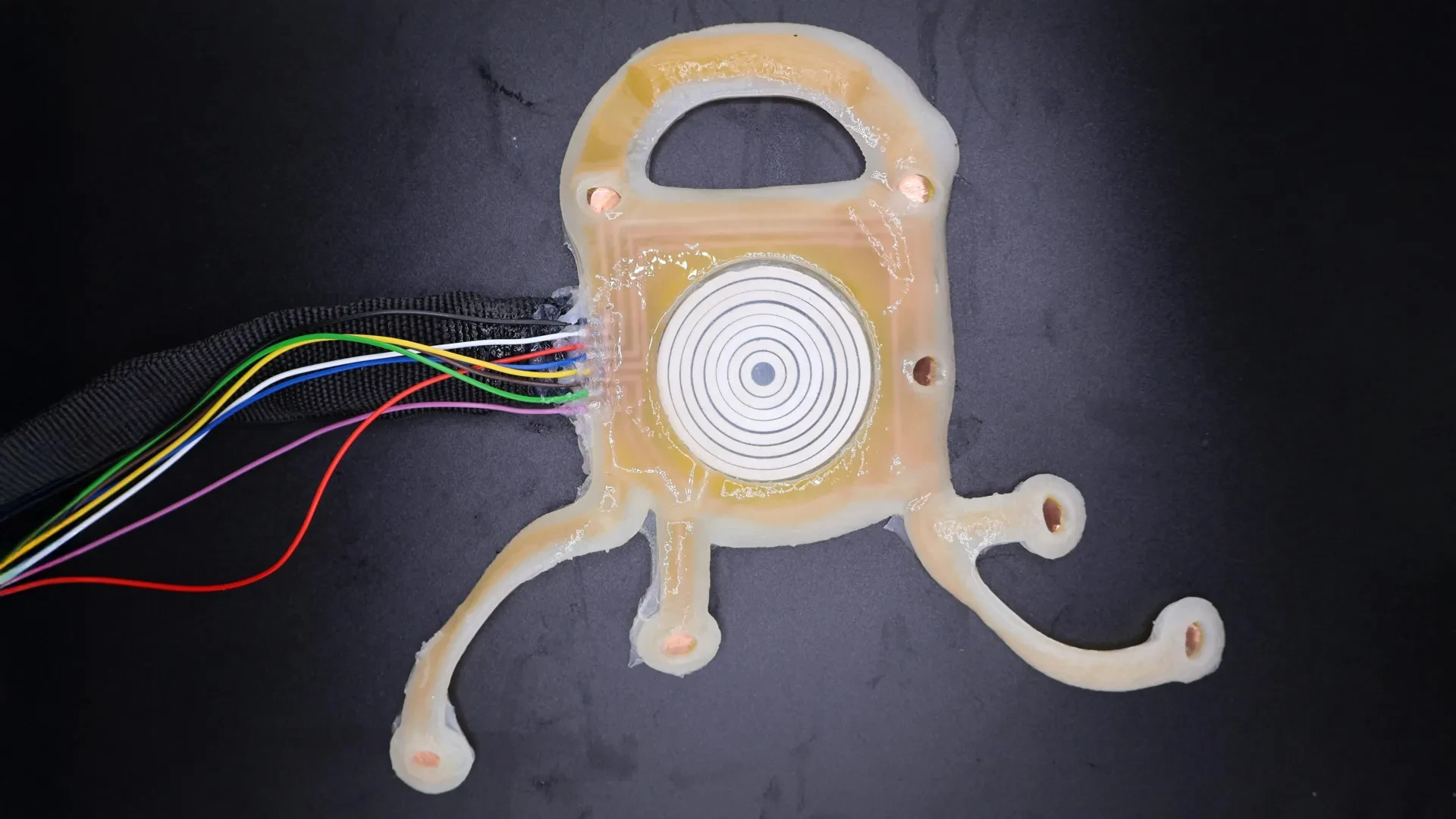
Researchers spearheaded by a multidisciplinary team at the University of Texas at Austin have engineered a groundbreaking wearable device that could fundamentally change how science approaches sleep medicine. Known as NEUSLeeP, the soft, skin-adapting patch utilizes gentle, focused ultrasound waves to target deep-seated regions of the human brain. By stimulating these neural networks while simultaneously recording real-time electrophysiological data, the patch helps individuals enter rapid eye movement (REM) sleep significantly faster and spend more extended periods in this vital, restorative stage.
Published in the prestigious journal Nature Communications, initial human trials involving 28 participants yielded astonishing results: users of the patch entered REM sleep an average of 43 minutes sooner and enjoyed roughly 16 additional minutes of REM sleep per night. Crucially, these milestones were achieved without the pharmacological side effects common to traditional sleep aids.
Beyond merely offering relief for restless nights, the implications of this technology stretch far into the realms of mental health, emotional resilience, and neurology. Because disrupted REM sleep is heavily implicated in a litany of psychiatric conditions—including major depressive disorder, generalized anxiety, and post-traumatic stress disorder (PTSD)—the advent of a noninvasive, targeted neuromodulation tool opens up unprecedented therapeutic pathways. As the UT Austin team prepares for expansive clinical trials and explores commercialization routes, the medical community is watching closely. If subsequent, larger-scale trials validate these preliminary breakthroughs, NEUSLeeP could democratize advanced sleep therapy, transitioning it from specialized clinical sleep laboratories directly into the comfort of patients’ homes.
Detailed Chronology: The Engineering and Evolution of NEUSLeeP
The journey from concept to a peer-reviewed clinical breakthrough was neither short nor simple. It required the convergence of advanced biomedical engineering, materials science, and neurophysiology.
The Genesis of Noninvasive Deep Brain Stimulation
For years, neuromodulation—the alteration of nerve activity through targeted delivery of a stimulus—was dominated by invasive procedures. Deep brain stimulation (DBS) required neurosurgeons to drill burr holes into the skull and implant electrodes directly into precise brain structures. While remarkably effective for conditions like Parkinson’s disease and treatment-resistant essential tremors, applying DBS to sleep disorders was entirely unfeasible due to the surgical risks, cost, and disruption to the patient’s natural resting environment.
Noninvasive alternatives, such as transcranial magnetic stimulation (TMS) or transcranial direct current stimulation (tDCS), faced their own limitations. Magnetic and electrical fields struggle to penetrate deeply into subcortical structures with pinpoint accuracy without dispersing or causing discomfort to superficial cortical layers.
Recognizing these barriers, a team at the Cockrell School of Engineering’s Department of Biomedical Engineering at UT Austin began exploring the potential of low-intensity focused ultrasound. Unlike electricity or magnetism, acoustic waves can be precisely focused deep within the human brain, bypassing superficial tissue with minimal attenuation.
Developing the Patch: Marrying Sensing and Stimulation
Led by Kai Wing "Kevin" Tang—a recent biomedical engineering Ph.D. graduate—and supervised by Assistant Professor Huiliang "Evan" Wang, the research team set out to solve a dual engineering challenge: how to deliver ultrasound deep into the brain while simultaneously monitoring the brain’s real-time electrical activity from the surface of the skin.
The result of this multi-year development effort was the NEUSLeeP patch.
- The Substrate: The device is built upon a soft, flexible, skin-conformable polymer matrix that moves naturally with the wearer, preventing discomfort or displacement during tossing and turning.
- The Actuators: Integrated micro-ultrasound transducers generate precise, inaudible acoustic frequencies capable of safely reaching subcortical brain circuits.
- The Sensors: Built-in flexible electrodes monitor electroencephalographic (EEG) signals, tracking real-time neural oscillations.
This closed-loop design is what sets NEUSLeeP apart from previous experimental devices. By combining real-time monitoring with targeted stimulation, the patch can dynamically adapt to the wearer’s brainwaves, delivering acoustic energy precisely when neural architecture indicates a transition or a blockade in the sleep cycle.
Putting Theory to the Test: The 28-Participant Trial
With the device fully prototyped and safety-vetted through rigorous preclinical models, the research team advanced to human clinical testing. In a tightly controlled study involving 28 human volunteers—comprising both healthy sleepers and individuals reporting various sleep difficulties—the team deployed the NEUSLeeP patch to observe its real-world efficacy.
The trial yielded immediate, quantifiable dividends. As data streams were decoded and analyzed, it became clear that the ultrasound stimulation was not merely a passive novelty; it was actively shifting the subjects’ sleep architecture. Participants not only fell into REM sleep nearly three-quarters of an hour faster, but they also maintained that restorative state for longer durations. Furthermore, subjective feedback from the volunteers indicated that the patch was remarkably comfortable, presenting virtually no adverse dermatological or neurological side effects.
Following the successful conclusion and peer review of these trials, the findings were officially published in Nature Communications, setting off a wave of international interest from both the neurology community and the biomedical technology sector.
Supporting Context & Metrics: Unpacking the Science of REM Sleep
To truly grasp the significance of the NEUSLeeP breakthrough, one must understand the unique biological architecture of sleep and why REM sleep is considered the ultimate frontier in restorative neurology.
The Anatomy of Human Sleep
A typical human night is composed of cycles lasting roughly 90 to 110 minutes, cycling repeatedly through non-REM (NREM) stages—ranging from light sleep to deep, slow-wave sleep—and culminating in a period of REM sleep.
While deep NREM sleep is critical for physical recovery, cellular repair, and metabolic cleansing, REM sleep is the psychological and emotional clearinghouse of the brain. Characterized by rapid, darting eye movements behind closed eyelids, accelerated respiration, and brainwave activity that closely mirrors waking consciousness, REM sleep is the stage where the vast majority of vivid, narrative-driven dreaming occurs.
Typical 90-Minute Sleep Cycle:
[Wake] ---> [Stage 1 Light NREM] ---> [Stage 2 Deeper NREM] ---> [Stage 3 Slow-Wave Sleep] ---> [REM Sleep]
Why REM Matters: Memory, Emotion, and Stress
Far from being a passive cinematic state, REM sleep is an active, high-metabolism period during which the brain undergoes extensive neuroplastic maintenance:
- Memory Consolidation: During REM, the hippocampus and the neocortex converse, transferring temporary daily experiences into long-term semantic and procedural memory banks.
- Emotional Regulation: Neuroimaging studies show that limbic and paralimbic brain structures—the emotional core of the brain, including the amygdala—are highly active during REM sleep. This state allows the brain to process emotional trauma, strip the emotional charge from distressing memories, and reset the baseline for stress reactivity.
- Cognitive Adaptation: Adequate REM sleep underpins creative problem-solving, abstract thinking, and psychological resilience.
The Link to Pathology
When REM sleep is chronically disrupted, fragmented, or prematurely cut short, the consequences can be severe. Clinical research has firmly established a bidirectional link between REM dysregulation and several major psychiatric disorders:
- Post-Traumatic Stress Disorder (PTSD): Patients frequently experience hyper-fragmented REM sleep, preventing the emotional processing of traumatic memories and locking the amygdala in a state of perpetual hyper-reactivity.
- Major Depressive Disorder (MDD): Depressed individuals characteristically exhibit shortened REM latencies (entering REM much too fast, often bypassing healthy deep sleep stages) accompanied by prolonged, intense REM episodes that fail to properly regulate mood.
- Chronic Insomnia & Anxiety: Persistent sleep architecture degradation feeds a vicious neuroendocrine loop, elevating cortisol, degrading heart rate variability (HRV), and heightening vulnerability to panic and emotional burnout.
Quantitative Breakdown of Clinical Metrics
The UT Austin trial’s statistical outcomes underscore the efficacy of targeted ultrasound intervention:
| Metric | Measured Improvement | Clinical Significance |
|---|---|---|
| REM Latency Reduction | 43 minutes faster | Accelerates entry into restorative dreaming states, mitigating sleep onset delays. |
| REM Duration Increase | ~16 additional minutes | Extends the window for emotional processing and memory consolidation. |
| Heart Rate Variability (HRV) | Measurable enhancement | Indicates improved autonomic nervous system balance and stress adaptability. |
| Adverse Event Rate | Near Zero | Demonstrates high biocompatibility and patient comfort for home use. |
Official Statements: Perspectives from the Leadership Team
The multidisciplinary nature of the NEUSLeeP project brought together engineers, neuroscientists, psychiatrists, and clinical sleep specialists. Their collective insights illuminate the broader vision behind the technology.
Engineering the Subcortical Frontier
Speaking on the unprecedented nature of the device, lead researcher Kai Wing "Kevin" Tang emphasized the technical leap achieved by the team:
"This is the first time we’ve been able to noninvasively target deep brain regions involved in REM sleep, while simultaneously monitoring brain activity," Tang noted.
For decades, targeting deep brain structures like the amygdala, hippocampus, or brainstem nuclei without surgery was considered an insurmountable biophysical hurdle. By harnessing low-intensity ultrasound, the UT Austin team bypassed this barrier.
Principal investigator Huiliang "Evan" Wang, assistant professor in the Cockrell School of Engineering, highlighted the transformative potential for consumer and clinical deployment:
"Our skin-attached NEUSLeeP patch opens up new possibilities for understanding sleep and treating sleep disorders in home settings," Wang stated. By shifting advanced neuromodulation out of sterile, multi-million-dollar clinical environments and onto the surface of the skin, the technology paves the way for accessible, decentralized healthcare.
Bridging Neurology and Psychiatry
The inclusion of clinical psychiatrists and behavioral scientists in the research underscores the medical weight of the innovation. Gregory Fonzo, assistant professor in the Dell Medical School’s Department of Psychiatry and Behavioral Sciences and a co-principal investigator on the project, pointed directly to the emotional health implications:
"REM sleep is not just about dreaming—it’s about emotional reset and stress adaptation. By enhancing REM, we may help people better cope with stress and improve their overall well-being."
This sentiment was echoed by Dr. Vincent Mysliwiec, a professor at UT Health San Antonio, a nationally recognized expert in sleep medicine, and another key co-PI:
"Our vision is a future where patients with mental health disorders can optimize their sleep with a noninvasive and safe treatment. This technology could help millions of people get the restorative sleep they need."
Future Outlook: Commercialization, Challenges, and Clinical Horizons
While the initial data published in Nature Communications is undeniably promising, the road from academic laboratory to pharmacy shelf requires careful navigation. The research collective is already mapping out the next phases of development, addressing both scientific verification and commercial scalability.
Expanding Clinical Trials
The immediate next step for the UT Austin team is the design and execution of larger, statistically robust clinical trials. While 28 participants provided a powerful proof-of-concept, regulatory bodies such as the U.S. Food and Drug Administration (FDA) will require extensive, multi-center trials involving hundreds—if not thousands—of patients across diverse demographics.
Crucially, these upcoming trials will specifically target patient cohorts diagnosed with:
- Post-Traumatic Stress Disorder (PTSD): Evaluating whether stabilizing and enhancing REM sleep can actively reduce the severity of intrusive trauma memories and nocturnal panic episodes.
- Treatment-Resistant Depression (TRD): Assessing whether targeted ultrasound modulation can break the cycle of depressive sleep architecture.
- Chronic Insomnia: Testing the device’s long-term efficacy in retraining dysfunctional sleep cycles without pharmacological intervention.
Towards Personalized, Closed-Loop Therapeutics
Beyond treating existing pathologies, the long-term vision for NEUSLeeP is deeply personalized. Sleep architecture is notoriously individualized; no two brains cycle through NREM and REM stages in precisely the same cadence.
Future iterations of the patch aim to incorporate advanced machine learning algorithms capable of analyzing a user’s unique sleep profile in real time. Rather than applying a generalized stimulation protocol, the patch will dynamically adjust its ultrasound frequency, duration, and timing to match the instantaneous needs of the individual’s neural circuitry.
Bringing the Patch to Market
Recognizing the commercial viability of their invention, the research team has wasted no time preparing for translation. Working closely with Discovery to Impact, UT Austin’s dedicated technology commercialization unit, the researchers have filed comprehensive patent applications covering the NEUSLeeP device architecture and stimulation protocols.
Discussions with medical device manufacturers and venture capital partners are already underway to fund the transition from academic prototyping to industrial manufacturing. If regulatory pathways are cleared smoothly within the coming years, consumers could eventually see prescription-grade, noninvasive sleep patches prescribed by psychiatrists, neurologists, and sleep medicine specialists alike.
A Paradigm Shift in Human Wellness
Humanity’s relationship with sleep has long been defined by passive acceptance of its mysteries. When insomnia strikes or nightmares plague the traumatized mind, medicine has historically offered blunt instruments—pills that sedate the entire central nervous system while often disrupting the delicate architecture of natural sleep stages.
The development of NEUSLeeP represents a philosophical and technological departure from that legacy. By speaking the brain’s own electrical language and gently guiding its subcortical structures with acoustic precision, science is moving closer to an era of truly elegant medicine. If the team at UT Austin succeeds in their upcoming clinical trials, the quiet hum of a skin-attached ultrasound patch may soon herald a new dawn for millions searching for peace in the dark.
