

Executive Overview
In the modern discourse surrounding human productivity, behavioral psychology, and personal development, the prevailing narrative often leans heavily on the cultivation of raw willpower. Society frequently tells us that success—whether in professional domains, health optimization, or personal relationships—is a direct function of inner fortitude. We are urged to "grind harder," maintain relentless discipline, and push through mental resistance using sheer cognitive grit.
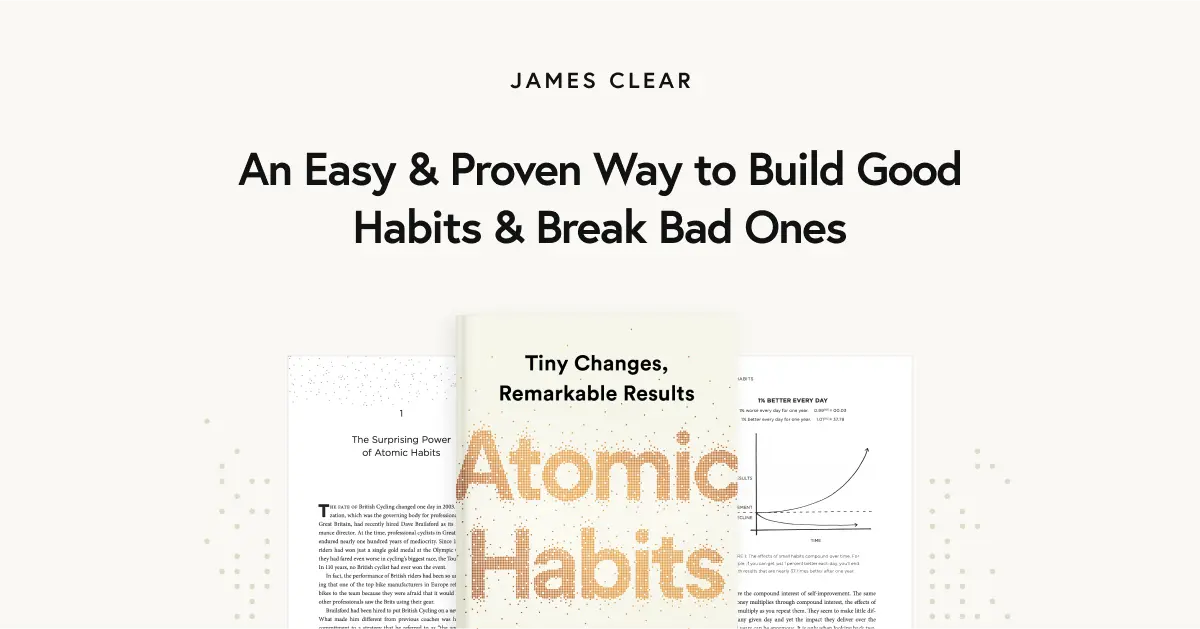
However, emerging insights from behavioral science challenge this traditional paradigm. A growing body of research, popularized and expanded upon in bestselling literature such as James Clear’s Atomic Habits, suggests that willpower is a finite, unreliable resource. Human beings, by evolutionary design, follow the path of least resistance. Therefore, attempting to force positive habits into a chaotic environment is akin to swimming upstream against a relentless current.
Enter the concept of environmental priming and "resetting the room"—a behavioral strategy first brought to light through the unassuming habits of Oswald Nuckols, an IT developer from Natchez, Mississippi. Rather than relying on sporadic bursts of motivation, Nuckols and a cohort of behavioral architects practice a philosophy of "proactive laziness." By systematically organizing physical and digital environments immediately after the completion of an action, individuals can eliminate friction for future positive behaviors while exponentially increasing the friction associated with detrimental habits.
This investigative report examines the mechanics of environmental design, exploring how seemingly minor tweaks to our daily surroundings can yield profound cumulative impacts. By deconstructing the principles of the "path of least resistance" and the "path of most resistance," we uncover actionable methodologies for reshaping human behavior at its root, transcending the limitations of traditional willpower-based models.
Detailed Chronology: The Evolution of Environmental Behavioral Design
To understand how environmental priming became a cornerstone of modern behavioral design, one must trace the convergence of environmental psychology, ergonomic efficiency, and cognitive habit formation over the past century.
The Early Foundations: Ergonomics and Industrial Efficiency
The roots of environmental manipulation trace back to the early 20th century during the rise of industrial engineering and Taylorism (scientific management). Pioneers like Frank and Lillian Gilbreth studied worker movements to optimize industrial efficiency. Their famous studies on bricklaying demonstrated that by altering the physical environment—specifically, by adjusting the height of scaffolding to keep bricks at waist level—workers could drastically reduce fatigue and double their output without working harder.
While initially applied to manufacturing plants and assembly lines, these foundational principles planted the seed for modern ergonomic design: altering the physical landscape directly dictates the ease and efficiency of human action.
The Mid-Century Cognitive Turn
By the mid-20th century, the rise of cognitive psychology began shifting focus from external mechanics to internal mental models. However, environmental psychologists continued to argue that human behavior could not be understood in a vacuum separate from physical surroundings. Seminal environmental studies demonstrated that spatial layouts, lighting, clutter, and accessibility heavily influenced social interactions, learning capacities, and stress levels.
The Modern Synthesis: Atomic Habits and "Resetting the Room"
The contemporary framework for applying environmental design to daily habit formation crystallized significantly with the release of James Clear’s Atomic Habits. Within this framework, Nuckols’ operational strategy of "resetting the room" emerged as a masterclass in behavioral architecture.
Nuckols did not view cleaning as an aesthetic chore meant to satisfy a desire for tidiness; rather, he weaponized spatial organization as a strategic deployment mechanism for future execution. When finishing a television session, returning the remote to its stand, fluffing cushions, and folding blankets were not passive clean-up tasks. They were tactical preparations for the next user. When stepping out of a car, clearing trash immediately prevented the accumulation of environmental degradation. Most notably, wiping down the toilet while the shower water warmed combined two disparate tasks by capitalizing on a pre-existing transition window, proving that the ideal time to maintain a space is directly adjacent to an inevitable biological routine.
As Nuckols noted: "When I walk into a room everything is in its right place. Because I do this every day in every room, stuff always stays in good shape… People think I work hard but I’m actually really lazy. I’m just proactively lazy. It gives you so much time back."
Supporting Context & Metrics: The Physics of Friction in Habit Formation
To fully grasp why environmental resetting is so effective, one must examine the behavioral economics and cognitive metrics underlying human decision-making.
The Cost of Cognitive Switching and Decision Fatigue
Human brains comprise roughly 2 percent of total body mass yet consume approximately 20 percent of the body’s energy. Every decision, micro-choice, and barrier to action demands a cognitive tax. When an individual wakes up to a kitchen filled with dirty dishes, unwashed pans, and scattered utensils, the brain immediately registers a high cognitive load. Before the individual can even begin cooking a healthy breakfast, they must expend precious mental energy overcoming spatial chaos.
Metrics from behavioral research indicate that decision fatigue sets in rapidly when individuals face continuous, unstructured choices throughout the day. By preemptively organizing the kitchen the night before—placing the skillet on the stove, setting out cooking spray, and arranging plates—the individual bypasses the decision-making phase entirely. The environment communicates a clear, unambiguous directive: Execute.
Quantifying the Impact of Spatial Friction
Behavioral scientists categorize friction into two primary vectors:
- Execution Friction: The effort required to perform a positive habit. Lowering this friction increases the probability of completion.
- Resistance Friction: The effort required to perform a detrimental habit. Raising this friction decreases the probability of execution.
| Habit Type | Environmental Manipulation | Behavioral Outcome |
|---|---|---|
| Positive Habit (Healthy Breakfast) | Skillet, oil, and utensils set out the night before. | Decreased execution friction; higher likelihood of cooking at home. |
| Positive Habit (Greeting Cards) | Cards pre-sorted by occasion in a dedicated box. | Immediate access; elimination of trip-to-store delay. |
| Negative Habit (Television Bingeing) | TV unplugged, remote batteries removed, or unit stored in a closet. | Exponentially increased resistance friction; discourages mindless viewing. |
| Negative Habit (Smartphone Distraction) | Phone placed in a separate room until midday. | High physical barrier; eliminates reflex-checking and preserves deep work blocks. |
Case studies involving digital detox and workspace design reveal stark metrics. When knowledge workers isolate their smartphones in adjacent rooms during morning operational windows, uninterrupted deep-work output increases by an average of three to four hours daily. The psychological barrier of having to physically stand up, walk to another room, and retrieve a device acts as a profound filter against subconscious, compulsive checking loops.
Official Statements and Expert Perspectives
Behavioral psychologists, productivity researchers, and ergonomics experts universally emphasize the primacy of environment over internal motivation.
Dr. Wendy Wood, Provost Professor of Psychology and Business at the University of Southern California and author of Good Habits, Bad Habits, notes that people who appear to have extraordinary self-control are typically not fighting internal urges on a minute-by-minute basis. Instead, they have engineered their lives to avoid temptation altogether.
"Our research demonstrates that what looks like willpower is actually habit architecture," explains Dr. Wood in academic evaluations of human agency. "People with good self-control have structured their environments so that they don’t have to exercise self-control in the first place. They design cues that trigger good behaviors and remove the cues that trigger bad ones."
James Clear reinforces this philosophical stance in his instructional frameworks, emphasizing the causal relationship between preparation and execution:
"Whenever you organize a space for its intended purpose, you are priming it to make the next action easy. This is one of the most practical and simple ways to improve your habits. When you master habits of preparation, habits of execution become easy."
Furthermore, organizational behaviorists point out that corporate and domestic environments alike suffer from "environmental debt." Just as financial debt accumulates interest when ignored, physical clutter and disorganization accumulate cognitive interest, draining productivity and breeding procrastination. Proactive resetting serves as an immediate amortization of this debt.
Future Outlook: Designing Systems for a Frictionless Future
As society navigates an era defined by unprecedented digital stimuli, algorithmic distractions, and hyper-accelerated work environments, the imperative to intentionally design our surroundings has never been more critical. The future of personal productivity and mental well-being will rely less on apps that track our shortcomings and more on architectural strategies that render those shortcomings obsolete.
Scaling Environmental Design to Organizations and Workplaces
Forward-thinking enterprises are beginning to recognize that employee burnout and fatigue are often symptoms of poorly engineered workflows and office spaces. By applying the principles of "resetting the room" to digital workspaces—such as organizing shared cloud drives, standardizing communication channels, and establishing clear protocols for digital handoffs—organizations can reduce institutional friction.
When teams leave their digital projects in a state of immaculate readiness at the end of a workday, morning execution velocity increases dramatically. The transition from rest to deep work becomes seamless.
Domestic Architecture and Smart-Home Integration
Looking ahead, residential architecture and smart-home automation are poised to integrate behavioral psychology directly into the built environment. From automated pantry systems that cycle healthy ingredients to the forefront, to smart-home ecosystems that physically lock entertainment centers during designated deep-work hours, the physical home is evolving into an active participant in personal habit formation.
However, technology is merely an amplifier; the core philosophy remains deeply human. Whether dealing with a physical living room in Natchez, Mississippi, or a high-stakes corporate office in New York, the foundational rule remains immutable: Design a world where it is easy to do what is right.
By embracing the ethos of proactive laziness—by cleaning up not just to satisfy the past, but to empower the future—we liberate ourselves from the exhausting cycle of forced motivation. We stop fighting our natural inclinations and instead align them with an environment optimized for success. In doing so, we discover that mastery over our habits is not achieved by changing who we are, but by deliberately shaping where we live, work, and act.
