

Executive Overview
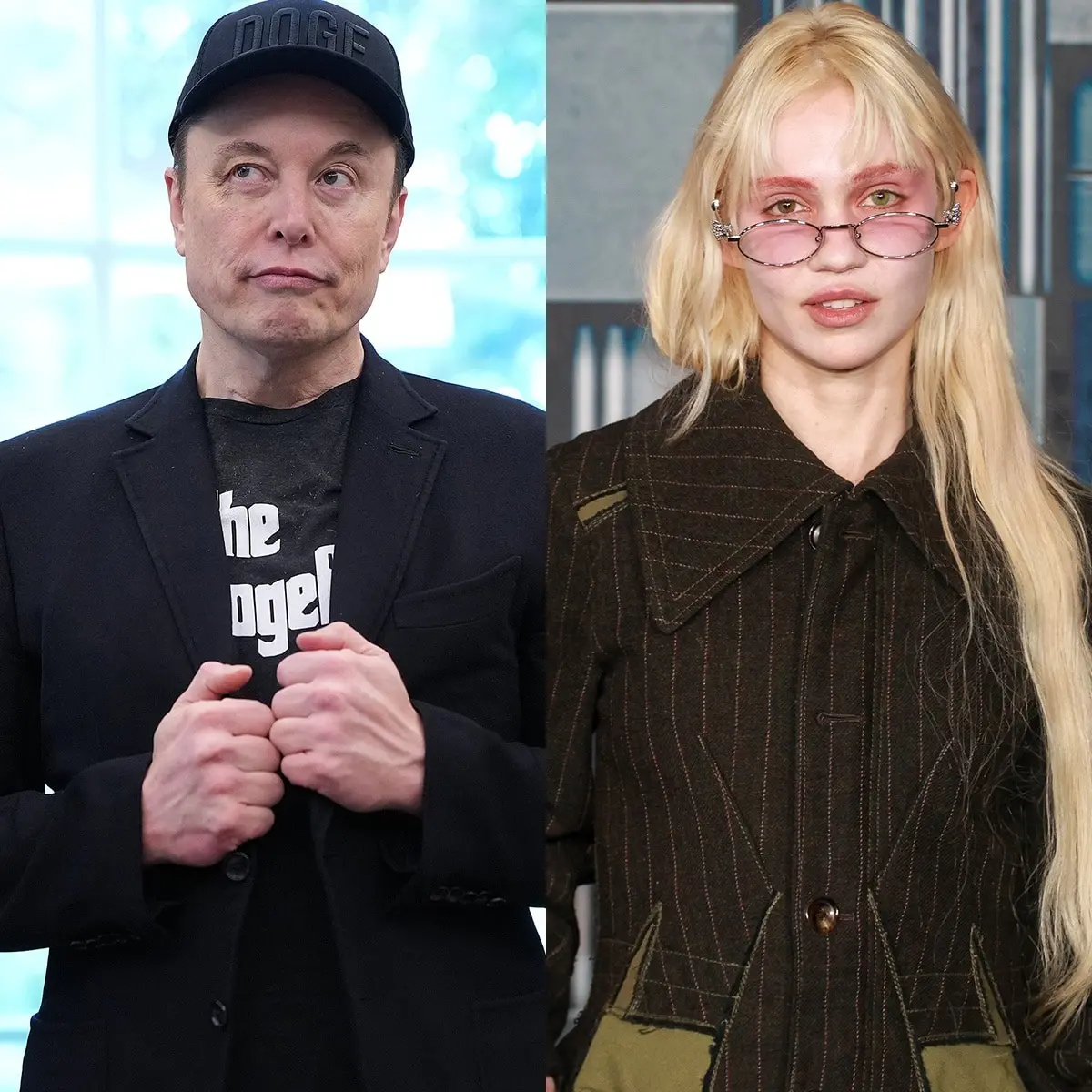
In the rapidly evolving landscape where Silicon Valley ambition intersects with global celebrity culture, few relationships command as much sustained public fascination as that of musician Grimes (Claire Boucher) and tech billionaire Elon Musk. Their four-year on-again, off-again romance—which officially ended in March 2022—has yielded not only three children, but a continuous stream of headline-grabbing cultural friction.
Recently, this friction manifested in a characteristically modern arena: a public debate over artificial intelligence, digital personae, and the psychological weight of modern fame. Grimes took to social media to sharply criticize Musk’s fascination with "Claudia," an artificially generated AI singer. Calling the fixation "cope" and referencing Nietzsche’s concept of the "last man," the "Oblivion" singer reignited a long-standing conversation about the boundaries between humanity, technology, and public exposure.
Beyond this digital sparring match lies a deeper narrative concerning family dynamics, the aggressive encroachment of digital media into private lives, and the sprawling, unconventional family tree of one of the world’s most influential men. Musk, a father to fourteen children across multiple relationships, frequently finds his personal life under the microscope. Meanwhile, Grimes continues an impassioned campaign to shield her young children—X Æ A-Xii, Exa Dark Sideræl, and Techno Mechanicus—from a digital footprint they are too young to consent to.
This report provides an in-depth examination of the latest tensions between Grimes and Musk, a meticulous exploration of the Musk family genealogy, and an analysis of the broader cultural implications surrounding privacy in the age of omnipresent technology.
Detailed Chronology: From Romance to Digital Clash
The Rise and Fall of a High-Tech Romance
The relationship between Claire Boucher and Elon Musk began in 2018, bonding over mutual eccentricities and a shared interest in futuristic philosophy. For four years, their romance navigated the complex demands of Musk’s globe-spanning enterprises—Tesla, SpaceX, and his grueling travel schedules—alongside Grimes’s career as an avant-garde electronic musician based primarily in Los Angeles.
By September 2021, reports surfaced that the couple was "semi-separated," a status Grimes officially clarified in March 2022 during a landmark interview with Vanity Fair, where she noted they lived in separate houses yet remained best friends. Despite the definitive end of their romantic partnership, their lives have remained permanently intertwined through co-parenting obligations and recurring public disagreements.
The AI Controversy: "The Last Man" Critique
The most recent flashpoint occurred when Musk voiced admiration for "Claudia," an AI-generated musical artist created by digital creator anabology. Musk shared content featuring the synthetic singer, prompting a swift and blistering rebuke from Grimes on X (formerly Twitter) on November 18.
"The fixation on fake women feels like cope," Grimes wrote. "I’m a fan of Claudia, but she doesn’t have a birkin deal and she isn’t a she, she’s an alien creature who’s both blessed and haunted by the entirety of ancestral memory."
She escalated her critique by invoking Friedrich Nietzsche, adding: "Sexualizing a species that cannot have sex is the ultimate definition of Nietzsche’s last man, and we can do better than reducing ‘it’ to a sex slave."
Rather than engaging with the philosophical critique, Musk responded by reposting a track titled "WHITEPILL" by Claudia and anabology, encouraging Grimes to "take the White Pill" and calling the track "Such a jolly song!"
The Ongoing Battle Over Child Privacy
Beneath the philosophical debates over artificial intelligence lies a deeply personal and agonizing battle for Grimes: the relentless public exposure of her children. Grimes shares three children with Musk: X Æ A-Xii (born 2020), Exa Dark Sideræl (born 2021 via surrogate), and Techno Mechanicus (born 2022 via surrogate).
Throughout 2024 and 2025, Grimes has voiced acute distress over her inability to keep her children out of the public eye. In poignant social media posts, she revealed that she spent a year locked in legal battles—operating with a fraction of Musk’s vast financial resources—where her public profile and modeling work were weaponized against her custody rights. She lamented being kept away from one of her children for five months.
"I have tried begging the public and my kids’ dad to keep them offline, and I’ve tried legal recourse," Grimes shared, adding that she wishes for legislation allowing parents to veto small children from living public lives, though she admits a profound lack of trust in the legal system to enforce such protections.
Supporting Context & Metrics: The Musk Family Tree
Elon Musk’s sprawling family network is as complex as his business empire. To understand the current dynamics, it is essential to examine the key figures across his multiple relationships.
The Matriarch and Patriarch: Maye and Errol Musk
- Maye Musk: Born in Saskatchewan, Canada, and raised in South Africa, Maye established a successful career as a dietitian and international fashion model. After splitting from Errol Musk in 1979, she raised her children to be fiercely independent. Following the sale of Musk’s early company Zip2, Elon purchased an apartment for her in New York City, where she cemented her modeling career with IMG.
- Errol Musk: An engineer born in South Africa, Errol’s relationship with Elon has been famously strained. In past interviews, Elon characterized his post-separation upbringing with his father as difficult. Errol later made global headlines by fathering children with his former stepdaughter, Jana Bezuidenhout, expressing a philosophy centered on human reproduction.
Siblings: Kimbal and Tosca Musk
- Kimbal Musk: A prominent restauranteur who founded "The Kitchen" restaurant collective, focusing on locally sourced farm-to-table dining, alongside his non-profit "Big Green," which builds learning gardens in U.S. schools.
- Tosca Musk: An accomplished filmmaker and entrepreneur who founded Passionflix, a streaming service catering to the romance novel industry.
First Marriage: Justine Wilson
Musk married his Queen’s University college sweetheart, author Justine Wilson, in 2000. Their early years were marked by unimaginable tragedy when their firstborn son, Nevada Alexander, tragically passed away at 10 weeks old from Sudden Infant Death Syndrome (SIDS) in 2002.
Through IVF, the couple welcomed five more children: twins Vivian and Griffin, followed by triplets Kai, Saxon, and Damian. Following their divorce in 2008, the family dynamic experienced significant turbulence. Notably, in 2022, Vivian Jenna Wilson legally changed her name and gender identity, petitioning to sever all ties with her biological father. Public friction escalated when Musk publicly criticized his daughter’s transition in interviews, assertions that Vivian firmly disputed, pointing to a permanent estrangement that began in 2020.
Subsequent Relationships and Children
- Talulah Riley: The Westworld actress married Musk in 2010, divorced in 2012, remarried in 2013, and finalized a second divorce in 2016. (Riley subsequently married actor Thomas Brodie-Sangster in 2024).
- Amber Heard: Musk and actress Amber Heard had a brief, highly publicized romance in 2017, which Musk later admitted caused him considerable emotional heartache upon its conclusion.
- Shivon Zilis: A Neuralink executive who shares four children with Musk: twins Strider Sekhar Sirius and Azure Astra Alice (born November 2021), daughter Arcadia (born February 2024), and son Seldon Lycurgus (born February 2025).
- Ashley St. Clair: Author and conservative influencer Ashley St. Clair announced in February 2025 that she welcomed a son named Romulus five months prior, identifying Musk as the father. Subsequent public statements and media reports detailed complex financial negotiations and paternity discussions regarding the child.
Official Statements and Public Discourse
The public commentary surrounding Grimes and Elon Musk highlights a profound ideological split between traditional parental protectiveness and techno-futuristic accelerationism.
-
Grimes (Claire Boucher) on Child Privacy:
"The state of my children’s lives being public is of grave concern to me and I think about how to solve this every day. It’s insane to me that there’s no way to deal with this… I have tried begging the public and my kids’ dad to keep them offline, and I’ve tried legal recourse."
-
Vivian Jenna Wilson on Estrangement:
"He’s a pathetic man-child. Why should I be scared of this man? Because he’s rich? I don’t give a f–k how much money anyone has."
-
Elon Musk on Demographic Trends:
"Doing my best to help the underpopulation crisis. A collapsing birth rate is the biggest danger civilization faces by far. Mark my words, they are sadly true."
Future Outlook: Navigating the Intersection of Tech, Family, and Fame
As Elon Musk continues to steer global technological advancements through companies like SpaceX, Tesla, and xAI, the intersection of his personal life and public platform remains a focal point of cultural scrutiny. The tension between his vision of an automated, AI-driven future and Grimes’s human-centric, protective maternal ethos encapsulates the broader societal anxieties of the 21st century.
For Grimes, the immediate future centers on artistic output—including her musical collaborations and romance with producer Elijah Weinkauf—alongside an unyielding commitment to carving out safe, private spaces for her children away from the glare of tabloid media and algorithmic obsession.
Ultimately, the ongoing dialogue between these two prominent figures serves as a high-profile case study in the costs of modern celebrity. As artificial intelligence blurs the lines between reality and simulation, and as ultra-high-net-worth individuals navigate unconventional family structures on a global stage, the demand for legal frameworks protecting child privacy and digital boundaries will only become more urgent. Whether the legal and cultural systems can adapt to these unprecedented challenges remains one of the defining questions of our technological era.
