

Executive Overview
In an era dominated by hyper-automation, programmatic ad placement, and predictive analytics, modern marketing has increasingly run the risk of losing its soul. As algorithms dictate everything from media buys to dynamic creative optimization, CMOs face a profound existential question: What is the true defensible advantage when every competitor has access to the exact same technological toolsets?
For Thomas Ranese, Chief Marketing Officer of Intuit, the answer is delightfully counterintuitive. It begins not in a spreadsheet or a data warehouse, but on a stage, behind the counter of a small-town pasta shop, and deep within the intricate nuances of human empathy.
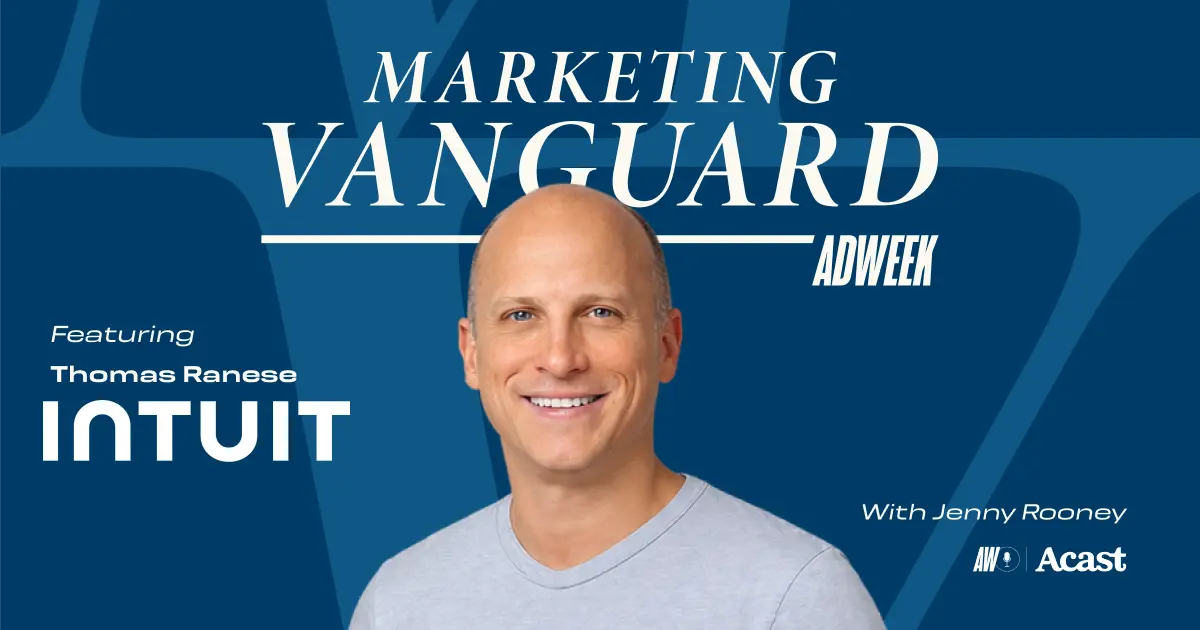
In a recent compelling episode of Marketing Vanguard, host Jenny Rooney sat down with Ranese to dissect his unconventional career path—one that winds from the dramatic arts and government consulting to tech giants like Google and Uber, before landing him at the helm of Intuit’s global marketing organization. Throughout their conversation, Ranese challenged conventional wisdom, arguing that while performance data is critical, emotional resonance remains the ultimate differentiator. Furthermore, as Intuit evolves into an integrated, AI-powered financial technology platform encompassing powerhouses like TurboTax, QuickBooks, Credit Karma, and Mailchimp, Ranese is spearheading a movement to ensure that artificial intelligence is paired inextricably with human expertise.
This in-depth feature explores Ranese’s blueprint for modern marketing leadership. By synthesizing lessons from his childhood, his multidisciplinary background, and his current corporate responsibilities, Ranese offers a masterclass in how global brands can scale human connection, champion financial literacy, and prove that in an AI-dominated landscape, the most potent marketing asset is humanity itself.
Detailed Chronology: From the Commodore 64 to the C-Suite
To understand Thomas Ranese’s unorthodox philosophy on marketing, one must trace the trajectory of a career defined by unexpected pivots, deep-seated curiosity, and an early exposure to small-business grit.
The Roots of Customer Obsession: The Family Pasta Shop
Long before he was managing multi-million-dollar global budgets for Silicon Valley titans, Ranese’s education in marketing and customer service took place behind the counter of his father’s local pasta shop. Growing up in this environment offered a visceral, unfiltered masterclass in human behavior.
In the shop, transactions were never purely transactional; they were relational. Ranese observed firsthand what customers actually needed, how they communicated their pain points, and how a personal touch could turn a casual buyer into a lifelong advocate. His entrepreneurial streak manifested early when, armed with an early-generation Commodore 64 computer, he took it upon himself to code and design his father’s very first promotional newsletter.
Looking back, Ranese identifies those formative hours in the pasta shop as the bedrock of his entire professional philosophy. It taught him that customer obsession cannot be outsourced to a focus group or simulated by an algorithm. It requires direct engagement, active listening, and a genuine desire to solve real-world problems for real people.
Navigating Multidisciplinary Worlds: Theater, Consulting, and Public Service
Rather than following a linear, corporate marketing track straight out of university, Ranese’s early professional life was remarkably eclectic. He immersed himself in the world of theater, an experience that fundamentally shaped his view of communication, narrative structure, and audience engagement. Whether directing actors or analyzing script subtext, he learned how to orchestrate emotional arcs—a skill he would later deploy to captivate mass consumer markets.
From the theater, Ranese expanded his intellectual toolkit through consulting, government service, and nonprofit work. This diverse journey forced him to adapt to vastly different operational cultures, stakeholders, and strategic objectives. Whether navigating the complexities of public policy or optimizing organizational efficiency in the non-profit sector, he mastered the art of distilling complex information into clear, compelling narratives that could rally diverse groups toward a shared mission.
Scaling Innovation at Google and Uber
When Ranese transitioned into the tech sector, first at Google and later at Uber, he brought with him this synthesis of creative storytelling and rigorous problem-solving. Operating inside hyper-growth environments required him to balance rapid technological scale with brand integrity.
At Google, he experienced firsthand the explosive power of data-driven digital ecosystems, learning how platforms shape modern attention spans and consumer behavior. Later, at Uber, he navigated the turbulent intersection of consumer disruption, regulatory hurdles, and massive global scaling. These roles solidified his understanding of how disruptive technology alters consumer expectations—and why marketing must always act as the empathetic bridge between complex engineering and human utility.
Leading Intuit’s AI-Powered Evolution
Today, as the Chief Marketing Officer of Intuit, Ranese sits at the vanguard of financial technology. Overseeing a powerhouse portfolio that includes TurboTax, QuickBooks, Credit Karma, and Mailchimp, he is helping orchestrate the company’s massive pivot toward an integrated, AI-driven platform designed to help consumers and small businesses prosper.
In this role, Ranese is not merely marketing software; he is translating complex financial infrastructure into accessible, empowering experiences for millions worldwide. It is the culmination of a lifetime spent exploring how human needs intersect with innovative tools—proving that his childhood days behind the pasta counter were the ultimate preparation for leading a global tech brand into the future.
Supporting Context & Metrics: The Pillars of Modern Marketing Leadership
Ranese’s strategic vision for Intuit is supported by several core tenets that challenge prevailing industry orthodoxies. During his conversation with Jenny Rooney, he unpacked these pillars with granular detail, offering quantitative insights and qualitative frameworks for modern CMOs.
1. Marketing as Theater: Three Dimensions of Engagement
One of Ranese’s most provocative frameworks is his insistence that "marketing is theater." Far from being a superficial metaphor, he breaks this concept down into three distinct operational pillars that must be meticulously orchestrated in modern campaigns:
- The Narrative Drama of Advertising: Traditional storytelling remains vital. Brands must capture attention by creating emotional arcs, utilizing humor, and addressing universal human truths that make complex product features instantly relatable.
- The Emotional Architecture of Customer Experience (CX): Theater happens in real-time interactions. The micro-moments within a product interface, customer service chat, or onboarding sequence carry immense emotional weight. CX is marketing.
- Immersive Real-World Environments: Physical retail, pop-ups, and experiential activations create visceral memories. Ranese argues that as digital and AI-driven environments become ubiquitous, tangible, real-world human interactions will paradoxically appreciate in value and scarcity.
2. The Symbiosis of Artificial Intelligence and Human Intelligence
As Intuit embeds advanced artificial intelligence into the core of its financial ecosystem, Ranese is acutely aware of the trust deficit that often accompanies emerging technologies. When consumers and small business owners are making high-stakes decisions regarding their taxes, credit scores, or business survival, raw algorithmic efficiency is not enough.
Ranese emphasizes that AI needs human intelligence to earn and maintain customer trust. While machine learning can process millions of data points and automate routine workflows with lightning speed, human experts provide verification, nuance, empathy, and moral accountability. This hybrid model—where AI scales capability, but human professionals provide the final safety net of confidence—is central to Intuit’s brand promise.
3. Redefining Product Utility: Money and Means to an End
Too many brands fall into the trap of marketing what their products do rather than what their customers want to achieve. Ranese challenges this product-centric myopia by reminding marketers that money is merely a means to an end—and so is software.
Consider small business owners using QuickBooks. They did not launch their enterprises because they woke up dreaming of balancing ledgers or filing quarterly tax returns; they started businesses because they wanted to pursue a craft, build a flexible lifestyle, serve their local communities, or create generational wealth for their families. By realigning marketing messages around these deeper human ambitions, brands transform from commoditized utility providers into deeply meaningful partners in their customers’ life journeys.
4. Tackling the Financial Literacy Crisis
Corporate purpose is often criticized as empty PR, but Ranese demonstrates how brand mission can be woven organically into systemic social impact. Citing sobering data that only 32% of students graduate able to pass a basic financial literacy exam, Ranese points to a profound societal failure that Intuit is uniquely positioned to address.
Through initiatives like Intuit for Education, the company has set an ambitious goal: to reach 50 million students by 2030. For Ranese, this is not just philanthropy; it is a vital bridge to the next generation of consumers. By equipping young people with essential financial skills, Intuit is simultaneously driving meaningful social change, building lifelong brand trust, and introducing future entrepreneurs and taxpayers to the tools they need to succeed.
5. The Hands-On CMO: Rejecting Delegation
As marketing organizations scale to enterprise size, a common trap for senior leaders is retreating into administrative oversight, delegating creative execution entirely down the chain of command. Ranese pushes back aggressively against this trend.
With artificial intelligence and digital marketing tools evolving at a breakneck pace, Ranese believes that CMOs must remain stubbornly hands-on. Leaders must actively experiment with new tools, stay literate in emerging technologies, and maintain a visceral understanding of the daily work being produced. He argues that the larger an organization becomes, the greater the risk of leadership becoming disconnected from both the ground-level execution and the actual customers being served.
Official Statements and Insights
To fully appreciate the depth of Thomas Ranese’s leadership philosophy, it is instructive to examine his core perspectives on creativity, technology, and empathy in his own words:
-
On the Inreplicable Advantage of Empathy:
"What if the best marketing advantage you have is something that cannot be replicated by an algorithm? It starts with theater, empathy, and understanding what people are actually trying to achieve."
-
On the Necessity of Human Oversight in AI:
"When customers are making important decisions about taxes, credit or their businesses, getting the right answer matters. AI can provide powerful technology and efficiency, but human expertise brings verification, empathy and the confidence customers need to act."
-
On Moving Beyond Functional Product Marketing:
"Money is a means to an end. So is your product. Small business owners aren’t necessarily starting businesses because they want to make money; they’re pursuing a craft, building a lifestyle, serving customers or creating opportunities for their families."
-
On the Active Role of Modern Marketing Leadership:
"The bigger the organization, the more important it is for CMOs to stay hands-on, understand the tools, and continue learning. It is entirely too easy to become disconnected from the actual work and the customers being served."
Future Outlook: The Human-Centric CMO Agenda
As we look toward the horizon of the 2020s and beyond, the intersection of marketing, technology, and human psychology will continue to shift at an unprecedented pace. Generative AI will become table stakes, programmatic channels will saturate, and consumers will grow increasingly sophisticated at filtering out algorithmic noise.
In this landscape, the trajectory outlined by Thomas Ranese offers a clear blueprint for executive leadership. The future does not belong to the brand that deploys the most complex machine-learning model in a vacuum; it belongs to the brand that successfully leverages technology to deepen human empathy, amplify creative storytelling, and solve fundamental life challenges.
For Intuit, this means continuing to break down the barriers between complex financial technology and human prosperity. For the broader marketing industry, it serves as a timely reminder that behind every data point, click-through rate, and automated workflow is a human being with a story, an ambition, and a desire to be genuinely understood.
As CMOs navigate the turbulent waters of digital transformation, Ranese’s synthesis of small-town customer obsession and enterprise-scale innovation provides an enduring North Star: Never let the technology eclipse the humanity. Whether designing a promotional newsletter on a Commodore 64 or orchestrating a global AI platform rollout, the core mission of marketing remains timeless—to help people achieve what matters most to them.
