

Executive Overview
The traditional marketing playbook is undergoing a structural collapse. For decades, media buying operated as a distinct, specialized silo within the broader corporate marketing machine—a functional cog responsible for securing impressions, optimizing CPMs, and delivering top-of-funnel reach. According to industry leaders, that compartmentalized approach is not just outdated; it is an active liability to corporate growth.
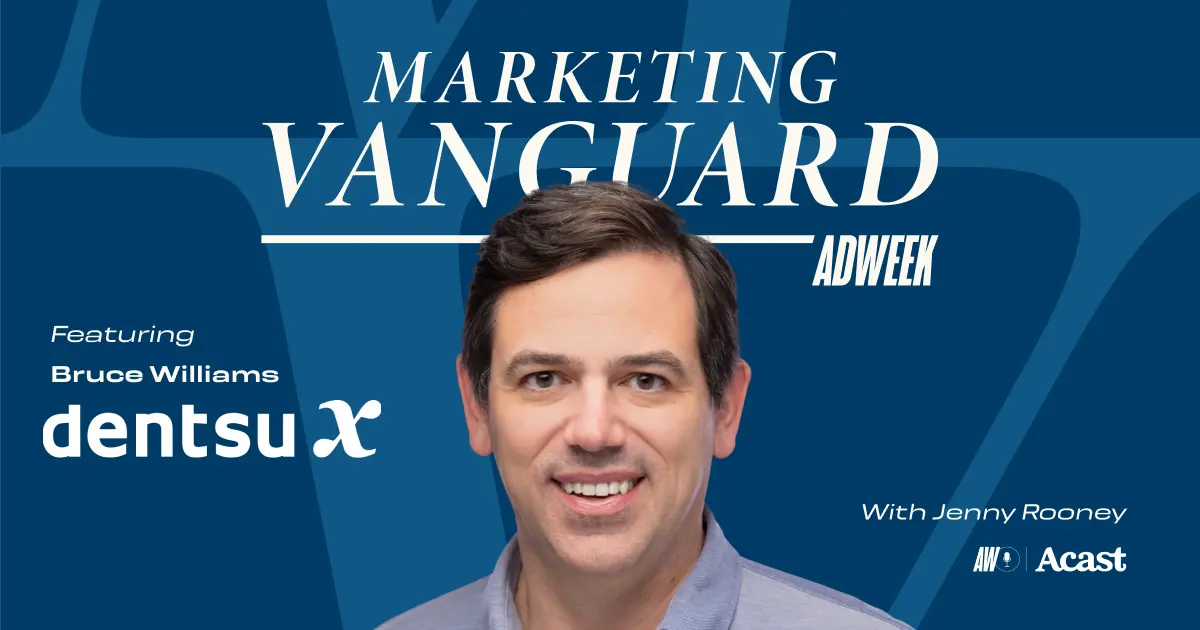
In a recent episode of Marketing Vanguard, host Jenny Rooney sat down with Bruce Williams, CEO of dentsu X North America, to unpack a fundamental industry shift: media is no longer just a component of the marketing mix. Instead, it is rapidly becoming the connective tissue binding creative, commerce, CRM, data, and technology into a single, cohesive engine.
During their conversation, Williams laid bare several uncomfortable truths facing modern brand leaders and agency partners alike. Most notably, he revealed that traditional, standalone media Requests for Proposals (RFPs) are quietly becoming obsolete. In their place, enterprise brands are demanding comprehensive, integrated briefs that solve complex organizational transformation challenges rather than simply asking agencies if they "buy media well."
Furthermore, Williams addressed the persistent friction of internal marketing silos, the practical implementation of artificial intelligence (AI) beyond superficial hype, and why the era of rigid, proprietary agency ecosystems is coming to an end in favor of radical interoperability. For CMOs, brand directors, and agency executives, the message is clear: the transition from channel-first planning to outcome-driven operating systems is no longer a forward-looking theory—it is an urgent operational necessity.
Detailed Chronology: The Evolution of Modern Media Strategy
To understand where the industry is heading, it is necessary to examine how the agency-client dialogue has transformed over the past several years. The evolution from fragmented channel planning to unified consumer ecosystems is marked by several critical shifts in methodology, client expectations, and technological integration.
The Demise of the Standalone Media RFP
Historically, procurement departments and brand marketers issued RFPs tailored strictly to media buying efficiency. Agencies competed on their ability to leverage buying scale, negotiate favorable rates, and execute programmatic campaigns across designated channels.
As Williams highlights, those days are effectively over. Brands rarely issue standalone media briefs today. Instead, contemporary RFPs arrive as multi-disciplinary challenges that require agencies to link media investment directly to creative execution, consumer experience (CX), customer relationship management (CRM), and loyalty frameworks.
When a modern brand approaches an agency partner, the foundational question has fundamentally changed. The dialogue has shifted away from:
"Can you buy media efficiently?"
And evolved toward:
"Can you help our entire enterprise operate better?"
This shift forces agencies to position themselves not as media vendors, but as transformation consultants who understand how every dollar spent ripples across the entire corporate ecosystem.
Dismantling the Consumer-Facing Silo
Despite decades of industry discourse regarding "integrated marketing," internal brand fragmentation remains one of the longest-running challenges in corporate history. Brand management teams, performance marketing units, retail media divisions, and PR departments frequently operate within isolated organizational towers, relying on disparate datasets and distinct key performance indicators (KPIs).
The consequence of this internal friction is painfully evident at the point of consumer reception. As Williams points out, the average consumer does not experience a brand through the lens of internal corporate charts. A shopper navigating a digital ad, clicking an email promotion, visiting a physical retail location, and interacting with customer service views these touchpoints as a single, continuous brand narrative.
When internal marketing systems are disconnected, those fractures inevitably bleed into the consumer experience. The future of brand architecture relies on tearing down these internal walls, replacing channel-first strategies with unified operating systems designed around holistic consumer outcomes.
Pragmatic AI: Moving Beyond the Hype Cycle
As artificial intelligence dominates boardrooms across every major industry, leaders face a false dichotomy: should they invest in massive, multi-year infrastructure overhauls, or chase quick, tactical AI wins that offer flashy demonstrations but little long-term enterprise value?
Williams argues for a balanced, hybrid methodology that bridges the gap between grand vision and scrappy execution. He points to dentsu X’s collaborative work with global brands like Heineken as a prime blueprint. This approach pairs robust, long-term data and technology integration with highly practical, agile tools.
For instance, deploying local intelligence agents allows field teams to ingest competitive data and market shifts instantly, translating macro-level strategies into rapid, localized decision-making. AI in this context is not a standalone novelty; it is an embedded operational accelerator.
The Death of "Our Way or Nothing"
For decades, major agency holding companies pushed proprietary, closed-loop ecosystems. Clients were often forced to adopt an agency’s specific tech stack, data taxonomy, and workflow methodology—often summarized by the unspoken corporate philosophy of "our way or nothing."
In today’s hyper-connected marketplace, that rigidity creates fatal friction. Modern enterprises possess sophisticated, proprietary data lakes, complex tech stacks, and a diverse roster of specialized platform partners. They cannot afford to rip and replace their infrastructure to accommodate an agency’s proprietary model.
According to Williams, the winning agency networks of the future will be defined by their commitment to interoperability and optionality. Openness is no longer just a collaborative courtesy; it has become a core commercial value proposition. Agencies must prove their ability to plug directly into a brand’s existing architecture, collaborating seamlessly with third-party vendors, internal data scientists, and competing platform partners.
Supporting Context & Metrics: The Macro-Environment of Marketing Transformation
To fully appreciate the urgency behind Williams’ insights, it is vital to examine the broader macroeconomic and industry-wide shifts transforming the marketing landscape.
The Rise of Retail Media Networks (RMNs)
One of the primary catalysts blurring the lines between media, commerce, and technology is the meteoric rise of Retail Media Networks. Brands are noinibng longer just buying awareness on third-party publishers; they are investing advertising dollars directly into point-of-purchase digital ecosystems managed by major retailers like Amazon, Walmart, and Target.
According to recent industry forecasts, global retail media spending is projected to surpass $100 billion, cementing its status as one of the fastest-growing sectors in advertising. Because retail media sits precisely at the intersection of consumer intent, first-party data, and immediate commerce conversion, it renders traditional, siloed media planning obsolete. Buying media on an RMN requires an intimate understanding of supply chain logistics, inventory availability, CRM data, and onsite UX—proving that media is commerce.
The Cookie-Less Future and First-Party Data Imperative
The phasing out of third-party cookies—though delayed multiple times by privacy regulations and technological roadblocks—has forced a structural reckoning across the marketing ecosystem. Brands can no longer rely on rented audiences and opaque programmatic tracking to drive acquisition.
Instead, enterprise survival depends on building robust, first-party data foundations integrated directly into CRM systems. Because media campaigns now serve as the primary engine for capturing zero- and first-party consumer insights, the execution of media strategy directly influences the health of a brand’s entire database. Media cannot operate in a vacuum when every impression must simultaneously build long-term consumer equity and compliance-backed data assets.
The Complexity of Omnichannel Attribution
CMOs are under immense pressure from CFOs to prove the ROI of every marketing dollar spent. However, traditional attribution models—such as last-click or simple multi-touch attribution—frequently fail to capture the nuanced, non-linear journeys modern consumers take before making a purchase.
When media is treated as a standalone silo, attribution becomes a game of self-justification, with channel teams competing for credit rather than focusing on incremental business growth. By shifting toward outcome-based operating systems, brands can utilize advanced econometric modeling, marketing mix modeling (MMM), and machine learning to evaluate how creative, media, data, and technology interact to drive true enterprise value.
Official Statements & Industry Perspectives
The sentiments shared by Bruce Williams reflect a broader consensus among forward-thinking executives across the global marketing ecosystem. Below are key thematic takeaways drawn from his industry leadership at dentsu X North America:
-
On the Evolution of Client Briefs:
"Brands increasingly want integrated briefs that connect media with creative, experience, CRM and loyalty, or they want agencies to solve bigger transformation problems. So, the agency conversation has to shift from ‘Can you buy media well?’ to ‘Can you help us operate better?’"
-
On the Reality of Consumer Fragmentation:
"Marketing may still be organized into separate teams, systems and channels, but the person receiving the experience does not care about those distinctions. Fragmentation remains one of the industry’s longest-running problems because disconnected structures eventually show up as disconnected consumer experiences."
-
On Balancing AI Infrastructure with Agility:
"It’s not about choosing between massive infrastructure projects and quick tactical wins. It’s about combining long-term data and technology integration with practical tools like local intelligence agents that move competitive and market data directly into local decisions."
-
On Agency Interoperability:
"Closed systems create friction. Agencies need to work directly with brand data, technology and other partners instead of expecting clients to conform to one proprietary model. Openness is becoming part of the value proposition."
Future Outlook: What This Means for Brands and Agencies
As we look toward the horizon of the marketing industry, several clear imperatives emerge for both corporate leaders and agency partners navigating this era of unprecedented transformation.
1. The Redefinition of Agency Partnerships
For agency holding companies and independent shops alike, survival demands a complete overhaul of service models. Traditional fee structures based purely on media commission or hourly billable rates are increasingly misaligned with client goals. Agencies must restructure around business outcomes, co-investing in technological innovation, and demonstrating seamless interoperability with client tech stacks.
2. The Rise of the Unified Marketing Architect
The internal talent profile within marketing organizations is also shifting. The days of hiring specialists who understand only programmatic bidding, linear television, or social media management are giving way to a demand for "marketing architects"—professionals who understand data engineering, consumer psychology, creative direction, and business finance. These leaders will be tasked with dismantling internal silos and orchestrating unified operating systems.
3. Technology as the Foundation of Strategy
Ultimately, strategy and technology can no longer be decoupled. As artificial intelligence, machine learning, and real-time data analytics become table stakes, the brands that win will be those that integrate their technological infrastructure with their media and creative operations from the ground up.
The standalone media RFP may not vanish overnight, but its days are numbered. As Bruce Williams aptly demonstrates, the future belongs to those who recognize that media is no longer just a megaphone for a brand message—it is the connective tissue of the modern enterprise.
