

By Mitchell Parton
Senior Commerce Reporter
Executive Overview
Retail giant Walmart has released its latest financial performance metrics, painting a complex picture of a sprawling retail empire navigating shifting macroeconomic tides, robust e-commerce gains, and the normalization of its once-meteoric advertising wing. For the third quarter, Walmart reported total global revenue of $188.8 billion, marking a healthy 5.2% year-over-year increase. However, beneath the headline-grabbing revenue figures lies a nuanced story regarding the retail media network (RMN) landscape.
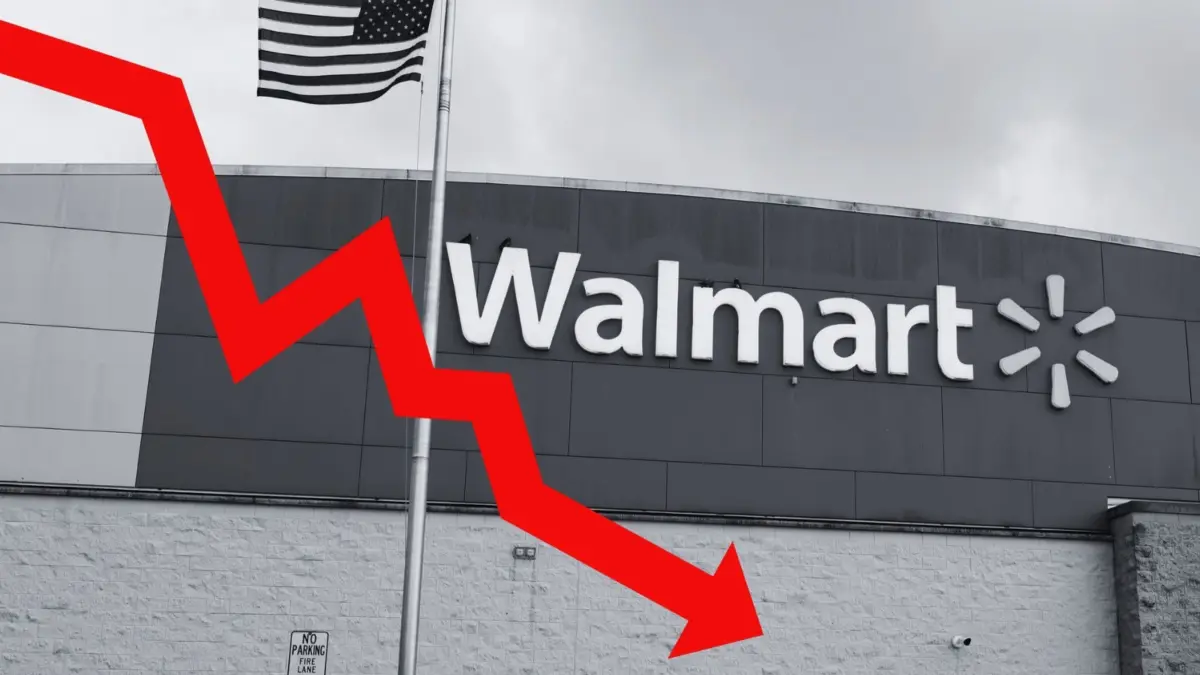
Walmart’s global advertising business posted a 25% year-over-year growth rate for the quarter. While a 25% expansion would be the envy of almost any traditional media or publishing enterprise, for Walmart, it represents its weakest global ad sales growth in two years—a notable cool-down from the blistering 53% growth rate recorded just a year prior.
Despite the deceleration in global ad growth, domestic initiatives continue to show robust health. Walmart U.S. advertising experienced a 37% year-over-year increase when factoring in recent acquisitions like Vizio and Vibe.co, while core platform Walmart Connect grew 36% domestically on an organic basis. Concurrently, the company’s e-commerce divisions thrived, and strategic pivots—such as a combined membership bundle for Walmart+ and Sam’s Club Plus—continue to drive recurring membership fee revenue, which jumped 17% globally.
This report provides an in-depth breakdown of the numbers driving Walmart’s latest financial quarter, the factors influencing the cooling of its advertising juggernaut, and what these trends signal for the future of retail media.
Detailed Chronology: Decoding Walmart’s Q3 Performance
To fully understand Walmart’s current standing, one must examine the trajectory of its various business units over the past several reporting cycles. The retail titan has spent the last few years aggressively transforming itself from a brick-and-mortar storefront into a multifaceted digital ecosystem encompassing e-commerce fulfillment, fintech, streaming integrations, and a high-margin retail media network.
The Rise and Normalization of Retail Media
For consecutive quarters following the post-pandemic digital acceleration, Walmart’s advertising arm—anchored by Walmart Connect—outpaced traditional retail benchmarks. In Q3 of the previous year, the company stunned Wall Street with a 53% surge in global ad sales. That growth was fueled by brands aggressively shifting ad dollars to point-of-sale digital real estate where they could directly tie ad impressions to physical and digital shopping carts.
However, industry analysts anticipated that these triple-digit or near-50% growth rates would eventually stabilize as the business scaled. The 25% global ad growth reported this quarter, while marking a two-year low relative to its own high-water mark, still underscores a massive, highly profitable advertising business. The deceleration is less a reflection of failing strategies and more a natural byproduct of market maturation and tougher year-over-year comparisons.
E-Commerce Expansion and Digital Integration
While advertising growth normalized, Walmart’s digital shopping footprint continued to expand aggressively. Global e-commerce sales grew by 17% during the quarter. Zooming into the domestic market, Walmart U.S. e-commerce sales performed even stronger, registering a 23% year-over-year increase.

This digital momentum is heavily supported by the seamless integration of omnichannel fulfillment options, grocery delivery, and third-party marketplace scaling. Customers are increasingly utilizing Walmart’s app and website not just for routine weekly pickups, but for general merchandise, apparel, and electronics—categories that traditionally yield higher margins and attract lucrative advertiser segments.
Supporting Context & Metrics
A granular look at the data released in Walmart’s latest financial disclosure reveals the scale and velocity of the company’s diverse revenue streams:
- $188.8 billion: Total global revenue, representing a solid 5.2% increase compared to the same period last year.
- 25%: Year-over-year growth of Walmart’s global advertising business in the third quarter. This stands as the weakest quarter of growth for the division since the first quarter of 2024.
- 37%: Walmart U.S. year-over-year advertising growth, a figure that incorporates the newly integrated capabilities of Vizio and Vibe.co.
- 36%: Walmart Connect’s organic U.S. advertising growth when excluding the Vizio and Vibe.co acquisitions, highlighting the enduring strength of core on-site search and display monetization.
- 17%: Global growth in e-commerce sales, led by a 23% surge in Walmart U.S. digital channels.
- $120: The annual price point for the newly introduced combined membership bundle uniting Walmart+ and Sam’s Club Plus, designed to capture cross-brand loyalty and drive recurring revenue.
- 17%: Global year-over-year growth in membership fee revenue, demonstrating the compounding success of Walmart’s loyalty ecosystems.
Official Statements and Industry Analysis
Market observers and industry insiders have spent the weeks following the earnings release dissecting the implications of Walmart’s slower ad sales growth.
Financial analysts note that retail media networks across the board are entering a phase of rationalization. As more retailers—from grocery chains to home improvement stores—launch their own RMNs, brand marketing budgets are becoming fragmented. Advertisers are increasingly demanding deeper attribution metrics, cross-platform campaign measurement, and seamless integration between connected TV (CTV) and point-of-sale data.
This reality explains Walmart’s strategic moves to incorporate players like Vizio and Vibe.co. By expanding its footprint into living room screens and programmatic CTV advertising, Walmart is attempting to widen the top of its marketing funnel. Rather than relying solely on sponsored product listings on its website or app, Walmart can now offer brand partners end-to-end campaigns that start with a CTV video ad in the living room and end with a cart checkout on Walmart.com or at a local Supercenter.
Furthermore, leadership remains optimistic about the stickiness of its customer base. The introduction of the $120 combined membership bundle for Walmart+ and Sam’s Club Plus is a calculated play to lock in high-value consumers. By bridging its core retail subscription with its warehouse club offering, Walmart is attempting to counter competitive pressures from Amazon Prime and warehouse rivals like Costco, ensuring that consumer loyalty translates into sustained long-term digital engagement.
Future Outlook: Navigating the Next Era of Retail Media
As Walmart looks toward the remainder of the fiscal year and beyond, the strategic priorities are clear. The company must balance its traditional low-price grocery dominance with high-margin digital transformations.
- Maturation of Walmart Connect: While the days of 50%+ quarterly growth may be in the rear-view mirror, a steady 25% to 35% growth trajectory remains formidable. To maintain this pace, Walmart Connect will need to prove the efficacy of its expanded off-site and CTV advertising inventory, convincing brands that Walmart-owned data can drive conversions outside of the walled garden of its retail app.
- The Power of the Bundle: The early reception to the $120 Walmart+ and Sam’s Club Plus membership bundle will be a critical bellwether. If successful, it will cement recurring revenue streams that insulate the company against macroeconomic retail dips while providing a rich repository of first-party consumer data for advertising targeting.
- Omnichannel Dominance: With U.S. e-commerce sales surging at 23%, Walmart continues to prove that it can capture digital market share from traditional tech-first ecommerce players. Continued investments in supply chain automation, localized fulfillment centers, and third-party seller tools will determine whether this digital velocity can be sustained.
Ultimately, Walmart’s Q3 report signals neither a triumph nor a crisis, but rather a phase of pragmatic maturation. The hyper-growth phase of retail media’s infancy is giving way to a more disciplined, consolidated market where execution, ecosystem integration, and verified return on ad spend (ROAS) will dictate the winners and losers. For Walmart, the vast scale of its physical and digital operations ensures it remains a titan uniquely positioned to weather these market shifts—even as the growth curves flatten out to healthier, more sustainable long-term trajectories.
