

Published: November 4, 2026
Dateline: ANN ARBOR, Mich.
Executive Overview
In what has crystallized as the crowning achievement of a banner night for the progressive movement nationwide, Democrat Dr. Abdul El-Sayed has captured Michigan’s open U.S. Senate seat. The Associated Press called the fiercely contested race at roughly 2:00 a.m. on Wednesday, projecting El-Sayed over his Republican challenger, former U.S. Representative and House Intelligence Committee Chairman Mike Rogers, by a decisive seven-percentage-point margin.
The high-stakes showdown was triggered by the retirement of incumbent Democratic Senator Gary Peters, setting off one of the most closely watched and financially explosive midterm contests in the country. For El-Sayed, a physician, epidemiologist, and former Detroit health director, the victory represents a monumental leap from municipal health administration to the halls of Capitol Hill. Running on a bold, progressive platform centered on universal healthcare, economic equity, and ambitious climate policy, El-Sayed successfully mobilized a diverse coalition of young voters, urbanites, and working-class Michiganders.
Yet, the path to the Senate was fraught with intense political drama. The final stretch of the campaign was upended by an extraordinary intra-party defection just 48 hours before the polls opened, when defeated primary rival Rep. Haley Stevens crossed party lines to endorse Rogers. Despite the eleventh-hour turbulence, Michigan voters delivered a clear verdict, capping off a night that fundamentally reshaped the balance of power and signaled a vibrant pulse within the progressive wing of the Democratic Party.
Detailed Chronology: From Primary Battles to Election Night Victory
The August Primary and the Formation of the Field
The groundwork for Tuesday’s dramatic finish was laid during a brutal August primary season. Following Sen. Gary Peters’ announcement that he would not seek re-election, the Democratic primary devolved into a multi-way ideological battle. The contest quickly polarized into a proxy war between the party’s moderate and progressive factions, pitting El-Sayed against prominent establishment figures, most notably U.S. Representative Haley Stevens.
El-Sayed campaigned as a grassroots populist, leaning heavily on his background as a public health official who had previously managed Detroit’s health department during the Flint water crisis fallout and the early days of the COVID-19 pandemic. His message focused squarely on material needs: expanding Medicare for All, lowering prescription drug costs, and holding corporate polluters accountable.
Stevens, running as a stalwart moderate, emphasized her legislative track record, manufacturing investments, and institutional backing. When the dust settled in August, El-Sayed narrowly edged out Stevens and the rest of the field, securing the Democratic nomination and immediately pivoting toward the general election against Mike Rogers.
The General Election Sprint
The general election matchup presented a stark ideological choice for Michigan voters. Rogers, bolstered by the endorsement of former President Donald Trump, focused his campaign on traditional Republican pillars: deregulation, sweeping tax cuts, border security, and revitalization of the state’s manufacturing sector. He painted El-Sayed as a dangerous, out-of-touch leftist whose policies would cripple Michigan’s industrial economy.
Conversely, El-Sayed framed Rogers as an embodiment of corporate-backed politics who would dismantle public safety nets and roll back labor rights. As the campaign entered its final weeks, millions of dollars flooded into the state from national super PACs, turning Michigan into a premier national battleground.
The October Surprise: Stevens’ Defection
The race took a stunning and unprecedented turn on Sunday, November 1—just two days before Election Day. During a surprise appearance at a Detroit church, Rep. Haley Stevens publicly threw her support behind Republican Mike Rogers, flatly rejecting her party’s nominee.
The announcement sent immediate shockwaves through the Michigan political establishment. Stevens cited irreconcilable policy differences with El-Sayed, specifically targeting his foreign policy stances regarding Israel and the broader ideological direction of his campaign.
The backlash within the Democratic party was swift and severe. State and national Democratic leaders condemned the move as an act of political sabotage designed to undermine the party’s fragile Senate majority. The fallout hit close to home immediately: multiple members of Stevens’ congressional staff resigned in protest, publicly distancing themselves from the endorsement and reaffirming their support for El-Sayed.
The Final 48 Hours and Election Day
Faced with a potential wedge issue that could depress turnout or confuse undecided voters, the El-Sayed campaign executed a rapid-response pivot. Rather than engaging in public feuds, El-Sayed leaned heavily into grassroots mobilization, urging his massive volunteer network to double down on phone banking and door-to-door canvassing.
The strategy worked with unexpected potency. Far from deflating the base, the controversy galvanized progressive organizations and enraged local Democratic activists. On Sunday alone, the El-Sayed campaign reported a massive fundraising haul of $2.4 million, while Michigan Democratic officials noted an immediate, measurable surge in new volunteer sign-ups.
By Monday, the Michigan Secretary of State’s office reported that more than 2.3 million voters had already cast ballots via mail-in or early in-person voting. Pundits questioned whether Stevens’ late endorsement would sway the remaining undecided electorate, but as precincts began reporting results late Tuesday night, it became clear that the early voting firewall and base mobilization had insulated El-Sayed from the eleventh-hour drama.
At 2:00 a.m. on Wednesday, The Associated Press officially called the race for El-Sayed, who held an insurmountable seven-point lead over Rogers.
Supporting Context & Metrics
- The Electoral Spread: Dr. Abdul El-Sayed secured victory with a roughly seven-point margin over Mike Rogers, outperforming initial polling averages that had predicted a tighter, down-to-the-wire finish.
- Early Voting Dynamics: Over 2.3 million Michigan voters participated before Election Day, demonstrating record-breaking civic engagement that favored the Democratic turnout machine.
- Fundraising Surge: The intense final weekend pressure catalyzed by the Stevens endorsement produced a single-day fundraising record of $2.4 million for the El-Sayed campaign on Sunday, November 1.
- Historical Significance: El-Sayed’s victory marks a major milestone for progressive policy implementation in the Rust Belt, proving that populist, left-leaning platforms can successfully win statewide office in crucial purple states.
Official Statements and Reactions
The fallout from the election results and the tumultuous final weekend prompted strong reactions from key political figures across the state and the nation.
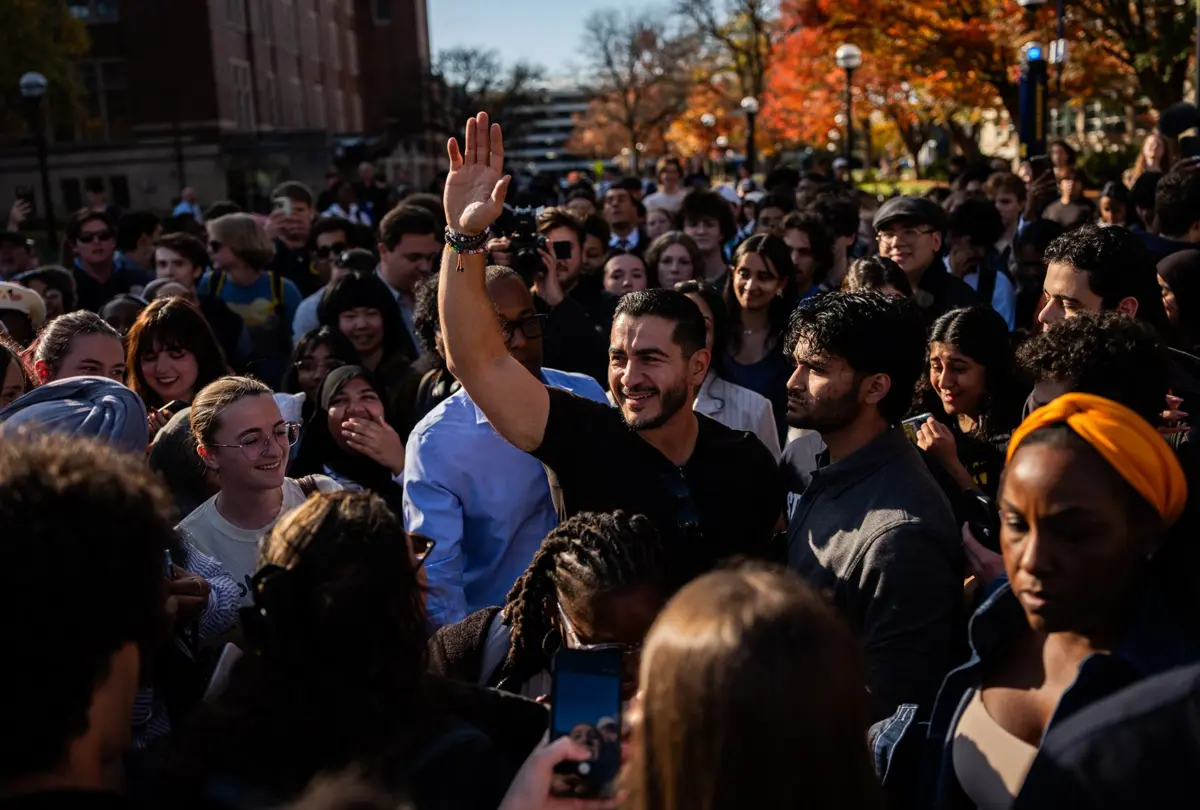
Dr. Abdul El-Sayed, addressing jubilant supporters in Ann Arbor:
"Tonight, the people of Michigan proved that our politics can be about more than just maintaining the status quo—it can be about building a future that leaves no one behind. We ran a campaign centered on the dignity of working people, the right to healthcare as a human right, and the absolute necessity of protecting our environment. To every volunteer, every door-knocker, and every voter who believed in this vision: this victory belongs to you."
Mike Rogers, in a concession statement released early Wednesday morning:
"While the outcome is not what we hoped for, I am deeply proud of the campaign we ran, the issues we raised, and the incredible support we received from hardworking Michiganders across this great state. We fought to protect manufacturing, restore fiscal sanity, and secure our economic future. I wish Dr. El-Sayed success as he takes up the mantle representing Michigan in Washington."
National Progressive Leadership Coalition:
"Abdul El-Sayed’s victory is proof-positive that the progressive agenda is not only viable in the industrial Midwest—it is winning. By refusing to water down his values and standing firm on economic and social justice, Abdul has shown the rest of the nation how a modern, multi-racial, working-class coalition can secure decisive electoral victories."
Future Outlook: What El-Sayed’s Victory Means for Washington
As the dust settles on a tumultuous election cycle, Dr. Abdul El-Sayed’s transition to the United States Senate introduces a dynamic new voice to the upper chamber. Stepping into the seat long held by the pragmatic Gary Peters, El-Sayed arrives in Washington with an explicit mandate from his constituents to champion structural reforms.
Domestically, El-Sayed’s presence in the Senate will provide an energetic anchor for the progressive caucus, particularly on issues of public health infrastructure, climate change mitigation, and labor rights. Having cut his teeth during public health emergencies, he is expected to immediately introduce legislation aimed at lowering pharmaceutical drug prices and expanding federal support for municipal health systems.
Geopolitically and legislatively, El-Sayed will also have to navigate the complex realities of a deeply divided Congress. The scars of the primary battle and the late-stage defection by Haley Stevens underscore the internal ideological frictions within the Democratic Party. How El-Sayed bridges the gap between the party’s aggressive progressive wing and its cautious moderate establishment will shape not only his tenure as a freshman senator but also the broader trajectory of the Democratic Party heading toward the next cycle.
For now, however, Wednesday morning belongs to El-Sayed and the progressive movement. In a state historically regarded as the quintessential American political bellwether, Michigan has spoken—and it has charted a distinctly progressive course for the future.
