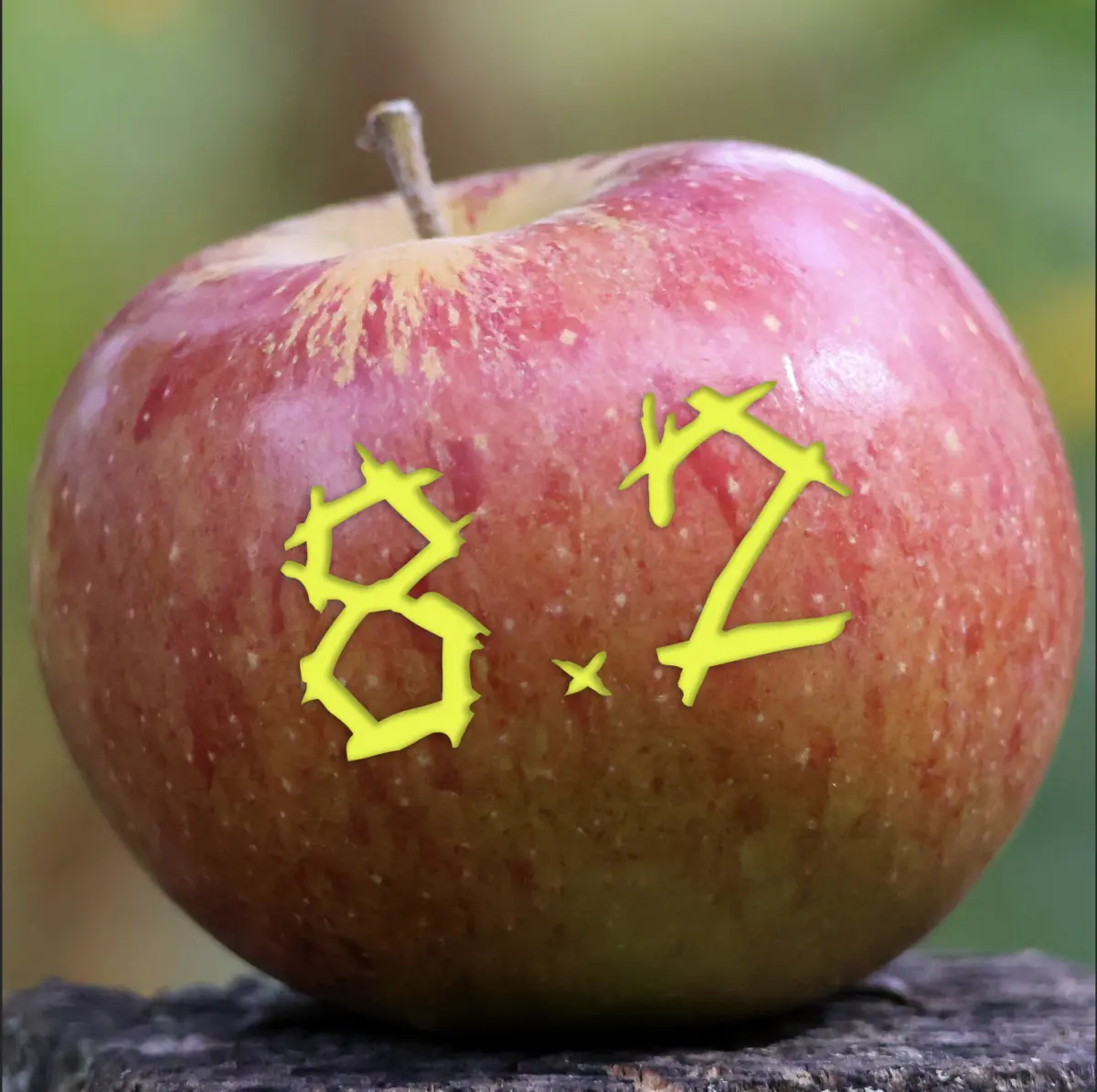
Few symbols in the cultural lexicon of the United States are as enduring or as deeply sentimental as the apple. The phrase "as American as apple pie" operates not merely as a culinary idiom, but as a cornerstone of national identity, evoking agrarian nostalgia, maternal warmth, and an unshakeable sense of domestic heritage. Yet, beneath the glossy red skin of this cultural mythology lies a startling paradox: the apple is fundamentally an immigrant, and apple pie is an imported European innovation.
This investigative feature deconstructs the historical revisionism that tethered the humble Malus domestica to the American mythos—a transformation catalyzed by the socio-political crucible of Prohibition and the ideological warfare of the mid-20th century. Furthermore, this report pivots from the macro-history of pomology to the micro-analysis of a single, extraordinary cultivar: the Karmijn de Sonneville. Bred in the Netherlands in the wake of the Second World War from elite British and American lineage, this fruit offers a masterclass in complex flavor profiles. Through an exhaustive organoleptic review, contextualized by historical metrics and modern pomological lineages, we examine why the Karmijn de Sonneville—despite falling just short of absolute perfection—remains an 8.2-out-of-10 triumph of international fruit breeding.
Detailed Chronology: From European Roots to Prohibition Spin
To understand how a fruit native to the Tien Shan mountains of Central Asia became synonymous with the American heartland, one must trace a winding historical arc defined by temperance movements, religious fervor, and wartime propaganda.
[Central Asian Origins]
       │
       ▼
[European Introduction & Dutch Pie Innovation]
       │
       ▼
[Early American Era: Hard Cider & Johnny Appleseed's Un-grafted Orchards]
       │
       ▼
[The Prohibition Purge (1920s): Cutting Down Cider Orchards, Rebranding the Apple]
       │
       ▼
[World War II: "Mom and Apple Pie" Propaganda]
       │
       ▼
[Modern Era: Global Production Shifts (China Leads, Netherlands Innovates)]
The Pre-American Genesis
Long before European settlers arrived on the shores of the North American continent, wild apples thrived across Eurasia. The apple pie itself—often celebrated as the ultimate Yankee dessert—did not originate in the New World. Culinary historians trace the genesis of apple pastry back to the Netherlands, where early baking traditions enclosed sliced fruit within sturdy crusts long before English colonists packed seeds for the transatlantic journey.
When European settlers did plant apple trees in the colonies, they did not do so with the intention of snacking on crisp, sweet fruit out of hand. The vast majority of early American apples were "spitter apples"—astringent, bitter, and entirely unpalatable when fresh. Their sole purpose was fermentation.
The Hard Cider Era and John Chapman
In colonial and early republican America, hard cider was the national beverage, consumed by men, women, and children alike due to the scarcity of safe drinking water. Enter John Chapman, immortalized in folklore as Johnny Appleseed. Chapman traversed the American frontier establishing nurseries, but his motivations were deeply ideological rather than purely commercial.
A devout follower of Swedenborgianism—a Christian theological movement founded on the writings of Emanuel Swedenborg—Chapman viewed the natural world as a direct manifestation of the divine. Consequently, he vehemently opposed the horticultural practice of grafting, believing that altering a tree’s natural growth through artificial splicing was an affront to God. Instead, he planted trees from seed, ensuring a wild genetic diversity that yielded hardy, tart cider apples.
The Prohibition Purge and the Great Rebranding
The cultural trajectory of the apple shifted violently with the passage of the 18th Amendment and the onset of Prohibition in 1920. Suddenly, the association of apples with the "sin" of drunkenness—via hard cider—became a liability.
Federal agents and temperance crusaders systematically targeted and chopped down thousands of cider-producing orchards nationwide, ironically destroying many of the very groves planted by Chapman’s disciples. To save the domestic apple industry from total economic ruin, agricultural marketers executed a brilliant public relations pivot. They decoupled the apple from alcohol and reframed it as an emblem of moral purity, health, and wholesome consumption: an everyday snack eaten fresh from hand, requiring no fermentation whatsoever.
The World War II Mythos
The final cementing of the apple into the American consciousness occurred during World War II. As millions of young Americans deployed to the European and Pacific theaters, war correspondents and propaganda networks synthesized a new rallying cry. Soldiers were frequently quoted in dispatches as fighting for "mom and apple pie"—a rhetorical flourish designed to evoke an idealized, domestic America worth dying for.
Yet, despite this emotional fortification, the statistical reality remains stubbornly international. While the United States consumes massive quantities of apples annually, it is not the world’s leading producer or consumer; that distinction belongs securely to the People’s Republic of China, which commands global market dominance.
Supporting Context & Metrics
Evaluating modern apple cultivars requires an understanding of cross-breeding, global trade dynamics, and organoleptic chemistry. The global apple market has evolved from localized heirloom preservation into a sophisticated arena of cross-continental horticulture.
Global Production and Consumption Metrics
Top Global Producer: China (accounting for nearly half of the world’s total apple output).
Secondary Producers: European Union (led by Poland, Italy, and France), the United States, and Turkey.
Cultivar Diversity: Over 7,500 distinct cultivars of Malus domestica are recognized globally, ranging from commercial monoliths (such as the Red Delicious and Gala) to rare heirloom and artisanal European imports.
The Lineage of the Karmijn de Sonneville
The subject of today’s evaluation, the Karmijn de Sonneville, represents a pinnacle of mid-century Dutch pomology. Bred in the Netherlands during the 1940s by visionary fruit breeder Piet de Sonneville, this cultivar is the direct result of targeted cross-pollination between two legendary parents:
Cox’s Orange Pippin: A quintessential English heirloom celebrated for its aromatic complexity, rich acidity, and spicy undertones.
Jonathan: A classic American mid-19th-century find (itself tracing lineage to the celebrated Esopus Spitzenburg), known for its snappy, lively acidity and distinct spice notes.
By fusing English refinement with American spunk, de Sonneville created a botanical bridge across the Atlantic, manifesting in a fruit that demands serious culinary and agricultural attention.
Official Statements & Pomological Perspectives
While commercial growers often prioritize shelf-life, uniform sizing, and bruise resistance—traits that gave rise to industrially optimized varieties like the Red Delicious—artisanal orchardists and pomologists champion complexity over mere durability.
"The modern commercial obsession with monochromatic sweetness and unyielding crispness has stripped the apple of its soul," notes an advisory brief from the European Heritage Fruit Consortium. "Cultivars born from complex lineages, such as the Karmijn de Sonneville, remind us that an apple should be an experience—a dynamic interplay of sugar, acid, and volatile aromatics that challenges the palate."
Horticultural historians emphasize that the post-war European breeding programs were specifically engineered to recover the deep, vinous flavors lost during the industrialization of agriculture. Piet de Sonneville’s work in the Netherlands stands as a testament to this philosophy, prioritizing depth of character over mass-market compliance.
The Karmijn de Sonneville: An Organoleptic Review
Nomenclature and First Impressions
Translating from Dutch, Karmijn clearly points toward "carmine," an apt descriptor for the deep, rich, reddish-blush hues that mottle its russet-tinged skin. Visually, this is not a polished supermarket specimen designed to sit passively in a decorative fruit bowl; it wears its complex heritage on its exterior—rough-hewn, textured, and unmistakably artisanal.
Tasting Notes and Flavor Architecture
Upon the first bite, the Karmijn de Sonneville asserts itself immediately. It is a bright, light, effervescent fruit.
Acidity and Sugars: It strikes a formidable, uncompromising balance between sharp tartness and deep, honeyed sweetness.
Flavor Notes: The primary structural notes are anchored in bright lemon and crisp pear, delivering a refreshing, high-toned brightness.
The Skin Anomaly: Most remarkably, the skin possesses a distinct, herbaceous complexity. Upon mastication, it yields an unmistakable flavor profile reminiscent of fresh arugula (or "rocket," depending on your side of the Atlantic)—a savory, peppery undertone that elevates the fruit far beyond standard dessert apples.
Texture: The flesh is coarse-grained and exceptionally juicy, offering a robust, satisfying bite that avoids the mealy pitfalls of over-stored commercial stock.
Final Verdict
Does it surpass its legendary parents? Not quite. The Cox’s Orange Pippin and the Jonathan maintain an almost mythic tier of sheer pomological glory that is exceptionally difficult to eclipse. Yet, the Karmijn de Sonneville comes admirably close.
Final Score: 8.2 / 10
It is a magnificent, assertive, unapologetically complex fruit for those fortunate enough to source it. Whether one chooses to appeal to younger generational cohorts by declaring it "goated" or simply respects it as a masterclass in mid-century Dutch breeding, the Karmijn de Sonneville proves that the true story of the apple extends far beyond the borders of American mythology.