

Executive Overview
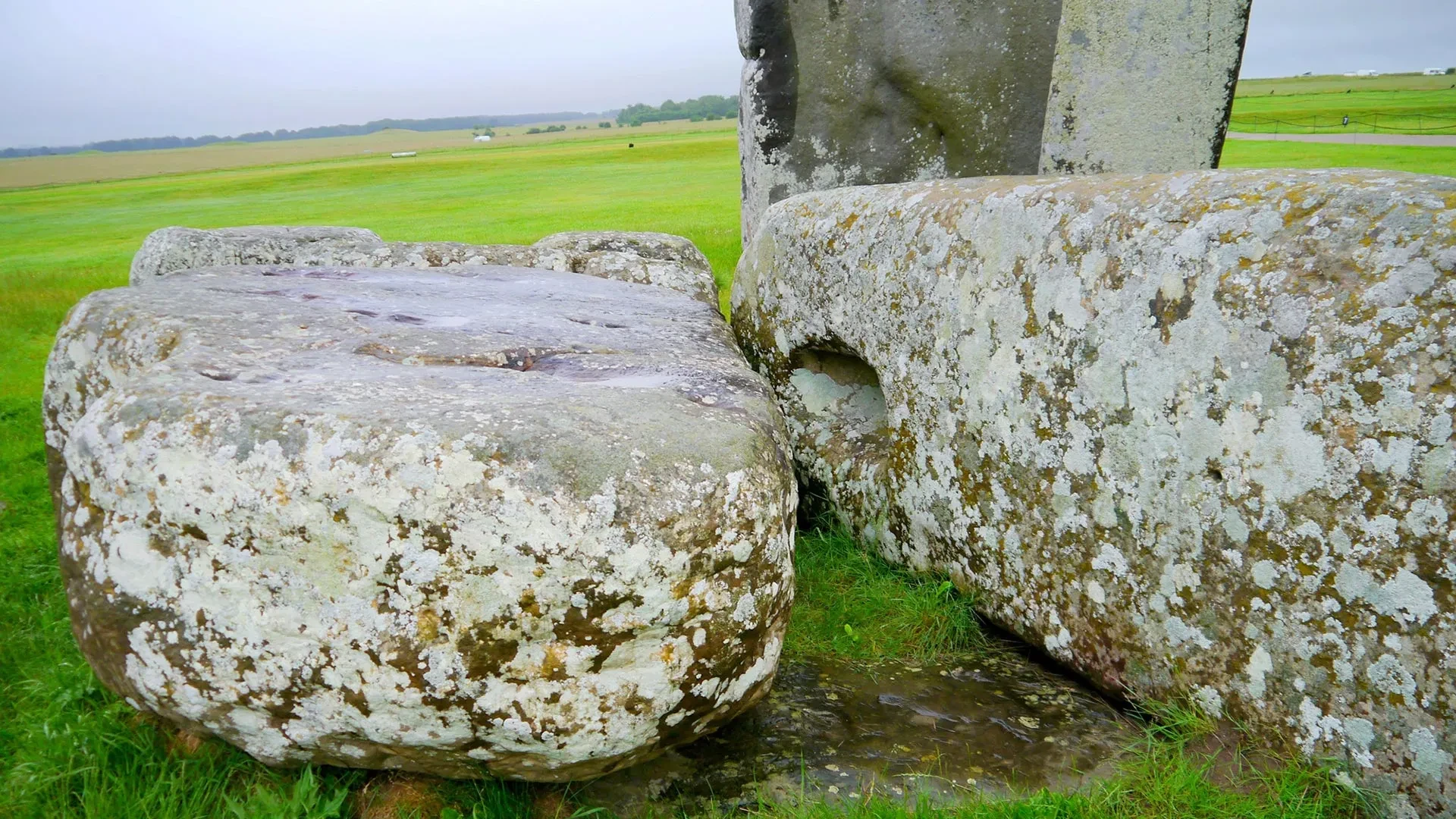
For over four millennia, the silent stones of Stonehenge have stood sentinel across the windswept expanse of Salisbury Plain in southern England, guarding secrets that have captivated generations of historians, archaeologists, and geologists. Among the monument’s most enigmatic monoliths lies the Altar Stone—a massive, six-ton, 4.9-meter (approximately 16-foot) slab of ancient sandstone resting at the very heart of the prehistoric structure.
The mystery surrounding this colossal rock has just taken a dramatic, highly technical turn. According to a landmark study published in the Journal of the Geological Society, an international team of scientists has completed the most comprehensive geological investigation of the Altar Stone ever undertaken. Rather than pinpointing a final geographic coordinate, the new research has systematically eliminated several suspected source locations within the Orcadian Basin of northeastern Scotland. By ruling out these candidates through advanced analytical filtering, the multidisciplinary team has successfully refined the search parameters for where this ancient monolith originated thousands of years ago.
This development follows a monumental paradigm shift that occurred only recently, when advanced scientific methodologies decisively overturned a century-old archaeological consensus. For generations, academic orthodoxy maintained that the Altar Stone had been quarried in western Wales alongside Stonehenge’s smaller "bluestones." However, contemporary geochemical profiling shattered that theory, pointing researchers hundreds of miles further north toward Scotland.
This latest international investigation—incorporating state-of-the-art analytical techniques on both newly gathered field observations and archival museum fragments—represents a critical leap forward. By establishing an unprecedented, high-resolution "geological fingerprint," the study is not narrowing down the search by mere elimination, but rather transforming a sprawling geographical riddle into a precise scientific pursuit. Solving this puzzle promises to do far more than reveal the birthplace of a single stone; it threatens to rewrite our understanding of prehistoric engineering, social organization, and long-distance trade networks during the British Neolithic and Bronze Age.
Detailed Chronology: From Welsh Orthodoxy to Scottish Revelations
To understand the magnitude of the current geological breakthrough, one must trace the timeline of scientific inquiry that has defined Stonehenge research over the past century.
The Century-Old Welsh Paradigm (1920s–2020)
For nearly a hundred years, the prevailing consensus regarding Stonehenge’s material origins was anchored firmly in the west. In the early 20th century, prominent geologists and archaeologists established that the monument’s smaller standing stones—collectively known as bluestones—had been transported approximately 225 kilometers (140 miles) from the Preseli Hills in western Wales.
Because the Altar Stone differed petrologically from the surrounding sarsens (the massive vertical pillars that form the iconic trilithons) and the bluestones, it was traditionally lumped into the broad category of Welsh imports. Textbooks taught, and generations of scholars accepted, that the entire assemblage of non-sarsen stones shared a common genesis in the rugged landscapes of Wales. This theory went largely unchallenged for generations, reinforced by the logistical reality that moving stones hundreds of miles across prehistoric Britain was thought to be exclusively tied to known westerly routes.
The Northern Reversal
The first major tremor in this foundational belief system occurred when advanced analytical techniques—specifically radiometric dating and mineralogical profiling—were brought to bear on the Altar Stone. To the shock of the archaeological community, data revealed that the sandstone composition of the Altar Stone did not match the geological formations of western Wales.
Instead, its chemical and isotopic makeup pointed unmistakably northward, toward the ancient sedimentary deposits of Scotland, and specifically the Orcadian Basin of northeastern Scotland. This revelation forced researchers to radically rethink the logistics of prehistoric stone transport. Moving a six-ton monolith from Wales was an extraordinary feat; transporting a stone of equivalent weight from the far reaches of northern Scotland represented an unimaginable logistical and engineering triumph for Neolithic communities.
The Current Investigation and Elimination Phase
Building directly upon this northern pivot, the newly published study in the Journal of the Geological Society represents the next logical step in the scientific process. Rather than simply declaring Scotland as the source and ending the inquiry, the international research team recognized that "Scotland" is a vast geological canvas comprising numerous distinct basins and formations.
By combining fresh, direct observations of the monolith at Stonehenge with high-precision laboratory analyses of pristine stone fragments preserved within museum archives, the team set out to test specific candidate sites within northeastern Scotland. Utilizing a battery of advanced analytical techniques—including optical petrography, mineralogical assays, bulk geochemistry, and detrital zircon isotopic dating—the researchers established a remarkably detailed geological fingerprint.
When this definitive fingerprint was cross-referenced against rock formations across the Orcadian Basin, a process of elimination began. Several suspected source locations that initially appeared promising based on gross lithology were conclusively ruled out. Far from being a setback, this elimination phase has brought unprecedented clarity to the investigation. By removing false leads, the study has refined the search criteria, ensuring that future fieldwork will be laser-focused on the specific geological environments that genuinely match the Altar Stone’s unique properties.
Supporting Context & Metrics: The Anatomy of a Geological Detective Story
The investigation of the Altar Stone is a masterclass in modern interdisciplinary science, blending field geology, geochemistry, and archaeology. Understanding why this research is so groundbreaking requires examining the specific metrics, physical characteristics, and geographical scales involved.
Physical Metrics of the Altar Stone
- Dimensions: The Altar Stone is a massive slab measuring approximately 4.9 meters (16 feet) in length.
- Weight: Weighing in at an estimated six tons, it is substantially heavier than the individual bluestones, though lighter than the giant sarsen megaliths.
- Placement: It lies horizontally, partially buried beneath fallen stones at the heart of Stonehenge’s horseshoe arrangement, aligned with the monument’s overarching astronomical focus on the solstices.
- Composition: Unlike the igneous and metamorphic bluestones or the tertiary silcrete sarsens, the Altar Stone is composed of a coarse-grained, micaceous sandstone rich in specific minerals that provide its unique geochemical signature.
The Science of the "Geological Fingerprint"
To differentiate between sandstones that may look identical to the naked eye, the research team deployed a suite of sophisticated analytical methods:
- Petrographic Analysis: Examining thin sections of the rock under polarized light to identify the exact size, shape, and mineralogy of individual sand grains (such as quartz and feldspar) as well as the cementing matrix holding them together.
- Geochemical and Isotopic Profiling: Measuring trace elements and conducting isotopic analysis on mineral grains (particularly detrital zircons). Zircons are microscopic mineral crystals that act as miniature geological clocks; their radioactive decay ratios reveal the age of the original parent rock from which the sand grains were eroded millions of years ago.
- Comparative Database Cross-Referencing: Pitting the resulting multi-parameter fingerprint against extensive geological surveys of British bedrock formations, with an intensive focus on northern sedimentary basins.
The Wider Construction Context of Stonehenge
Stonehenge was not built overnight; its construction unfolded in multiple complex stages over a staggering timeframe, spanning from approximately 3000 BC to 1600 BC.
- Phase 1 (c. 3000 BC): The initial monument was created as a large henging monument, consisting of a circular ditch and bank, accompanied by the Aubrey Holes.
- Phase 2 (c. 2600 BC): The transportation and erection of the bluestones, originating roughly 225 kilometers (140 miles) away in western Wales.
- Phase 3 (c. 2500 BC and later): The arrival of the massive sarsen stones and, crucially, the placement of the Altar Stone, along with the rearrangement of the bluestones into their current configurations.
If the Altar Stone’s ultimate origin is confirmed to be northeastern Scotland, the geographical span of Stonehenge’s materials becomes truly continental in scale. Moving a six-ton slab across hundreds of miles of rugged terrain, dense forests, and coastal waters—long before the invention of the wheel or metal tools in Britain—would demonstrate an unprecedented level of social cohesion, long-distance trade, centralized authority, and engineering mastery among prehistoric Britons.
Official Statements and Expert Insights
The international team behind the study includes leading geologists and archaeologists from institutions across the United Kingdom, Canada, Italy, and Sweden. Their commentary underscores the rigorous, methodical nature of this monumental scientific endeavor.
Professor Duncan Pirrie, Emeritus Professor at the University of South Wales and leader of the study, emphasized the comprehensive scope of the investigation and the constructive nature of ruling out candidate sites:
"This is the most comprehensive geological investigation of the Altar Stone ever undertaken. By combining a wide range of analytical techniques, we have built the clearest picture yet of the stone’s composition and tested the leading theories about its origins. So far, none of the locations examined have the same set of characteristics as the Altar Stone. That tells us the search is not over, but we are now far better equipped to focus on the areas most likely to yield an answer."
Professor Richard Bevins, Honorary Professor in the Department of Geography and Earth Sciences at Aberystwyth University, reflected on the historical significance of shifting the geographic focus from Wales to Scotland:
"For almost a century, the prevailing view was that the Altar Stone came from west Wales. Our previous research overturned that assumption and pointed instead to Scotland as the most likely source. This latest study significantly refines the search by identifying the specific geological characteristics we need to look for, allowing future investigations to be targeted more effectively. With each new piece of evidence, we move closer to solving one of Stonehenge’s most enduring mysteries."
Professor Nick Pearce, Emeritus Professor of Geochemistry at Aberystwyth University, addressed the philosophical approach required in geological detective work:
"In a geological detective story such as this, ruling out potential source areas is just as important as identifying new ones. Every location eliminated narrows the search and brings us closer to discovering where the Altar Stone originated. The stone is unique among those at Stonehenge, and tracing its source would provide valuable new insights into its remarkable journey to Salisbury Plain thousands of years ago."
Collaborative Global Network
The scale of the research reflects a truly global scientific effort. Participating organizations that contributed expertise, analytical facilities, and fieldwork coordination include:
- University of South Wales
- Aberystwyth University
- University College London (UCL)
- University of Aberdeen
- University of Plymouth
- The James Hutton Institute
- Swedish University of Agricultural Sciences
- University of Milano-Bicocca
- Various specialized industry partners providing advanced analytical hardware and geological data processing.
Future Outlook: The Road Ahead for Stonehenge Research
As the ink dries on this latest publication in the Journal of the Geological Society, the scientific community is already casting its gaze toward the next phase of the investigation. Far from dampening enthusiasm, the elimination of specific regional candidates within the Orcadian Basin has provided researchers with a highly refined operational roadmap.
Next Steps in the Field and Laboratory
- Broadening Scottish Surveys: While initial targets in the Orcadian Basin did not yield an exact petrological match, the detailed mineralogical criteria established in this study will be applied to broader and deeper sedimentary sequences across Scotland and potentially adjacent offshore geological formations.
- Refining Provenance Models: The multi-proxy fingerprint—integrating petrography, heavy mineral analysis, and high-precision zircon geochronology—will serve as a gold standard methodology not just for Stonehenge, but for tracing the provenance of megalithic monuments across Atlantic Europe.
- Reassessing Transport Logistics: Archaeologists are already modeling hypothetical transport routes from northern Scotland to Salisbury Plain. Whether the journey involved maritime cabotage (coastal shipping via rafts or skin boats) or arduous overland hauling across rugged terrain, experimental archaeology and geographic information systems (GIS) will be employed to test the feasibility of these ancient logistical feats.
Rewriting the Prehistoric Narrative
Ultimately, the hunt for the Altar Stone’s birthplace transcends academic curiosity. It touches upon the fundamental nature of Neolithic and Early Bronze Age society in Britain. A monument as complex as Stonehenge did not emerge in an insular vacuum; it required a vast, interconnected network of communities capable of sharing resources, coordinating labor, and executing engineering projects of breathtaking ambition across hundreds of miles.
When the exact quarry source of the six-ton Altar Stone is finally unlocked, it will not only solve one of archaeology’s greatest enduring riddles but also illuminate the remarkable sophistication of the ancient people who reshaped the landscape of Britain over four millennia ago. Until then, the geological detective work continues, driven by advanced science, international collaboration, and an unyielding quest for historical truth.
