

Executive Overview
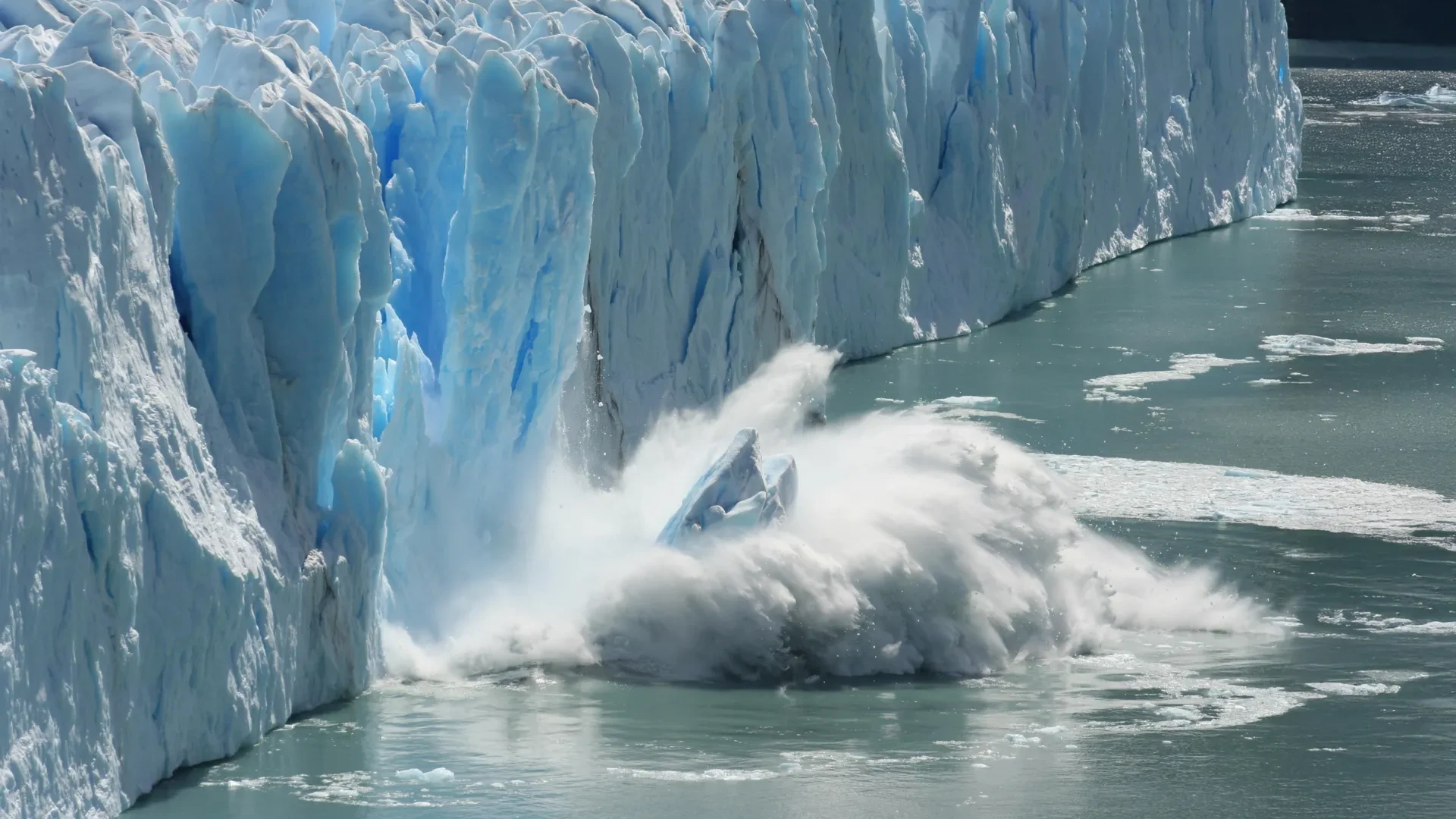
As global temperatures relentlessly climb, the floating ice shelves anchoring Antarctica’s colossal ice sheet are fracturing and melting at unprecedented rates. The erosion of these vital protective barriers lays bare towering, monolithic walls of solid ancient ice. For years, the fate of these towering cliffs has remained a central preoccupation for glaciologists and climate modelers worldwide. Whether these ice faces stand resilient or succumb to gravity has long been considered a primary catalyst for accelerated ice loss and catastrophic global sea level rise.
For decades, the prevailing scientific consensus warned that these geological monoliths harbored a terrifying vulnerability. Under a theoretical framework known as marine ice cliff instability (MICI), scientists believed that any ice cliff exceeding 100 meters in height—roughly equivalent to the towering stature of the Statue of Liberty—would inevitably succumb to structural failure under its own immense weight. The catastrophic collapse of one towering wall would expose an even taller face farther inland, igniting a devastating, self-sustaining chain reaction of structural retreats that could rapidly consume vast expanses of the Antarctic ice sheet.
However, groundbreaking new research spearheaded by scientists at the Massachusetts Institute of Technology (MIT) and the Woods Hole Oceanographic Institution (WHOI) has fundamentally upended this long-standing paradigm. Published in the prestigious journal Science, a comprehensive, four-year empirical study utilizing high-resolution satellite observations reveals that the destiny of an Antarctic ice cliff is far more complex than a simple height threshold.
Analyzing data from more than 15,000 ice cliffs across the frozen continent, the research team discovered a surprising counter-narrative. While extreme ice cliffs do experience periods of rapid, alarming retreat—often outpacing existing computer simulations—they do not trigger an irreversible, runaway collapse. Instead, these dramatic retreats are short-lived, routinely arrested by hidden environmental variables such as the topography of the bedrock below, the stabilizing pressure of surrounding seawater, and the buffering accumulation of frozen debris known as mélange.
This discovery offers a vital recalibration of climate projections. While it does not mean Antarctica is immune to the pressures of a warming planet, it demonstrates that natural "speed bumps" and structural self-limiting processes prevent the apocalyptic cascade once feared by researchers. By integrating these newly understood physical dynamics into predictive computer models, the scientific community can now chart a more accurate, reliable course for forecasting future global sea level rise.
Detailed Chronology: From Theoretical Doom to Empirical Discovery
To fully comprehend the significance of the recent MIT and WHOI findings, one must trace the historical trajectory of how glaciologists conceptualized the mechanics of polar ice sheet retreat. For years, the specter of marine ice cliff instability has loomed large over climate projections, largely driven by theoretical physics and computational models rather than expansive empirical observation.
The Rise of the MICI Hypothesis
Long before satellites could map individual ice fractures with laser precision, scientists recognized that Antarctica’s marine-terminating glaciers possessed a unique vulnerability. Unlike land-based glaciers, marine-terminating ice sheets rest on bedrock that dips downward below sea level, extending far beneath the ocean’s surface.
As warming ocean waters erode these glaciers from below, the ice thins and ungrounds, leaving behind sheer, unsupported vertical cliffs at the ocean’s edge. Theoretical models constructed in previous decades calculated the mechanical strength of ice under extreme loads. These calculations yielded a critical threshold: roughly 100 meters of exposed height.
According to the MICI hypothesis, once an ice cliff surpasses this vertical limit, the internal stress within the ice exceeds its structural integrity. The cliff face shatters and collapses into the sea. Under the old models, this collapse would invariably expose an even deeper, taller wall of ice retreating inland along the downward-sloping bedrock. Each successive cliff would be taller than the last, creating a compounding cycle of structural failure that could theoretically destabilize entire sectors of the Antarctic ice sheet within decades, driving global sea levels up by several meters.
The Observational Turning Point (2019–2023)
Despite the wide acceptance of MICI in academic literature, the hypothesis suffered from a critical limitation: it was built primarily on theoretical physics and computer simulations, tested against only a sparse handful of localized field observations in Antarctica.
Recognizing the urgent need to test these theoretical models against reality, a team of researchers led by Caroline Needell, a graduate student in the MIT-WHOI Joint Program, set out to capture a comprehensive, continent-wide inventory of Antarctic ice cliffs. Rather than relying on isolated snapshots, Needell and her colleagues sought to track the actual behavior, height variations, and retreat patterns of thousands of ice cliffs over an extended multi-year timeframe.
The team leveraged NASA’s state-of-the-art Ice, Cloud, and Land Elevation Satellite-2 (ICESat-2). Equipped with a sophisticated laser altimeter, ICESat-2 orbits the globe, repeatedly sweeping over Earth’s polar regions and measuring elevations with millimeter-scale precision.
Between 2019 and 2023, the research team processed an immense volume of satellite data, analyzing more than 15,000 individual ice cliffs across Antarctica at rigorous three-month intervals. This unprecedented spatial and temporal resolution allowed the researchers to observe, for the first time, how ice cliffs truly behave throughout the seasonal shifts of the polar environment—capturing the exact moments of structural failure, retreat, and subsequent stabilization.
Supporting Context & Metrics: Unraveling the Secrets of Cliff Stability
The results of the four-year ICESat-2 analysis challenged conventional wisdom almost immediately. When the researchers aggregated the data for all 15,000 ice cliffs, they found that the vast majority of Antarctica’s exposed ice walls were far shorter than the theoretical 100-meter danger zone. The average height of an Antarctic ice cliff stood at a remarkably stable 30 meters.
However, a small, critical subset of the observed cliffs did indeed reach or exceed the 100-meter threshold, with the absolute tallest cliffs recorded reaching heights of up to 127 meters. When the researchers zoomed in on these massive monoliths to observe their lifecycle, they uncovered a fascinating sequence of events that defied simple computer models.
The Anatomy of a Collapse and Recovery
When the researchers tracked the 100-meter-plus cliffs over the four-year study period, they confirmed that these towering structures did indeed experience catastrophic structural failure. As predicted, the massive walls collapsed, and the glaciers behind them retreated inland. Crucially, the rate of this initial retreat was significantly faster than what existing MICI computer simulations had projected—a finding that initially suggested an even more alarming trajectory for ice loss.
Yet, contrary to the runaway collapse hypothesis, the rapid retreat abruptly halted. Instead of triggering an unstoppable, continent-eating chain reaction, the glaciers systematically stabilized. Following their rapid retreat, the ice margins paused, and in many instances, began advancing outward toward the ocean once more.
This puzzling pattern forced the research team to look beyond mere cliff height and investigate the hidden physical variables governing ice stability. Their analysis revealed three primary stabilizing mechanisms that interrupt the cycle of collapse:
- Mélange Accumulation: The researchers discovered that the broken ice and slush accumulating directly in front of the cliffs—known as mélange—played a profoundly protective role. Composed of a dense mixture of sea ice and pulverized iceberg fragments, thicker accumulations of mélange exerted a physical counter-pressure against the base of the ice cliffs, acting as a structural buttress.
- Subsurface Hydrostatic Pressure: The depth of the surrounding seawater proved equally critical. Deeper water exerts greater hydrostatic pressure against the submerged portion of the ice cliff, counteracting the immense gravitational forces that drive inward structural failure.
- Bed Topography and Natural Speed Bumps: Perhaps most importantly, the team examined the shape of the bedrock lying hidden beneath the ice sheet. When an ice sheet flows over a flat or downward-sloping terrain, the ice remains thick and structurally vulnerable. However, when the underlying topography rises into a ridge, bump, or elevated sill, the ice resting upon it is forced to thin out significantly. These buried geological ridges act as natural speed bumps, reducing the height of any exposed ice cliffs above them and rendering the margin dramatically less susceptible to collapse.
Official Statements and Expert Perspectives
The publication of these findings in Science has sparked widespread discussion across the international glaciology community, offering both a cautionary note regarding near-term retreat rates and an encouraging perspective on long-term stability.
Reflecting on the paradoxical findings of the study, lead author Caroline Needell emphasized the nuanced reality of ice sheet dynamics:
"We found that when the cliffs were retreating, they were doing so faster than what has been modeled, which would mean more ice loss and higher contributions of sea level rise. But because we found that the retreat was short-lived, and all the glaciers eventually stabilized, that would suggest that things won’t be so bad. We don’t see this runaway effect."
Addressing the limitations of historical predictive models, Needell pointed out the necessity of incorporating multi-variable physics into future climate simulations:
"Predictive ice-sheet models that have been used so far to represent ice cliff instability just take into account cliff height. That’s the only variable that matters. And once the cliff height reaches the critical threshold, usually 100 meters, it should initiate this runaway effect of ice sheet retreat."
Describing the surprise of discovering the natural braking mechanisms at play, Needell noted:
"We measured mélange height and found taller cliffs have thicker mélange, which could be a built-in stabilizing effect. After we did that global analysis, we thought, ok, let’s zoom in on the tallest cliffs and see how they’re behaving… It’s this rapid retreat, punctuated by periods of stabilization. That was puzzling to us. Then, we thought: We need to look at all the things that affect cliff height."
Looking toward the practical application of the research, Needell concluded with a clear roadmap for the scientific community:
"Now we know what to look for. We really need to know the bed topography, and we need to know the ice thinning rate, in order to get ice cliff instability right, because this value really matters in the context of projecting sea level rise."
Co-author Catherine Walker, an assistant scientist at WHOI, and Jeremy Bassis, an associate professor at the University of Michigan, contributed critical oversight to the study, reinforcing the collaborative nature of the research which was supported in part by NASA, the U.S. National Science Foundation, and the DOMINOS project—a key component of the International Thwaites Glacier Collaboration.
Future Outlook: Implications for Global Climate Models and Sea Level Projections
As coastal communities worldwide prepare for the compounding realities of sea level rise, accurate projections of Antarctic ice sheet behavior are more critical than ever. Antarctica holds the vast majority of Earth’s freshwater ice; even a fractional destabilization of its marine-terminating margins could displace hundreds of millions of people living in low-lying coastal zones across the globe.
The findings from MIT, WHOI, and the University of Michigan do not grant humanity a reprieve from the challenges of climate change, nor do they suggest that Antarctica’s ice sheet is immune to ongoing atmospheric and oceanic warming. Ice loss is still occurring, and as Needell’s team observed, individual cliff collapses can happen with alarming speed.
However, the research fundamentally reshapes our understanding of how ice sheets disintegrate. By proving that marine ice cliff instability is not an inescapable, self-sustaining doom loop, the study removes a major source of uncertainty—and likely overestimation—from extreme sea level rise scenarios.
To translate these insights into actionable policy and engineering guidance, climate modelers must now upgrade their forecasting software. Traditional models that rely solely on a simplistic 100-meter height threshold are obsolete. Future predictive frameworks must integrate high-resolution maps of sub-glacial topography, real-time measurements of ice thinning rates, bathymetric data on surrounding ocean depths, and the stabilizing mechanical feedback of coastal mélange.
By capturing the full complexity of these interacting physical processes, scientists can replace worst-case guesswork with precision science. This evolution in modeling will ultimately empower global leaders, urban planners, and coastal communities to plan for the future with greater confidence, grounded in a rigorous, empirical understanding of how Earth’s most formidable ice sheet responds to a warming world.
