

Executive Overview
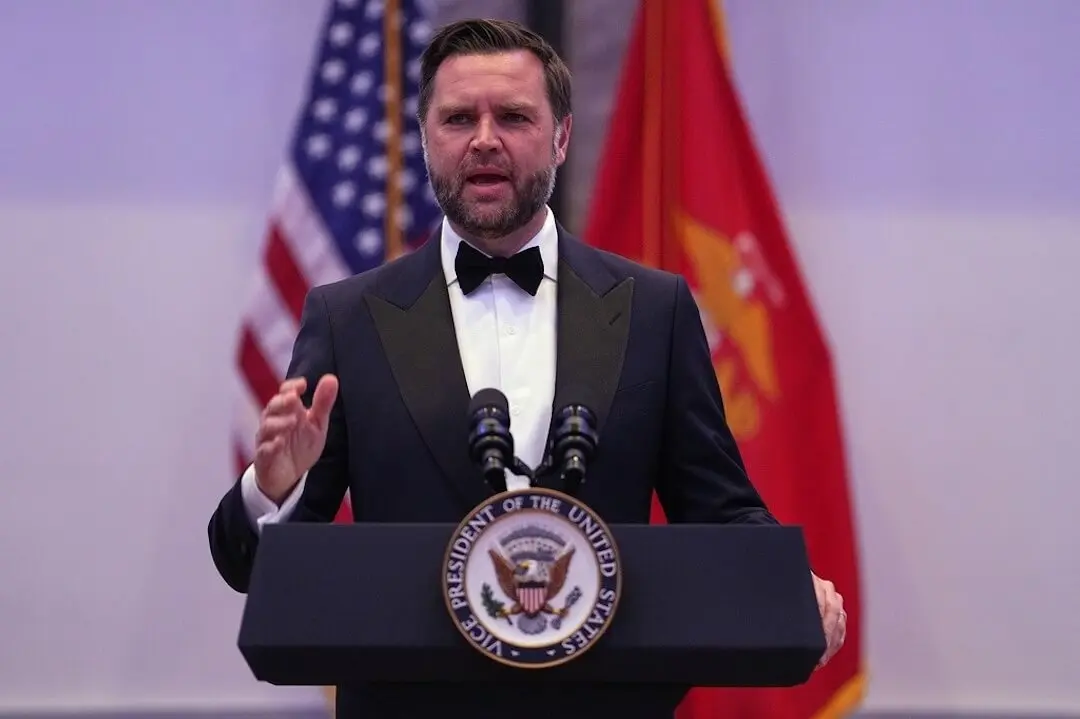
The intersection of federal politics, media consolidation, and technological infrastructure convergence collided in a remarkably turbulent week, reshaping the narrative landscape across Washington, D.C., and New York City. At the center of this political storm is Vice President JD Vance, who faced simultaneous crises: a last-minute cancellation at The New York Times DealBook Summit due to unprecedented national infrastructure outages, mounting internal friction with President Donald Trump over midterm election retrospectives, and an extraordinary public rebuke from prominent Fox News personality Brian Kilmeade.
Concurrently, the titans of corporate media and Silicon Valley converged on the DealBook Summit to address monumental shifts in industry ownership. Skydance CEO David Ellison confirmed billionaire Elon Musk’s substantial financial backing following Skydance’s mega-merger with Warner Bros. Discovery—a deal that places CBS News and CNN under a unified ownership umbrella. As television news ratings surge amid a relentless news cycle marked by systemic technological failures and high-stakes cabinet controversies, both Ellison and Musk offered rare glimpses into their political alignments, future corporate visions, and the enduring challenges of rebuilding public trust in American journalism.
Detailed Chronology: The Vance Crisis and the DealBook Cancellation
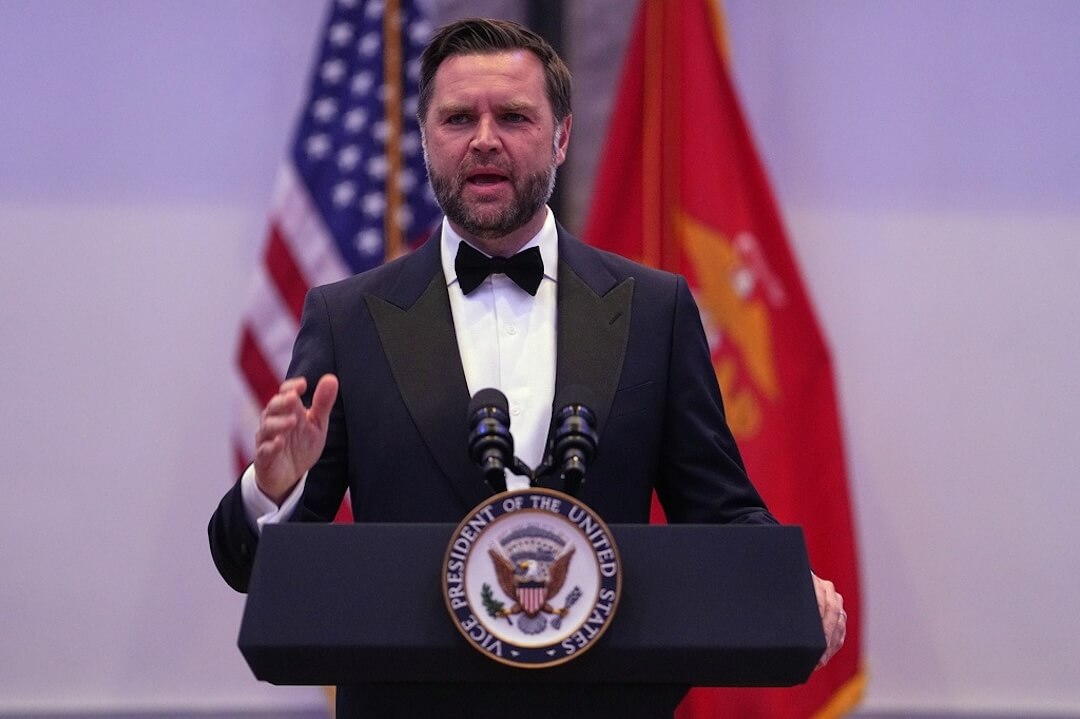
The unraveling of Vice President JD Vance’s scheduled public appearances underscored the precarious nature of governance during systemic operational failures. Vance had been slated to deliver a high-profile keynote address at The New York Times DealBook Summit in New York City on Wednesday morning. Secret Service agents had secured the venue overnight, and stage preparations were fully completed when an abrupt operational pivot occurred.
Just twenty to thirty minutes prior to his scheduled remarks, Vance was summoned back to Washington, D.C., to participate in emergency inter-agency meetings. The recall was triggered by a cascading series of nationwide infrastructure outages that paralyzed critical sectors of the American economy. Disruptions spanned cloud services from Microsoft, sensitive operations involving the National Security Agency (NSA), major financial institutions including JPMorgan Chase and Zelle, and a sweeping ground stop issued across the nation’s commercial airlines.
DealBook host Andrew Ross Sorkin announced the cancellation to a stunned audience, detailing the eleventh-hour logistical scrambling. Official statements released across DealBook’s digital platforms confirmed that the vice president’s presence was necessitated by the multisectoral crisis.
However, this logistical emergency was merely the visible tip of an iceberg concerning Vance’s standing within the executive branch. According to investigative reporting by The New York Times’ Tyler Pager, President Donald Trump has grown visibly frustrated with Vance’s post-midterm political analysis. Following a devastating "blue tsunami" in the midterm elections that saw Democrats overwhelmingly reclaim majorities in both the Senate and the House, Vance publicly and privately attributed the shellacking to the administration’s military engagement in Iran.
Vance, long identified as a dissenting voice within Trump’s inner circle regarding the wisdom of the Iran campaign—particularly concerning objectives of regime change—argued that the war proved toxic to the electorate. Privately, President Trump has complained to aides and allies that Vance failed to project unified strength. Trump’s camp expressed irritation that the vice president did not unequivocally endorse the conflict’s necessity, lamenting to confidants that Vance should have asserted that initiating the war was entirely correct, regardless of electoral fallout.
In the wake of these tensions, President Trump has demonstrably elevated Secretary of State Marco Rubio in public praises, frequently hinting to associates that Rubio represents a formidable standard-bearer for the Republican Party in the 2028 presidential cycle. Meanwhile, Vance’s own political future remains opaque. While political analysts frequently place him at the forefront of potential 2028 Republican contenders, sources close to the vice president emphasize that a run is far from guaranteed. Factors weighing on his decision include his young family—highlighted by the birth of his fourth child in July—his heavy reliance on data-driven political viability models, and the lingering, highly unpopular shadow of the Iran conflict. Allies have noted that any resumption of major combat operations in Iran could effectively neutralize Vance’s path to the White House.
Media Fallout: The Kilmeade Rebuke and the Battle Over the Midterms
The internal Republican fracture over the Iran war spilled dramatically into the media ecosystem, resulting in an unprecedented clash between the executive branch and conservative commentary mainstays.
The controversy ignited following Vance’s appearance on Fox News’ The Ingraham Angle, during which he sought to reassure viewers regarding the administration’s endgame in the Middle East. Vance told host Laura Ingraham:
"My prediction, Laura, is that whatever the president ultimately decides to do, there are going to be people who demand more, who want the war to go on indefinitely. And what I feel quite confident about the president of the United States, and again, there’s no daylight here, is that whatever he ultimately decides to do, however he ultimately decides to bring the conflict to a close, he is not going to let this become a forever war."
This framing triggered a sharp, unvarnished rebuke from Fox News radio host and television personality Brian Kilmeade. Speaking on his radio program, Kilmeade launched a blistering counter-offensive against the sitting vice president, asserting:
"There is not one person that I have ever met that wants an endless war, who will say, ‘The president’s got to keep fighting no matter what.’ Win, neutralize our 40-year enemy and you end it when you want to end it. It’s not that people are never going to be satisfied. So that is another straw man argument that this guy puts up. I’m talking about the vice president of the United States; he never should have been vice president."
Kilmeade further criticized Vance’s post-midterm narrative, taking direct aim at the vice president’s assertion that any honest post-mortem of the Republican legislative losses must begin with the war in Iran. Media observers across the political spectrum expressed shock at the severity of the critique. Jeremy Barr, media reporter for The Guardian, noted on social media that it was "really wild to see one of the most distinguished and long-serving hosts on Fox News say that JD Vance ‘never should have been vice president,’" characterizing it as one of the most severe intra-party media volleys in recent political history.
Corporate Convergence: Skydance, Paramount, Warner Bros. Discovery, and Elon Musk
While Washington grappled with political infighting, New York played host to massive corporate restructuring announcements during the DealBook Summit. Skydance CEO David Ellison took the stage to address the sweeping media landscape following Skydance’s acquisition of Warner Bros. Discovery and its subsequent merger with Paramount.
Ellison officially confirmed months of financial speculation by verifying that tech billionaire Elon Musk had invested approximately $1 billion into Skydance as part of the merger’s equity capitalization. This investment places the world’s richest man in a position of significant influence within traditional Hollywood media.
+-----------------------------------------------------------------+
                 SKYDANCE MEDIA CAPITALIZATION
+-----------------------------------------------------------------+
  |-- Sovereign Wealth Funds: $24 Billion Commitment
  |-- Elon Musk (Tesla/SpaceX/X): ~$1 Billion Equity Investment
  |-- Laurene Powell Jobs: $250 Million Equity Investment
  |-- Larry Ellison & Private Capital: Residual Equity Load
+-----------------------------------------------------------------+
As reported by The New York Times’ Lauren Hirsch, the capitalization of the mega-merger was supported by a diverse coalition of financial heavyweights. In addition to Musk’s $1 billion stake, three international sovereign wealth funds committed a staggering $24 billion in equity, while Laurene Powell Jobs contributed $250 million. This diversified funding structure successfully lightened the personal financial load on Ellison’s father, Oracle founder Larry Ellison.
The inclusion of Musk drew intense scrutiny due to his expansive technological footprint, which spans Tesla, SpaceX, and the social media platform X. Industry analysts have increasingly speculated about potential operational synergies—specifically, whether SpaceX’s Starlink satellite internet service, heavily utilized by commercial airlines and remote enterprises, might integrate Paramount and Warner Bros. Discovery streaming and content libraries. Ellison acknowledged these possibilities, stating that having Musk’s vote of confidence as a shareholder was an "honor and a privilege" and noting that future collaborations would be welcomed.
The Future of CBS News and CNN Under Unified Ownership
Addressing institutional anxieties within the journalism sector, Ellison tackled the burning question of whether CBS News and CNN—now operating under the same corporate umbrella—would be merged or kept structurally independent.
Ellison emphasized a commitment to operational continuity:
- Current Status: Both news organizations will maintain their distinct identities and operate within their current institutional structures.
- Editorial Independence: Ellison underscored a strict firewall between corporate ownership and editorial decision-making, stating that management places absolute trust in journalists to execute their duties without interference.
- Selective Synergy: While maintaining independent newsrooms, Ellison did not rule out strategic news-sharing initiatives down the line.
Addressing the broader crisis of institutional credibility, Ellison pointed to declining public trust in news media. He articulated a mission to restore audience confidence through rigorous, non-partisan, fact-based reporting:
"I think it’s important when you are getting that feedback from the audience to make sure that you are working to rebuild trust every single day. I also think it’s really important to be truly basic truth-based, bipartisan, down the middle as you’re basically delivering news… We will not stop working until we earn that trust."
When pressed by Andrew Ross Sorkin regarding his personal political contributions and whether he voted for Donald Trump, Ellison demurred, maintaining strict political neutrality:
"I’ve actually never disclosed that. I’ve voted both sides of the aisle basically my entire life. I’m not a partisan." He added that Skydance successfully navigated regulatory and operational milestones under both the Biden administration and the current Trump administration, emphasizing a commitment to working constructively with future executive leadership regardless of political affiliation.
Supporting Context & Metrics: Surge in Viewership Amid National Turmoil
The convergence of political upheaval, technological outages, and institutional scandals has yielded a massive windfall for traditional broadcast and cable news networks, driving audiences back to legacy programming in historic numbers.
ABC’s World News Tonight Breaks Records
ABC’s flagship evening newscast, World News Tonight with David Muir, recorded its highest viewership figures since the peak of the COVID-19 pandemic.
- Weekly Average: 9.3 million viewers every single night.
- Accolade: Ranked as the No. 1 non-sports program across all of television for the week.
- Catalysts: The staggering viewership was driven by intense public demand for verified information regarding the nationwide Microsoft and FAA ground stops, fallout from the Nvidia financial scandal, a catastrophic building collapse in Brooklyn, and the congressional impeachment proceedings targeting Defense Secretary Pete Hegseth.
CBS News Sunday Morning Momentum
Concurrently, CBS News Sunday Morning experienced a substantial audience surge, drawing 4.6 million viewers—marking a 6% increase from the prior week and its highest viewership figures since May. The broadcast was anchored by a high-profile lineup, including an exclusive television interview with Billy Evans (partner of disgraced Theranos founder Elizabeth Holmes) following the release of the documentary You Can See Everything, alongside a nostalgic retrospective celebrating rock band U2’s 50th anniversary.
Elon Musk Clarifies Political Stance at DealBook
Adding another layer of complexity to the political and economic landscape, Elon Musk took the stage at the DealBook Summit to clarify his political positioning following a cycle of unprecedented financial expenditure.
Despite donating nearly $500 million to support Republican candidates during the midterms, Musk explicitly rejected the "MAGA" political label:
"I’m not sure what MAGA means, but if that means sort of blind adherence to a set of policies by the Republican Party, then I certainly don’t have that. There are positives and negatives in both parties."
Reflecting on the return on investment from his massive financial contributions, Musk offered a candid and self-critical assessment of his electoral strategy:
"If I could rewind the clock, I would have spent less money." He admitted feeling "foolish" over the electoral defeats suffered by several candidates he heavily financed, signaling a potential recalibration of his political philanthropy moving forward.
Future Outlook
As the dust settles on an exceptionally volatile week, the political and media horizons point toward sustained instability and intense strategic positioning.
For Vice President JD Vance, the immediate future hinges on his ability to reconcile internal executive branch friction. Navigating President Trump’s demands for total rhetorical alignment on foreign policy—particularly regarding the enduring fallout of the Iran war—will dictate whether Vance can solidify his standing within the administration or find himself marginalized as the 2028 electoral cycle approaches. Concurrently, his domestic policy bandwidth will be severely tested as federal agencies race to fortify critical national infrastructure against the systemic systemic vulnerabilities exposed by recent nationwide digital and aviation outages.
In the corporate sphere, David Ellison’s newly consolidated media empire faces the monumental task of integrating massive studio assets while proving that traditional newsrooms like CBS News and CNN can restore public trust through uncompromising, bipartisan, fact-based journalism. With tech titan Elon Musk embedded as a major stakeholder and strategic sounding board, the intersection of Silicon Valley engineering and legacy Hollywood broadcasting will undoubtedly redefine how information is distributed, monetized, and consumed in the years ahead.
