

Executive Overview
As the global energy landscape accelerates its pivot toward low-carbon alternatives, hydrogen has emerged as a premier contender to replace fossil fuels in residential and commercial settings. Hailed for its potential to drastically reduce greenhouse gas emissions, hydrogen can be combusted in much the same way as traditional natural gas, powering domestic stoves, hot water systems, and home heating units. However, integrating a new energy vector into everyday consumer environments introduces a litany of complex engineering, safety, and operational challenges.
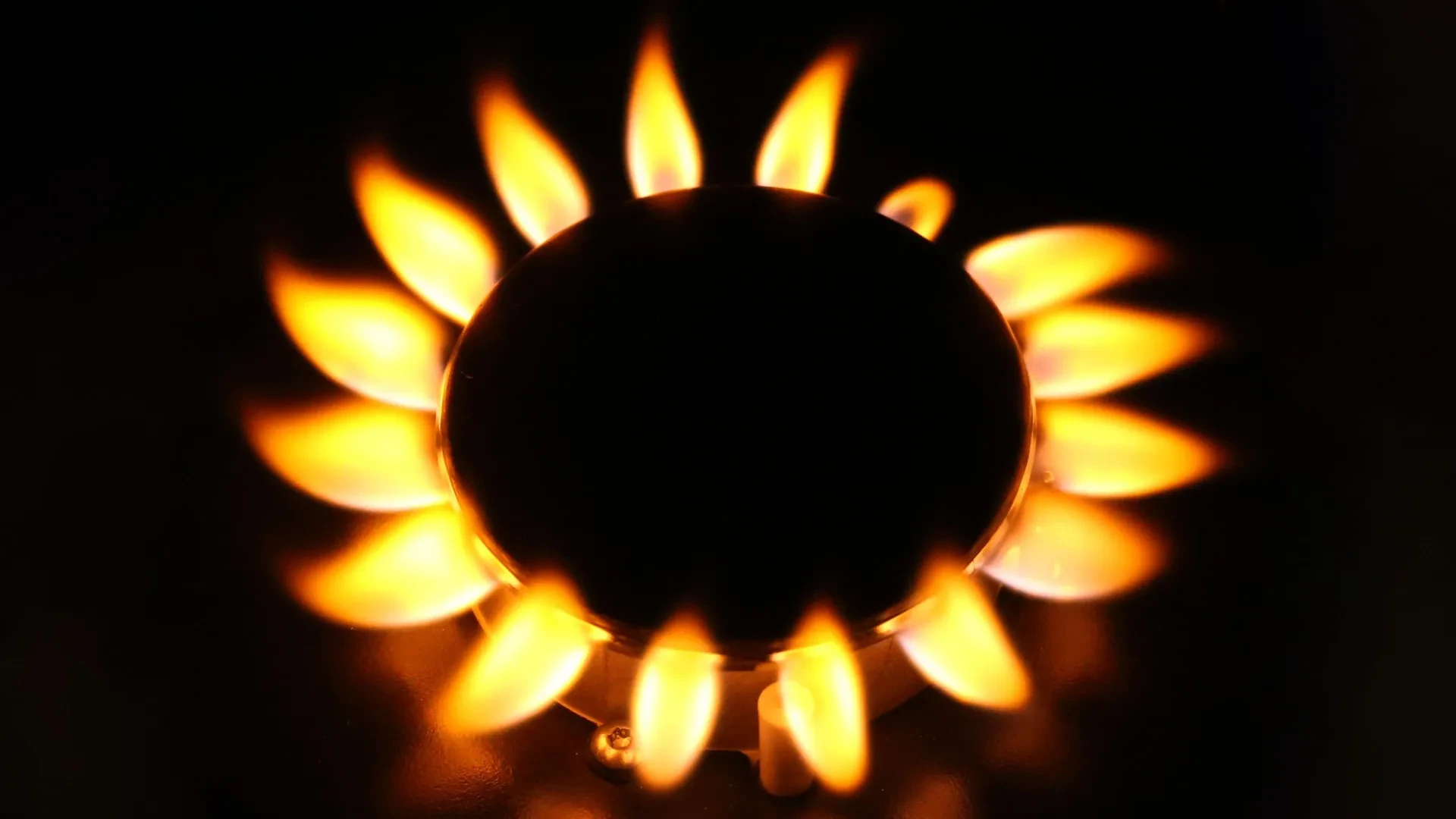
A prominent breakthrough in this field has been published in the journal Next Energy, courtesy of a collaborative research team from the University of Adelaide, the University of New South Wales, and Gas Infrastructure Research Australia. Supported by the Future Fuels Cooperative Research Centre and the Australian Government’s Cooperative Research Centres Program, the study confronts a deceptively simple yet potentially hazardous phenomenon: hydrogen flames can glow a bright, easily noticeable orange one day, yet become nearly invisible the next—even when burner settings remain completely unchanged.
For decades, the invisible nature of pure hydrogen flames has been acknowledged as a theoretical safety hurdle. Unlike natural gas, which burns with a distinct, easily perceptible blue and yellow flame due to hydrocarbon soot emissions, pure hydrogen combusts primarily to produce water vapor, emitting minimal visible light. Historically, researchers assumed this was an inherent, static characteristic of the gas.
However, the Adelaide-led study reveals that flame visibility is dynamic, fluctuating dramatically based on micro-environmental variables. Specifically, the researchers identified airborne sodium—often transported inland as sea salt via coastal winds—as the primary catalyst driving these sudden visual transformations. When sodium concentrations in the ambient air are high, hydrogen flames capture the element, exciting its atoms and triggering a vibrant orange hue. When sodium levels drop, the flame reverts to its naturally faint, near-invisible state.
This discovery carries profound implications for the commercialization of hydrogen appliances. Relying on visual cues—such as a glowing burner—to determine whether a stove is operational or lit is a deeply ingrained safety habit for consumers. The finding that atmospheric shifts can instantly strip away this visual feedback loop mandates a paradigm shift in how domestic hydrogen appliances are engineered. Moving forward, engineers must bypass traditional visual confirmation methods, integrating robust electronic, thermal, or optical sensors into residential hardware. Far from dampening enthusiasm for the hydrogen transition, these findings provide the precise technical roadmap required to make hydrogen-powered homes fundamentally safe, reliable, and ready for the mainstream market.
Detailed Chronology and Experimental Methodology
To unpack the complex relationship between atmospheric composition and hydrogen combustion, the research team designed a rigorous methodology that bridged controlled laboratory experimentation with real-world, outdoor environmental monitoring. The investigation was structured to track fluctuations over extended periods, mapping how shifting meteorological patterns directly altered the light emissions of a standard hydrogen burner setup.
The Two-Week Field and Lab Trial
The core of the empirical study took place over a continuous two-week testing period. During this window, researchers maintained absolute consistency in the mechanical operation of the test burner. Gas flow rates, pressure regulations, and ambient fuel-to-air ratios were held strictly constant. Yet, despite these unvarying operating parameters, the light signals emitted by the flame experienced staggering volatility.
Upon analyzing the spectral data gathered across the fortnight, the team discovered that the sodium-related light signal varied by more than 28 times between its lowest and highest recorded values. This monumental swing occurred entirely independent of the appliance’s settings, pointing outward to environmental factors rather than inward to mechanical inconsistencies.
The Sodium Variable and Meteorological Tracking
Through methodical atmospheric analysis, the researchers pinpointed sodium particles suspended in the ambient air as the primary driver of the variation. Sodium, an alkali metal abundantly present in marine environments, is carried inland by wind currents in microscopic particulate forms, primarily as sea salt aerosols.
When a hydrogen burner draws in surrounding air to facilitate combustion, these microscopic sodium particles are swept into the flame zone. At the extreme temperatures of a hydrogen fire, the sodium atoms undergo thermal excitation, absorbing energy and subsequently emitting photons in the yellow-orange portion of the spectrum—a phenomenon known as atomic emission spectroscopy.
Consequently, air masses that had recently passed over the ocean carried higher concentrations of sodium, resulting in hydrogen flames that burned with a distinct, bright orange glow. Conversely, when wind directions shifted or air masses originated from inland regions with lower sodium particulates, the orange luminescence faded drastically. The flames transformed into faint, translucent columns that defied casual visual detection.
Comparing Hydrogen to Conventional Natural Gas
To contextualize their findings, the research team conducted comparative analyses between hydrogen combustion and traditional natural gas (methane) cooktops.
Natural gas flames inherently produce a greater volume of visible light due to the presence of heavier hydrocarbon molecules and soot particles formed during the combustion process. Even under optimal environmental conditions where sodium enhancement maximized the visibility of hydrogen flames, the hydrogen burners emitted substantially less overall visible light than standard natural gas appliances.
Furthermore, while hydrogen combustion does generate faint emissions in the blue and red spectrums, the researchers noted that these hues are exceptionally weak. Under brightly lit domestic conditions—such as a sunlit contemporary kitchen—these faint chromatic signatures are completely washed out. They are only discernable in deliberately darkened environments, rendering them entirely unsuitable as reliable visual safety indicators for everyday consumers.
Supporting Context & Metrics: The Engineering Challenges of a Hydrogen Economy
The transition from hydrocarbon-based fuels to green hydrogen represents the largest structural shift in energy infrastructure since the widespread adoption of natural gas. However, hydrogen’s physical and chemical properties diverge sharply from methane, necessitating radical redesigns in storage, distribution, and end-use appliances.
The Physical Properties of Hydrogen
Hydrogen ($H_2$) is the smallest and lightest element in the universe. Because of its minute molecular size, it possesses a high diffusion rate and low viscosity, making it prone to leakage through microscopic gaps that would reliably contain natural gas. Furthermore, hydrogen has a remarkably wide flammability range in air—from roughly 4% to 75% by volume—compared to natural gas (5% to 15%). This broad flammability window, combined with a very low ignition energy threshold, means that stray hydrogen gas is exceptionally eager to ignite.
When pure hydrogen burns, its flame velocity is significantly higher than that of natural gas, and it releases heat via a high-temperature, low-radiant-heat flame. Because hydrogen combustion produces water vapor ($H_2O$) rather than carbon dioxide ($CO_2$), carbon monoxide, or heavy soot, the flame emits very little thermal radiation in the visible spectrum. This clean-burning property, while environmentally advantageous for preventing local air pollution, strips away the visual cues that humans have relied upon for over a century to manage open flames safely.
Quantifying the Risk: Metrics from the Adelaide Study
The empirical data gathered by Professor Medwell’s team quantify the extent of this visibility deficit:
- 28-Fold Variance: The intensity of the sodium-induced orange emission flickered across a 28-fold range over the two-week testing period, proving that flame visibility is inherently unstable and entirely dependent on local weather and atmospheric drift.
- Ambient Dependence: Coastal regions or areas experiencing onshore wind patterns routinely exhibited heightened flame visibility due to elevated marine sodium aerosols, while inland or rain-cleansed air masses resulted in near-total optical invisibility.
- Spectral Limitations: Natural gas flames project visible luminescence across a wide, easily detectable bandwidth under standard ambient lighting. Hydrogen flames offer virtually no continuous spectral emission in the visible range, forcing a heavy reliance on transient trace elements like sodium for any perceived color at all.
Infrastructure Context: The Australian Frontier
Australia has positioned itself at the forefront of international hydrogen adoption. In 2023, the Australian Gas Infrastructure Group (AGIG) achieved a major milestone by introducing the nation’s first 100% hydrogen-powered residential demonstration home in Victoria, affectionately dubbed "HyHome." This project proved that standard household appliances—ranging from cooktops to space heaters—could be retrofitted or engineered to run safely and efficiently on pure renewable hydrogen.
Described widely as a "game changer" for the domestic energy sector, the HyHome project underscored the feasibility of the green hydrogen transition. Yet, as pilot projects scale up into commercial rollouts, empirical studies like the one published in Next Energy are vital for catching and resolving overlooked operational hazards before widespread public deployment.
Official Statements and Expert Insights
The implications of the Adelaide University study extend far beyond academic circles, offering critical guidance for appliance manufacturers, safety regulators, and energy utilities. Lead researcher Professor Paul Medwell emphasized that the findings should be viewed not as a roadblock for hydrogen, but as an essential engineering guidepost.
"Hydrogen has significant potential as part of a lower-emissions energy future, and we need to understand how it behaves in the real world if we want people to be confident using it," stated Professor Paul Medwell from the School of Electrical and Mechanical Engineering at Adelaide University.
"Our research helps explain why hydrogen flames can look different from one day to the next. That knowledge gives engineers valuable information to develop appliances and flame-detection systems that work reliably, regardless of changing environmental conditions."
Professor Medwell stressed that successful technological transitions hinge on respecting the unique physical attributes of new energy vectors rather than forcing them to behave like legacy fuels.
"Different energy sources have different properties, and good engineering is about understanding those differences and designing for them," Medwell continued.
"Rather than relying on a flame looking a particular color, we can investigate other ways of confirming that a burner is operating. Options include specialized ultraviolet or infrared flame detectors and temperature sensors. By identifying the factors that influence flame visibility, we can help inform the development of hydrogen appliances that are fit for purpose in real homes and other everyday settings."
The collaborative nature of the research highlights a unified front across Australia’s scientific and industrial sectors. By pooling resources through the Future Fuels Cooperative Research Centre, institutions including the University of Adelaide, the University of New South Wales, and Gas Infrastructure Research Australia have established a framework where empirical science directly informs commercial safety standards.
Future Outlook: Engineering the Next Generation of Safe Hydrogen Appliances
As the global community works toward net-zero carbon emissions, the decarbonization of residential heating and cooking is an inevitable frontier. The findings from Adelaide University provide a timely intervention, ensuring that safety innovations evolve in lockstep with fuel transitions.
Redefining Domestic Safety Systems
The historical reliance on a visible flame as the primary indicator of burner operation is no longer viable in a hydrogen-fueled household. Accidentally leaving a hydrogen burner running while the ambient air is low in sodium could lead to an invisible, roaring fire burning unnoticed on a kitchen cooktop—presenting severe burn and fire hazards.
To eliminate this risk, appliance manufacturers are now challenged to integrate active electronic safeguarding mechanisms into commercial kitchen hardware. Potential engineering solutions include:
- Infrared (IR) and Ultraviolet (UV) Sensors: Optical sensors tuned to detect the specific radiation wavelengths emitted by hydrogen combustion can instantly verify whether a burner is lit, transmitting this status to a digital display or automatic fuel shut-off valve.
- Thermocouples and Thermal Imaging: Advanced temperature-sensing probes embedded in the burner grate can confirm active combustion within milliseconds of ignition, bypassing the need for optical verification.
- Smart Ignition Interlocks: Automated systems that require electronic confirmation of flame presence before locking open the gas supply valves, preventing unignited gas pooling.
Paving the Way for Public Acceptance
Public trust is the ultimate currency of any major infrastructure transition. For consumers to willingly welcome hydrogen into their kitchens, living rooms, and hot water cupboards, they must feel entirely secure in its operation. By identifying the exact environmental mechanisms behind fluctuating hydrogen flame visibility, researchers have removed a veil of unpredictability from the technology.
The insights published in Next Energy equip engineers with the empirical foundation needed to build foolproof appliances. As regulatory bodies update safety codes to mandate advanced electronic detection systems, the transition to green hydrogen can proceed with confidence. Ultimately, understanding the invisible flame ensures that the homes of tomorrow remain as safe, reliable, and comfortable as those of the past, marking another vital step forward in humanity’s journey toward a sustainable energy future.
