

Executive Overview
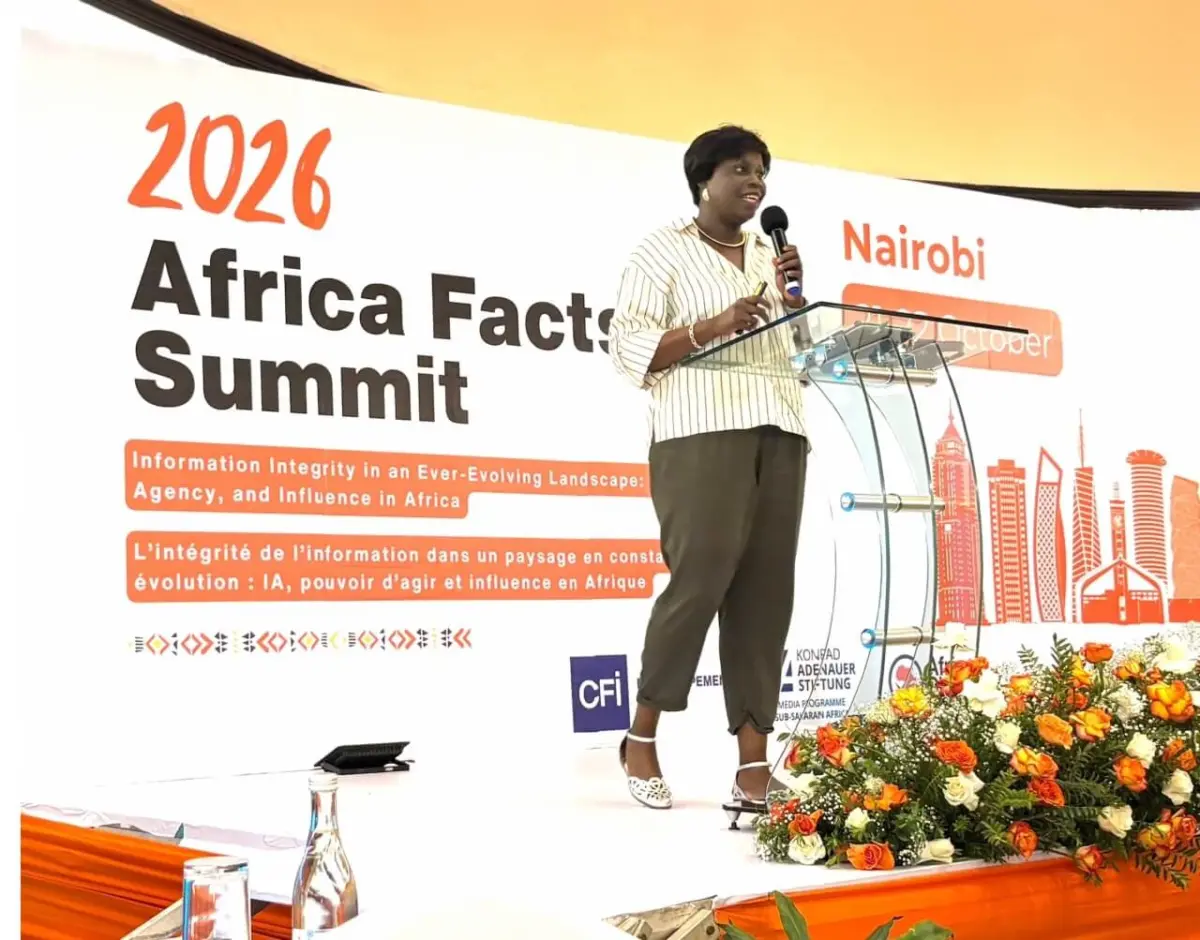
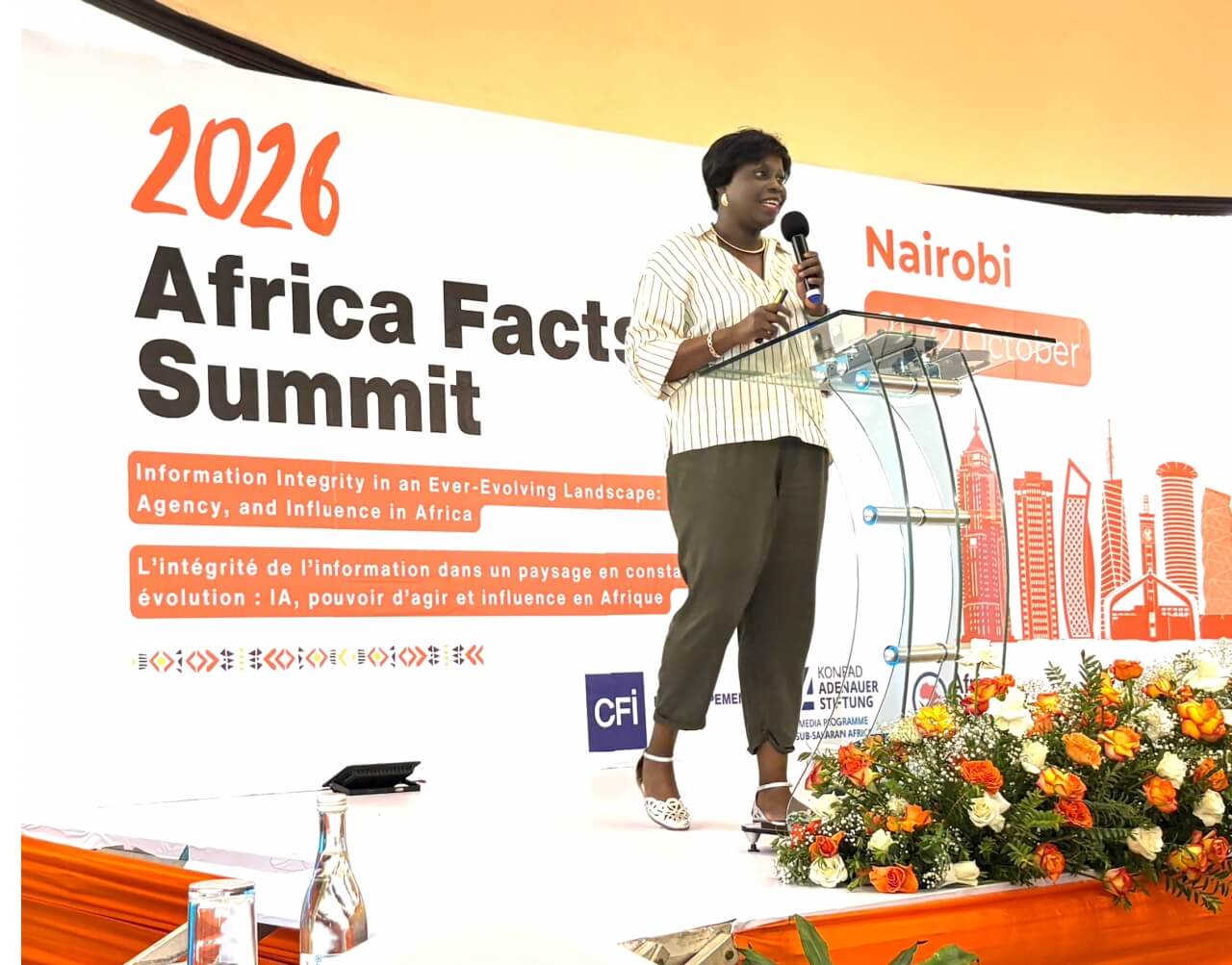
In October, Nairobi’s Safari Park Hotel played host to the fifth Africa Facts Summit, bringing together the continent’s premier fact-checkers, nonprofit leaders, digital media entrepreneurs, and philanthropic funders. Over two days of intense panels, attendees wrestled with the modern existential challenges of journalism: the disruptive integration of artificial intelligence into verification workflows, the rapid evolution of cross-border foreign influence campaigns, and the persistent institutional failure of major social media platforms to moderate misinformation in indigenous African languages.
Yet, beneath these urgent technological and geopolitical anxieties, a more fundamental, existential crisis dominated the hallway conversations. It was crystallized by a single, piercing question posed to the room by Ugandan journalist and former BBC executive Rachael Akidi:
"If your largest source of funding disappeared tomorrow, what would your newsroom still have?"
For an industry heavily reliant on philanthropic grants, the answer has proven uncomfortably stark. According to data from the International Fact-Checking Network’s (IFCN) State of the Fact-Checkers report, approximately 76% of the world’s accredited fact-checking organizations currently describe their financial standing as vulnerable or in crisis. Despite a noticeable contraction in philanthropic funding globally, grants still account for 46% of the total income reported by the 141 participating organizations spanning 71 countries.
Akidi’s inquiry struck a nerve across the ecosystem, moving beyond theoretical media economics to challenge the foundational survival strategy of independent newsrooms. As international donors tighten their purses and redirect priorities, African fact-checkers and small community outlets are forced to confront an uncomfortable reality: grant money can fund the journalism of today, but it rarely builds the financial architecture required to survive tomorrow. This report explores how African media organizations are navigating this structural vulnerability, the real-world operational hazards of reporting from active conflict zones, and the emerging blueprint for long-term financial independence.
Detailed Chronology: From Nairobi’s Halls to the Frontlines of Goma
The Genesis of a Continent-Wide Reckoning
The trajectory of the current financial debate can be traced directly to the Africa Facts Summit sessions in Nairobi. While official panels focused on updating the IFCN’s Code of Principles—specifically regarding AI adoption and government engagement—Akidi’s keynote intervention shifted the paradigm.
Having spent 21 years at the BBC—where she spearheaded BBC Africa’s digital expansion, transitioned from London to Nairobi to manage operations across East Africa, and served as interim head of journalism for Africa—Akidi brought a rare depth of institutional and grassroots perspective. Since leaving the British broadcaster three years ago, she has worked intimately with community newsrooms across the continent, observing firsthand the precarious financial gymnastics required to keep local journalism alive.
During her summit address, Akidi challenged attendees to rethink the traditional mechanics of philanthropic grants. She outlined a common scenario: a foundation awards a grant to fund 20 investigative pieces. The stories are published, holding power to account and occasionally shifting government policy. But when the grant cycle expires, the editor is left scrambling for the next round of capital.
Instead, Akidi argued, grants must serve as a temporary scaffolding rather than a permanent crutch. "A grant should support you while you build," she explained. "And the question is, what are you building that will remain when the scaffolding comes down?"
Following the summit, the impact of her question rippled across the international media landscape. One attendee wrote back to confess that he and his colleague had tested Akidi’s hypothetical scenario against their own operations, arriving at a sobering conclusion: "The answer was nothing."
The Operational Realities: Fact-Checking Under Fire in the DRC
While media executives in Nairobi debated financial models, newsrooms on the frontlines of political instability were facing more immediate, physical threats. For Joel Alimasi, deputy editor of Eleza Fact in the Democratic Republic of the Congo (DRC), Akidi’s financial challenge intersected directly with hard decisions his team was making regarding a $30,000 SUSTAIN grant awarded by the IFCN in May.
Earlier in the year, Alimasi and his colleagues confronted a profound operational crisis. Escalating armed conflict in Goma severely compromised journalist safety, culminating in a crippling two-week internet blackout. To survive and continue their verification work, the team temporarily relocated to Kampala, Uganda. Recognizing that remote fact-checking is no substitute for ground-level truth, they returned to Goma after two months to bear witness to the daily realities of their community.
The return brought acute security risks. In conflict-torn Goma, publishing a fact-check on routine public health matters could safely carry a reporter’s byline, but investigations into the prolonged armed conflict routinely bypassed individual credits, appearing solely under the newsroom’s desk name. This precaution shielded individual journalists from being targeted by warring factions as the team systematically debunked disinformation campaigns propagated from multiple sides of the conflict.
To build long-term resilience, Eleza Fact allocated a portion of their IFCN grant toward specialized training, equipping their journalists to investigate sophisticated foreign influence networks and recognize synchronized inauthentic behavior online. The organization scheduled intensive workshops in Goma and Bukavu, eyeing a transition toward monetizing advanced verification courses. Furthermore, the newsroom is scaling up Eleza Box AI, a verification tool initially developed the previous year to parse claims surrounding health and conflict. By structuring the tool with both free consumer tiers and paid enterprise access for newsrooms and professional journalists, Eleza Fact is actively engineering the exact type of self-sustaining asset Akidi advocated for in Nairobi.
Supporting Context & Metrics: The Anatomy of a Global Financial Crisis
The structural anxieties voiced at the Africa Facts Summit are supported by empirical data compiled in the IFCN’s comprehensive 2026 reports. The numbers paint a sobering picture of an essential global democratic pillar operating on fragile economic foundations.
Key Metrics from the IFCN 2026 State of the Fact-Checkers Report:
- Financial Vulnerability: 76% of accredited global fact-checking organizations categorize their financial health as either "vulnerable" or in outright "crisis."
- Grant Dependency: Despite widespread donor fatigue and shifting geopolitical priorities, grants accounted for 46% of total revenue reported by the 141 participating organizations across 71 countries.
- Targeted Capital Injection: To combat this systemic vulnerability, funding bodies are increasingly shifting toward targeted sustainability grants. For instance, upcoming rounds of the IFCN SUSTAIN grants are slated to distribute approximately $1.5 million, providing roughly 50 qualifying organizations with $30,000 stipends specifically earmarked to bridge immediate operational gaps while developing diverse revenue streams.
The South African Blueprint: Daily Maverick’s Membership Model
To understand what successful post-grant sustainability looks like, media strategists frequently point to South Africa’s Daily Maverick. Long before receiving a strategic Google News Initiative grant in 2020, the publication had established the foundational architecture of a reader membership program.
Rather than treating the grant as basic operating cash, the Daily Maverick team used the capital to engineer custom data analytics tools. These systems allowed the newsroom to precisely identify which journalistic investigations resonated deeply enough with audiences to drive reader retention and convert casual browsers into committed, paying members.
By 2024, that strategic foresight paid off dramatically: roughly 30,000 paying members generated approximately 40% of the publication’s total revenue. As Akidi emphasized when reflecting on the case study: "The money came from Google, but what it built belongs to the newsroom."
Navigating Local Market Realities
Building self-sufficiency, however, is rarely a one-size-fits-all endeavor. The viability of commercial models depends entirely on the socioeconomic realities of the local audience.
Akidi recalled consulting a digital-first publisher in Liberia who had made the counterintuitive decision to launch a print edition. While conventional wisdom in Western media markets favors abandoning print entirely, the Liberian publisher faced severe monetization hurdles in the digital sphere due to low digital advertising yields and limited online payment infrastructure. By testing a print edition, the publisher was actively probing alternative monetization channels tailored to local consumption habits.
Similarly, Eleza Fact in the DRC is designing tiered access models for its AI verification tools. Basic services—such as checking whether a suspicious image submitted via WhatsApp or Telegram has historical digital footprints—will remain entirely free to the public, ensuring that vital safety information is never paywalled. Meanwhile, advanced analytical capabilities will be commercialized for corporate clients, media outlets, and institutional researchers.
Official Statements and Perspectives
The dialogue surrounding the future of African journalism highlights a growing consensus among media leaders, institutional directors, and frontline reporters:
-
Rachael Akidi, Journalist and Former BBC Executive:
"If your largest source of funding disappeared tomorrow, what would your newsroom still have? A grant should support you while you build. And the question is, what are you building that will remain when the scaffolding comes down?"
-
Angie Drobnic Holan, Director of the International Fact-Checking Network (IFCN):
Highlighting the upcoming funding initiatives designed to cushion organizations while they transition toward financial independence, Holan confirmed that the IFCN will open applications for a fresh round of SUSTAIN grants in January, with formal awards scheduled for distribution in April. The initiative aims to inject $1.5 million into roughly 50 verified organizations worldwide. -
Joel Alimasi, Deputy Editor of Eleza Fact (DRC):
Reflecting on the balancing act between physical survival in active conflict zones and institutional development, Alimasi noted: "We are checking claims from both sides of the conflict and want to keep individual reporters from being singled out… Part of what would make a course worth paying for is what participants could do after it ends."
Future Outlook: The Road Ahead for Independent Media in Africa
The existential questions raised in Nairobi signal a profound maturation point for the African fact-checking and independent journalism ecosystem. The era of passive reliance on perpetual donor benevolence is drawing to a close, accelerated by shrinking philanthropic budgets and increasingly complex geopolitical landscapes.
Moving forward, the survival of independent newsrooms will hinge on three critical transformations:
- Strategic Diversification of Revenue: Independent outlets must leverage short-term grants not merely to sustain current reporting cycles, but to aggressively construct proprietary revenue streams—such as reader membership programs, localized micro-subscriptions, premium B2B verification services, and specialized training workshops.
- Technological Pragmatism: Newsrooms will need to develop or adopt scalable technological assets (such as AI-driven verification bots and automated media-checking tools) that serve a dual purpose: providing vital public goods for free while monetizing advanced features for institutional clients.
- Institutional Resilience: As demonstrated by outlets operating under fire in the DRC, operational security and decentralized reporting infrastructure must be integrated into the financial planning of every newsroom, ensuring that truth-telling persists regardless of political hostility or infrastructure collapse.
Ultimately, Rachael Akidi’s challenge serves as both a warning and a roadmap. The ultimate measure of a newsroom’s success is no longer determined solely by the size of its grant portfolio, but by the permanence of the institutional foundations it constructs while the grant money lasts.
