

Executive Overview
In an era defined by geopolitical friction and fragmented international borders, diplomacy is occasionally forged not across mahogany conference tables, but through the visceral, unpretentious pursuit of pomological excellence. Last month, a high-level cultural delegation ventured northward into the sovereign expanse of Ottawa, Ontario, under the auspices of the Can*Con science fiction and fantasy convention.
At the center of this cross-border expedition was a culinary and agricultural reconnoitering mission orchestrated alongside bestselling author Kevin Hearne, renowned creator of The Iron Druid Chronicles. What began as a routine guest-of-honor appearance quickly escalated into a rigorous field study of regional carbohydrates, dairy products, street-level gastronomy, and, ultimately, arboriculture.
The primary objective of this investigation centers upon a singular subject: The Spartan Apple. Hailed as a foundational triumph of Canada’s early systematic apple breeding programs, the Spartan represents a fascinating synthesis of pedigree and mystery. This report details the chronology of its procurement, the medieval terrors of apple pathology, an exhaustive sensory evaluation of the fruit itself, and the broader geopolitical implications of cross-border fruit smuggling between the United States and Canada.
Detailed Chronology: From Ottawa Panels to Terror Orchards
The sequence of events leading to the discovery and consumption of the Spartan apple began in the nation’s capital during the autumn convention circuit. While the official itinerary demanded literary panels, fan engagement, and professional networking, the informal agenda—dictated largely by Hearne—focused squarely on immediate caloric intake.
"We’re gonna go get some fucking apples," Hearne reportedly declared, setting the tone for an afternoon that would also encompass mandatory acquisitions of cheese, donuts, and street tacos. Particular gastronomic recognition must be awarded to Ottawa’s Ay Wey, the staging ground for what delegates described as the most glorious al Pastor tacos procured and consumed during the tour.
Satisfying the savory requirements of the expedition was merely the preliminary phase. The hunt for regional fruit led the delegation away from metropolitan conveniences and into the rural periphery surrounding Ottawa. Operations spanned two distinct agricultural outposts:

- A micro-vendor operation consisting of a sweet proprietor stationed inside a modest, tarp-draped domestic garage.
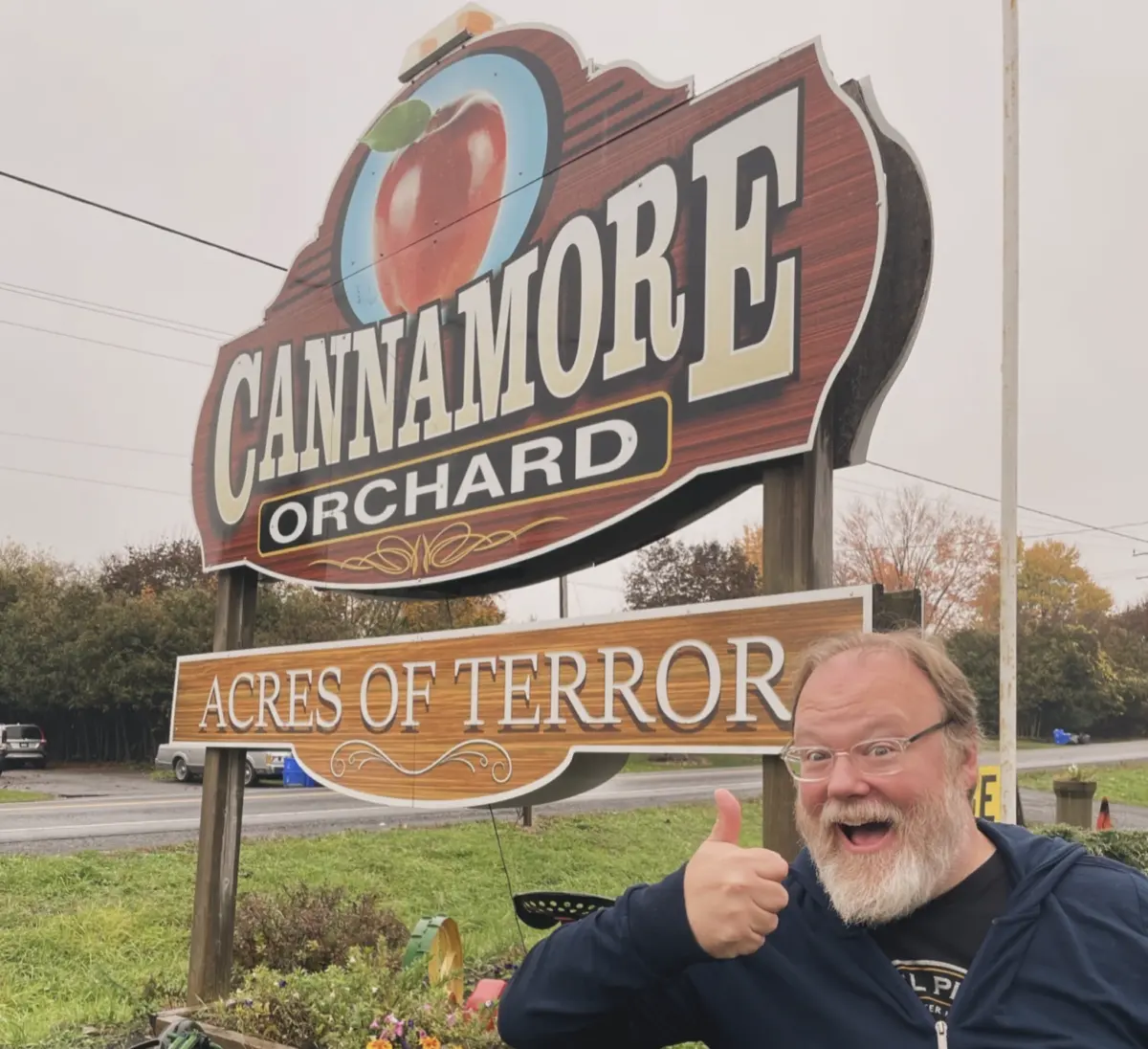
- A sprawling commercial agricultural site identified by field researchers simply as a "terror orchard"—an aesthetic classification denoting rows of gnarled, frost-hardened trees bearing the heavy burdens of an unforgiving northern harvest.
It was within the rows of this terror orchard that the delegation successfully secured a bag of authentic Canadian Spartan apples. While initial operational intel suggested a secondary target—the elusive Canadian variety colloquially and affectionately dubbed the Lobo—seasonal variances rendered the Lobo unavailable, leaving the Spartan to serve as the sole ambassador of northern pomology for this leg of the tour.
Supporting Context & Metrics: Pedigree, Pathology, and the Spartan Profile
The Genetics of a "Canadapple"
The Spartan holds a distinguished place in agricultural history as one of the earliest successful products of a formalized, scientific apple breeding program. Developed at the Dominion Experimental Farm in Summerland, British Columbia, the Spartan’s lineage is well-documented: it is the direct offspring of the classic McIntosh crossed with an unidentified "Mystery Apple."
Field theorists, including Hearne, have posited alternative hypotheses regarding this anonymous parentage, suggesting the pollen source may not have been a traditional cultivar at all, but rather the genetic contribution of a regional Sasquatch. While unverified by peer-reviewed genetic sequencing, the hypothesis remains culturally resonant within Pacific Northwest and Canadian borderlands lore.
Medieval Pathologies of the Orchard
To understand the triumph of a healthy apple harvest, one must confront the genuinely apocalyptic array of maladies capable of reducing an orchard to ruin. Modern agricultural science treats these issues with systemic fungicides and rigorous management, but the nomenclature reads like a syllabus from a medieval witch trial. A brief inventory of afflictions native to pomological ecosystems includes:
- Fireblight
- Fisheye rot
- Moldy core
- Apple rust
- Sooty blotch
- Union necrosis
- Dead spur
- Burr knot
- Green mottle
- Nailhead canker
- Apple scab
- Flyspeck
The resilience required for a cultivar like the Spartan to survive these atmospheric and fungal curses—particularly in wetter regional microclimates where it is reportedly prone to canker—speaks to a robust constitutional fortitude.
Sensory Evaluation and Official Tasting Notes
Upon extraction from cold storage, the Spartan was subjected to rigorous organoleptic analysis.

Appearance and Aromatics
Visually, the Spartan rejects modernist designer-fruit aesthetics in favor of a traditional, unpretentious form factor. It is an "apple’s apple"—red, moderately sized, and structurally conventional. Much like a high-performance athlete possesses a distinct, unmistakable physical build optimized for their discipline, the Spartan looks precisely like what the human subconscious envisions when the word "apple" is invoked.
Its aroma is classic, clean, and unmistakably reminiscent of its McIntosh heritage, underscored by a subtle berry vinousness that elevates it above standard grocery store commodities.
Texture and Structure
Thanks to its recent harvest date, the specimen displayed exceptional structural integrity. The skin offered a sharp, clean break under pressure, yielding an interior flesh as brilliantly white as the seasonal complexion of a Canadian citizen navigating a prairie winter. The crunch was authoritative, confirming zero degradation or mealiness.
Flavor Profile and Balance
Market literature frequently targets the Spartan toward juvenile palates, categorizing it as a universally sweet "candy" fruit. However, field testing disproves this oversimplification. While approachable and naturally sweet, the flavor profile is stabilized by a sharp, invigorating backbone of acidity.
Pomological researchers estimate the flavor balance at a precise 65/35 sweet-to-tart ratio. This structural acidity prevents the fruit from cloying, injecting a lively, peppy characteristic into every bite that satisfies both casual consumers and discerning critics.
Final Scoring Matrix
- Visual Appeal: 8.5 / 10
- Structural Crispness: 9.0 / 10
- Flavor Complexity (Sweet/Tart Balance): 8.0 / 10
- Historical & Cultural Significance: 8.5 / 10
- Overall Composite Score: 8.3 / 10
Conclusion: The Spartan stands validated as a premier specimen of northern pomology—arguably the finest iteration of what informal trade nomenclature has dubbed the "Canadapple."

Future Outlook and Geopolitical Reconciliation
As international relations face perpetual strain, cultural exchanges anchored in shared leisure and localized agriculture offer a blueprint for diplomatic recovery. The cross-border acquisition of the Spartan apple serves as a case study in soft-power integration, proving that mutual appreciation for high-grade poms can bridge cultural divides.
In closing out this seasonal dispatch, delegation representatives offered an official diplomatic addendum regarding historical cross-border relations:
“Also we’re sorry for all our shenanigans. We’re trying to fix it.
Love, America.”
Future monitoring will track the availability of the elusive
Lobo apple during subsequent seasonal shifts, alongside continued surveillance of domestic and international agricultural developments within the Socialist Realm of Grand Canada.
