

Executive Overview
In the sprawling, high-stakes theater of modern pomology, a quiet arms race is being waged across agricultural research universities and corporate test orchards. The objective? To capture the elusive, lucrative lightning in a bottle that was the Honeycrisp phenomenon.
Enter the SnapDragon—a New York-bred, market-tested contender designed to capture the grocery store aisles and consumer snack drawers alike. Yet, as the apple lands under the critical lens of self-appointed fruit representatives and sensory analysts, deeper questions emerge.
Is the SnapDragon a triumph of modern agricultural engineering, or is it merely another casualty of the American palate’s relentless demand for unchallenging sweetness?
This investigative review examines the lineage, sensory profile, and cultural footprint of the SnapDragon apple. Operating under a rigorous analytical framework, this report explores the genetic heritage, flavor complexity, textural mechanics, and broader implications of what happens when science attempts to engineer the Platonic ideal of a piece of fruit.
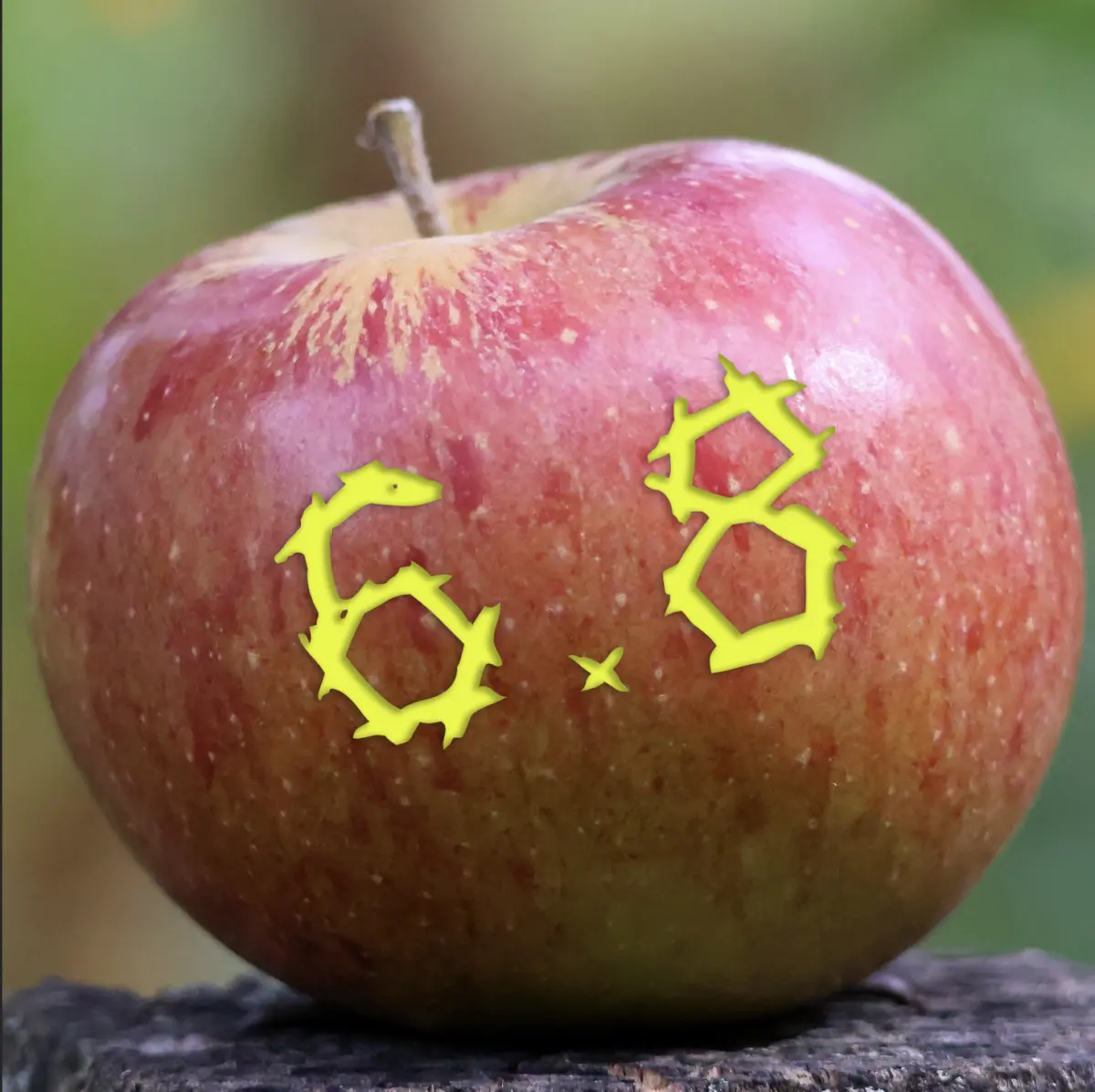
Ultimately, the SnapDragon earns a respectable yet telling 6.8 out of 10—a testament to an effective, if fundamentally unadventurous, agricultural product that secures its position through mass appeal rather than culinary brilliance.
Detailed Chronology: The Genesis and Discovery of the SnapDragon
To understand the SnapDragon, one must trace the lineage of contemporary designer apples, a lineage dominated almost entirely by the genetic blueprint of the Honeycrisp. Developed at the Minnesota Agricultural Experiment Station and released in 1991, the Honeycrisp permanently altered consumer expectations regarding crispness and juiciness.
Naturally, breeders across the globe scrambled to reverse-engineer its success by cross-pollinating the Honeycrisp with established or experimental cultivars. Thus, we witnessed the birth of the Evercrisp (Honeycrisp crossed with Fuji), the Cosmic Crisp (Honeycrisp crossed with Enterprise), and the SweeTango (Honeycrisp crossed with Zestar!).
The SnapDragon—officially designated NY 754—was developed by the horticultural breeding program at Cornell University. While public-facing marketing materials frame it as a straightforward cross between a Honeycrisp and an undisclosed mystery variety, institutional orchard logs and field reports paint a far more cinematic, if scientifically dubious, picture of its origins.
According to recovered archival snippets from Cornell’s experimental stations, the second parent tree was not meticulously tracked in a greenhouse ledger. Instead, orchard historians note an aura of administrative mystery surrounding the cultivar’s development:

"We discovered this tree at the border of our property, fully-grown, and it had not been there the year prior. We did not plant it. Further, the branches swayed, the leaves twitched, even when the air was still. The apples that hung there were lush, full, heavy on the hang, the skin the color of a black eye. When approaching the tree, our Apple Scientists described a feeling inside them of ‘intense hunger coupled with a powerful, almost cosmic shame.’ So clearly we used them to make the new SnapDragon apple!"
Whether accepted as rigorous field documentation or agricultural folklore, this narrative underscores the mystique cultivated around modern club apples. Released to commercial growers and retail chains—frequently making its way into premium grocery ecosystems like Whole Foods—the SnapDragon quickly established itself as a seasonal heavy-hitter. It capitalized on high visual appeal and a robust marketing campaign that leaned heavily into its distinctive, forceful nomenclature.
Supporting Context & Metrics: Sensory Evaluation and Fluctuation Analysis
Evaluating a modern grocery store apple requires separating the mechanical metrics of texture from the elusive, often neglected dimensions of flavor complexity.
The Platonic Ideal of Apple Taste
Upon first bite, sourced via standard retail channels, the SnapDragon immediately announces itself as an intensely appley apple. In the lexicon of sensory perception, certain foods achieve the status of an ur-flavor—much like Coca-Cola serves as the cultural baseline by which all other colas are measured. The SnapDragon hits this baseline with absolute precision. It tastes like the platonic ideal of an apple: clean, direct, and universally recognizable.
However, this universality carries a distinct vulnerability: a lack of flavor variance.
The Necessity of Culinary Rhythm
In music, literature, and gastronomy, human engagement relies on rhythm and variance. A well-constructed multi-course dinner does not consist of consecutive heavy, salty, and fatty dishes; rather, meals are punctuated by acid, spice, sweetness, and lightness. This ebb and flow creates an active dialogue between the diner and the plate, maintaining attentiveness and delaying sensory fatigue.
When applied to pomology, complex flavor profiles—such as those found in heritage varieties or nuanced European pippins—create micro-variations across a single bite. These unexpected aromatic pings prevent the brain from wandering.
In an era defined by fractured human attention spans, where smartphones successfully command our focus through constant micro-stimuli, a one-note food product risks inducing immediate mental drift. The SnapDragon, while pleasant, falls squarely into this one-note category.
Textural Mechanics and the Sugar-Acid Imbalance
From a structural standpoint, the SnapDragon performs admirably:

- Crunch: Exceptionally high, delivering a satisfying acoustic and physical fracture upon the initial bite.
- Juiciness: Plentiful, ensuring a mouthfeel that is refreshing rather than desiccated or mealy.
- Skin Integrity: Herein lies a minor operational flaw. The skin possesses a slightly plasticky resilience—a tough, lingering wrapper that outlives the sweet, candy-like flesh consumed within, persisting annoyingly in the mouth long after the bite has dissolved.
Furthermore, the SnapDragon suffers from the defining malady of contemporary mass-market fruit breeding: it is overwhelmingly sweet while starving for tartness. This skew reflects a broader catering to the modern American palate, which historically gravitates toward high-sugar profiles at the expense of structural acidity and balanced complexity.
Official Statements and Comparative Market Analysis
In the broader pantheon of apple evaluation, the SnapDragon occupies a comfortable, if uninspiring, middle tier. While it commands consumer loyalty, it faces fierce competition from established heavyweights sitting on the same produce shelves.
When stacked against industry titans like the Opal or the Cosmic Crisp, the SnapDragon lacks the distinctive structural architecture or aromatic depth required to claim the crown of elite pomology. It is neither deeply subversive nor offensively flawed; it is simply competent.
To contextualize its standing, we must look at the expansive catalog of recent evaluations:
[2025-2026 Pomological Index - Selected Rankings]
--------------------------------------------------
Cosmic Crisp  : 9.1 / 10 (Structural powerhouse)
Opal          : 8.5 / 10 (Balanced sweetness & texture)
Honeycrisp    : 8.2 / 10 (The historical benchmark)
SnapDragon    : 6.8 / 10 (The Mayor of Appletown)
Red Delicious : 2.0 / 10 (A cautionary historical footnote)
As encapsulated by field evaluations, the SnapDragon is effectively the mayor of Appletown: somewhat predictable, slightly boring, but possessing just enough mainstream competency to continually win elections without ever challenging the status quo.
Future Outlook: The Trajectory of Designer Cultivars
As agricultural scientists continue to refine breeding programs at institutions like Cornell, Washington State University, and international counterparts, the future of the apple market hangs in a delicate balance.
The proliferation of trademarked "club apples"—varieties that require specific licensing agreements to grow and distribute—has transformed fruit aisles into branded showrooms. While this guarantees consistent quality control and protects grower revenues, it also threatens agrobiodiversity. Varieties that lack the aggressive marketing budgets, thick skins, or high-sugar profiles required to survive long-haul shipping logistics face extinction in favor of uniform crowd-pleasers.
For the SnapDragon, the road ahead is secure. Consumers seeking a reliable, high-crunch, intensely sweet snack will continue to pull it from the bins by the pound.
However, for the dedicated fruit enthusiast, the SnapDragon serves as a reminder of what is lost when safety and mass-market palatability supersede wild, unruly complexity. Until breeding programs lean back into the bracing tartness and eccentric aromatic notes of heritage cultivars, apples like the SnapDragon will remain comfortable staples of the grocery aisle—competent, juicy, and destined to be perpetually elected, yet rarely destined to truly inspire.
