

Executive Overview
In a bold move that bridges the gap between contemporary aerospace engineering and the classroom, the National Aeronautics and Space Administration (NASA) has officially inaugurated the $1 Million Moon Base Challenge. Unveiled during a high-energy MAX POWER event at the Kennedy Space Center Visitor Complex in Florida, this nationwide initiative serves as a cornerstone of a burgeoning "Golden Age of Science." The competition issues a clarion call to high school and college students across the United States, inviting them to step directly into the vanguard of interplanetary exploration by designing practical, scalable solutions for humanity’s first permanent settlement on the Moon.
Rather than relying solely on traditional aerospace contractors and seasoned engineers, NASA is crowdsourcing visionary ideas from the demographic that will ultimately inherit and inhabit these deep-space outposts. The multi-phase challenge offers a total prize purse of $1 million, distributed across various milestones, while providing young innovators with hands-on exposure to the rigorous demands of space systems architecture. By dismantling the barrier that suggests space exploration is reserved exclusively for post-graduate professionals, NASA is actively cultivating a diverse, multidisciplinary talent pipeline.
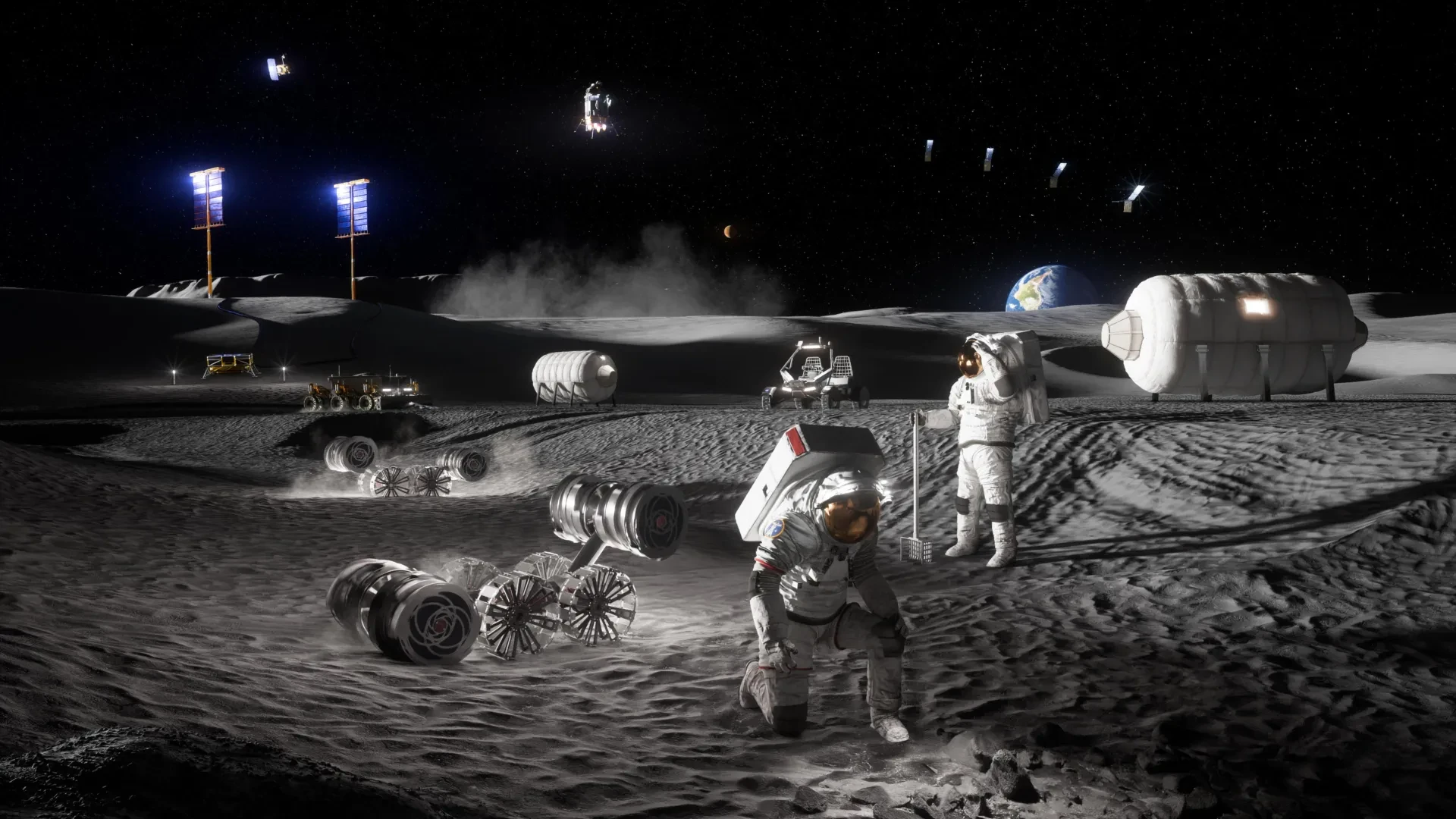
The initiative is designed to address six foundational pillars of off-world survival: power generation, habitat construction, life support, surface mobility, communications, and astronaut radiation shielding. As the agency accelerates its timeline toward establishing a sustainable human presence near the lunar South Pole—a critical staging ground for eventual crewed missions to Mars—the Moon Base Challenge represents a vital convergence of educational outreach and mission-critical research and development.
Detailed Chronology: From Concept to Launch
The genesis of the $1 Million Moon Base Challenge traces back to NASA’s evolving strategic framework under Artemis and subsequent long-term lunar development programs. For decades, lunar exploration was characterized by short-duration sortie missions, such as the historic Apollo landings. However, the paradigm has decisively shifted toward permanent infrastructure.
The Prelude at Kennedy Space Center
The formal announcement at the Kennedy Space Center Visitor Complex was meticulously orchestrated to capture the imagination of the public and the academic community alike. Set against the backdrop of humanity’s historic gateway to the stars, administration officials detailed how the agency intends to harness external intellect to solve complex systemic bottlenecks. The MAX POWER event served as both a celebration of past aerospace achievements and a launchpad for future ingenuity, drawing educators, industry partners, and student representatives from across the nation.
Administrative Alignment and Partnerships
The competition is a collaborative triumph within the federal agency, developed jointly by NASA’s Office of STEM Engagement and the specialized Moon Base Program. Recognizing that administering a national challenge of this scale requires specialized logistics, NASA integrated the expertise of the Institute of Competition Sciences. This organization operates under a contract with NASA’s Center of Excellence for Collaborative Innovation, housed within the Research and Technology Mission Directorate. This intricate administrative web ensures that the competition runs with corporate efficiency while maintaining the highest academic and scientific standards.
The Phased Competition Roadmap
The challenge is structured as a multi-stage marathon designed to test not only the theoretical viability of student concepts but also their ability to communicate complex technical details.
- Phase 1: Registration and Ideation. Currently underway, student teams have until the hard registration deadline of January 25, 2027, to officially enter their cohorts via the NASA STEM Gateway.
- Phase 2: Proposal Development. Registered teams will spend subsequent months evaluating competing technical options, drafting detailed design proposals, and structuring project briefs that mirror real-world aerospace industry standards.
- Phase 3: Evaluation and Prototyping. Shortlisted groups will present their findings to panels of NASA engineers, program managers, and academic leaders, competing for segments of the $1 million prize pool and potential pathways for further technological maturation.
Supporting Context & Metrics: The Realities of Lunar Colonization
To fully appreciate the gravity of the Moon Base Challenge, one must examine the hostile environmental constraints and logistical parameters that competing student teams must navigate. Designing for the lunar surface is vastly different from designing for Earth or even low-Earth orbit (LEO).
The Strategic Importance of the Lunar South Pole
NASA has targeted the lunar South Pole as the premier site for the permanent Moon Base. This region harbors permanently shadowed craters that contain vast reserves of water ice—a crucial resource that can be harvested not only for life support drinking water but also processed into hydrogen and oxygen rocket propellant. Furthermore, certain elevated ridges near the South Pole receive near-continuous solar illumination, offering a semi-reliable energy source that mitigates the brutal, two-week-long lunar night.
The Six Major Pillars of the Challenge
Student innovations must directly target six core functional requirements essential for sustaining human life and operational continuity on the Moon:
- Power Generation and Storage: The lunar night lasts approximately 14 Earth days, during which solar panels are rendered useless. Teams must conceptualize resilient, lightweight energy grids capable of harvesting, converting, and storing vast amounts of power through advanced batteries, nuclear fission systems, or localized thermal storage.
- Habitat Construction: Transporting heavy building materials from Earth is cost-prohibitive. Solutions must explore in-situ resource utilization (ISRU)—utilizing local lunar regolith (soil) combined with advanced binders, 3D-printing robotics, or inflatable structural modules to build radiation- and micrometeorite-resistant shelters.
- Life Support Systems (ECLSS): Maintaining breathable air, potable water, and comfortable atmospheric pressure requires closed-loop recycling systems with near-100% efficiency. Students are tasked with improving upon existing carbon dioxide scrubbers, waste-water reclamation units, and biological or chemical life support redundancies.
- Surface Mobility: Exploring the rugged, cratered lunar terrain requires innovative transport. Teams must design rovers, hopping vehicles, or cable-car systems capable of navigating steep slopes, deep dust (regolith), and extreme thermal fluctuations without catastrophic mechanical failure.
- Communications Networks: Establishing high-bandwidth, low-latency communication nodes across the lunar surface—and maintaining a reliable link back to Earth—is vital for mission command, scientific data relay, and astronaut safety.
- Astronaut Protection: The Moon lacks a dense atmosphere and a global magnetic field, exposing the surface to deadly cosmic galactic rays, solar particle events (SPEs), and hyper-velocity micrometeorites. Shielding technologies must be lightweight, modular, and deployable by astronauts in heavy pressurized spacesuits.
Accessibility and Multidisciplinary Scope
A defining metric of this challenge is its intentional inclusivity. NASA has explicitly structured the competition so that specialized, advanced degrees in aerospace engineering are not prerequisites for entry. The agency recognizes that building a functioning civilization on another celestial body requires insights from architecture, sociology, software development, industrial design, environmental science, and vocational trades. By lowering the barrier to entry, NASA hopes to attract a diverse mosaic of thinkers who can approach age-old engineering dilemmas from radically unconventional angles.
Official Statements: Voices from NASA Leadership
The launch of the $1 Million Moon Base Challenge has elicited strong endorsements from top-tier leadership across NASA, highlighting the agency’s cultural shift toward youth empowerment and open innovation.
NASA Administrator Jared Isaacman emphasized the urgency of engaging young minds immediately, rather than waiting for formal career entry:
"We’re looking for students ready to think creatively, work as a team, and take on real problems connected to NASA’s future on the Moon. You do not have to wait until graduation to contribute. Curiosity, creativity, and the willingness to tackle hard problems without obvious answers are exactly the qualities we need as we build what comes next."
Elaborating on the engineering realities of the habitat itself, Carlos García-Galán, manager of the Moon Base Program, underscored the value of fresh perspectives:
"As we build and design the foundations of Moon Base, we want to leverage all the ingenuity and innovation to think of every consideration our explorers might need to live and work there. Students bring exactly the bold ideas that we’re looking for, and I’m looking forward to their fresh perspective. Ultimately, Moon Base is for them, people who will experience a world where humans are on the Moon to stay."
Echoing the educational philosophy underpinning the initiative, Elaine Ho, associate administrator for the Office of STEM Engagement at NASA Headquarters, pointed to the long-term cultural impact of the competition:
"Students are the next generation of explorers and innovators. Their unique perspectives are key to helping us envision a future away from Earth, and I’m excited to see the creativity and ingenuity spurred by this challenge."
Future Outlook: Building the Gateway to Mars
The implications of the $1 Million Moon Base Challenge extend far beyond the lunar horizon. As humanity transitions into an era of routine interplanetary travel, the lunar base serves as the ultimate proving ground. Technologies perfected on the Moon—such as closed-loop life support, autonomous 3D-printed construction, and deep-space radiation mitigation—will form the foundational toolset required to safely transport and sustain human crews on the red dust of Mars.
By engaging high school and college students today, NASA is effectively shaping the workforce that will command missions well into the latter half of the 21st century. The solutions generated by these student teams may very well form the blueprint for the habitats where future generations of scientists, miners, and explorers live out their lives, permanently anchoring humanity’s footprint in the cosmos.
Call to Action for Prospective Teams
Eligible student teams eager to leave their mark on the history of space exploration are encouraged to review the competition guidelines and submit their official applications through the NASA STEM Gateway. With registration closing on January 25, 2027, aspiring space architects, engineers, and visionaries have a unique window to design the future of civilization among the stars.
