

Executive Overview
As the nation approaches the culmination of the 2026 midterm elections, an unprecedented wave of political mobilization is sweeping across the American South. Driven by a powerful psychological response to loss aversion and historical civic memory, Black voters are turning out for early voting in staggering numbers. This surge directly counters a concerted legislative and judicial campaign by conservative lawmakers and the MAGA-aligned Republican Party to dismantle decades of civil rights protections.
Only six months after the U.S. Supreme Court’s controversial decision in Louisiana v. Callais—a ruling that effectively gutted the core enforcement mechanisms of the landmark Voting Rights Act (VRA)—political analysts are witnessing what many are calling a historic "Blacklash." Rather than yielding to disenfranchisement following aggressive racial gerrymandering and the erosion of federal oversight, Black communities in states like Mississippi, Louisiana, and South Carolina are leveraging early voting to challenge entrenched political power. This report examines the psychological, historical, and statistical dimensions of this mobilization, evaluating its potential to reshape the geopolitical landscape of the American South.
Detailed Chronology
Understanding the current electoral rebellion requires tracing a precise timeline of judicial rollbacks, political realignments, and grassroots pushback that have defined the mid-2020s landscape.
- January 2025: Donald Trump assumes the presidency for a second term, immediately setting into motion an aggressive executive and legislative agenda prioritizing mass deportations, federal rollbacks of diversity initiatives, and the consolidation of executive power.
- Late 2025 – Early 2026: Following a surprising 2024 election cycle where Donald Trump secured an estimated 15% of the Black vote—nearly doubling his 2020 share—the administration and its congressional allies pursue policies that increasingly alienate minority communities, abandoning outreach efforts in favor of hardline cultural and institutional battles.
- April 30, 2026: In a ruling designated by civil rights advocates as a "Jim Crow 2.0" moment, the conservative majority on the Supreme Court issues its decision in Louisiana v. Callais, severely gutting the Voting Rights Act and clearing the path for states to circumvent federal protections against racial vote dilution.
- May – August 2026: Republican-controlled legislatures across the Deep South rapidly move to exploit the Callais ruling. States like Louisiana and neighboring jurisdictions aggressively redraw congressional and state legislative maps, packing or cracking majority-Black districts to diminish minority voting power and secure a permanent partisan advantage.
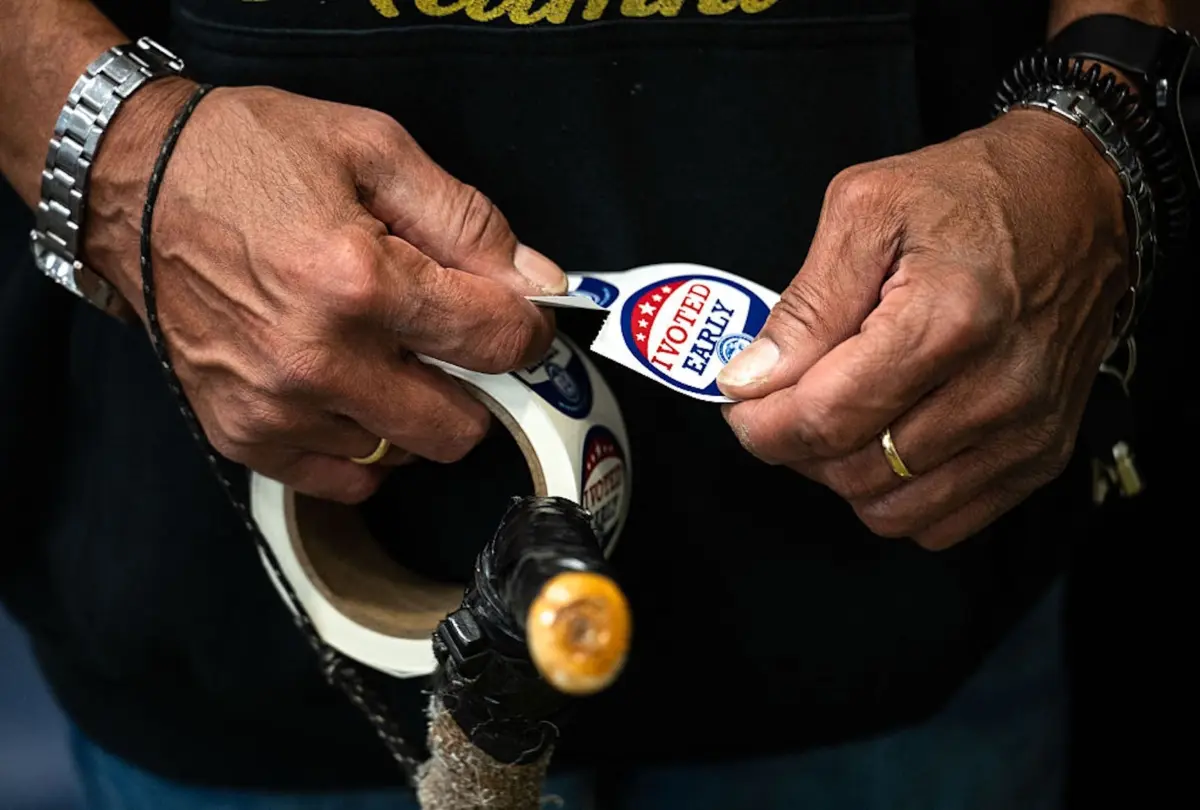
- September – October 2026: As early voting windows open across the South for the midterm elections, early returns reveal an anomaly that catches pollsters and political strategists flat-footed. Turnout metrics demonstrate massive spikes in participation among Black voters, led heavily by young voters and galvanized by local high-stakes Senate and congressional races.
- Late October 2026: National political figures descend upon competitive Southern battlegrounds. President Trump makes emergency campaign appearances in states like South Carolina to salvage vulnerable Republican incumbents, while Democratic heavyweights—including former President Barack Obama, former Secretary of State Hillary Clinton, and prominent senators—rally behind insurgent Black candidates like Scott Colom in Mississippi.
- November 3, 2026: On the final day of early voting, record queues wrap around polling stations from Charlotte, North Carolina, to New Orleans, Louisiana, closing out a historic mobilization cycle ahead of Election Day.
Supporting Context & Metrics
To comprehend the sheer magnitude of the 2026 early voting surge, one must examine the intersection of behavioral economics, historical precedent, and empirical voting data.
The Psychology of Loss Aversion
In behavioral economics and psychology, loss aversion dictates that the psychological pain of losing something is felt roughly twice as intensely as the joy of gaining an equivalent benefit. In the political arena, this principle translates directly into electoral motivation. Promising voters future benefits often yields moderate enthusiasm; however, stripping away established rights—such as voting access, reproductive freedom, or bodily autonomy—generates a profound, visceral backlash.
When the Supreme Court overturned Roe v. Wade in 2022, it triggered an immediate electoral reckoning for Republicans. In 2026, the systematic dismantling of voting rights through Callais and the subsequent aggressive gerrymandering of Southern districts have triggered a parallel defensive reflex among Black Americans.
Historical Muscle Memory
To many outside observers, the swiftness and ferocity of the Black community’s response came as a shock. Yet, for Black Americans, navigating targeted systemic disenfranchisement is a familiar historical trial.
Following the Civil War and the ratification of the 14th and 15th Amendments, Black political participation flourished during the Reconstruction era. Mississippi famously elected two Black U.S. senators and a lieutenant governor, while newly freed citizens exercised their rights to free speech, enterprise, and governance. That progress was met with a violent, coordinated backlash from white Southern society. When federal troops withdrew, a regime of state-sanctioned violence, poll taxes, literacy tests, and vigilante terror—the Jim and Jane Crow era—subjugated Black populations for nearly a century.
The eventual passage of the Civil Rights Act of 1964 and the Voting Rights Act of 1965 was forged through relentless, intergenerational struggle. The events of 2026 demonstrate that this historic "muscle memory" remains fully active, particularly among a younger generation of voters unwilling to surrender hard-won constitutional guarantees.
Key Electoral Metrics and Battleground Data
- Mississippi: Long considered a safe bastion for the Republican incumbent, the U.S. Senate race between GOP Senator Cindy Hyde-Smith and Democratic challenger Scott Colom—a Black former prosecutor and judge—has tightened dramatically. Infusions of national party resources and an energetic mobilization of Mississippi’s nation-leading Black voter population have turned a non-competitive race into a potential nail-biter.
- Louisiana: Despite the state housing the legal epicenter of the Supreme Court’s VRA rollback, early voting data reveals an astonishing surge in participation. Accounting for roughly one-third of the state’s population, Black voters made up 34% of early ballots cast in the tight open Senate race. Democratic candidate Jamie Davis—who is Black—held a six-point advantage among early voters over Republican Julia Letlow in recent polling averages.
- South Carolina: Following the sudden vacancy left by the death of long-serving Senator Lindsey Graham, Republican appointee Darline Graham has struggled on the campaign trail, prompting multiple emergency visits from Donald Trump. According to The New York Times, Black voters accounted for approximately 28% of early votes cast in the state by late October, significantly outperforming their standard 20% share of the overall electorate in recent cycles.
Official Statements and Expert Analysis
Political analysts, civil rights leaders, and data scientists have weighed in heavily on what the data reveals about the current political climate.
On the unexpected nature of the voter demographic shift:
"What we are seeing in the early vote data is not just a reversion to baseline historical norms; it is a structural anomaly driven by young voters and fueled by direct legislative provocation," notes a prominent election data analyst tracking Southern turnout. "When you systematically attempt to write a segment of the population out of the political equation, you invite an immediate, highly organized counter-offensive."
On the strategic miscalculation of post-VRA redistricting:
Civil rights litigators who fought the Louisiana v. Callais case argue that the Republican strategy of aggressive racial packing and cracking relied on outdated assumptions about voter apathy.
"The architects of the post-VRA map adjustments operated under the belief that administrative fatigue would keep minority voters at home," a senior voting rights attorney stated. "They fundamentally misunderstood the resilience of communities that have spent centuries fighting for the ballot. Every barrier erected has served as a beacon rather than a deterrent."
On the Republican counter-strategy:
National Republican campaign committees, recognizing the unexpected tightness in historically non-competitive Senate races across the South, have defended their ground by framing the midterms as a referendum on national economic policy and border security. However, surrogates dispatched to shore up vulnerable candidates like South Carolina’s Darline Graham have increasingly focused on neutralizing the enthusiasm gap through late-stage rallies and localized media blitzes.
Future Outlook
As the 2026 midterms reach their final hours, the long-term implications of this historic electoral mobilization extend far beyond the immediate tally of Senate seats and House majorities.
- Judicial and Legislative Retaliation: Regardless of the final outcome on Election Tuesday, the sheer volume of minority early voting sends an unmistakable message to the federal judiciary and state legislatures. Future attempts to restrict ballot access will face formidable, legally sophisticated, and highly mobilized resistance at the polls.
- The Evolution of Southern Politics: The tightening of races in Mississippi, Louisiana, and South Carolina signals that the "Solid South" for the Republican Party is increasingly porous when energized multiracial coalitions engage fully in the democratic process. Demographic realities, combined with aggressive grassroots organizing, threaten to transform safe red seats into perennial battlegrounds.
- A Blueprint for Civic Resilience: The 2026 "Blacklash" serves as a modern masterclass in civic defense. By turning procedural setbacks into catalysts for record turnout, Black voters have once again demonstrated that the ultimate guardian of constitutional rights is not the benevolence of the courts, but the active, unyielding participation of the electorate.
