

Executive Overview
As voters across the United States head to the polls, the 2026 midterm elections have reached a critical, highly volatile climax. Set against a backdrop of voter dissatisfaction with President Donald Trump’s second administration, the electoral landscape is defined by economic turbulence, soaring inflation, and mounting criticism over foreign policy decisions—most notably the administration’s war of choice in Iran. The cumulative friction of the MAGA agenda has deeply polarized the electorate, alienating critical voting blocs and even causing friction among the president’s traditional supporters.
While political prognosticators increasingly point toward significant Democratic gains—including potential control of the U.S. Senate and a pickup of up to 25 seats in the House of Representatives—the night remains fraught with uncertainty. Major battlegrounds span from high-profile Senate races in Michigan and Texas to surprising contests in the Deep South. Compounding the tension are massive financial expenditures, chaotic primary fallout, and high-stakes redistricting battles that will test the structural integrity of both political parties ahead of the 2028 presidential cycle.
Detailed Chronology and Electoral Dynamics
The Morning Indicators and Early Bellwethers
The tone of election night will be set early by critical bellwether districts. Political analysts will be watching Kentucky’s 6th Congressional District closely when polls close at 6:00 p.m. EST. In this contest, Democrat Zach Dembo is challenging incumbent Republican Ralph Alvarado.
Historically a Democratic stronghold before shifting to the GOP in 2012, the district remains structurally gerrymandered to favor Republicans. However, ground-level enthusiasm heavily favors Dembo. A strong, sustained lead for the Democratic challenger in this district would serve as an early indicator that a broader "blue wave" is sweeping through traditionally conservative or competitive regions nationwide.
The Michigan Political Drama: El-Sayed vs. Rogers and the Stevens Fallout
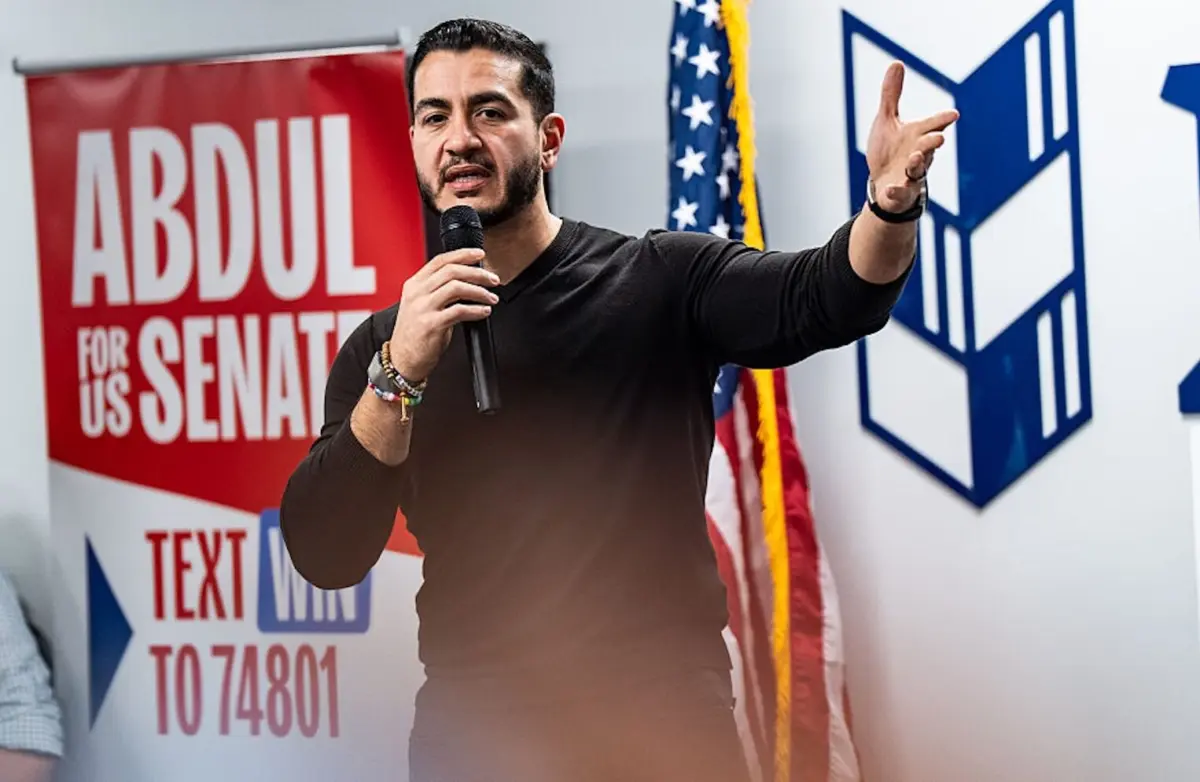
In Michigan, the race for the U.S. Senate has captured national attention, featuring Democratic candidate Dr. Abdul El-Sayed against Republican opponent Mike Rogers. El-Sayed’s campaign has maintained a strong position, bolstered by a pre-election New York Times/Siena poll showing him holding an 11-point lead. The nonpartisan Cook Political Report shifted its rating for the race to "Leans Democratic" well before the campaign’s final days.
However, the race was abruptly disrupted by outgoing Democratic U.S. Representative Haley Stevens. After narrowly losing to El-Sayed in a contentious Senate primary—where El-Sayed defeated her by a razor-thin margin of just 1% (14,893 votes)—Stevens’ closing days of the campaign involved intense political friction. Following assurances to colleagues that she supported El-Sayed, Stevens appeared at a church service alongside Republican Mike Rogers to endorse his candidacy via video.
The move triggered swift internal condemnation, leading to Stevens being formally expelled from the Michigan Democratic Party. While state Republicans privately expressed regret that the defection did not happen earlier, political analysts are watching closely to see if the eleventh-hour drama will meaningfully alter the trajectory of a race long trending in the Democrats’ favor.
Supporting Context & Metrics
Financial Super-Weight: Elon Musk’s Historic Spending
The 2026 cycle has shattered records for outside financial influence, most notably through the political spending of billionaire entrepreneur Elon Musk. According to The New York Times, Musk has funneled a staggering $474 million into this election cycle across various PACs, funds, and conservative organizations—a figure that excludes additional uncounted "dark-money" donations.
A significant portion of this capital—including $168 million directed to the Senate Leadership Fund—has been deployed to support contentious Republican nominees, such as Ken Paxton in his tight Texas Senate race against Democrat James Talarico.
Beyond evaluating whether this unprecedented investment yields legislative results, Musk faces immediate institutional risks if Democrats secure a congressional majority. A blue wave would likely trigger intensive congressional investigations into Musk’s corporate and political activities, including his reported private interventions in Russia’s war against Ukraine and his leadership role within the Department of Government Efficiency (DOGE) during the opening months of Trump’s second term.
The Redistricting Gamble and the Crumbling GOP Coalition
The 2026 midterms serve as the ultimate referendum on aggressive partisan redistricting strategies engineered by Republican legislatures in states like Texas and Florida following Trump’s 2024 performance. The strategy sought to institutionalize GOP advantages by capitalizing on localized gains among Black and Latino voters.
However, polling data indicates those projected margins have largely eroded as the broader electorate has reacted against the administration’s policy trajectory. Compounding matters, Democratic-led state legislatures in California and Virginia implemented aggressive counter-gerrymandering measures. A recent Politico poll suggests that the core voter coalition responsible for returning Trump to the White House is fracturing, rendering the GOP’s extensive map-redrawing efforts far less effective than initially projected.
Official Statements and Progressive Perspectives
As the returns begin to roll in, intra-party factions are actively positioning themselves to interpret the results. The size and depth of the Democratic victory will directly influence the balance of power between the party’s moderate establishment and its progressive wing.
Progressive groups have proactively pushed back against pre-emptive narratives from moderate strategists regarding electability. A leaked memo from the Progressive Change Campaign Committee obtained by Politico addressed this exact dynamic:
"Expect to hear narrow victories cited as evidence of weak electability," the memo states. "But a candidate’s first winning margin is not their electoral ceiling."
Progressive organizations point to races like Michigan’s 7th Congressional District, where William Lawrence—co-founder of the Sunrise Movement—is mounting a competitive challenge against incumbent Republican Representative Tom Barrett. A victory by progressive candidates in unconventional districts would inject substantial momentum into the movement, establishing a stronger platform for policy influence ahead of the 2028 presidential primaries. Conversely, narrow margins or unexpected losses would likely be leveraged by the party establishment to advocate for a more centrist strategy.
Future Outlook: Surprises in the Deep South
While the national media focuses heavily on traditional battlegrounds, the ultimate measure of whether the 2026 midterms evolve from a standard "blue wave" into a historic "blue tsunami" may rest on unexpected contests in the Deep South. Historically solid Republican states with substantial African American populations—specifically South Carolina, Mississippi, and Louisiana—are seeing competitive paths to victory driven by high early voter turnout among Black residents.
- South Carolina: Appointed Republican incumbent Darline Graham (who assumed the seat following the death of her brother, Senator Lindsey Graham) has faced criticism over her debate performances and public appearances. Democratic challenger Annie Andrews has capitalized on these vulnerabilities, running a disciplined campaign that has noticeably narrowed the polling gap.
- Mississippi: Incumbent GOP Senator Cindy Hyde-Smith has faced similar scrutiny over a perceived coasting strategy. Combined with voter mobilization following federal judicial changes to voting rights and a calculated campaign by Democrat Scott Colom, the race has emerged as a genuine contest.
- Louisiana: Recent polling indicates a statistical tie between Republican Julia Letlow and Democratic challenger Jamie Davis in a state where roughly one-third of the population is African American, fueled by a surge in early minority voting.
Conclusion
As the polls close and tabulation begins, the 2026 midterms stand as a definitive test of national mood, institutional resilience, and political strategy. Whether the anticipated Democratic gains materialize into a sweeping realignment or are checked by last-minute anomalies and structural advantages, the outcome will fundamentally reshape the final two years of the current presidential term and set the battle lines for 2028.
